
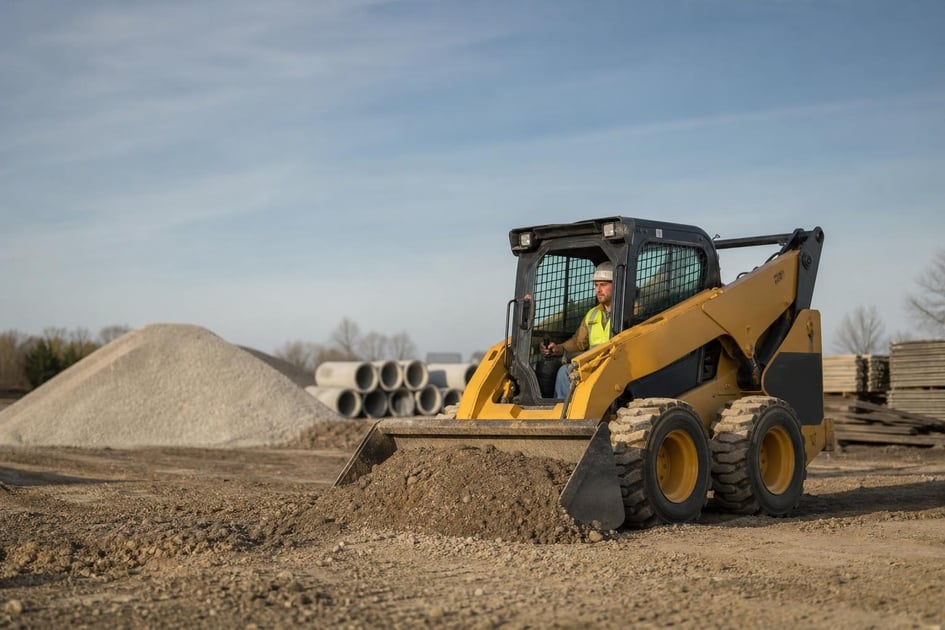
What Lenders Actually Look For
If you are buying a skid steer and need financing, the requirements are straightforward. Lenders want to see that your business generates enough revenue to cover the payments, that you have a track record of managing credit, and that the equipment value supports the loan amount. Most established contractors and landscapers qualify without issue. If your business is newer or your credit has some dings, you may still qualify, though the terms will reflect the additional risk. You can see what financing you qualify for on that skid steer in a few minutes.
Skid Steers financing works differently from an unsecured business loan. Because the equipment itself is the collateral, lenders can keep rates competitive even for borrowers who might not qualify for a general term loan. The machine secures the debt, which means the lender cares as much about the asset as they do about your personal credit score.
Time in Business
Most equipment lenders prefer at least two years in operation. That history demonstrates you have survived the volatile early period of a contracting or landscaping business. If you have been in business less than two years, you may still qualify, especially if you have strong personal credit or a significant down payment. Some lenders will consider applicants with as little as six months of operating history if the other factors are strong. The key is demonstrating consistent revenue and a viable business model.
Credit Profile
Your personal credit score carries significant weight in equipment financing decisions, particularly for owner-operators and small LLCs. A score above 680 generally opens the door to the most competitive terms. Scores in the 620 to 679 range are still financeable, though rates vary by credit profile, equipment age and term. Below 620, options narrow further, but they do not disappear entirely. A larger down payment or a co-signer can offset credit challenges. Lenders also look at your credit utilization, recent inquiries, and any bankruptcies or judgments.
Monthly and Annual Revenue
Lenders typically want to see at least $10,000 in monthly revenue, though this threshold varies by lender and deal size. They calculate your debt-service coverage ratio to ensure the new payment will not consume too much of your cash flow. A ratio of 1.25 or higher—meaning your net operating income covers the new payment by 125 percent or more—is the standard benchmark. If your business is seasonal, be prepared to show bank statements that cover both peak and slow months so the lender can see the full revenue cycle.
Equipment Specifications
The skid steer itself matters. Lenders want to know the year, make, model, hours, and condition. Newer equipment with lower hours commands better terms because it retains value and serves as stronger collateral. If you are financing a used machine, expect the lender to cap the loan term based on the equipment age—often a maximum of three to five years for a machine that is already several years old. The lender may also require an independent appraisal for high-value used equipment or private-party sales.
Key Insight: Lenders often discount the value of high-hour skid steers more aggressively than owners expect. A machine with 3,000 hours may be valued at 40 to 50 percent below retail, even if it runs well, because the lender must account for resale risk in a default scenario.
Already have a machine in mind?
Provide Capital finances new and used equipment from $5,000 to $5 million, with same-day decisions possible.
Apply NowNew vs. Used Skid Steer Financing
The decision between new and used shapes your financing terms as much as it shapes your upfront cost. Each path has distinct implications for down payment, term length, and total interest paid.
Financing a New Skid Steer
New skid steers typically range from $25,000 for a compact base model to $75,000 or more for a large-frame machine with high-flow hydraulics and advanced controls. Financing a new unit usually brings longer terms—up to 84 months in some cases—and more favorable rates vary by credit profile, equipment age and term. The warranty coverage also reduces the lender's risk. If you plan to put high hours on the machine quickly, new may make sense despite the higher acquisition cost. You also gain the latest emissions-compliant engines, which matter for contracts on government or corporate job sites.
Financing a Used Skid Steer
Used skid steers offer a lower entry point. A three- to five-year-old machine with 1,000 to 2,000 hours might cost $30,000 to $45,000 depending on brand and features. The savings are real, but financing terms tighten. Lenders may limit the term to 36 or 48 months and require a down payment of 10 to 20 percent. Always obtain a mechanical inspection before financing a used skid steer. A machine with hidden hydraulic or drive-train issues becomes a liability that outlasts the loan. Request maintenance records and verify that any major component replacements were done by a certified technician.
| Factor | New Skid Steer | Used Skid Steer (3–5 Years) |
|---|---|---|
| Typical price range | $25,000 – $75,000+ | $15,000 – $45,000 |
| Typical loan term | 48 – 84 months | 24 – 60 months |
| Down payment | 0% – 10% | 10% – 20% |
| Warranty | Full manufacturer warranty | Limited or expired |
| Rate environment | More competitive | Rates vary by credit profile, equipment age and term |
Pro Tip: If you are buying used from a private party rather than a dealer, get the machine inspected by a third-party mechanic and ask the lender whether they require a title search or UCC lien check. Unpaid liens on used equipment can derail a deal at the last minute.
Lease vs. Loan: Which Structure Fits Your Operation?
Beyond the equipment choice, you must decide how to structure the financing. The two primary vehicles are the equipment loan and the equipment lease. Each treats ownership, taxes, and end-of-term options differently.
Equipment Loan
A loan means you own the skid steer outright once the final payment clears. You can depreciate the asset, claim Section 179 deductions for the 2026 tax year, and sell the machine whenever you choose. Loans suit contractors who plan to keep a skid steer for five or more years and who want the equity on their balance sheet. Because the equipment itself is the collateral, lenders can offer terms that unsecured financing cannot match. You also build equity with every payment, which improves your net worth over time.
Equipment Lease
A lease typically requires less upfront cash and may offer lower monthly payments. At the end of the term, you either return the equipment, buy it at fair market value, or refinance the residual. Leases work well if you want to upgrade every few years or if you need to preserve cash for labor and materials. The tax treatment differs: lease payments are generally deductible as operating expenses, but you do not depreciate the asset. Consult your CPA about the optimal structure for your 2026 tax situation. If you anticipate rapid technological changes—such as new electric or autonomous models—a lease preserves flexibility.
| Factor | Loan | Lease |
|---|---|---|
| Ownership | You own it after final payment | You return, buy, or refinance at end |
| Down payment | Usually 0% – 10% | Usually first and last payment |
| Tax treatment | Depreciation and Section 179 for 2026 | Payments deductible as expense |
| Best for | Long-term ownership, high annual hours | Short-term use, frequent upgrades |
| End of term | Free and clear asset | Residual payment or return |
Documentation You Will Need
Gather these items before you apply to avoid delays:
- Business bank statements (last three to six months)
- Personal and business tax returns (last two years)
- Current profit and loss statement
- Equipment quote or invoice from the seller
- Proof of insurance covering the equipment
- Driver's license or other government-issued ID
- Voided business check for automatic draft setup
Some applications for established borrowers with strong credit may require less paperwork. Same-day approvals are possible when the file is complete. If you are buying through a dealer, they often provide the equipment quote in a standard format that lenders accept without modification. Private-party sales require more diligence: the lender may want a bill of sale, title verification, and proof that the seller has the legal right to transfer ownership.
The Application and Approval Timeline
The process moves quickly if you are prepared. After you submit an application, the lender reviews your credit, verifies revenue, and evaluates the equipment. For straightforward deals, you may receive a decision within hours. More complex files—those involving weaker credit, newer businesses, or older equipment—may take one to two business days. Get a decision on your equipment, possibly the same day, by having your bank statements and equipment quote ready before you start.
Once approved, the lender issues a term sheet detailing the payment, term, and any conditions. You review and sign, and the lender pays the seller or equipment dealer directly. You take delivery and put the machine to work. If the lender requires a down payment, you will send that before funding. The entire process from application to funding can finish in 24 to 72 hours for clean files.
By the Numbers: Provide Capital finances new and used business equipment from $5,000 to $5 million. A typical skid steer loan falls in the $20,000 to $60,000 range, with terms stretching from 24 to 84 months depending on the equipment age and borrower profile.
See what you qualify for
The equipment itself secures the financing, which keeps rates competitive. Checking your options takes minutes.
Check Your OptionsTax Treatment for the 2026 Tax Year
For the 2026 tax year, Section 179 allows businesses to deduct the full purchase price of qualifying equipment, subject to annual limits set by the IRS. The exact 2026 limit will be announced by the IRS, but businesses should consult their CPA for the current-year figure and how it applies to their specific situation. Bonus depreciation may also apply, though recent legislation has phased down the percentage from prior years. The key point: financing a skid steer does not prevent you from taking these deductions. You can claim Section 179 on equipment purchased with a loan, provided you place it in service during the 2026 tax year.
Used equipment qualifies for the same deductions as new, as long as it is new to your business. Lease payments, as noted, are treated differently—deducted as operating expenses over the lease term. Your CPA can model which approach yields the better outcome for your 2026 return. Keep in mind that the Section 179 deduction cannot create a net operating loss, so the amount you can claim is capped by your taxable business income. If you are a pass-through entity such as an S-Corp or partnership, the deduction flows to your personal return, which adds another layer of planning complexity.
According to SBA equipment financing programs, understanding the full cost of capital—including tax benefits—helps owners make better acquisition decisions than focusing on the monthly payment alone.
Industry-Specific Financing Considerations
Skid steers are the workhorse of several industries, and financing needs vary by application. Lenders underwrite differently depending on how you plan to use the machine and what revenue it will generate.
Construction and Demolition
In construction, skid steers handle grading, material handling, and site prep. Contractors often run them hard for eight to ten months of the year, then store or service them during winter downtime. Construction equipment financing accounts for seasonal cash flow by aligning payment schedules with revenue cycles. If you are a northern contractor with a slow fourth quarter, ask about skip-payment structures or seasonal plans that let you reduce or defer payments during off months.
The U.S. Census Bureau construction spending data shows that nonresidential construction activity remains a significant driver of equipment demand, which means lenders are familiar with the revenue patterns of general contractors and specialty trades.
Landscaping and Forestry
Landscapers use skid steers for land clearing, grading, and snow removal. The multi-season utility makes them easier to finance because the revenue stream is steadier than pure construction. Forestry attachments like mulchers increase the equipment cost but also increase revenue potential. Lenders will underwrite based on the base machine and may ask you to pay for high-cost attachments out of pocket if they push the total financed amount beyond standard loan-to-value ratios.
Agriculture
Farmers use skid steers for feeding, manure handling, and general barn work. Agricultural financing sometimes carries different documentation requirements, but the core criteria remain the same: credit, revenue, and equipment value. If you are a farmer with fluctuating commodity income, be ready to explain your revenue in the context of crop or livestock cycles.
Key Insight: Contractors who use skid steers for snow removal in winter and landscaping in summer often enjoy the strongest approval odds because their year-round revenue smooths out the seasonal cash-flow risk that makes lenders cautious about single-season operators.
Common Mistakes to Avoid
Even qualified buyers make errors that cost them money or delay funding. Avoid these pitfalls:
- Buying too much machine. A large-frame skid steer with high-flow hydraulics is impressive, but if your jobs rarely demand that capacity, you are paying for capability you do not use. Match the machine to your actual work mix.
- Ignoring total cost of ownership. Financing covers the purchase price, but not fuel, maintenance, tracks or tires, attachments, and insurance. A $40,000 machine can easily cost $55,000 to $65,000 over five years of operation.
- Skipping the inspection on used equipment. A low-hour used skid steer is tempting, but hour meters can be replaced. Check service records, inspect the pins and bushings for play, and test all hydraulics under load.
- Not comparing structures. Some borrowers default to a loan without asking whether a lease would free up cash flow. Run both scenarios with your accountant.
- Failing to act quickly. Inventory of both new and used skid steers fluctuates. If you find the right machine at the right price, start your application immediately so you do not lose it to another buyer.
- Overlooking insurance requirements. Lenders require physical damage insurance naming them as loss payee. If your current policy does not cover equipment financed by a third party, you may need to upgrade before funding.
As Forbes guidance on equipment financing notes, the equipment itself serves as collateral in most cases, which lowers the lender's risk and can make financing accessible even when other credit options are not.
What Happens After Approval
Once you sign the final documents, the lender funds the transaction. If you are buying from a dealer, the lender pays the dealer directly. If it is a private-party sale, the lender may issue a check to the seller or wire funds after verifying title. You add the lender as a loss payee on your insurance policy, take delivery, and start using the equipment.
Your payments begin according to the schedule—usually monthly, though some lenders offer quarterly or seasonal structures. Missing payments risks default and repossession, so set up automatic drafts if your cash flow supports them. Most lenders report payment history to business credit bureaus, which means on-time payments can strengthen your business credit profile for the next purchase. Keep your loan documents in a safe place and track your payoff date; some loans have prepayment penalties while others allow early payoff without fees.
If your business grows and you need additional equipment—perhaps a Dump Trucks financing addition to move material alongside your skid steer—your payment history on the first loan improves your negotiating position for the second.
Put the right equipment to work
From $5,000 to $5 million, new or used, Provide Capital helps businesses nationwide finance the equipment they need.
Apply TodayFrequently Asked Questions
Can I finance a skid steer with bad credit?
Yes, though the terms will reflect the additional risk. Scores below 620 often require a larger down payment, a shorter term, or a co-signer. The equipment itself is the collateral, which gives lenders more comfort than an unsecured loan. Be honest about your credit history when you apply so the lender can match you to the right program.
How long does skid steer financing take?
For straightforward applications with complete documentation, approval can come within hours and funding within 24 to 72 hours. Complex files may take one to two business days. Same-day approvals are possible when the borrower's credit, revenue, and equipment details are clean and well-documented.
Do I need a down payment?
Not always. Strong borrowers financing new equipment may qualify for zero down. Used equipment and weaker credit profiles typically require 10 to 20 percent down. The down payment reduces the lender's risk and demonstrates your commitment to the asset.
Can I finance a skid steer from a private seller?
Yes, most equipment lenders finance private-party sales. You will need a bill of sale, clear title, and often an independent appraisal. The lender may also require a UCC lien search to confirm no outstanding claims exist against the machine.
What interest rate will I pay?
Rates vary by credit profile, equipment age and term. Borrowers with strong credit and new equipment receive the most competitive offers. Those with credit challenges or older machines pay more. No lender can quote your exact rate without reviewing your application and the specific equipment.
Is a skid steer loan tax-deductible?
If you use a loan, you can generally claim depreciation and may be eligible for Section 179 expensing for the 2026 tax year, subject to IRS limits. If you lease, you typically deduct the payments as operating expenses. Ask your CPA which structure maximizes your 2026 deduction.
Can I pay off the loan early?
Some lenders allow early payoff without penalty; others charge a prepayment fee or require you to pay a portion of the remaining interest. Read your loan agreement carefully before signing, and ask your financing representative to point out the prepayment language.
What happens if I miss a payment?
Missing a payment triggers late fees and can damage your business and personal credit. Repeated missed payments may lead to default and repossession of the skid steer. If you anticipate cash-flow trouble, contact your lender before the due date. Many lenders offer hardship modifications for borrowers who communicate early.
Ready to Finance Your Skid Steer?
Financing a skid steer is one of the most direct ways to add capability to your operation without draining your cash reserves. Whether you are buying new or used, choosing a loan or a lease, the key is understanding what lenders evaluate and preparing your documentation in advance. Strong credit, steady revenue, and a well-maintained machine are the formula for fast approval and favorable terms.
At Provide Capital, we finance new and used business equipment from $5,000 to $5 million nationwide. If you have found the right skid steer and want to move fast, start an application in a few minutes and get a decision so you can get back to work.
Disclaimer: The information provided in this article is for general educational purposes only and is not financial, legal, or tax advice. Funding terms, qualifications, and product availability may vary and are subject to change without notice. Provide Capital does not guarantee approval, rates, or specific outcomes. For personalized information about your business funding options, contact our team directly.
