
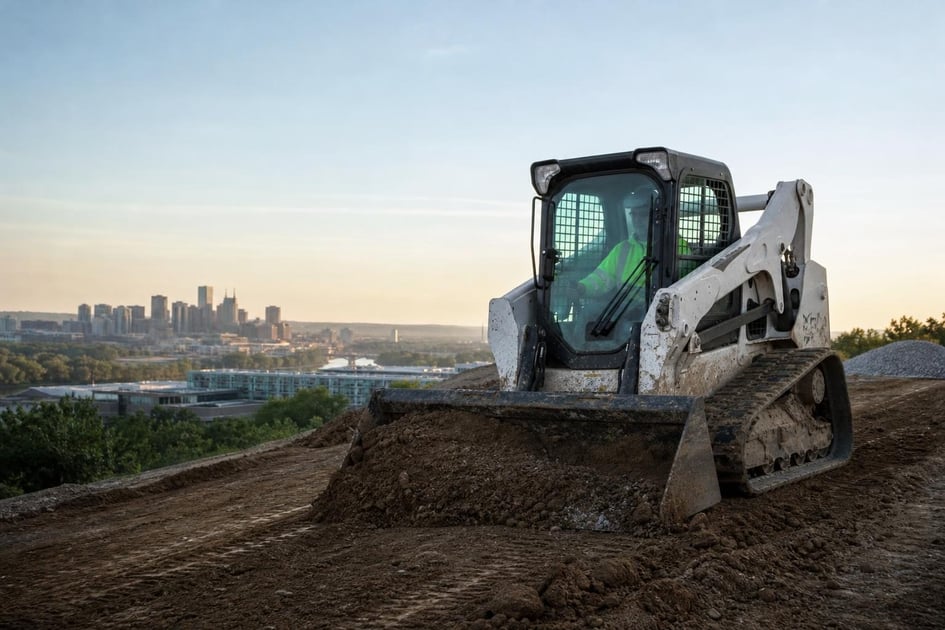
Skid Steer Financing in Tennessee: What Owner-Operators Need to Know
If you run a construction, landscaping, or agricultural business in Tennessee and need a skid steer, you do not have to pay cash upfront. Equipment financing lets you spread the cost over time while the machine goes to work immediately. Provide Capital finances new and used skid steers from $5,000 to $5 million, using the equipment itself as collateral to keep rates competitive. Depending on your credit profile and the documentation you provide, same-day approvals are possible. If you are weighing a purchase, see what financing you qualify for on that loader before you visit the dealer lot.
Tennessee’s mix of urban growth, rural agriculture, and heavy civil work makes the skid steer one of the most versatile investments on a job site. From grading lots in Nashville to moving feed in the Plateau, a single machine with the right attachments can replace several pieces of dedicated equipment. Financing simply turns that capital expense into a manageable monthly outlay.
Already have a machine in mind?
Provide Capital finances new and used equipment from $5,000 to $5 million, with same-day decisions possible.
Apply NowWhy Tennessee Contractors Rely on Skid Steers
Tennessee’s economy runs on construction, manufacturing, agriculture, and transportation. According to the U.S. Census Bureau QuickFacts for Tennessee, the state has seen steady population growth that drives demand for housing, roads, and commercial space. That activity falls heavily on small contractors who need compact, maneuverable equipment. A skid steer fits where excavators and backhoes cannot, and with dozens of attachment options it can handle digging, lifting, grading, and brush clearing in tight quarters.
In Middle Tennessee, residential and commercial building around Nashville and Murfreesboro keeps fleets busy year-round. West Tennessee contractors working near Memphis handle warehousing, logistics pad grading, and road repair. East Tennessee’s forestry and agricultural sectors use skid steers for land clearing, barn work, and fence-line maintenance. Major infrastructure commitments, including the Tennessee development projects around Memphis, continue to drive demand for earthmoving equipment statewide. Because the state has four distinct seasons, many owner-operators finance equipment in the fourth quarter so the machine is delivered before the spring rush. Waiting until March often means competing for limited dealer inventory and paying premium freight to remote job sites.
Key Insight: In Tennessee, the best time to finance a skid steer is often October through December. Contractors who close in the fourth quarter beat the spring delivery backlog and may still place the machine in service before year-end for tax purposes. Dealers in the Nashville and Chattanooga markets frequently run preseason promotions during this window to move inventory before the fiscal year closes.
If your primary work is commercial building or civil sitework, you may also need Construction equipment financing for additional machines down the line.
New vs. Used Skid Steers: What to Know Before You Finance
New skid steers arrive with full manufacturer warranties, the latest hydraulic systems, and zero-hour engines. For a contractor running multiple crews, that reliability translates into fewer unexpected downtime days. New machines also qualify for the longest financing terms, which can lower the monthly payment. Expect new compact models to start in the mid-$40,000 range and larger framed units with high-flow hydraulics to approach $70,000 or more before attachments.
Used skid steers offer lower entry prices and faster payoff, but they require more scrutiny. A machine with 2,000 hours that was maintained every 250 hours by a single owner can be a better investment than a 1,200-hour unit that sat uncovered in a muddy lot. Check for frame cracks, hydraulic leaks, and loader-arm play. Request maintenance records and run the engine through its full rpm range before committing. If you buy used, the financing term usually shortens because lenders align the payoff with the equipment’s remaining useful life.
Attachments change the math. A bucket is standard, but augers, trenchers, grapples, and brush cutters add capability. Many lenders let you roll attachments into the same financing package as the base machine, which preserves working capital for labor and fuel. Just make sure the skid steer has the auxiliary hydraulic flow to run the attachments you plan to use. Standard flow runs around 18 to 25 gallons per minute, while high-flow systems exceed 30 gallons per minute and are required for heavy-duty brush cutters and cold planers.
Pro Tip: Before you sign, verify that the skid steer’s rated operating capacity matches your heaviest typical load. A 1,500-pound ROC machine struggles with wet clay in a full bucket, while a 2,200-pound ROC unit handles the same material without risk of tipping. Upgrading frame size is cheaper at purchase than replacing the machine twelve months later.
Equipment Loan vs. Lease: Which Makes Sense for Your Business?
Financing a skid steer generally means choosing between an equipment loan and a lease. Both break the purchase into monthly payments, but ownership, tax treatment, and end-of-term obligations differ. The right choice depends on how long you plan to keep the machine, how many hours you expect to run annually, and whether you want to claim the depreciation on your books.
An equipment loan makes sense if you intend to keep the skid steer for five years or more and want to build equity. You own the machine outright once the final payment clears, and there are no mileage or hour restrictions. A lease can lower the monthly outlay and may offer flexibility to upgrade at the end of the term, but it often includes usage limits and purchase-option language you need to understand upfront.
| Feature | Equipment Loan | Equipment Lease |
|---|---|---|
| Ownership | You own the skid steer after the final payment | Lessor owns the machine; you may have a buyout option |
| Monthly payment | Higher than a lease in most cases | Lower monthly cost |
| Down payment | Often first and last payment or 5% to 10% | First payment and security deposit in some cases |
| Tax deduction | Interest deductible; Section 179 and depreciation apply | Payments may be deductible as operating expense; confirm structure with your CPA |
| Usage limits | None | Hour or term restrictions may apply |
| End of term | No balloon or buyout; you hold title | Return, renew, or purchase at fair market value or fixed buyout |
If you expect to put 1,000 hours per year on the machine and run it until the engine is tired, a loan is usually the better path. If you prefer to trade into a new unit every three years to avoid major maintenance, explore a lease. Either way, get a decision on your equipment, possibly the same day, so you can compare total cost before you negotiate with the dealer.
By the Numbers: A new 74-horsepower skid steer with high-flow hydraulics and a standard bucket typically lists between $55,000 and $70,000. A three-year-old unit with under 1,500 hours from a reputable brand often trades between $30,000 and $45,000. Attachments range from $2,000 for a heavy-duty bucket to $8,000 or more for a cold planer or forestry mulcher. Rolling attachments into the financing preserves cash for payroll and fuel.
Qualifying for Skid Steer Financing
Provide Capital works with owner-operators across credit profiles, but understanding what underwriters review helps you prepare a stronger file. While the SBA 7(a) loan program offers long-term financing for small businesses, equipment lenders often close faster because the machine itself serves as collateral. Lenders typically look at four areas: credit history, time in business, revenue stability, and the equipment itself.
Credit score is the first filter. Most equipment finance companies prefer a minimum score in the low-to-mid 600s, though approvals outside that range happen when other factors are strong. If your score is below 600, expect a larger down payment or a shorter term. Time in business matters because lenders want evidence that you can generate revenue with the equipment. Two or more years in operation is the standard threshold, though some programs accept twelve months if revenue is consistent.
Revenue verification comes from recent bank statements. Expect to provide three to six months of business statements, and possibly tax returns if the loan amount exceeds $150,000. The underwriter is looking for steady deposits and a positive ending balance that shows you can cover a new monthly payment. Negative days in the account do not automatically disqualify you, but be ready to explain them.
The equipment itself also affects approval. Lenders prefer name-brand machines with clear serial numbers and verifiable resale value. A skid steer from a major manufacturer with a clean title and no salvage history is easier to finance than an off-brand import with limited dealer support. For used equipment under $25,000, some programs require only an invoice and proof of insurance. For amounts above $50,000, a formal appraisal or inspection may be required.
See what you qualify for
The equipment itself secures the financing, which keeps rates competitive. Checking your options takes minutes.
Check Your OptionsTypical Costs and Payment Ranges
Because rates vary by credit profile, equipment age, and term, no single monthly payment fits every buyer. The examples below illustrate how financing changes with purchase price and term. Your actual payment will depend on the rate you receive, origination fees, and any down payment required.
A $28,000 used skid steer financed over 48 months might land in the high-$600 to mid-$800 range per month before fees. A $55,000 new unit on a 60-month term could run from the high-$900s to around $1,200 monthly. If you bundle a $60,000 machine with $10,000 in attachments and finance the combined $70,000 over 60 months, the payment likely sits in the low-to-mid-$1,400 range. Extending the term to 72 months lowers the monthly figure but increases total interest paid.
These ranges assume a borrower with established revenue and a credit score in the mid-600s or higher. If your credit is challenged, the payment shifts upward or the term shortens. The key is to match the payment to your monthly cash flow so the machine earns more than it costs.
Tax Treatment for Tax Year 2026
For tax year 2026, Section 179 allows businesses to deduct the full purchase price of qualifying equipment in the year it is placed in service, subject to an annual limit set by the IRS. The exact dollar cap for 2026 changes with inflation adjustments, so speak with your CPA about the current limit before you decide how much to finance versus pay cash. Bonus depreciation is also available for tax year 2026, though the percentage has been stepping down from prior-year levels. Your accountant can confirm how the 2026 rate interacts with Section 179 and whether your business structure benefits more from a loan or a lease.
If you finance the skid steer, you still own the equipment for tax purposes under a standard loan, which means you can claim Section 179 and depreciate the basis. With a lease, the treatment depends on whether it is structured as a capital lease or an operating lease. In either case, do not guess at the numbers. The cost of a 30-minute call with your CPA is far less than the cost of missing a five-figure deduction.
Common Mistakes Tennessee Buyers Make
One of the most expensive errors is buying a skid steer that is too small for the work. A contractor clearing land in the Smoky Mountains needs a different frame size and hydraulic package than a landscaper mowing tight residential berms in Germantown. Match the rated operating capacity, breakout force, and hydraulic flow to your hardest task, not your average task.
Another mistake is skipping the maintenance records on used equipment. Tennessee’s humid summers and muddy winters accelerate wear on pins, bushings, and drive motors. A machine that looks clean cosmetically may have spent three years in a poultry house with high ammonia exposure. Pull the oil analysis if the seller has it, and inspect the final drives for metal in the fluid.
Buyers also frequently forget to finance attachments upfront. Adding a grapple or auger six months later means a second transaction, a second credit pull, and potentially a higher blended rate. Bundle everything at once if possible.
Finally, do not assume you must use the dealer’s captive finance company. Dealer programs are convenient, but they are not always the best fit for every credit profile. Shopping the financing separately often yields better terms or faster approval, especially if you have an existing banking relationship or a strong equipment finance partner.
What Documentation You Need
Having your paperwork ready shortens the approval timeline from days to hours. At minimum, gather the following before you apply:
- A copy of your driver’s license
- A voided business check for ACH setup
- The equipment quote or invoice, including serial number and description
- Three months of recent business bank statements
- One to two years of business tax returns, especially for requests above $100,000
- Proof of business formation, such as articles of incorporation or a business license
- Evidence of insurance coverage or a quote binding upon funding
If the skid steer is used, the lender may also want photographs, a condition report, or verification that the seller holds clear title. Private-party sales require extra diligence, but they are financeable if the documentation is clean.
What Happens After Approval
Once approved, the lender issues a funding letter or purchase agreement. You review and sign, and the funds are wired directly to the dealer or private seller. You take delivery, activate your insurance, and put the machine to work. First payment is typically due 30 to 45 days after funding, which gives you a short window to generate revenue before the note comes due.
During the term, the lender holds a security interest in the skid steer. That means you cannot sell the machine without paying off the balance, and you must maintain insurance that names the lender as loss payee. After the final payment, the lender releases the lien and you hold clear title.
If your fleet is growing, remember that we also offer Scissor Lifts financing for contractors working on multi-story builds, and our Skid Steers financing program covers everything from compact track loaders to wheeled units with high-flow packages.
Put the right equipment to work
From $5,000 to $5 million, new or used, Provide Capital helps businesses nationwide finance the equipment they need.
Apply TodayFrequently Asked Questions
Can I finance a skid steer with bad credit?
Yes, but expect different terms. Borrowers with credit scores below 600 can still qualify through programs that emphasize cash flow and equipment value. You may need a larger down payment or a shorter term, and the rate will reflect the added risk.
How long does approval take?
Many applications receive a decision within a few hours, and same-day approvals are possible when the file is complete. Delays usually happen when documentation is missing or when the equipment needs a third-party inspection.
Do I need a down payment?
Not always. Well-qualified borrowers can finance 100 percent of the equipment cost plus attachments. If your credit is thin or the equipment is older, the lender may ask for first and last payments upfront or a 5 percent to 10 percent down payment.
Can I include attachments in the financing?
Yes. Most lenders allow you to roll attachments into the same contract as the skid steer. This simplifies billing and avoids a second credit inquiry later. Just make sure the attachments are itemized on the invoice.
Is it better to lease or finance a skid steer?
Finance if you plan to keep the machine long-term and want to claim depreciation and Section 179. Lease if you prefer lower monthly payments and plan to upgrade every few years. Confirm the tax treatment with your CPA before you sign.
What credit score do I need for skid steer financing?
The typical minimum is in the low-to-mid 600s. Higher scores unlock longer terms and lower rates, but revenue and equipment quality also influence the decision.
Can I finance a private-party sale?
Yes, provided the seller has clear title and you can supply a bill of sale, photos, and in some cases an inspection. The lender will verify the serial number and may require a title search.
Does the equipment have to be new?
No. Used skid steers are commonly financed. Lenders care more about the machine’s condition, brand, and resale value than the model year. Units up to ten years old are generally eligible, though older machines may require shorter terms.
Next Step
A skid steer is a force multiplier for a Tennessee contractor, but only if the financing structure fits your cash flow. Review your typical monthly revenue, gather your bank statements and equipment quote, and start an application in a few minutes to see what terms you qualify for. Whether you are buying new or used, from a dealer or a private seller, the right equipment loan keeps your working capital intact and your crews moving.
Disclaimer: The information provided in this article is for general educational purposes only and is not financial, legal, or tax advice. Funding terms, qualifications, and product availability may vary and are subject to change without notice. Provide Capital does not guarantee approval, rates, or specific outcomes. For personalized information about your business funding options, contact our team directly.
