What to Expect When Financing a Used Skid Steer
Used skid steers financing works like any other equipment loan: the machine itself serves as collateral, which keeps rates competitive and lets you spread the cost over 24 to 60 months. At Provide Capital, Skid Steers financing starts at $5,000 and runs up to $5 million, and same-day approvals are possible when your paperwork is clean. Rates vary by credit profile, equipment age and term, so the rate you receive depends on your business history and the specific machine you are buying. The process is straightforward—apply with your equipment quote, provide a few months of bank statements, and let the underwriter match the collateral value to the loan amount.
Already have a machine in mind?
Provide Capital finances new and used equipment from $5,000 to $5 million, with same-day decisions possible.
Apply NowWhy Contractors Choose Used Skid Steers
A used skid steer in the 1,500–2,500 hour range often costs 40% to 60% less than a comparable new model. For owner-operators adding a second machine or replacing a tired loader, that spread can mean the difference between paying cash and preserving working capital. The used market is especially active in construction, landscaping, and agriculture, where fleets turn over equipment every three to five years to avoid major rebuilds. Financing the purchase lets you put the machine to work immediately while keeping cash on hand for payroll, materials, and fuel. Construction equipment financing from Provide Capital covers skid steers, excavators, and other fleet essentials nationwide, with terms shaped to your operating season.
Equipment borrowing across the U.S. rose more than 5% in late 2025, according to Reuters data on equipment finance trends. That activity reflects steady demand for loaders, lifts, and trucks as contractors replace aging fleets without committing to new-machine premiums.
Key Insight: Most lenders treat skid steers with fewer than 3,000 hours as "light use" if maintenance records are complete. Above 4,000 hours, underwriters look for recent engine or hydraulic work before approving standard terms. A machine with a fresh rebuild at 4,500 hours can still qualify, but expect the lender to advance a smaller percentage of the asking price.
Used vs. New Skid Steer Financing
| Factor | Used Skid Steer | New Skid Steer |
|---|---|---|
| Purchase Price | $25,000–$65,000 for mid-size models | $65,000–$110,000+ for mid-size models |
| Financing Term | 24–48 months common | 36–60 months common |
| Down Payment | 0–10% for strong credits | 0–10% for strong credits |
| Collateral Value | Depreciated; lender may require larger equity cushion | Full purchase price |
| Warranty | Limited or expired; factor repair reserves into cash flow | Manufacturer warranty included |
| Approval Speed | Same day possible with clean records | Same day possible with dealer invoice |
Used machines carry more variables. A 2021 model with 1,200 hours and a dealer inspection is easier to finance than a 2015 model with 3,800 hours sold at auction. The lender's risk is tied to resale value, so age, hours, and brand reputation all shape the term sheet. New equipment carries a premium price but simpler underwriting because the collateral value is predictable. If your goal is lowest total cost of ownership and you can handle occasional downtime, used is the better bet. If uptime is critical and you have the revenue to support higher payments, new may pencil out. Construction spending levels also affect resale values; U.S. Census Bureau construction spending data can help you gauge whether demand in your region is rising or softening.
How Qualification Works for Used Equipment
Credit and Time in Business
Most equipment lenders want to see at least two years in business and a personal credit score in the mid-600s or higher. That said, the equipment itself is the collateral, so a strong machine can offset a thinner credit file. If your business is newer, expect a slightly larger down payment or a shorter term, but rejection is not automatic. Provide Capital looks at cash flow first: can the machine generate enough revenue to cover the payment? We also review your debt-service coverage ratio, bank balance trends, and the length of your customer relationships. A construction contractor with signed purchase orders for the next six months is a different risk than a seasonal operator entering the slow months.
Borrowers who need additional flexibility can explore Small Business Administration loan programs alongside conventional equipment financing. SBA-guaranteed loans can help businesses with shorter track records or unique collateral situations, though they typically involve more paperwork and longer timelines than a direct equipment loan.
Equipment Age and Hour Limits
Lenders typically cap used equipment age at 7 to 10 years at origination. For skid steers, 5 model years or newer gets the best rates. Hour limits vary by brand; a Caterpillar, Bobcat, or John Deere with 3,500 hours is viewed differently than a no-name import with the same hours. The lender will verify the machine's serial number and may require an independent appraisal for purchases over $100,000. High-hour machines are not automatically disqualified, but the lender will tighten the advance rate—perhaps lending 70% to 80% of wholesale value rather than 90% to 100%. If you are buying at auction, be prepared for a stricter review because there is no dealer warranty and title history can be murky.
Pro Tip: Before you shop, gather the last 12 months of bank statements, a current equipment quote or purchase agreement, and the machine's maintenance history. Having these ready can cut approval time from days to hours. If the seller has service records from an authorized dealer, download them; they are worth more than a verbal assurance.
Lease vs. Loan for a Used Skid Steer
A loan makes sense if you want to own the asset, build equity, and claim depreciation or Section 179 deductions. You make monthly payments, and at the end of the term the lender releases the lien. A lease—particularly a fair-market-value lease—keeps the monthly payment lower and may let you upgrade at the end of the term. With used equipment, loans are more common because the residual value at lease-end is harder to predict. If you plan to run the machine until the engine gives out, finance it. If you expect to trade up in two seasons, ask about a shorter-term lease or a loan with a manageable balloon. Keep in mind that some leases restrict hours or require you to return the machine in good condition; with a used skid steer, those clauses can be expensive if you work in abrasive conditions. See what you qualify for on a used skid steer or loader and compare the two structures side by side.
Tax Treatment in 2026
For the 2026 tax year, the IRS allows businesses to deduct qualifying equipment purchases under Section 179 up to an annual dollar limit that adjusts yearly. Bonus depreciation may also apply, though it has been phasing down according to Congressional schedules. Because these limits change and interact differently with loans and leases, talk to a CPA before you file. The deduction is valuable, but only if your tax situation supports it. If you finance the purchase, you typically deduct the interest expense as you pay it and claim depreciation or Section 179 on the equipment itself. If you lease, you may deduct the lease payments as an operating expense, though the exact treatment depends on whether the lease is classified as operating or capital. Never make a financing decision based solely on tax savings; the structure must also fit your cash flow and equipment lifecycle.
By the Numbers: A $40,000 used skid steer financed over 36 months might carry a monthly payment in the low four figures depending on credit and term. Spread across 24 months, the payment rises but total interest paid drops. A $65,000 package with attachments and delivery over 48 months lands in the mid four figures. Always model both scenarios against your expected billable hours.
See what you qualify for
The equipment itself secures the financing, which keeps rates competitive. Checking your options takes minutes.
Check Your OptionsReal-World Cost Scenarios
Imagine you are buying a 2022 Bobcat S76 with 1,800 hours for $42,000. With strong credit, you might put $4,200 down and finance the balance over 36 months. The equipment acts as collateral, so the rate reflects your credit profile and the machine's remaining life. Alternatively, a $28,000 Kubota SVL97-2 with 2,400 hours might qualify for a 24-month term with minimal down payment. In both cases, the lender files a UCC-1 lien on the skid steer until the final payment clears. Provide Capital finances transactions from $5,000 to $5 million, so a single used loader or a five-machine package both fit within the program.
Now consider a larger package: a 2021 CAT 259D with a bucket, auger, and grapple, plus delivery, totals $55,000. Financing over 48 months keeps the monthly obligation predictable. If you also need hauling capacity, Dump Trucks financing can be structured under the same credit line or as a separate transaction. The key is matching the term to the machine's revenue potential. A skid steer that bills 30 hours a week at $85 an hour generates roughly $11,000 a month in gross revenue. Even after fuel, maintenance, and operator wages, the equipment payment should fit comfortably inside the margin.
Common Mistakes When Financing Used
Buyers often overestimate a machine's value because they fell in love with a specific brand. Lenders base advance rates on auction or wholesale values, not asking price. Another error is hiding negative equity from a previous trade. Be upfront about existing liens; they complicate titling and delay funding. Some borrowers also forget to budget for delivery, attachments, and sales tax. These costs add 5% to 15% to the out-the-door price, and most lenders will not finance tax or freight unless it is rolled into a larger equipment package. Finally, do not skip the physical inspection. A fresh coat of paint can hide cracks in the loader arms or a weeping hydraulic cylinder. Bring a mechanic if you are not qualified to assess the machine yourself.
Key Insight: Private-party sales can carry hidden liens. Always run a title or UCC search on a used skid steer before committing cash or credit. A $75 search can save you from buying someone else's unpaid loan. If the seller cannot produce a clear title, walk away or structure the deal as a payoff at closing.
What Documentation You Need
Have the following ready before you apply:
- Last three to six months of business bank statements
- Current year P&L or the most recent tax return
- Driver's license or other government-issued ID
- Equipment quote or purchase agreement with serial number, year, make, model, and seller information
- Proof of insurance naming the lender as loss payee
- Maintenance records or dealer inspection report for older or high-hour machines
If the machine is over $100,000 or more than five years old, the lender may also request a third-party appraisal or an equipment inspection report. Insurance requirements vary by lender and collateral value, but expect to carry physical damage coverage at least equal to the loan balance. The lender will verify coverage before releasing funds, so line up your agent early.
What Happens After Approval
Once approved, the lender issues a purchase order or funds the seller directly. You take delivery, activate insurance, and the lien is filed with the secretary of state or local UCC registry. Payments usually start 30 to 45 days after funding, which gives you time to put the machine to work before the first bill arrives. If you need the machine on site Monday, start the application Wednesday. Same-day approvals are possible when the file is complete and the equipment is straightforward. After the final payment, the lender releases the lien and sends you a clear title or termination statement. Keep that document; you will need it when you trade or sell the machine years later. Get a same-day decision on your equipment and keep your project schedule on track.
Put the right equipment to work
From $5,000 to $5 million, new or used, Provide Capital helps businesses nationwide finance the equipment they need.
Apply TodayFrequently Asked Questions
Can I finance a skid steer from a private seller?
Yes. The lender pays the seller directly after verifying title and completing a lien check. Private-party deals take slightly longer than dealer transactions because there is no floorplan or standard invoicing system to accelerate paperwork. Expect an extra 24 to 48 hours for title verification. The seller must provide a clear title, bill of sale, and proof that any existing loans are satisfied before funding.
Does a used skid steer require a larger down payment than new?
Not necessarily. Down payments are driven by credit strength and the lender's advance rate. A used machine in excellent condition with strong comparable sales can qualify for 0% down with the right borrower. However, if the machine is older than seven years or has high hours, the lender may require 10% to 20% down to offset collateral risk. New equipment often qualifies for 0% down simply because the collateral value is more predictable.
What credit score do I need for used equipment financing?
Most lenders prefer a personal credit score in the mid-600s or higher. Below that, you may still qualify with compensating factors such as strong cash flow, a co-signer, or additional collateral. Because the equipment secures the loan, lenders are often more flexible than they would be for an unsecured line of credit. That said, the lowest rates go to borrowers with established credit, low revolving balances, and consistent deposits.
How old can a skid steer be and still get financed?
Lenders typically prefer machines no older than 7 to 10 years at the time of financing. A 2018 model financed in 2026 is generally acceptable; a 2012 model may require a larger down payment or a shorter term. Some lenders enforce a hard cutoff at 10 years, while others look at hours and condition first. A well-maintained 2015 model with 2,000 hours can be easier to finance than a neglected 2020 model with 5,000 hours.
Can I bundle attachments into the same loan?
Often yes. Buckets, augers, grapples, trenchers, and other attachments that ship with the machine can usually be rolled into the financing if they are on the same invoice. The lender treats them as part of the collateral package. Standalone attachment purchases months later usually require a separate line or credit card because they do not carry the same resale value as the host machine.
Will the lender inspect the machine before funding?
For deals under $75,000, most lenders rely on photos, serial numbers, and seller disclosures. Above that threshold, or for machines with high hours, an inspection or appraisal may be required. The inspection checks for structural cracks, engine compression, hydraulic leaks, and undercarriage wear. If the machine fails any major category, the lender may reduce the advance amount or require repairs before closing.
Is a lease better than a loan for a used skid steer?
It depends on your tax strategy and how long you plan to keep the machine. Loans build equity and offer depreciation deductions. Leases can lower monthly payments but may restrict hours or modifications. With used equipment, residual values are harder to predict, so leases are less common. Compare both structures with your CPA and choose the one that aligns with your expected holding period and revenue model.
How fast can I get funding?
With complete documentation, same-day approval is possible. Funding usually follows within 24 to 48 hours after approval, depending on how quickly the seller provides a clean title and invoice. Dealer purchases move fastest because the seller has done this before. Private sales and auction purchases take longer because title verification and payoff coordination add steps.
Ready to Finance Your Used Skid Steer?
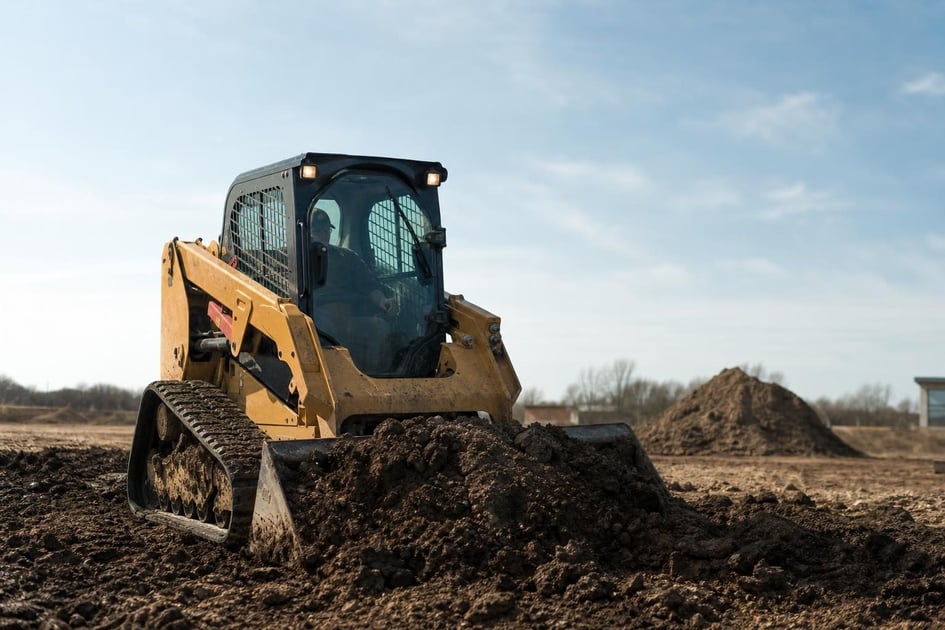
A used skid steer can keep your crew moving without draining your operating account. Whether you need a compact loader for tight residential pads or a tracked machine for muddy sites, financing spreads the cost across the revenue the equipment earns. Start with a clear picture of your monthly cash flow, gather your paperwork, and talk to a specialist about your specific machine. We handle transactions from $5,000 to $5 million nationwide, with terms tailored to the way you work.
Disclaimer: The information provided in this article is for general educational purposes only and is not financial, legal, or tax advice. Funding terms, qualifications, and product availability may vary and are subject to change without notice. Provide Capital does not guarantee approval, rates, or specific outcomes. For personalized information about your business funding options, contact our team directly.