
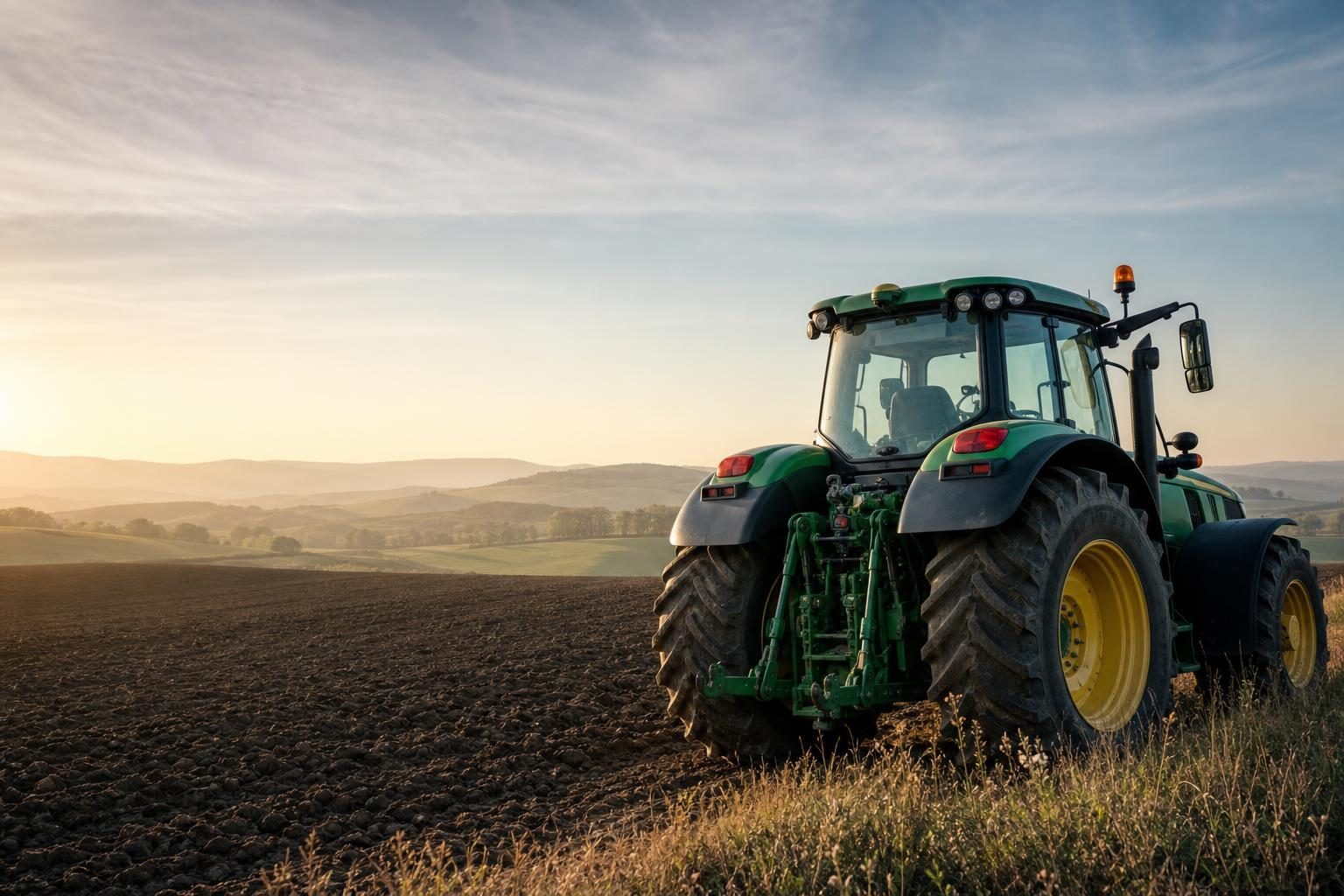
If you are weighing whether a tractor purchase fits your budget, the short answer is that most owner-operators and small business owners can qualify for Tractors financing when the equipment itself secures the loan. Provide Capital finances new and used tractors from $5,000 up to $5 million, with same-day approvals possible for qualified applicants. The equipment acts as collateral, which means rates stay competitive even if your credit is not perfect. Before you shop, it helps to know what lenders evaluate, how new and used tractors compare, and what paperwork you will need.
Key Insight: Because the tractor itself collateralizes the financing, lenders place more weight on the equipment's value and condition than on pristine credit. A well-maintained used tractor with documented service history can qualify on stronger terms than a newer machine with unknown maintenance.
The first step is simple: see what you qualify for on the tractor you have in mind. You can start an application in a few minutes and receive a decision quickly, sometimes the same day.
What Types of Tractors Can Be Financed
Provide Capital finances a wide spectrum of tractors and related machinery. The range starts at compact utility tractors in the $5,000 to $25,000 bracket and extends to large agricultural tractors that can approach the upper limits of our program. Eligible equipment includes row-crop tractors, utility tractors, 4WD articulated tractors, and specialty machines like orchard or vineyard tractors. We also finance Terminal Tractors financing for yard and port operations, as well as Lawn Tractor financing for landscaping and groundskeeping businesses.
The equipment does not need to be new. Used tractors are eligible provided they have verifiable service records and remaining useful life. Most lenders prefer equipment manufactured within the last 15 to 20 years, though exceptions exist for well-maintained classic machines with strong resale markets. Attachments and implements—loaders, backhoes, mowers, tillage equipment—can often be bundled into the same financing package if they are purchased together with the tractor.
When evaluating a tractor for financing, lenders consider the manufacturer, model year, hours of operation, and overall condition. Brands with strong dealer networks and parts availability typically command better financing terms because the collateral retains value. A tractor with 3,000 hours from a major manufacturer may qualify more easily than a low-hour machine from a defunct brand with no parts support.
Get a fast decision on your equipment
Applying takes just a few minutes, and decisions can come as soon as the same day.
Start Your ApplicationWhat Lenders Look For: Qualification Criteria
Understanding the qualification process removes guesswork and lets you prepare before you apply. Lenders evaluate several factors, and no single item automatically disqualifies you. The equipment-backed nature of the financing means the overall profile matters more than any one score.
Credit Profile
Your personal and business credit history play a role, but they are not the only factors. Lenders typically look for a track record of meeting obligations, even if there are past blemishes. A credit score in the mid-600s or higher generally opens access to competitive terms, while scores below that may still qualify with additional conditions such as a larger down payment or shorter term. Rates vary by credit profile, equipment age and term.
Lenders also review your debt-to-income ratio and existing obligations. If you currently carry heavy equipment debt on other machines, that may affect how much you can borrow. Conversely, a clean credit report with modest existing debt and steady revenue makes approval straightforward.
Time in Business
Most equipment lenders prefer to see at least one to two years of operating history. This demonstrates that your business generates consistent revenue and can service new debt. Startups face tighter scrutiny and may need to provide additional documentation or a personal guarantee. Established businesses with two or more years of tax returns and bank statements usually move through approval faster.
Equipment Age and Condition
The tractor itself is the star of the application. Lenders will verify the serial number, hour meter reading, and maintenance history. A recent inspection or appraisal helps, especially for private-party purchases. If you buy from a dealer, they often provide inspection reports that satisfy lender requirements. The loan term generally aligns with the remaining useful life of the tractor; you are unlikely to get a seven-year loan on a 20-year-old machine with 8,000 hours.
Pro Tip: Gather maintenance records, repair invoices, and any existing warranty documentation before applying. A folder showing regular oil changes, hydraulic service, and major repairs tells the lender the collateral is worth protecting—and can shave days off the approval timeline.
New vs. Used Tractor Financing
The decision between new and used tractors carries financial implications beyond the sticker price. New tractors offer the latest technology, warranty coverage, and lower maintenance costs for the first several years. Used tractors depreciate more slowly and often deliver better value per dollar, but they may carry higher financing rates and shorter available terms.
| Factor | New Tractor | Used Tractor |
|---|---|---|
| Purchase price | Higher upfront cost | Lower upfront cost |
| Financing rates | Typically more favorable | Rates vary by credit profile, equipment age and term |
| Loan term available | Up to 7 years or more | Shorter; aligned with remaining useful life |
| Warranty | Full manufacturer warranty | Limited or expired; consider extended coverage |
| Depreciation | Steepest in first 2–3 years | Slower; previous owner absorbed initial drop |
| Technology | Latest precision ag, emissions compliance | May lack GPS guidance or Tier 4 engine |
| Down payment | Often 0% to 10% | Often 10% to 20% depending on age |
If you plan to keep the tractor for a decade and log high annual hours, new may pencil out better despite the higher payment. If you need a secondary machine for seasonal work or want to preserve cash, used equipment delivers productivity without the premium. Get a decision on your equipment, possibly the same day, to see how new and used options compare in your situation.
Lease vs. Loan: What Works for Your Operation
Beyond new versus used, you also need to decide whether to lease or take out an equipment loan. Each structure suits different operational needs and tax strategies. According to Forbes guidance on equipment loans, understanding the total cost structure before signing is critical for small business owners.
A loan means you own the tractor outright once the final payment clears. You build equity, can modify the machine as needed, and face no restrictions on hours or usage. Loans work well for core equipment that stays in your fleet long-term. The monthly payment is fixed, and at the end of the term you own a depreciated but still productive asset.
A lease typically offers lower monthly payments and may include maintenance packages. At the end of the lease term, you either return the tractor, buy it out at fair market value, or renew the lease. Leasing suits operations that want to upgrade frequently or need predictable total costs. However, leases often carry usage limits and require you to maintain the equipment to specific standards.
The choice often comes down to cash flow versus ownership. If preserving working capital matters most and you plan to trade every three to five years, explore lease structures. If you intend to run the tractor until the engine gives out, a loan is usually the smarter path.
By the Numbers: A $75,000 utility tractor financed over five years might carry a monthly payment in the low four figures, while a fair-market-value lease on the same machine could run 20% to 30% less per month. Over a 10,000-hour ownership period, the loan builds equity worth roughly 30% to 40% of the original purchase price, while the lease returns the equipment to the lessor.
Tax Treatment for 2026
The tax implications of tractor financing deserve attention, especially for the 2026 tax year. Under Section 179 of the Internal Revenue Code, businesses may elect to deduct the full purchase price of qualifying equipment in the year it is placed in service, subject to annual limits. For tax year 2026, consult your CPA to confirm the exact dollar ceiling and phase-out thresholds, as these figures adjust periodically.
Bonus depreciation has also been a significant factor in equipment purchasing decisions. For 2026, the bonus depreciation percentage may differ from prior years, so verify the current rate with a tax professional before making decisions based on prior-year percentages. The rules around new versus used equipment eligibility can affect your strategy.
If you lease rather than buy, the tax treatment changes. Lease payments are generally deductible as business expenses, but you do not claim depreciation on the asset. The Section 179 deduction applies to purchased or financed equipment, not true leases. Always confirm your specific structure with a CPA before filing.
Key Insight: Placing a tractor in service by December 31, 2026, is what matters for this tax year's deductions—not when you sign the loan documents. If you are cutting it close to year-end, build in time for delivery, setup, and any dealer prep work so the machine is actively working before the calendar turns.
Find the right financing structure
Tell us about the equipment you need and we will show you the options that fit your business.
See Your OptionsWhat Documentation You Need
Preparing your paperwork in advance keeps the process moving. For most tractor financing applications, you will need:
- A completed application with business and personal details
- One to two years of business tax returns
- Three to six months of business bank statements
- A current profit-and-loss statement
- The equipment quote or purchase agreement, including serial number and specifications
- Proof of insurance covering the collateral
If you are buying from a private seller, the lender may also require an independent appraisal or inspection. Dealer purchases typically streamline this because the seller provides standardized documentation and may even handle the lien filing. If you have existing equipment loans, be ready to list those balances and monthly payments.
For larger requests—approaching $500,000 or more—lenders may ask for additional financial statements, a business plan showing how the tractor generates revenue, or references from existing creditors. The process remains straightforward, but the depth of review increases with the size of the transaction.
Industry-Specific Use Cases
Tractors serve dramatically different roles across industries. Understanding how financing fits your specific sector helps you choose the right machine and structure.
Agriculture
Farms and ranches rely on tractors for tillage, planting, hay production, and loader work. A row-crop operation might need a 200-horsepower tractor with GPS guidance and autosteer, while a cattle ranch may prioritize a durable utility tractor with a loader for feeding and fence work. Agriculture equipment financing through Provide Capital accommodates both scenarios, with terms structured around seasonal cash flow.
Many agricultural borrowers time their purchases around harvest proceeds or spring planting loans. Lenders familiar with farming recognize this seasonality and can structure payments to align with income cycles. This might mean lower or skipped payments during off-peak months, though specific structures vary by lender and applicant. Census Bureau data on American agriculture underscores how machinery investment tracks directly with farm productivity and land utilization.
Construction and Landscaping
Construction companies use tractors for grading, backhoe work, and material handling. Landscapers need compact tractors with mowers, tillers, and buckets. In both cases, the tractor often serves as a multi-tool, replacing several specialized machines. Financing the tractor plus attachments as a single package simplifies bookkeeping and may improve approval odds because the total collateral value is higher.
Construction firms should also consider transportability. If you move tractors between job sites, a machine under 10,000 pounds that trailers behind a standard truck may be more versatile than a larger tractor requiring a lowboy. Factor trailer and towing equipment into your total project cost.
Common Mistakes When Financing Tractors
Even experienced buyers stumble over predictable pitfalls. Avoid these common errors to keep your financing on track.
Buying before pre-qualifying. Falling in love with a tractor at auction or dealership before knowing your budget leads to disappointment. Get a clear picture of your financing capacity first, then shop within those parameters. SBA guidance on growing your business emphasizes that understanding your capital position before major purchases is a hallmark of stable operations.
Ignoring total cost of ownership. The monthly payment is only part of the equation. Fuel, maintenance, insurance, and storage add up quickly. A cheaper tractor that burns more fuel or lacks dealer support may cost more over five years than a slightly pricier, more efficient model.
Overlooking lien requirements. The lender places a lien on the tractor until the loan is satisfied. You cannot sell the machine without paying off the lien, and you must maintain insurance that names the lender as loss payee. Understand these obligations upfront.
Choosing the wrong term length. Stretching a loan to seven years lowers the monthly payment but may leave you owing money on a machine that is no longer productive. Match the term to the expected useful life of the tractor, not just your monthly budget.
Skipping the inspection. A fresh coat of paint hides a lot of sins. For used tractors, hire a qualified mechanic to check compression, hydraulics, and transmission health. The $200 to $500 inspection fee is cheap insurance against a $50,000 mistake.
What Happens After Approval
Once approved, the closing process moves quickly. The lender issues a commitment letter outlining the rate, term, monthly payment, and any conditions. You review and sign the loan documents, typically electronically. The lender then funds the transaction—either paying the dealer directly or wiring funds to you for a private-party purchase.
After funding, your responsibilities include maintaining insurance, making payments on schedule, and keeping the tractor in good working order. Most lenders do not micromanage usage, but they do expect the collateral to retain reasonable value. If you fall behind on payments, communicate early. Lenders prefer to restructure rather than repossess, but silence removes that option.
At the end of the loan term, the lender releases the lien and you own the tractor free and clear. File the lien release with your state’s motor vehicle or titling authority to ensure clean ownership records. This step is easy to overlook but matters when you eventually sell or trade the machine.
Put the right equipment to work
From $5,000 to $5 million, new or used, Provide Capital helps businesses nationwide finance the equipment they need.
Apply TodayFrequently Asked Questions
What credit score do I need to finance a tractor?
There is no universal minimum, but a score in the mid-600s or higher generally positions you for competitive terms. Lower scores may still qualify with a larger down payment, shorter term, or additional collateral. Because the tractor secures the loan, lenders can be more flexible than with unsecured credit.
Can I finance a used tractor?
Yes. Provide Capital finances both new and used tractors. The age, hours, and condition of the used machine affect the available term and rate. Well-maintained tractors from established manufacturers with strong resale value typically qualify on the best terms.
How long can I finance a tractor?
Terms typically range from two to seven years, depending on the equipment age and your credit profile. New tractors support longer terms, while older used tractors may be limited to three to five years. The goal is to match the loan duration to the tractor’s remaining productive life.
Is a down payment always required?
Not always, but it is common. New tractors may qualify for 0% down with strong credit. Used tractors or borrowers with credit challenges may need 10% to 20% down. The down payment reduces the lender’s risk and can improve your rate.
Can I finance attachments and implements with the tractor?
In most cases, yes. Loaders, mowers, tillers, backhoes, and other attachments can often be bundled into a single financing package if purchased concurrently. This simplifies your payments and may improve approval terms because the total collateral value increases.
What happens if I want to pay off the loan early?
Most equipment loans allow early payoff, though some include prepayment penalties during the first year or two. Review your loan documents carefully before signing. If early repayment is a priority, ask your financing representative to structure the loan without prepayment restrictions.
Do I need to be a large farm to qualify?
No. Provide Capital serves operations of all sizes, from single-owner landscaping companies to multi-thousand-acre farms. The equipment serves as collateral, so the scale of your operation matters less than your ability to service the debt and the value of the machine.
How quickly can I get approved?
Same-day approvals are possible for qualified applicants with complete documentation. More complex applications or larger loan amounts may take one to three business days. Submitting clean, organized paperwork is the single biggest factor in speed.
Ready to Move Forward?
Financing a tractor does not need to be complicated. Whether you are adding a compact machine for landscaping or a high-horsepower row-crop tractor for planting season, the key is matching the right equipment to the right financing structure. Start by getting pre-qualified, shop with confidence, and close quickly so you can put the tractor to work.
Start an application in a few minutes and see what terms you qualify for on the tractor your operation needs.
Disclaimer: The information provided in this article is for general educational purposes only and is not financial, legal, or tax advice. Funding terms, qualifications, and product availability may vary and are subject to change without notice. Provide Capital does not guarantee approval, rates, or specific outcomes. For personalized information about your business funding options, contact our team directly.
