
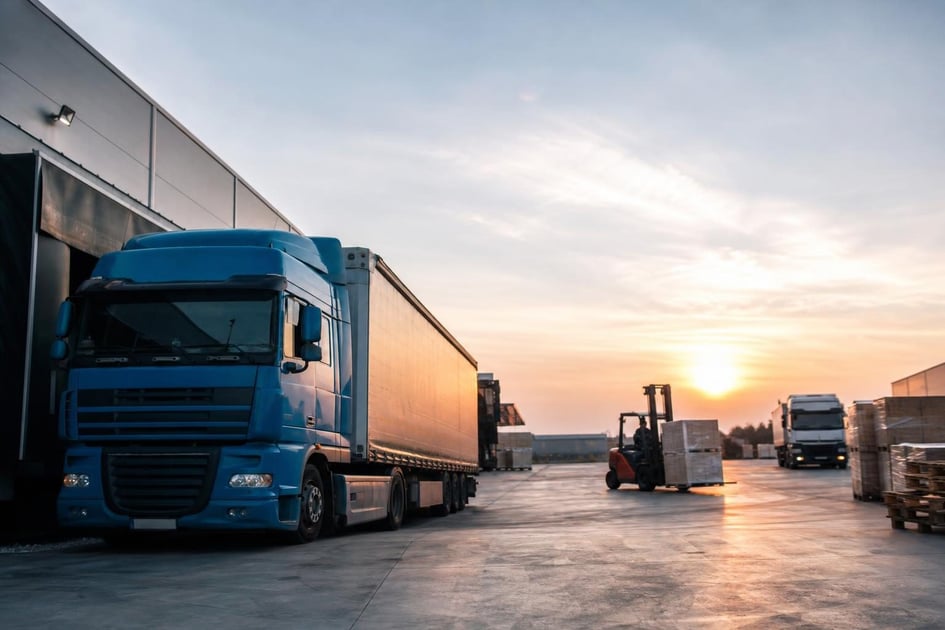
What Determines Transportation Equipment Financing Cost
Transportation equipment financing cost depends on the borrower's credit profile, the age and type of the equipment, the term length, and the size of the down payment. Rates vary by credit profile, equipment age and term length. A well-qualified buyer putting money down on a new tractor can expect the most competitive terms, while a first-time owner-operator financing a high-mileage used truck will pay more to offset the lender's risk. The equipment itself serves as collateral, which keeps rates competitive compared with unsecured borrowing. According to SBA success data, small trucking businesses continue to drive the majority of freight activity in the U.S.
Most lenders in the transportation space structure payments around the useful life of the asset. A Class 8 tractor might carry a term of 36 to 60 months, while a trailer or box truck could run 24 to 48 months. The general rule is straightforward: the newer the equipment and the stronger the borrower's financials, the lower the total cost of financing. Borrowers with two or more years in business, documented revenue, and a credit profile in the top tiers typically see the best available structures.
Down payment also moves the needle. While some programs offer 100 percent financing, putting 10 to 20 percent down improves the rate and reduces the total interest paid over the life of the agreement. It also creates equity immediately, which matters if the owner decides to upgrade before the term ends. Transportation equipment financing works best when the payment aligns with the revenue the asset generates.
If you are reviewing your options, see what you qualify for and compare structures side by side.
Key Insight: Lenders often reserve the best terms for equipment with less than 750,000 miles or ten model years. A truck that exceeds either threshold may still qualify, but the rate adjustment can add meaningful cost over a 60-month term. Always ask the dealer for the complete maintenance history before applying, because a clean record can offset age in the underwriter's model.
New vs. Used Equipment: How Age Affects Your Rate
New Trucks and Trailers
New equipment carries the lowest financing cost because the collateral value is predictable. Depreciation is steady, warranty coverage reduces unexpected repair risk, and resale value at the end of the term is easier to forecast. For a new semi-truck in the $150,000 to $200,000 range, lenders often structure deals with minimal down payment requirements and longer amortization because the asset backs the obligation so reliably.
The downside is the upfront acquisition cost and the steeper depreciation in the first two years. An owner-operator who trades frequently may find that the equity disappears faster than expected. Financing a new unit makes the most sense for operators with stable contracts and high annual mileage who will drive the truck well past the break-even point.
Used Equipment Considerations
Used trucks and trailers dominate the small carrier market for good reason. A three- to five-year-old Class 8 tractor can cost 30 to 50 percent less than a new one while still offering hundreds of thousands of miles of service life. The financing cost rises slightly to account for the concentrated depreciation and the higher probability of mechanical failure, but the lower principal often produces a smaller monthly obligation.
Financing used equipment requires more scrutiny. Lenders want to see inspection reports, maintenance logs, and sometimes a third-party appraisal. High-mileage units or those with prior fleet ownership may carry shorter maximum terms, which pushes the monthly payment higher even though the principal is lower. The sweet spot for many owner-operators is a unit between three and seven years old with documented preventive maintenance and no major component replacements pending.
Lease vs. Loan: A Side-by-Side Comparison
Choosing between a lease and a loan comes down to ownership intent, mileage predictability, and tax strategy. A loan builds equity and leaves no mileage restrictions. A lease typically offers a lower monthly outlay but may impose penalties for excess wear or early termination. The following table breaks down the practical differences.
| Factor | Equipment Loan | Equipment Lease |
|---|---|---|
| Ownership | You own the asset after the final payment | You return or purchase at lease end |
| Monthly payment | Higher, but builds equity | Lower, but no equity accumulation |
| Mileage limits | None | Often capped annually |
| Maintenance responsibility | Borrower pays all maintenance | Borrower pays, but some leases include coverage |
| Tax treatment | Interest deductible; depreciation over schedule | Lease payments generally fully deductible |
| Early payoff | Usually allowed, sometimes with a fee | Early termination penalties common |
| Best for | High-mileage operators planning to keep the unit long-term | Fleet owners rotating units every 3 to 4 years |
Many established fleets mix both structures. They finance core tractors that run predictable routes and lease specialty trailers or seasonal equipment. An owner-operator with a single truck usually benefits more from a loan because the mileage is uncapped and the equity becomes a tradable asset. Dump Trucks financing and similar heavy transport categories follow the same logic: if the unit will accumulate high hours or miles, ownership typically wins.
Pro Tip: If you are considering a lease, ask for the "penalty per mile" figure in writing before signing. On some heavy-haul leases, excess mileage charges can exceed $0.15 per mile. On a truck running 120,000 miles annually with a 100,000-mile cap, that is an extra $3,000 per year in penalties alone.
Tax Treatment and Deductions for 2026
The tax treatment of transportation equipment depends on whether you finance with a loan or a lease, and whether you elect to accelerate deductions. For the 2026 tax year, Section 179 allows businesses to deduct the full purchase price of qualifying equipment up to a statutory limit, subject to phase-outs once total equipment purchases exceed a certain threshold. The exact dollar limits for 2026 are set by the IRS and adjusted annually. Because these figures change and individual situations vary, consult a CPA to confirm the current-year limits and how they apply to your fleet.
Bonus depreciation is another tool. It permits a first-year deduction of a percentage of the equipment cost, with the remainder depreciated over the Modified Accelerated Cost Recovery System schedule. The applicable percentage for 2026 depends on legislative status at the time of purchase. Again, a qualified accountant should verify the current rate before you rely on it for cash-flow planning.
Lease payments are generally fully deductible as an operating expense, which simplifies record-keeping but does not provide the large front-loaded deduction that purchasing with a loan can offer. The right structure depends on your marginal tax rate, your expected income trajectory, and whether you need to reduce taxable income immediately or spread the benefit over several years.
By the Numbers: A $100,000 truck financed over 60 months might generate annual interest expense between $4,000 and $8,000 in the early years, depending on the rate structure. If the borrower qualifies for a first-year Section 179 or bonus depreciation election for 2026, the deduction can far exceed the interest cost, producing a net tax benefit in year one. Always model this with your CPA.
Qualification Criteria in Detail
Lenders evaluate transportation equipment deals across five dimensions: credit, time in business, revenue, equipment type, and down payment. No single factor is disqualifying on its own, but weak spots in one area usually require strength in another.
Credit profile. Most programs look for a personal credit score in the mid-600s or higher. Scores above 700 unlock the best tiers, while scores below 600 may require a larger down payment or a shorter term. Some lenders also review business credit, but for owner-operators with a single truck, personal credit often carries more weight.
Time in business. Two years or more is the standard benchmark. Borrowers with less time in business can still qualify if they have prior industry experience, but the rate and down payment requirements tighten. Lenders want evidence that the operator understands the revenue cycle of trucking or hauling.
Revenue. Monthly bank deposits or freight invoices should comfortably cover the proposed payment. A common guideline is that the equipment payment should not exceed 15 to 20 percent of gross monthly revenue. Lenders verify this with three to six months of bank statements or an operating authority history.
Equipment type and age. Standard over-the-road tractors and dry van trailers are the easiest to finance. Specialty equipment like refrigerated units, car haulers, or logging trucks may require additional collateral or a larger down payment because the resale market is narrower.
Down payment. Zero-down programs exist, but 10 to 20 percent is typical for used equipment and for borrowers with credit challenges. The down payment reduces the lender's exposure and demonstrates the borrower's capacity to save. Equipment financing structures and down payment requirements vary significantly by lender and borrower profile (Forbes equipment financing guide).
Industry-Specific Use Cases and Cost Examples
The U.S. Census Bureau tracks truck transportation under NAICS sector 48-49, covering general freight and specialized hauling operations nationwide (Census Bureau transportation data). Within that broad category, lenders segment deals by equipment type and use case.
Transportation is not a single market. The financing cost and structure for a long-haul tractor differ from those for a local dump truck or a utility bucket truck. Understanding how lenders view each segment helps you prepare the right application.
Long-haul trucking. A Class 8 sleeper tractor for interstate freight is the most commonly financed transportation asset. Lenders know the resale values, the auction channels, and the revenue potential. A used sleeper in the $80,000 to $130,000 range with reasonable miles can often be financed over 48 to 60 months. The payment typically aligns with a single weekly freight check.
Construction transport. Dump Trucks financing serves contractors and material haulers who need units rated for off-road use and heavy payloads. Because these trucks accumulate frame stress and bed wear faster than highway tractors, lenders may shorten the maximum term or require a larger down payment. A dump truck in the $75,000 to $150,000 range is common, and many borrowers pair the truck with a trailer.
Utility and telecom. Bucket Trucks financing appeals to contractors serving electrical and telecommunications infrastructure. These units are specialized, and the aerial component adds maintenance risk. Lenders like to see established contracts with municipal or utility clients because the revenue is predictable. Terms often run 36 to 48 months, and the down payment requirement may be slightly higher than for a standard highway tractor.
Regional delivery. Box trucks and cargo vans used in last-mile delivery represent a lower ticket size, often between $35,000 and $75,000. These units are easier to finance because the payment is modest and the used market is liquid. Fleet owners adding a fifth or sixth unit frequently use these deals to establish a borrowing track record for larger acquisitions later.
Common Mistakes Owner-Operators Make
Overlooking Total Cost of Ownership
The monthly payment is only one line item. Fuel, insurance, maintenance, permits, and licensing often exceed the financing cost. Diesel price volatility remains a major factor in transportation operating costs, directly affecting the total cost of ownership for financed equipment (Reuters diesel price analysis). A truck with a low monthly payment but poor fuel economy or a history of aftertreatment failures can cost more over five years than a newer unit with a higher payment. Run a full total-cost-of-ownership spreadsheet before deciding.
Stretching Term Length Too Far
Extending a loan to 72 or 84 months lowers the monthly payment but increases total interest and extends the period during which the borrower owes more than the equipment is worth. Negative equity traps owner-operators who need to trade early because of an engine failure or a lost contract. Stay within the useful life of the asset.
Ignoring Seasonal Cash Flow
Construction hauling and agricultural transport have pronounced seasonal swings. A payment that is comfortable in August may be impossible in February. Structure the deal with seasonality in mind. Some lenders offer skip-payment options or seasonal schedules that match revenue patterns.
What Documentation You Need
Preparation speeds approval. Most transportation equipment deals require the following:
- A completed application listing the business, ownership, and requested equipment
- Three to six months of business bank statements
- A current driver's license and, for commercial vehicles, a valid CDL
- Proof of operating authority (MC number) if applicable
- An equipment quote or purchase agreement from the seller
- Insurance binder showing the lender as loss payee
- Prior year business tax return for loans above $150,000
Having these documents ready before applying can mean the difference between a same-day decision and a week of back-and-forth. If the equipment is used, add the maintenance history and any inspection reports. For Bucket Trucks financing, the aerial inspection certificate is often required as well.
What Happens After Approval
Same-day approvals are possible when the file is complete and the equipment is standard. Once approved, the lender issues a commitment letter outlining the rate, term, payment, and any conditions. The borrower reviews and signs, and the lender coordinates directly with the seller to fund the deal. Funding usually occurs within one to three business days after all conditions are met.
The lender files a UCC-1 lien on the equipment, which is released when the final payment clears. Until then, the borrower owns and operates the asset subject to the loan agreement. Most lenders do not restrict where or how the truck is operated, provided it remains insured and properly registered.
If you have found a unit and want to move quickly, get a same-day decision on your equipment by submitting a complete file early in the week.
Frequently Asked Questions
Can I finance a truck with a salvage or rebuilt title?
Most lenders avoid salvage or rebuilt titles because the collateral value is uncertain and resale is difficult. A clean title is strongly preferred. If the only available unit has a branded title, expect a much larger down payment or a requirement for additional collateral.
Does the lender need to inspect the equipment before funding?
For loans under $100,000 on standard equipment, an inspection is usually not required if the buyer provides photos and a purchase agreement. For higher-dollar deals, specialty equipment, or private-party sales, the lender may require a third-party inspection at the borrower's expense.
Can I finance the sales tax and registration fees?
Some lenders allow soft costs such as tax, title, and delivery to be included in the financed amount up to a percentage of the equipment value. Others require these fees to be paid out of pocket at closing. Ask before you shop so you know how much cash to have on hand.
What happens if I need to sell the equipment before the loan is paid off?
The loan must be paid in full to release the lien. Many lenders offer a simple payoff quote process. If the sale price is less than the remaining balance, the borrower must cover the shortfall. This is why avoiding extended terms and negative equity matters.
Is a personal guarantee required?
For most owner-operators and small carriers, yes. The personal guarantee ties the borrower's individual credit and assets to the obligation. It is standard in equipment finance for deals under $1 million. Larger fleets with strong corporate credit may negotiate limited or waived guarantees.
Can I finance multiple trucks at once?
Yes. Fleet deals are common, and lenders often offer better terms for multiple units because the administrative cost per dollar lent is lower. A package of three to five tractors may qualify for a volume discount or reduced documentation on the subsequent units.
Will financing a truck help my business credit?
Yes, provided the lender reports to business credit bureaus and payments are made on time. Equipment finance is a strong credit-builder because it demonstrates the business's ability to manage a term obligation secured by a revenue-producing asset.
How does a previous bankruptcy affect my application?
A discharged bankruptcy is not an automatic denial, especially if it occurred more than two years ago and the borrower has re-established credit. Expect to provide a larger down payment and to document the circumstances of the filing. Open or recent bankruptcies are generally disqualifying.
Final Steps to Move Forward
Transportation equipment financing cost is driven by credit, collateral, and term. The best way to control it is to buy equipment that matches your revenue, put money down when possible, and choose a term that does not outlast the asset's productive life. Used equipment can be a smart way to lower the monthly obligation, but only if the maintenance history supports the price.
Before you sign, compare the total cost of a loan versus a lease, model the tax impact for the 2026 tax year with your CPA, and gather your documentation so the approval process moves fast. The transportation sector runs on thin margins and tight timelines; your financing should match that reality.
Ready to add a unit to your fleet? Talk to a specialist about your specific machine and get a decision that keeps your trucks moving.
Disclaimer: The information provided in this article is for general educational purposes only and is not financial, legal, or tax advice. Funding terms, qualifications, and product availability may vary and are subject to change without notice. Provide Capital does not guarantee approval, rates, or specific outcomes. For personalized information about your business funding options, contact our team directly.
