
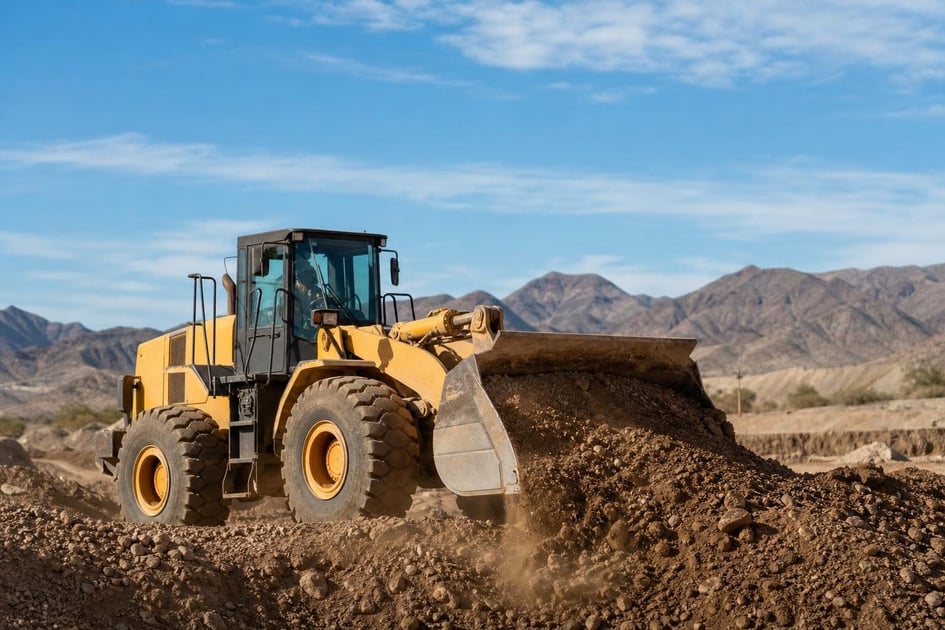
Wheel Loaders Financing in Arizona: What Contractors Need to Know
If you run a construction, landscaping, mining, or materials-handling business in Arizona and need a wheel loader, financing is available from $5,000 up to $5 million through equipment lenders who use the machine itself as collateral. That collateral structure keeps rates competitive compared with unsecured borrowing, and approvals can come the same day if your documentation is in order. Whether you need Wheel Loaders financing for a compact unit in Scottsdale or a 3-cubic-yard production machine for a Phoenix civil site, the process is straightforward for established businesses with consistent revenue. You can see what you qualify for on a wheel loader in minutes by starting an application through our online portal.
Get a fast decision on your equipment
Applying takes just a few minutes, and decisions can come as soon as the same day.
Start Your ApplicationWhy Arizona Contractors Are Financing Wheel Loaders Now
The Phoenix-Tucson Growth Corridor
Arizona continues to rank among the fastest-growing states in the country. According to census data, Maricopa and Pinal counties have seen sustained population inflows that translate directly into dirt-moving demand. Associated Press reporting on infrastructure spending indicates that federal highway and bridge commitments continue to flow into southwestern states, extending the project pipeline for Arizona dirt contractors. Highway expansions along Interstate 10, residential subdivisions in Queen Creek, and commercial pad sites in Tucson all require wheel loaders for site prep, stockpile management, and load-and-carry work. Unlike excavators that specialize in digging, wheel loaders move material efficiently across relatively flat desert terrain, making them indispensable on southwestern job sites. Many contractors pair their loader financing with Construction equipment financing for backhoes and dozers to keep mobilization costs predictable and avoid drawing down operating lines.
Seasonal Buying Patterns
Arizona's construction cycle is not uniform. From June through August, daytime temperatures above 110 degrees slow earthwork activity in many desert markets. Smart buyers shop for equipment in late summer when dealers are looking to move inventory ahead of the busy fall and winter season. Financing a wheel loader in August or September means the machine is ready when temperatures drop and municipalities release their fiscal-year paving and infrastructure budgets in October. Because approvals can be turned around quickly, you do not need to park cash months in advance. Get a decision on your equipment, possibly the same day, so you can lock in off-season pricing before the October rush.
New vs. Used Wheel Loaders: What Financing Covers
Most lenders treat new and used wheel loaders differently. New machines from Caterpillar, Komatsu, John Deere, or Case carry full manufacturer warranties, predictable maintenance schedules, and longer financing terms—often up to 60 or 72 months. Used machines cost less upfront but come with wear accumulated in Arizona's abrasive dust and high heat.
| Factor | New Wheel Loaders | Used Wheel Loaders |
|---|---|---|
| Typical financing term | 48–72 months | 36–60 months |
| Down payment | 0–10% | 10–20% |
| Collateral | The loader | The loader |
| Warranty | Full manufacturer | Limited or expired |
| Ideal for | High-utilization fleets | Cost-conscious operators |
Hour Limits and Condition Standards
For used equipment, lenders usually want to see machines with fewer than 10,000 operating hours at the time of purchase. Arizona's dry climate is easier on frames than the Midwest's road salt, but fine dust infiltration can punish engines, axles, and hydraulics. A used loader with clean, documented service records and under 7,000 hours is often viewed as prime collateral. If the machine is over 10 years old, expect a shorter term and possibly a larger down payment. The equipment itself is still the collateral, which keeps the approval process focused on the asset value and your business cash flow rather than real estate or other guarantees. If you are also considering a backhoe for utility trenches, Backhoe Loader financing follows similar hour and age guidelines.
Key Insight: Lenders in the Southwest watch hydraulic cylinder condition closely because Arizona's fine dust works past worn seals faster than in humid climates. A loader that looks clean cosmetically can still carry hidden maintenance costs if the hydraulics are contaminated. Always request an oil analysis before submitting a used equipment quote for financing.
Lease vs. Loan: Which Structure Fits Arizona Jobs?
Equipment loans and leases both preserve cash, but they treat ownership and tax deductions differently. A traditional equipment loan puts the title in your business name from day one. You claim depreciation and any available Section 179 deduction, and once the final payment clears, the lender releases its lien. A $1 buyout lease functions almost identically to a loan for tax purposes. A fair market value (FMV) lease, on the other hand, treats the machine as a rental; you make lower monthly payments and return or purchase the loader at the end.
| Structure | Monthly payment | Ownership | Tax treatment | Best for |
|---|---|---|---|---|
| Equipment loan | Moderate | You own it | Depreciation + Section 179 | Long-term fleet assets |
| $1 buyout lease | Moderate to high | You own it after final $1 | Same as loan | Borrowers who prefer lease accounting |
| FMV lease | Lower | Return or buy at FMV | Deduct payments as expense | Short-term contracts, technology refresh |
When a Loan Makes Sense
If you plan to run the loader for five years or more on recurring municipal, mining, or agricultural contracts, a loan or $1 buyout lease is usually the better choice. You build equity in the asset, and the machine can be traded in later toward a new unit. Loans also accommodate larger amounts—up to the $5 million ceiling—without the residual-value restrictions that sometimes come with FMV structures. Because the equipment is the collateral, lenders can offer longer amortizations than unsecured term debt, keeping monthly payments manageable even on six-figure machines.
When a Lease Makes Sense
An FMV lease works well if you are bidding a two-year airport expansion in Mesa or a resort renovation in Paradise Valley and are not certain the workload will continue after contract completion. The lower monthly payment preserves cash for labor, fuel, and insurance, and you can walk away at the end if the machine is no longer needed. Just be aware that FMV leases usually restrict hours per year; exceeding them triggers per-hour penalties that can erase the monthly savings.
Pro Tip: If you are financing a loader for a specific Arizona Department of Transportation project, match your lease term to the contract length plus a three-month buffer. That alignment prevents you from paying for a machine that sits idle once the paving crew moves to the next county.
See what you qualify for
The equipment itself secures the financing, which keeps rates competitive. Checking your options takes minutes.
Check Your OptionsQualifying for Wheel Loader Financing
Credit Profile
You do not need perfect credit, but a score north of 650 puts you in the most competitive tier. Below that, approvals are still possible—especially if the loader is newer and your business shows consistent deposits—but the rate will reflect the additional risk. Rates vary by credit profile, equipment age, and term length. Because the loader secures the transaction, lenders are often more flexible than banks offering unsecured credit lines. For businesses exploring government-backed options, the SBA 7(a) loan program covers machinery purchases, though dedicated equipment lenders typically move faster and also use the asset itself as collateral.
Time in Business
Most equipment lenders prefer two years of operating history. That said, if you have strong personal credit, a detailed equipment quote, and a signed contract in hand, some programs will consider businesses with as little as one year. The key is demonstrating that the new payment fits inside existing cash flow without straining payroll or fuel budgets.
Equipment Age and Specs
Lenders generally cap used equipment age at 10 to 15 years at the end of the financing term. A 2018 loader on a 48-month note is fine; a 2010 loader on the same term may not be. Bucket size, auxiliary hydraulics, quick-coupler options, and ride control matter less to the underwriter than overall condition and hour count, but they do affect resale value if the lender ever needs to remarket the machine. High-lift configurations and log grapples can narrow the resale pool, which sometimes prompts a slightly larger down payment.
By the Numbers: A contractor financing a $120,000 used wheel loader with 4,000 hours on a 48-month term might see a monthly payment in the low $2,000s, depending on credit and structure. A $350,000 new loader on a 60-month loan could run in the mid-$6,000s. These ranges shift with credit tier, down payment, and whether you wrap in sales tax and delivery.
Tax Treatment for 2026
For tax year 2026, Section 179 allows businesses to deduct qualifying equipment purchases up to an inflation-adjusted annual limit. The exact ceiling and phase-out threshold change each year, so speak with your CPA before counting on a specific first-year deduction. Bonus depreciation continues its scheduled step-down under current law, meaning 2026 offers a smaller upfront percentage than prior years. Again, your CPA can confirm the precise rate available for equipment placed in service this year and whether your taxable income supports the deduction.
Because the equipment itself is the collateral and the loan or lease payments represent ordinary business expenses, the after-tax cost of financing is often lower than the sticker price suggests. A Forbes Finance Council analysis notes that optimizing cash flow through equipment financing remains a top priority for business owners purchasing machinery.
Documentation You'll Need
To keep approvals moving, gather these items before applying:
- Driver's license or government-issued ID
- Business bank statements for the last three to four months
- Equipment quote or invoice from the dealer or private seller
- Business tax returns for the prior one to two years (sometimes required for larger requests)
- Voided business check for ACH setup
If you are buying from a private party rather than a dealer, the lender may also require a third-party appraisal or an equipment inspection report. The seller must provide a clear title; any existing lien must be paid off at closing. Having these documents ready is what separates same-day approvals from multi-day delays.
Common Mistakes Arizona Buyers Make
Buying Too Old for the Climate
Arizona heat cycles rubber hoses, seals, and radiators faster than owners from cooler climates expect. A loader that worked fine in Michigan may need thousands in cooling-system work after its first Arizona summer. Factor climate-specific maintenance into your total cost of ownership, not just the financed amount.
Ignoring Transport Costs
If you are shopping online for a used loader in Texas or California, remember that heavy-haul transport to Phoenix or Tucson can add several thousand dollars. Some lenders allow you to wrap delivery into the financing; others require it to be paid upfront. Ask before you sign the purchase agreement.
Waiting Too Long Into Busy Season
October through April is peak demand in Arizona. Prices rise and selection shrinks. If you wait until January to finance a loader, you may pay a premium and face longer lead times on delivery. Financing in the late summer window gives you negotiating leverage.
What Happens After Approval
Once approved, the lender issues a purchase order or funds the invoice directly. You do not receive a lump sum in your account; the vendor gets paid, and you take delivery. First payments are usually due 30 to 45 days after funding, giving you time to put the machine to work before the initial payment hits. If you are adding the loader to an existing fleet that includes Dump Trucks financing, you may be able to bundle multiple units under a master equipment line for simpler bookkeeping and a single monthly payment.
Same-day approvals are most common when the equipment is clearly identified, the seller has a verifiable commercial address, and your bank statements show consistent revenue. Delays usually come from missing paperwork or title issues on used private-party sales, not from credit decisions.
Key Insight: Same-day approvals are possible when the equipment is clearly identified, the seller has a verifiable commercial address, and your bank statements show consistent revenue. Delays usually come from missing paperwork or title issues on used private-party sales, not from credit decisions.
Ready to move forward?
More than 10,000 businesses have financed equipment with Provide Capital. See what you qualify for today.
Get StartedFAQ
What credit score do I need to finance a wheel loader in Arizona?
Most competitive programs look for a 650 or higher, but there is no universal cutoff. Because the loader serves as collateral, lenders can approve lower scores when cash flow is strong. Rates vary by credit profile, equipment age, and term.
Can I finance a wheel loader with over 10,000 hours?
Yes, but terms may be shorter and the down payment larger. Under 10,000 hours is the sweet spot. Under 5,000 hours with documented maintenance is even better.
How long can I finance a used wheel loader?
Terms typically range from 24 to 60 months for used equipment. New loaders can stretch to 72 months. The exact term depends on the machine's age, your credit, and the lender's policy.
Is the wheel loader itself the collateral?
Yes. In almost every case, the equipment secures the financing. That structure is why lenders can offer competitive rates without requiring real estate or other assets as backup.
Can I finance a wheel loader from a private seller?
Yes. Private-party sales require a clear title and sometimes an inspection. The lender pays the seller directly after lien verification.
What is the difference between a wheel loader and a skid steer?
A wheel loader has a single articulated bucket on the front and is built for moving large volumes of material over distances. A skid steer is smaller, turns by skidding its wheels, and excels in tight spaces. Many Arizona contractors finance both; Skid Steer Loader financing is available for the tighter-access jobs.
How fast can I get approved?
Same-day approvals are possible when your documents are complete. Most decisions arrive within one to two business days.
Do you finance wheel loaders for agriculture use?
Yes. Wheel loaders are common in Arizona agriculture for moving feed, compost, and palletized produce. The same collateral-based structure applies regardless of whether the machine works on a construction site or a farm in Yuma.
Ready to Add a Wheel Loader to Your Fleet?
Arizona's growth trajectory means demand for earthmoving equipment will stay elevated through the next several years. Whether you need a compact loader for landscaping or a production machine for heavy civil work, financing from $5,000 to $5 million is available with the equipment itself as collateral. Gather your quote and your last three bank statements, then start an application in a few minutes to see what terms you qualify for on your next machine.
Disclaimer: The information provided in this article is for general educational purposes only and is not financial, legal, or tax advice. Funding terms, qualifications, and product availability may vary and are subject to change without notice. Provide Capital does not guarantee approval, rates, or specific outcomes. For personalized information about your business funding options, contact our team directly.
