
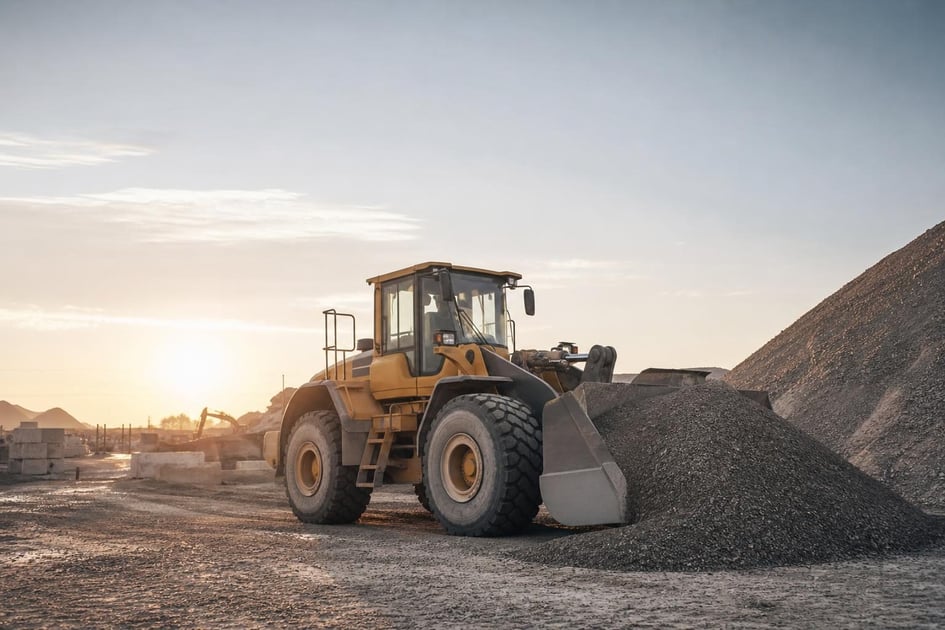
How Much Will a Wheel Loader Cost to Finance?
A used compact wheel loader with 5,000 hours can run $45,000 to $75,000, while a new mid-size loader often lands between $180,000 and $350,000 depending on bucket size, transmission, and attachments. If you are trying to budget a monthly payment before talking to a salesperson, a wheel loaders financing calculator is a useful starting point. It will not give you a binding quote, but it will show how term length, equipment age, and down payment change what you owe each month.
At Provide Capital, we finance new and used wheel loaders from $5,000 up to $5 million. The equipment itself serves as collateral, which means you do not need to pledge real estate or inventory to secure the deal. Because the lender can recover value in the machine if necessary, rates stay competitive for borrowers across the credit spectrum. If you already have a machine picked out, run your numbers and see what financing you qualify for on that loader.
Most owner-operators and construction firms use financing to preserve working capital. Paying cash for a $200,000 loader can tie up funds you need for payroll, fuel, and materials on the next job. Spreading the cost over 36 to 60 months keeps cash flow predictable and lets the machine generate revenue while you pay it down.
By the Numbers: A $150,000 wheel loader financed over 48 months with a standard down payment can carry a monthly cost roughly equivalent to hiring one additional laborer for a 40-hour week. Many contractors find the machine replaces overtime hours or temp labor, making the payment cash-flow neutral within the first quarter.
Get a fast decision on your equipment
Applying takes just a few minutes, and decisions can come as soon as the same day.
Start Your ApplicationNew vs. Used Wheel Loaders: How Age Affects Financing
Lenders price risk partly based on the collateral's remaining useful life. A new wheel loader with a full warranty and 10-plus years of expected service commands better terms than a 15-year-old unit with 8,000 hours. That does not mean used equipment is hard to finance; it simply means the structure changes.
New loaders often qualify for longer terms—up to 60 or occasionally 72 months—because the collateral value stays high throughout the loan. Lenders are comfortable letting you stretch payments when the asset is unlikely to need major overhaul before the note is retired. Used machines, especially those over seven years old or with high hours, may max out at 36 or 48 months. The shorter term raises the monthly payment, but it also means you build equity faster and pay less total interest.
Depreciation is another factor. A new loader loses 15% to 25% of its value in the first year. If you plan to trade or sell within three years, that depreciation can leave you underwater unless you made a substantial down payment. A used loader has already absorbed the steepest depreciation, so resale value stays flatter during the financing term. For fleet owners who upgrade frequently, used equipment can be the safer balance-sheet choice even if the rate is slightly higher.
When you are comparing a new machine against a late-model used one, do not look at the sticker price alone. Factor in the warranty coverage, expected maintenance cost per operating hour, and the term length each unit qualifies for. A $120,000 used loader at 36 months can have a higher monthly payment than a $180,000 new loader at 60 months, even though the total outlay is lower. Your Wheel Loaders financing specialist can model both scenarios so you pick the structure that fits your cash flow, not just the machine you prefer.
Lease vs. Loan: What the Calculator Hides
A financing calculator shows principal and interest, but it does not always reveal the structural differences between a loan and a lease. If you plan to keep the loader for its full useful life, an equipment loan usually makes more sense. You build equity with every payment, and at the end you own an asset with residual value. If you expect to upgrade every three to four years or you need the lowest possible monthly outlay, a lease may be worth exploring.
With a $1 buyout lease, you make payments and then purchase the machine for $1 at the end. For tax purposes, the IRS generally treats this as a loan, which means you can still claim depreciation and Section 179 deductions. A true operating lease—sometimes called a fair-market-value lease—gives lower payments but requires you to return the equipment or buy it at fair market value when the term ends. Operating leases can keep the liability off your balance sheet, though recent accounting rule changes have made that benefit less automatic for small businesses.
| Factor | Equipment Loan | $1 Buyout Lease | Fair-Market-Value Lease |
|---|---|---|---|
| Ownership at end | You own the loader | You own the loader for $1 | Return or buy at FMV |
| Monthly payment | Moderate | Moderate | Lowest |
| Depreciation/Section 179 | Typically eligible | Typically eligible | Usually claimed by lessor |
| Ideal for | Long-term ownership | Eventual ownership with fixed cost | Short-term use or fleet rotation |
| Balance-sheet treatment | Asset and liability | Asset and liability | May differ; consult your CPA |
| End-of-term flexibility | None needed; you own it | None needed; you own it | Must negotiate return or purchase |
The right structure depends on your tax situation, your forecasted equipment usage, and how long you intend to keep the machine. Rates vary by credit profile, equipment age, and term, so the cheapest monthly payment on paper is not always the cheapest overall cost. Get a decision on your equipment, possibly the same day, and compare loan versus lease side by side.
Key Insight: Many contractors assume a lease always offers better tax treatment, but for tax year 2026 a loan or $1 buyout lease often delivers identical first-year deductions under Section 179. The difference usually lies in who holds title during the term, not in what you can write off. Always confirm the structure with your CPA before signing.
How Lenders Set Rates and Terms on Heavy Equipment
When you enter numbers into a wheel loaders financing calculator, you are usually adjusting three variables: equipment cost, down payment, and term length. Behind the scenes, lenders are weighing your time in business, personal and business credit, the equipment's age and hours, and whether you are buying from a dealer or a private party.
Preparation matters. Forbes guidance on equipment financing emphasizes that organized paperwork and clear equipment specs are among the most effective ways to shorten approval timelines. Established businesses with two or more years of revenue history and strong bank balances generally see the most favorable structures. That does not mean newer companies are shut out. If your credit is solid and the equipment is late-model, lenders can still approve the deal; they may simply require a larger down payment or a shorter term to offset the limited operating history. The same logic applies to credit challenges. A lower personal credit score raises the rate or shortens the term, but because the wheel loader is the collateral, the deal can still pencil out where an unsecured loan would not.
Dealer purchases are easier to finance than private-party sales because dealers provide clear title, inspection reports, and sometimes warranties. Private-party transactions require extra due diligence: verifying serial numbers, checking for liens, and confirming maintenance records. If you do buy from an individual, expect the lender to request an independent appraisal or an equipment inspection before funding.
Provide Capital serves Construction equipment financing clients nationwide, from residential excavators to heavy highway contractors. The same underwriting team that handles wheel loaders also structures deals for Skid Steer Loader financing, excavators, and dump trucks, so we understand how a loader fits into a mixed fleet.
Tax Treatment for Wheel Loaders in 2026
Tax strategy is one of the biggest reasons contractors choose to finance rather than pay cash. Under Section 179 of the Internal Revenue Code, businesses that purchase qualifying equipment may be able to deduct the full cost in the year the equipment is placed in service, subject to annual limits. For tax year 2026, the specific dollar caps and phase-out thresholds have been adjusted for inflation. Because these numbers change annually and because your eligibility depends on total equipment purchases and taxable income, you should verify the exact 2026 limits with your CPA before you rely on them for a purchasing decision.
Bonus depreciation is another consideration. Depending on the current legislation and IRS guidance for 2026, you may be able to take additional first-year depreciation on qualified new and used property. The percentage and eligibility rules have shifted in recent years, so what applied in 2024 or 2025 may not apply in 2026. Again, a CPA who knows your entity structure and income forecast is the right source for the exact figure.
One detail that catches some buyers off guard: if you finance the loader, you can generally still claim Section 179 or bonus depreciation even though you have not paid the full purchase price in cash. The IRS allows the deduction when you place the equipment in service and become legally obligated to pay, which is usually the closing date on your financing agreement. Your CPA can confirm that the structure you choose—loan versus lease—preserves this benefit.
Pro Tip: If you are buying in November or December, confirm the exact date the lender will fund and the dealer will deliver. A delay that pushes delivery into January can shift your entire deduction into the next tax year. For tax year 2026, you need the wheel loader placed in service by December 31, 2026, to claim the write-off on this year's return.
See what you qualify for
The equipment itself secures the financing, which keeps rates competitive. Checking your options takes minutes.
Check Your OptionsQualification Criteria: What Underwriters Actually Review
Many financing calculators ask only for the equipment cost and your estimated credit tier. Real underwriting goes deeper. Here is what most equipment lenders review when you apply for wheel loader financing.
Time in Business
Two years or more is the standard threshold for the best terms. Businesses younger than two years can still qualify, especially if the owner has strong personal credit and relevant industry experience. Startups with no track record and no comparable equipment ownership history face tighter scrutiny, and the down payment requirement typically rises.
Credit Profile
Lenders look at both personal and business credit. A personal FICO score in the mid-600s or higher opens the door to competitive structures. Scores below that do not trigger automatic denial, but they usually mean a shorter term, a larger down payment, or a slightly higher rate. Recent bankruptcies, open tax liens, or judgments within the past three years are bigger red flags than a low score alone.
Revenue and Bank Balances
Most lenders want to see that your business generates enough revenue to cover the new payment. They may review three to six months of bank statements to verify cash flow. Consistent deposits matter more than top-line revenue; a business that deposits $40,000 every month is less risky than one that deposits $100,000 in one month and nothing for two.
Equipment Condition and Source
The underwriter will verify the serial number, year, make, model, and hours. High-hour machines or units older than ten years may require a larger down payment or a shorter amortization. Salvage-title equipment or machines with unrepaired damage are usually ineligible.
Down Payment
While zero-down programs exist for strong credits and new equipment, most used wheel loader deals require 5% to 20% down. The down payment protects the lender against initial depreciation and demonstrates your commitment to the asset.
Documentation You Will Need
Having paperwork ready before you apply can shave days off the process. Some owners first ask about government-backed programs; the SBA microloan program works through nonprofit intermediaries and is generally capped below the cost of a mid-size loader, which is why most buyers go straight to an equipment lender. For a wheel loader purchase, gather the following:
- A signed equipment quote or purchase agreement showing the seller, price, serial number, and condition
- Three to six months of business bank statements
- One to two years of business tax returns (if your business has been operating that long)
- A current personal financial statement or personal tax return, especially if you are a guarantor
- Proof of insurance covering the equipment, usually with the lender listed as loss payee
If you are buying from a private party, also obtain a clear title search and a recent equipment inspection report. Dealers typically handle title verification themselves, but private sellers may not know whether a prior loan was fully released. A $30 title check can prevent a $150,000 headache.
At Provide Capital, same-day approvals are possible when the file is complete and the equipment is standard collateral. Delays usually come from missing insurance binders, incomplete purchase agreements, or title issues—not from the credit decision itself.
Common Mistakes Buyers Make
Even experienced contractors misstep when financing equipment. Avoid these recurring errors:
- Overlooking total cost of ownership. A low monthly payment stretched over 72 months can cost more in interest than a higher payment over 48 months. Run the full amortization before you sign.
- Buying too much machine. A 4-yard loader on a residential site is overkill. Match the bucket size and lift capacity to your typical job, not your largest theoretical project.
- Skipping the inspection. On used equipment, hydraulic leaks, frame cracks, and transmission wear can cost more than the machine itself. Spend the money on a certified inspection.
- Financing soft costs incorrectly. Attachments, freight, and installation can sometimes be rolled into the loan, but some lenders cap the percentage of soft costs relative to the equipment price. Clarify this upfront.
- Ignoring seasonality. Construction firms in cold climates often see lower winter revenue. Structure your first payment or seasonally adjusted payments to match your cash-flow cycle.
Key Insight: A wheel loader with a repowered or swapped engine may look like a bargain at $20,000 below market, but many lenders will not finance it without a detailed mechanic's report and sometimes an extended warranty. The discount evaporates if you have to pay cash because no lender will collateralize a machine with non-factory powertrain work.
Industry-Specific Use Cases
Wheel loaders are not just for general construction, though latest Census Bureau construction spending data shows continued investment in infrastructure and commercial development that keeps loaders busy year-round. In agriculture, they handle feed, manure, and bale moving. In forestry, they sort logs and load trucks. In snow removal, a quick-attach bucket swap turns a loader into a season-saving revenue tool. The financing structure can adapt to these seasonal patterns.
Agricultural buyers often want balloon payments or seasonal skip periods that align with harvest cash flow. Snow-removal contractors may want a 12-month term with heavy winter payments and a light summer tail. Not every lender accommodates these schedules, but equipment-specific financiers understand that a loader's revenue is not always linear. When you apply, describe your revenue pattern so the term can be tailored to the work, not just the equipment.
Put the right equipment to work
From $5,000 to $5 million, new or used, Provide Capital helps businesses nationwide finance the equipment they need.
Apply TodayFrequently Asked Questions
Can I finance a wheel loader with no money down?
Zero-down financing is available for qualified borrowers purchasing new or near-new equipment. If your credit is strong and your business shows consistent revenue, you may be able to finance 100% of the machine cost. Used equipment and borrowers with credit challenges usually require 5% to 20% down.
Does financing a wheel loader require a personal guarantee?
Most equipment loans for privately held businesses require a personal guarantee from the owner. Because the lender can repossess and resell the loader, the personal guarantee is a secondary layer of protection rather than the primary security. Corporations with strong standalone credit and multiple years of profitable history may occasionally qualify without one.
How fast can I get approved?
With a complete application and equipment quote, same-day approvals are possible. The speed depends on how quickly you provide bank statements, tax returns, and insurance. Complex deals—private-party sales, high-hour machines, or borrowers with credit events—may take 24 to 48 hours.
Will the lender inspect the equipment before funding?
For dealer purchases of standard new or late-model used loaders, an inspection is usually not required. Private-party sales and machines with high hours or visible wear may trigger an independent appraisal. The cost is typically a few hundred dollars and can be rolled into the loan.
Can I include attachments in the financing?
Yes. Forks, buckets, snow pushers, and grapples can often be included in the same financing package. Some lenders limit soft costs to a percentage of the hard equipment cost—usually 10% to 25%—so confirm the limit before you finalize your attachment list.
What happens if I want to pay off the loan early?
Most equipment loans allow early payoff, but the penalty structure varies. Some loans use a simple interest structure with no prepayment penalty. Others charge a small fee or require you to pay a portion of the remaining interest. Read the prepayment language before you sign, and ask your financing representative to model the savings of an early payoff.
Can I finance a wheel loader from a private seller?
Yes, but the process involves extra steps. The lender must verify clear title, confirm the serial number, and often order an inspection. Sellers must cooperate with lien releases and title transfers. Allow a few extra days for funding compared with a dealer purchase.
Is a wheel loader different from a backhoe loader for financing purposes?
The underwriting process is similar, but backhoe loaders sometimes carry slightly different collateral valuations because they serve dual purposes. If you are also considering a backhoe, read our guide to Backhoe Loader financing to compare terms.
Your Next Step
A wheel loaders financing calculator gives you a starting point, but the real numbers depend on your credit profile, the machine's age and hours, and how long you want to pay. The fastest way to move from estimate to actionable quote is to apply with your equipment information in hand.
Whether you are adding a compact loader to a landscaping fleet or buying a 4-yard machine for a busy quarry, Provide Capital structures deals from $5,000 to $5 million with the equipment itself as collateral. Start an application in a few minutes and get a decision on your wheel loader, possibly the same day. There is no obligation, and you will know exactly what to expect before you talk to the dealer.
Disclaimer: The information provided in this article is for general educational purposes only and is not financial, legal, or tax advice. Funding terms, qualifications, and product availability may vary and are subject to change without notice. Provide Capital does not guarantee approval, rates, or specific outcomes. For personalized information about your business funding options, contact our team directly.
