
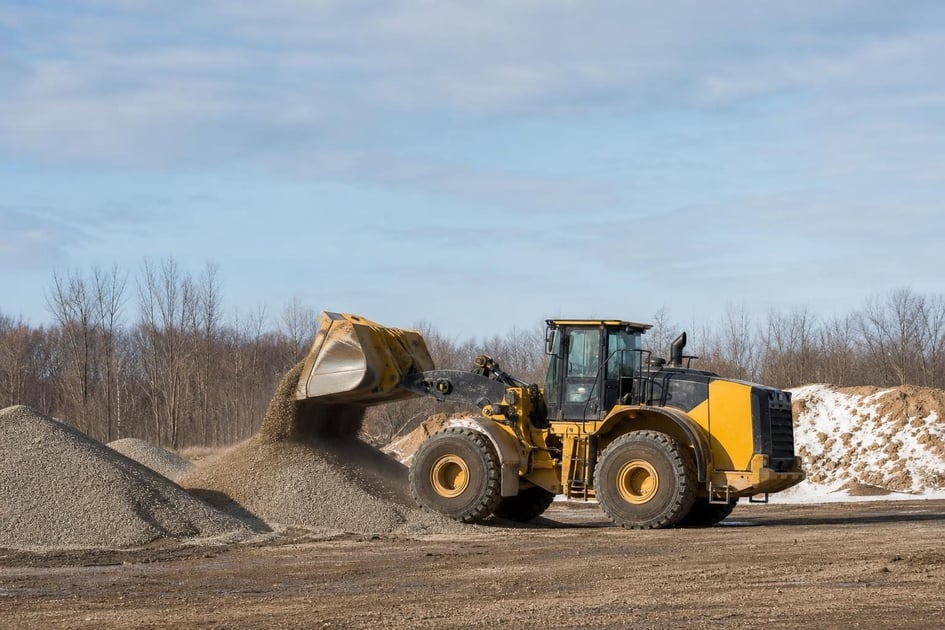
Michigan contractors and business owners looking for Wheel Loaders financing face a financing landscape shaped by tight seasonal windows, diverse terrain demands, and the pressure to keep crews working through the state’s compressed construction season. Whether you are replacing a worn 2-yard loader in Grand Rapids or adding a 4-yard machine for a new Detroit-area municipal contract, the equipment itself secures the loan, which keeps financing accessible even when cash reserves are thin after a slow winter.
Same-day approvals are possible at Provide Capital, and financing covers new and used wheel loaders from $5,000 up to $5 million. Rates vary by credit profile, equipment age and term. If you are staring at a purchase decision before spring breakup, see what financing you qualify for on that wheel loader without committing hours to paperwork.
Why Michigan Contractors Finance Wheel Loaders Instead of Paying Cash
Michigan’s construction season runs roughly April through November above the frost line, a reality confirmed by Bureau of Labor Statistics data showing heavy construction employment concentrated in the warmer months. That leaves six to seven months of billable work to cover twelve months of overhead, loan payments, and payroll. Tying up $80,000 to $300,000 in a single wheel loader purchase in March can leave a contractor short on the working capital needed to staff up and buy materials when the ground thaws.
Equipment financing spreads that cost across 24 to 72 months, preserving cash flow for payroll, fuel, and the inevitable weather delays that compress schedules in the Upper Peninsula and northern Lower Michigan. Because the loader serves as collateral, lenders can structure deals with competitive rates and without requiring additional real estate or blanket liens on every business asset.
Used wheel loaders hold value well in Michigan, especially machines between three and seven years old that have already absorbed their steepest depreciation but still have strong hydraulics and engine hours below 6,000. Financing a used unit keeps the monthly obligation lower while delivering the bucket capacity and breakout force needed for roadwork, site prep, and material handling. Get a decision on your equipment, possibly the same day, so you can bid jobs with confidence.
Already have a machine in mind?
Provide Capital finances new and used equipment from $5,000 to $5 million, with same-day decisions possible.
Apply NowHow Wheel Loader Financing Works at Provide Capital
The process centers on the equipment, not an exhaustive audit of every business asset. Applicants submit basic business information, equipment details, and the purchase invoice or quote. Underwriters review credit history, time in business, and the collateral value of the specific loader. For established contractors with solid credit, approvals can come back within hours.
Loan terms generally range from 24 to 72 months, depending on the equipment age and the borrower’s preference for monthly payment size. New loaders may qualify for longer terms because of higher collateral value and longer expected useful life. Used machines, especially those over ten years old, may see slightly shorter amortization or require a modest down payment to align the loan balance with collateral value.
Provide Capital finances wheel loaders for Construction equipment financing clients across Michigan, from asphalt producers in Flint to site contractors in Traverse City. The equipment itself is the collateral, which simplifies documentation and keeps the process moving.
Key Insight: Michigan lenders and underwriters often discount equipment values more aggressively in November and December than in March or April, because they know winter storage and seasonal downtime can hide deferred maintenance. A loader financed in late fall may require a more recent inspection or service records to justify the same advance rate as an identical machine financed in spring.
New vs. Used Wheel Loaders: What Michigan Buyers Should Consider
The choice between new and used depends on application intensity, warranty appetite, and whether the machine will work in corrosive environments like road salting or aggregate washing.
New Wheel Loaders
New machines offer full manufacturer warranties, telematics integration, and emissions compliance through Tier 4 Final or Stage V engines. For contractors working near urban centers with air-quality mandates, new equipment avoids the operational restrictions that can affect older diesels. New loaders also command stronger collateral value, which can improve loan terms and reduce the down payment requirement.
The downside is depreciation. A new loader can lose 20 to 30 percent of its value in the first 12 to 18 months. For a contractor planning to trade or upgrade within three years, that depreciation hits equity hard.
Used Wheel Loaders
Used loaders, particularly those in the three-to-eight-year range, offer the best balance of price and remaining life. A 2019 or 2020 model with 3,000 to 5,000 hours often sells for 40 to 55 percent less than a new equivalent but retains 60 to 70 percent of its productive capacity. For dirt work, snow removal, and material stockpiling, a well-maintained used loader is often indistinguishable from a new one in output.
The risk lies in maintenance history. Michigan’s freeze-thaw cycles and road salt accelerate corrosion on frames, buckets, and hydraulic lines. A used loader that spent its life in an indoor aggregate plant is a different asset than one that pushed snow on I-75 for five winters. Buyers should demand oil analysis, hour-meter verification, and a cylinder leak-down test before financing a used machine.
Pro Tip: When evaluating a used wheel loader in Michigan, check the bucket pin bores and lift-arm pivot points for ovaling. Road salt and wet aggregate accelerate wear in these areas, and re-bushing a loader can cost $4,000 to $8,000—an expense that should adjust your offer price before financing is structured.
Lease vs. Loan: Matching Structure to Michigan Seasonality
Contractors often assume a loan is the only path to equipment ownership, but leasing structures can align better with seasonal cash flow or short-term project demands.
| Factor | Equipment Loan | FMV Lease | $1 Buyout Lease |
|---|---|---|---|
| Ownership at end | Yes, title transfers after final payment | No, return or purchase at fair market value | Yes, for $1 |
| Monthly payment | Higher than FMV lease, lower than $1 buyout | Lowest monthly cost | Higher than loan |
| Tax treatment | Interest deductible; depreciation on schedule | Payment fully deductible as operating expense | Treated as loan for tax purposes |
| Best for | Long-term ownership, high annual hours | Seasonal or uncertain workload | Must show lease on balance sheet |
| Seasonal flexibility | Fixed payment year-round | Fixed payment year-round | Fixed payment year-round |
| Credit reporting | Installment debt | May not appear as debt | Installment debt |
For a Michigan contractor running a loader 1,200 hours per year on steady municipal and commercial work, a conventional equipment loan usually wins. The payment builds equity, and the machine generates revenue through winter snow contracts and summer roadwork. For a developer who needs a loader for a single 18-month site build, a fair-market-value lease preserves capital and avoids the resale hassle when the project wraps.
Tax Treatment and Section 179 for 2026
The 2026 tax year brings the standard Section 179 deduction and bonus depreciation rules into play for equipment acquisitions. Under 2026 tax law, businesses may elect to expense up to $1,250,000 of qualifying equipment under Section 179, subject to a phase-out threshold beginning at $3,130,000 of total equipment purchases. Bonus depreciation allows additional first-year write-down, though the percentage has stepped down from prior years and continues to adjust under current law.
Wheel loaders qualify as tangible personal property used in business. Because they are not passenger vehicles, they escape the luxury auto limits and can generally be fully depreciated over five to seven years under MACRS, or front-loaded via Section 179 and bonus depreciation if the business has sufficient taxable income to absorb the deduction.
By the Numbers: A $185,000 wheel loader financed in 2026 could, depending on taxable income and election timing, generate a first-year deduction large enough to offset the cash cost of several monthly payments. A contractor in the 24 percent federal bracket who fully deducts the purchase could see tax savings equivalent to 12 to 18 months of debt service. Always confirm with a CPA—depreciation rules interact with AMT, state tax laws, and Michigan’s own business tax provisions in ways that vary by entity structure.
Michigan does not offer a separate state-level Section 179 matching deduction, but the state does follow federal depreciation schedules for most business entities. S-corporations and partnerships should coordinate with their tax preparer to ensure the deduction flows through correctly to individual returns, as Forbes analysis of pass-through tax strategy consistently recommends. If your business is approaching the Section 179 phase-out range, consider the timing of your purchase relative to your fiscal year-end and any other equipment acquisitions planned for 2026.
See what you qualify for
The equipment itself secures the financing, which keeps rates competitive. Checking your options takes minutes.
Check Your OptionsQualification Criteria: What Underwriters Look For
Equipment financing underwriters evaluate four main factors: credit history, time in business, equipment collateral value, and debt-service coverage.
Credit history. A FICO score in the mid-600s or higher generally opens access to competitive rates and longer terms. Scores below that do not automatically disqualify an applicant, but they may trigger a shorter term, a larger down payment, or a personal guarantee. Recent bankruptcies, open tax liens, or judgments within the past 24 months are more problematic than a low score alone.
Time in business. Two years or more of operating history is the sweet spot. Startups and businesses under one year face additional scrutiny and may need to show prior industry experience, a signed contract backlog, or a stronger personal credit profile to compensate, according to SBA guidance on small business financing.
Equipment collateral. The loader must be insurable, free of prior liens, and valued reasonably against recent comparable sales. For used equipment, underwriters may require an independent appraisal or an inspection report from a qualified mechanic. Caterpillar, Deere, Komatsu, and Case loaders are preferred because of liquid resale markets. Off-brand or imported machines may still finance, but often at lower advance rates.
Debt-service coverage. Underwriters want to see that the business generates enough cash flow to cover existing debt plus the new payment. A coverage ratio of 1.25x or higher is typical. Seasonal businesses may need to show bank statements across 12 months to demonstrate that winter lows are offset by summer surpluses.
Industry-Specific Use Cases in Michigan
Wheel loaders are not generic yellow iron. The right machine for an asphalt paving crew in Lansing differs from what a logging operation in the Upper Peninsula needs.
Roadwork and Municipal Contracting
Michigan’s road construction season is brutal and brief. Contractors need loaders with high breakout force for ripping packed limestone and fast cycle times for feeding asphalt plants. A 3- to 4-yard wheel loader with an aggregate bucket and solid tires is the standard configuration. Financing terms of 48 to 60 months match the typical municipal contract cycle and leave the contractor with equity when it is time to rebid.
Aggregate and Ready-Mix
Quarries and concrete plants run loaders 2,000 to 3,000 hours per year in multi-shift operations. Reliability matters more than purchase price. These buyers often finance new or late-model loaders with comprehensive warranties and maintenance packages. The loan term may stretch to 60 or 72 months to keep payments in line with the depreciation schedule.
Snow Removal and Landscaping
Landscape contractors in southeast Michigan frequently buy loaders in late summer or early fall to gear up for snow season. A 1.5- to 2-yard compact wheel loader with a snow pusher or blower attachment can replace two pickup trucks and operators. Financing a used compact loader on a 36-month term keeps the payment manageable during the summer months when the machine may only see occasional use.
Agriculture and Forestry
Farms in southwest Michigan and logging operations in the north use wheel loaders for material handling, feed mixing, and log loading. These seasonal users often run machines 800 to 1,200 hours per year. A loan with a seasonal payment structure—higher in the productive months, lower in winter—can align debt service with cash flow, though standard fixed-payment loans are more common.
Pro Tip: If you are financing a wheel loader for snow removal, verify that your lender does not impose seasonal-use restrictions on collateral insurance. Some policies reduce coverage or increase deductibles for machines operated primarily between November and March, which can affect your total cost of ownership and loan compliance.
Common Mistakes Michigan Buyers Make
First, buying the wrong size loader for the application. A 2-yard machine cannot economically feed a high-volume asphalt plant, and a 6-yard loader is overkill for a landscaping crew that mostly moves palletized sod and mulch. Match bucket capacity to the dominant task, not the occasional peak.
Second, ignoring total cost of ownership. Financing the purchase price is only part of the equation. Tires, fuel, maintenance, and insurance can equal 40 to 60 percent of the ownership cost over five years. A cheaper used loader with a worn drivetrain can cost more per month than a newer unit with a higher purchase price but lower repair bills.
Third, failing to account for Michigan’s spring breakup. Soft ground conditions in March and April can sideline a heavy loader on unpaved sites. Contractors who finance large loaders without considering floatation tires or tracked alternatives may find the machine underutilized during the very season they bought it for.
Fourth, skipping the lien search. If you buy a used loader from a private seller or at auction, confirm that no prior lender holds a security interest. A UCC search costs less than $50 and can prevent a nightmare where your new loan funds pay off a lien you did not know existed.
Documentation You Will Need
Bring these items to the application to keep the process moving:
- Business tax returns for the prior two years
- Current year-to-date financial statements or bank statements (last three to six months)
- Equipment invoice or purchase agreement with serial number, year, make, model, and hours
- Proof of insurance quoting the lender as loss payee
- Driver’s license and voided business check
For transactions over $250,000, underwriters may also request an interim balance sheet, an equipment appraisal, or a personal financial statement. Having these ready before you apply shaves days off the timeline.
What Happens After Approval
Once approved, the lender issues a commitment letter outlining the loan amount, term, payment, and any conditions. The borrower signs and returns it. The lender then pays the seller directly or funds an escrow for auction purchases. Title and UCC filing follow funding.
First payment is typically due 30 to 45 days after funding. Most lenders offer automatic ACH drafting to avoid missed payments. If cash flow is seasonal, ask about setting the draft date to align with your strongest revenue week.
After six to twelve months of on-time payments, borrowers often become eligible for additional equipment financing without re-proving the business from scratch. That maturation path matters for contractors building a fleet.
Ready to move forward?
More than 10,000 businesses have financed equipment with Provide Capital. See what you qualify for today.
Get StartedFAQ
Can I finance a wheel loader with bad credit?
Possibly. Credit scores below the mid-600s do not automatically disqualify you, but they may result in a shorter term, larger down payment, or requirement for a co-signer. The equipment collateral helps offset credit risk, so wheel loaders often finance more easily than unsecured working capital.
How much down payment is required?
Down payments range from zero to 20 percent depending on credit profile, equipment age, and loan size. Strong credit on new equipment may qualify for 100 percent financing. Weaker credit or older used equipment may require 10 to 20 percent down to align the loan balance with collateral value.
Can I finance attachments separately?
Yes. Buckets, forks, snow pushers, and other attachments can be rolled into the same financing package if they are part of the initial purchase. Adding attachments later usually requires a separate transaction or a lease line of credit.
What is the oldest wheel loader you will finance?
Most lenders prefer equipment under 15 to 20 years old at the end of the loan term. A 10-year-old loader on a 5-year loan is generally acceptable; a 20-year-old loader on a 5-year loan is harder to place. Exceptions exist for low-hour classic machines or refurbished units with documentation.
Does financing affect my other credit lines?
An equipment loan appears as installment debt on your business credit report. It can improve your credit mix if managed well. It also consumes some of your monthly debt-service capacity, which underwriters consider when you apply for additional financing.
Can I pay off the loan early?
Most equipment loans allow early payoff, but read the commitment letter carefully. Some contracts include a prepayment penalty for the first 12 to 24 months, or a minimum interest charge that makes early payoff less attractive than expected.
Do you finance private-party sales?
Yes, private-party sales are financeable. The lender will require a bill of sale, proof the seller owns the equipment free and clear, and may insist on an inspection before funding. The process adds a few days compared to dealer purchases.
How long does approval take?
Many applications receive a decision within one business day. Complex transactions, large loan amounts, or applications requiring additional documentation may take two to five business days. Submitting complete documentation upfront is the best way to speed the process.
Next Step: Get a Decision on Your Michigan Wheel Loader
Michigan’s construction season does not wait. If you have a machine picked out, a dealer quote in hand, or an auction date approaching, the next step is to start an application in a few minutes and see where you stand. Provide Capital finances wheel loaders and related Dump Trucks financing for contractors statewide, with terms that respect the realities of seasonal work and equipment-dependent cash flow. Same-day approvals are possible, and the equipment itself secures the financing—no extra real estate collateral required.
Disclaimer: The information provided in this article is for general educational purposes only and is not financial, legal, or tax advice. Funding terms, qualifications, and product availability may vary and are subject to change without notice. Provide Capital does not guarantee approval, rates, or specific outcomes. For personalized information about your business funding options, contact our team directly.
