
What Wheel Loader Financing Actually Covers
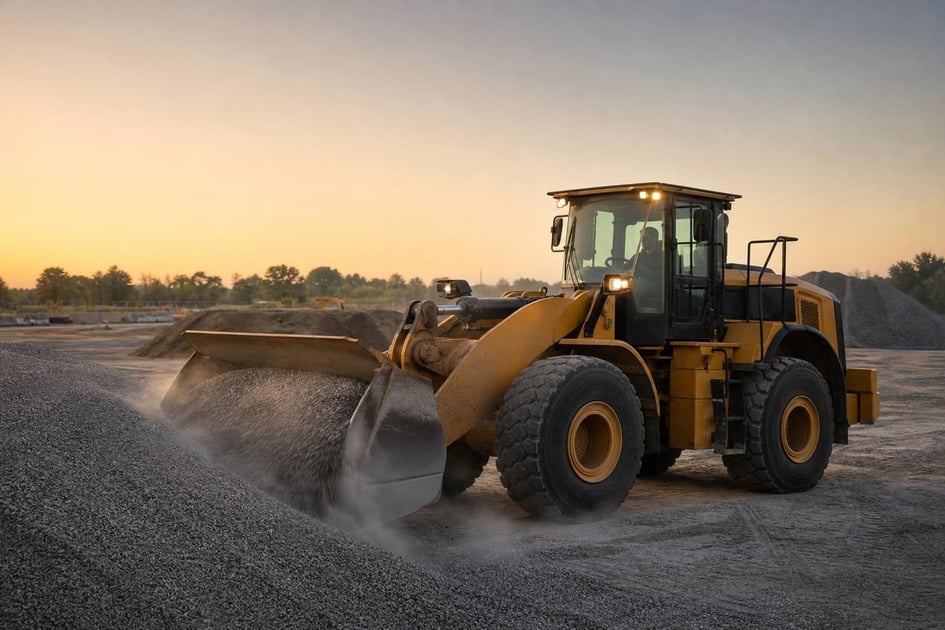
A wheel loader is one of the most versatile purchases a contractor, farmer, or materials handler can make. Wheel Loaders financing from Provide Capital covers machines from compact 60-horsepower models up to large production loaders, with transactions ranging from $5,000 to $5 million. The equipment itself serves as collateral, which is why rates stay competitive even if your credit is not perfect.
Most borrowers use the funds to acquire the loader, but financing can also cover attachments, delivery, and initial warranty costs if they are rolled into the invoice. Because the lender's security interest is in the machine, the structure works much like an auto loan: the stronger the equipment's resale value, the more favorable the terms tend to be.
By the Numbers: A mid-size wheel loader in the 150–200 hp range typically runs between $120,000 and $250,000 new. Used units three to five years old often trade at 50–65% of original invoice, making them attractive collateral for lenders who stress loan-to-value ratios.
New vs. Used Machines
New loaders come with manufacturer warranties, predictable maintenance schedules, and the latest emissions systems. They also command higher monthly payments and steeper depreciation in the first two years. Lenders like new equipment because the collateral value is easy to verify through dealer invoice or manufacturer data.
Used machines lower the monthly outlay and shorten the path to positive equity. However, lenders scrutinize hour meters, maintenance logs, and undercarriage condition. A loader with 8,000 hours and a questionable hydraulic history may still finance, but expect a shorter term or a larger down payment. For used equipment, most lenders cap financing at the wholesale book value or the purchase price, whichever is lower.
The sweet spot for many owner-operators is a late-model used loader in the 2,000–4,000 hour range. It has already absorbed the steepest depreciation, yet it usually has enough life left to outlast the loan term. If your site is too tight for a full-size loader, a smaller Skid Steer Loader financing package can handle similar tasks at a lower total cost.
Attachment and Accessory Inclusion
Bucket type, quick couplers, forks, and snow pushers can add $5,000 to $30,000 to the total cost. Most lenders will roll these into the financing package if they are on the same invoice from a licensed dealer or auction house. Aftermarket accessories installed post-purchase are harder to include because they do not always add commensurate collateral value.
If you plan to finance attachments, get them itemized on the purchase order before submitting the application. A single-line invoice that reads "loader plus extras" forces the underwriter to guess at the machine's standalone value, which can delay approval.
How Lenders Evaluate a Wheel Loader Application
When you ask what wheel loaders financing qualifies for, the answer depends on four variables: your credit profile, time in business, annual revenue, and the specific machine you are buying. Provide Capital looks at the total picture rather than relying on a single score, which is why same-day approvals are possible for well-documented deals.
Credit Profile
Personal credit scores above 680 generally unlock the best rates and longest terms, but scores in the low 600s are not automatic disqualifiers. If your business credit is thin, the lender will weigh your personal history more heavily. Recent bankruptcies, open tax liens, or accounts in active collections are bigger obstacles than a few late payments from two years ago.
Consistency matters. A borrower with a 650 score, ten years in business, and steady deposits will often see better terms than a 720-score applicant with six months of operation and erratic revenue.
Business History and Revenue
Most equipment lenders prefer two years in business, though one year with strong tax returns can suffice for smaller transactions. Revenue requirements scale with the size of the loan. A $50,000 compact loader might only require $150,000 in annual revenue, while a $400,000 production loader usually calls for $1 million or more.
Lenders verify revenue through bank statements, tax returns, or audited financials depending on the amount. For deals under $150,000, three months of business bank statements are often enough. Larger requests may require two years of corporate returns and a current year-to-date profit-and-loss statement.
Key Insight: Seasonal businesses—such as those in snow removal or agricultural contracting—should submit twelve months of bank statements rather than three. Showing the full revenue cycle prevents an underwriter from misreading a slow quarter as financial distress.
Equipment Age and Condition
The collateral's age affects both approval odds and term length. New and current-model-year loaders can typically be financed for 60 to 72 months. Once a machine hits five years old, the maximum term often drops to 48 months. At ten years, you may be looking at 36 months or less, with a larger equity contribution required.
Hours matter as much as age. A three-year-old loader with 6,000 hours is a riskier collateral bet than a five-year-old unit with 2,500 hours. Lenders may request an independent appraisal for any machine over a certain age or hour threshold, usually paid for by the borrower.
Lease vs. Loan: A Side-by-Side Look
Not every wheel loader acquisition should be a purchase. The right structure depends on how long you plan to keep the machine, your tax strategy, and your balance-sheet preferences.
| Factor | Equipment Loan | Finance Lease |
|---|---|---|
| Ownership | You own the loader at payoff; lender holds a lien until then. | Lessor owns the asset; you may have a purchase option at the end. |
| Down payment | Often 0–20%, depending on credit and equipment age. | Usually one or two payments upfront. |
| Monthly cost | Higher if you put nothing down; you build equity with each payment. | Lower monthly outlay; no equity unless you exercise a buyout. |
| Term flexibility | 24–72 months common. | 24–60 months common; seasonal skips possible. |
| Tax treatment | Interest deductible; depreciation and Section 179 available. | Payments often fully deductible as operating expense. |
| End-of-term | Free and clear ownership; no further obligations. | Return, renew, or buy at fair market value or a fixed amount. |
| Best for | High-hour operators who run machines into the ground. | Fleets that cycle equipment every 3–4 years for reliability. |
If you plan to put 3,000 hours per year on a loader and keep it for eight years, a loan usually wins. If you replace loaders every three years to avoid maintenance risk and stay under warranty, a lease's lower payment and return option may fit better.
Talk to a specialist about your specific machine to see whether a loan or lease structure matches your utilization plan.
Tax Treatment and Section 179 in 2026
For tax year 2026, Section 179 allows businesses to expense qualifying equipment purchases up to a limit set by the IRS. As of the 2026 tax year, that limit is subject to inflation adjustments from the base established in prior years. Because these figures are revised annually, you should confirm the exact 2026 limit with your CPA before making a purchase decision.
Bonus depreciation has been phasing down. For 2026, the bonus depreciation percentage is 40%, down from 60% in 2025 and 80% in 2024. This means you can still accelerate a substantial portion of the cost, but the benefit is smaller than in previous years. Again, verify the current-year percentage with a tax professional, as legislative changes can alter these schedules.
Loan interest is deductible as a business expense, and you still claim depreciation or Section 179 even though the lender holds title until payoff. With a true tax lease, the lessor typically claims the depreciation while you deduct the lease payments. The structure you choose changes who gets the tax benefit, so run the numbers with your accountant before signing.
Pro Tip: If you are close to the Section 179 cap and considering multiple equipment purchases, buy the wheel loader in a separate tax year or coordinate timing so you do not inadvertently exceed the phase-out threshold, which begins at a set level of total equipment purchases for 2026. Your CPA can model the exact breakpoint.
Typical Documentation You'll Need
The paperwork burden scales with the transaction size. For smaller deals, the process is light. For larger ones, expect more scrutiny. The Small Business Administration publishes general guidance on equipment financing documentation that aligns with what most lenders request.
Deals under $100,000:
- Completed one-page application
- Three months of business bank statements
- Invoice or purchase agreement for the loader
- Proof of insurance binding upon funding
Deals from $100,000 to $500,000:
- All of the above, plus
- Two years of business tax returns
- Current year-to-date profit and loss statement
- Personal financial statement for guarantors
Deals above $500,000:
- All of the above, plus
- Business debt schedule
- Equipment appraisal for used machines
- Interim balance sheet
Having these documents ready before you apply is the single biggest factor in whether you get a same-day decision or a two-week back-and-forth.
Common Mistakes That Slow Down Approval
Even qualified buyers derail their own applications. Here are the missteps we see most often.
Shopping for the machine before checking credit. If you negotiate a price and then discover your credit forces a shorter term or larger down payment, you may no longer afford the deal. Pull your own business and personal reports first so you know what tier you land in.
Buying from a private seller without a title search. A loader with an undisclosed lien or a missing serial-number plate can prevent the lender from perfecting its security interest. Always verify clean title through a UCC search or escrow service when buying used.
Underinsuring the equipment. Lenders require collision and comprehensive coverage naming them as loss payee. If your policy lapses or carries a high deductible, funding will stall until you provide a compliant certificate of insurance.
Mixing personal and business deposits. Underwriters look at business bank statements to verify revenue. If you run personal expenses through the same account, the deposits look erratic. Separate your books before applying.
Key Insight: Auction purchases often move on compressed timelines. If you are buying at auction, get pre-approved before bidding. Provide Capital can issue a pre-approval letter subject only to equipment inspection and clean title, letting you bid with confidence.
Industry-Specific Use Cases
Wheel loaders cross several industries, and the financing structure often adapts to the work cycle. U.S. Census Bureau construction spending data shows that equipment demand tracks closely with regional building activity, which is why contractors in fast-growing states often front-load purchases in the first quarter.
In Construction equipment financing, loaders are primary earthmoving tools. Contractors may run them 1,500 hours per year or more, so they favor loans with 60-month terms that outlast the heavy depreciation window. A general contractor in the Midwest might buy a 160-hp loader in March to break ground on spring projects, knowing the machine will pay for itself through November.
Agricultural buyers use loaders for feed handling, manure management, and snow removal. Their revenue is seasonal, so they sometimes prefer leases with skip payments during low-cash months. Dairy farms in particular favor mid-size loaders with grapple buckets that can handle round bales and clear barn alleys.
Forestry and land-clearing operators need high-lift arms and reinforced frames. These specialized machines cost more, but the collateral value is supported by strong resale demand. Lenders will finance them if the borrower can show contracts or a history of logging revenue.
Waste and recycling facilities run loaders in brutal conditions. Because of accelerated wear, they often replace equipment every four years and gravitate toward leases that match the replacement cycle. The key is proving stable tipping-fee or contract revenue to offset the high utilization. Industry commentary in Forbes has noted that rising replacement costs for heavy iron are pushing more fleet managers toward financing rather than cash purchases.
What Happens After You Apply
Once you submit a complete application, the timeline looks like this:
- Initial review (same day): An underwriter verifies credit, revenue, and equipment details. If everything aligns, you receive a verbal approval or conditional offer with rate ranges that vary by credit profile, equipment age and term.
- Documentation collection (1–3 days): You submit the full document stack—tax returns, bank statements, insurance, and purchase agreement.
- Final approval and docs (1–2 days): The lender issues formal documents. You review, sign, and return them.
- Funding (1–2 days): Funds are wired to the dealer or seller, or in some cases to an escrow agent. You take delivery once payment clears.
For well-prepared borrowers, the entire cycle can finish in three to five business days. Complex deals or used equipment from remote sellers may stretch to two weeks.
Get a same-day decision on your equipment by applying with your purchase agreement and bank statements in hand.
Frequently Asked Questions
Can I finance a wheel loader with bad credit?
You can still qualify, but expect different terms. Lower credit scores usually mean a larger down payment, a shorter term, or a higher rate. The equipment's value and your business revenue help offset credit weakness. Every application is reviewed individually.
How long can I finance a used wheel loader?
Terms depend on age and hours. A one- to two-year-old loader may qualify for 60 months. A five-year-old unit typically maxes out at 48 months. At ten years, 36 months is more common. The lender wants the loan paid down before the collateral value drops too far.
Can I include attachments in the financing?
Yes, if they are on the same invoice from a reputable seller. Buckets, forks, couplers, and even some snow pushers can be rolled into the total financed amount. Aftermarket items bought separately usually cannot be included.
Is a down payment always required?
Not always. Strong credit and new equipment can qualify for zero down. Used equipment, weaker credit, or larger transactions usually require 10–20% equity. The down payment protects the lender and improves your monthly cash flow.
Do I need to be in business for two years?
Two years is the standard benchmark, but exceptions exist. If you have one year of operation, strong tax returns, and a clean credit profile, you may still qualify—especially for smaller transactions. Startups with no operating history are harder to approve because the lender has no revenue trend to evaluate.
What interest rate will I get?
Rates vary by credit profile, equipment age and term. We do not quote specific APRs without reviewing your full file. Factors include personal and business credit, time in business, revenue stability, and the loan-to-value ratio of the machine.
Can I pay off the loan early?
Most equipment loans allow early payoff. Some have a prepayment schedule—perhaps a small penalty in year one that declines each year until it disappears. Ask for the exact prepayment language before you sign so you are not surprised if you want to refinance or sell the machine.
What if the loader needs repairs right after I buy it?
If you bought new, the manufacturer's warranty covers most failures. If used, consider a third-party equipment warranty or set aside a maintenance reserve. Lenders do not require warranties, but they do require that you maintain the collateral in working order because it secures the loan.
Your Next Step
Wheel loaders are expensive, but they are also revenue engines. The right financing structure lets you put the machine to work immediately while preserving cash for payroll, materials, and unexpected expenses. Whether you need a compact loader for a landscaping crew or a 300-hp production machine for a quarry, the qualification process is straightforward if you understand what lenders look for and bring the right paperwork.
Ready to move forward? See what you qualify for and get a decision on your wheel loader financing today.
Disclaimer: The information provided in this article is for general educational purposes only and is not financial, legal, or tax advice. Funding terms, qualifications, and product availability may vary and are subject to change without notice. Provide Capital does not guarantee approval, rates, or specific outcomes. For personalized information about your business funding options, contact our team directly.
