
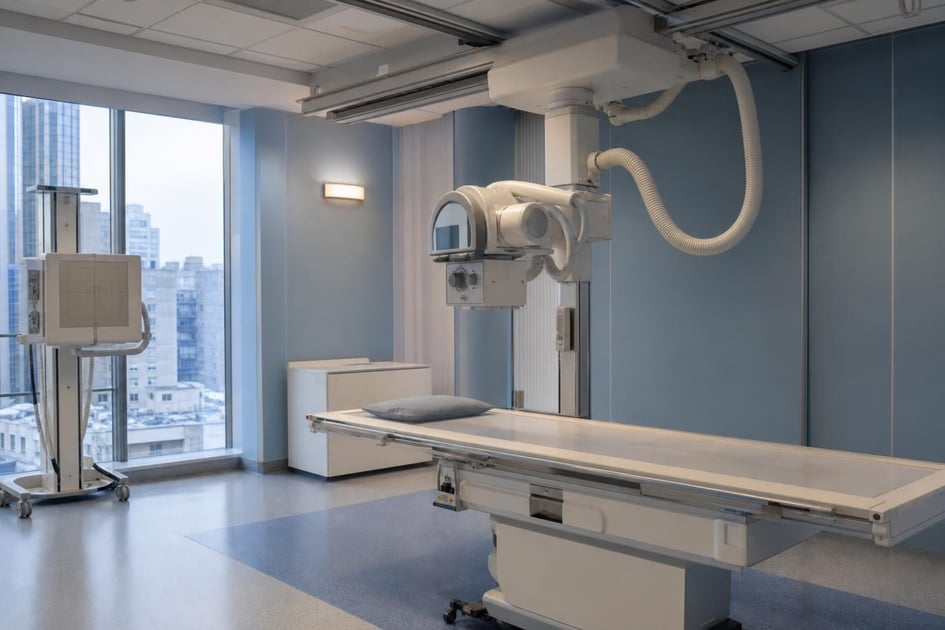
What It Takes to Qualify for X-Ray Machine Financing
If you are buying an X-ray machine for a medical practice, veterinary clinic, or chiropractic office, financing is often the practical path. You do not need to pay the full purchase price upfront. Instead, the equipment itself serves as collateral, which keeps rates competitive and lets you spread the cost over a term that matches the machine's useful life. See what financing you qualify for on that digital radiography system before you commit to a cash purchase.
Provide Capital finances new and used business equipment from $5,000 to $5 million. For X-ray systems, that range covers everything from a single digital unit for a small clinic to a full suite of diagnostic imaging for a multi-location practice. Because the equipment secures the financing, approval depends more on the asset's value and your business's ability to repay than on perfect credit alone. According to SBA guidance on business financing, equipment loans are one of the most common ways small healthcare practices acquire capital assets without depleting cash reserves.
X Ray Machine financing covers everything from standard fixed units to specialized digital systems, and the qualification process is straightforward once you know what lenders evaluate.
Lenders typically look at three things: your personal and business credit profiles, how long you have been operating, and your annual revenue. A strong file in any two of those areas can often offset a weakness in the third. Same-day approvals are possible when your documentation is complete and the equipment quote is in hand.
Already have a machine in mind?
Provide Capital finances new and used equipment from $5,000 to $5 million, with same-day decisions possible.
Apply NowHow Credit, Time in Business, and Revenue Shape Your Offer
Your credit profile tells the lender how you have managed debt in the past. Most equipment financiers want to see a personal credit score in the mid-600s or higher, though exceptions exist for well-established practices with strong cash flow. If your score is lower, expect a larger down payment requirement or a shorter term. Business credit matters too, especially if your practice has been incorporated for several years and has its own trade lines.
Time in business is the next filter. Practices operating for two years or more generally receive the best terms because they have survived the startup phase and demonstrated stable patient volume. That said, newer practices can still qualify if the buyer has relevant industry experience or if the practice is acquiring an established patient base along with the equipment. Data from the Census Bureau shows that healthcare remains one of the largest small-business sectors in the United States, which means lenders are familiar with the revenue cycles and risk profiles of medical practices.
Revenue requirements vary by deal size. A $50,000 digital X-ray unit might only require $150,000 to $250,000 in annual revenue, while a $400,000 system could call for significantly more. The lender wants to see that your monthly equipment payment is a manageable slice of your cash flow. As a rough guide, many financiers prefer the equipment payment to stay below 15 to 20 percent of your monthly gross revenue.
Key Insight: A lender may approve a newer practice with six months of operation if the borrower has five or more years of clinical experience and the equipment generates immediate billable revenue. The underwriter weights future cash flow from the machine more heavily than historical financials in these cases.
New vs. Used X-Ray Equipment: What to Know Before You Buy
New X-ray machines come with manufacturer warranties, the latest software, and compliance with current FDA standards. They also depreciate rapidly in the first two years. For a practice planning to keep the machine for eight to ten years, that depreciation is less of a concern because you capture the full productive life of the asset. Digital X Ray Machine financing often favors newer units because digital sensors and software licenses are harder to value on the secondary market.
Used equipment can cut the purchase price by 30 to 60 percent depending on age, hours, and condition. The trade-off is shorter remaining life, no factory warranty, and potentially higher maintenance costs. Financing a used X-ray machine is common, but the lender may cap the term at the estimated remaining useful life. A five-year-old unit might only qualify for a three- or four-year loan, which raises the monthly payment even though the total amount financed is lower.
Refurbished units from original equipment manufacturers or certified dealers sit in the middle. They cost more than as-is used machines but less than new ones, and they often carry a limited warranty. From a financing perspective, refurbished equipment is usually treated like new if it comes with a dealer warranty and installation support. Forbes analysis of medical technology costs notes that imaging equipment typically represents one of the top three capital expenditures for independent practices, so choosing the right acquisition strategy affects your balance sheet for years.
Lease or Loan: Choosing the Right Structure
The choice between leasing and borrowing depends on your tax strategy, how long you plan to keep the machine, and whether you want to own the asset at the end. A $1 buyout lease functions almost identically to a loan: you make monthly payments and own the equipment for a nominal final payment. A fair market value lease, by contrast, lets you return the machine at the end of the term, which appeals to practices that want to upgrade every three to five years.
| Factor | Equipment Loan | $1 Buyout Lease | Fair Market Value Lease |
|---|---|---|---|
| Ownership at end | You own the equipment | You own the equipment | Return or purchase at FMV |
| Tax treatment | Depreciation + interest deduction | Depreciation + interest deduction | Lease payments deducted as expense |
| Monthly payment | Higher than FMV lease | Higher than FMV lease | Lowest monthly cost |
| Upgrade flexibility | Must sell or trade | Must sell or trade | Built-in at end of term |
| Best for | Long-term keepers | Long-term keepers | Practices planning frequent upgrades |
Loans and $1 buyout leases both let you claim Section 179 and bonus depreciation because you are considered the owner for tax purposes. Fair market value leases do not, since the lessor retains ownership. Rates vary by credit profile, equipment age, and term, so the lowest monthly payment is not always the lowest total cost.
Pro Tip: If you are comparing a loan to a fair market value lease, ask the lessor for the total lease cost including the purchase option at the end. Multiply the monthly payment by the number of months, then add the estimated fair market value buyout. Compare that sum to the total payments on a loan for the same term. The difference is often smaller than the monthly gap suggests.
Tax Treatment for X-Ray Equipment in 2026
For the 2026 tax year, Section 179 allows businesses to deduct the full purchase price of qualifying equipment in the year it is placed in service, subject to an annual limit. The exact dollar cap for 2026 is set by inflation adjustments from the base amount established in prior legislation. If you are planning a year-end purchase, confirm the current-year limit with your CPA because the phase-out threshold and cap can shift with inflation indexing. Never rely on a prior year's figure for planning.
Bonus depreciation is also available in 2026, though the percentage has stepped down from the 100 percent level of earlier years. You can pair bonus depreciation with Section 179, but Section 179 is taken first. Your CPA can model which combination produces the best outcome based on your taxable income, business structure, and state tax rules. State conformity to federal depreciation rules varies, so a strategy that works in Texas may not work in California.
Interest paid on an equipment loan is generally deductible as a business expense. Lease payments on a fair market value lease are deductible as well, but you cannot depreciate the asset because you do not own it. The IRS has specific rules about whether a lease is truly a lease or a disguised purchase agreement, so have your accountant review the paperwork before you sign.
Find the right financing structure
Tell us about the equipment you need and we will show you the options that fit your business.
See Your OptionsBy the Numbers: Real Cost Scenarios
A small chiropractic clinic buying a 65 kW digital X-ray system might face an all-in cost of $65,000 to $90,000 including installation, training, and initial calibration. With a five-year term and the equipment as collateral, the monthly payment could fall in a range that preserves cash flow for payroll and rent. A large orthopedic group acquiring a digital radiography and fluoroscopy suite for $350,000 might spread that over six or seven years to keep the monthly obligation manageable.
Used portable X-ray units for mobile veterinary services or home health care often run $15,000 to $35,000. Because the financed amount is lower, these deals sometimes close with minimal down payment and a three-year term. Portable X Ray Machine financing works well for practices that need mobility without tying up large amounts of working capital.
By the Numbers: A practice financing $80,000 over five years at a competitive equipment-financing rate could see monthly payments in the low-to-mid four figures, depending on credit profile, equipment age, and term. Over the full 60 months, the total cost of financing typically adds 8 to 18 percent of the principal for borrowers with strong credit, and more for riskier profiles. Always request an amortization schedule so you see exactly how much interest accrues each year.
Common Mistakes Buyers Make
The most expensive error is focusing only on the monthly payment. A longer term lowers the payment but increases total interest and may extend past the equipment's useful life. If you are still paying for an X-ray machine after it has become obsolete, you are financing a liability, not an asset.
Another mistake is neglecting soft costs. Installation, electrical upgrades, lead shielding, staff training, and IT integration can add 10 to 25 percent to the base equipment price. If you finance only the machine and pay cash for the extras, you may strain your working capital. Build the full project cost into the financing request.
Buyers also underestimate maintenance. Digital X-ray panels have finite lifespans measured in exposure cycles. A tube rated for 150,000 exposures may need replacement sooner than expected in a high-volume practice. Ask the seller for expected maintenance costs in years three through five and consider whether a service contract belongs in the financing package.
Finally, do not let the equipment vendor rush you into captive financing before you have shopped the terms. Vendor programs are convenient, but they are not always the most competitive. Gathering one outside quote takes little time and can save thousands over the term.
What Documentation You Will Need
Lenders ask for a short list of documents, and having them ready speeds approval. Expect to provide the last three months of business bank statements, a current year-to-date profit and loss statement, and the equipment quote or invoice. If your practice is new, you may also need a personal financial statement and the purchase agreement for the practice itself.
For practices with existing debt, the lender may request a current balance sheet and a brief debt schedule. They are checking that the new equipment payment does not push your total debt service above a sustainable threshold. If you are buying used equipment, the lender may want an independent appraisal or a condition report from a certified technician.
Corporate documents are straightforward: articles of incorporation, operating agreement, and a copy of your business license. Medical practices should also have their NPI numbers and any state imaging permits ready. The underwriter is not judging your clinical skill; they are verifying that the business is legitimate and properly licensed to operate the equipment.
What Happens After You Apply
Once you submit an application and the equipment details, the lender reviews credit, verifies revenue, and evaluates the collateral. For deals under $150,000, this can often be completed within one business day. Larger requests or more complex corporate structures may take two to four days.
If approved, you receive a term sheet outlining the monthly payment, term length, down payment requirement, and any prepayment penalties. Read it carefully. Ask about automatic renewal clauses, late fees, and what happens if you want to pay off the balance early. Some equipment finance agreements include a prepayment penalty in the first year or two; others allow payoff at any time with minimal charge.
After you accept the terms, the lender pays the vendor directly or funds your account if the machine has already been purchased. You then start making monthly payments. The equipment is typically titled in your practice's name with the lender holding a security interest until the final payment clears.
Equipment Financing Across Industries
While X-ray machines sit in the medical and dental world, the financing logic is the same across sectors. Provide Capital serves construction, healthcare, dental, restaurant and food service, manufacturing, transportation, agriculture, HVAC, and forestry nationwide. Whether you need Forestry Logging equipment financing for a feller buncher or an imaging suite for a new orthopedics practice, the equipment itself secures the deal. That collateral-based approach is why rates stay competitive and why same-day approvals are possible when the file is clean.
Put the right equipment to work
From $5,000 to $5 million, new or used, Provide Capital helps businesses nationwide finance the equipment they need.
Apply TodayFrequently Asked Questions
Can I finance an X-ray machine if my practice is less than two years old?
Yes, though the terms may differ. Newer practices can qualify with strong personal credit, relevant clinical experience, or a solid patient volume forecast. Expect a slightly larger down payment or a shorter term until the practice establishes a longer track record.
Does the equipment have to be new to qualify for financing?
No. Used and refurbished X-ray machines are commonly financed. The lender will consider the equipment's age, condition, and remaining useful life when setting the term. A used digital unit that is three to five years old can still qualify for a four- or five-year loan if it is in good working condition.
Will financing an X-ray machine require a personal guarantee?
Most equipment financiers require a personal guarantee for small and mid-sized practices, especially if the business credit file is thin. The guarantee means you are personally responsible for repayment if the practice cannot pay. Some lenders release the personal guarantee after 12 to 24 months of on-time payments.
How fast can I get a decision?
For deals with complete documentation and a clean credit profile, decisions can come the same day. Larger requests or files needing additional verification may take two to four business days. Get a decision on your equipment, possibly the same day, by having your bank statements and equipment quote ready before you apply.
Can I include installation and training in the financing?
Yes. Most lenders allow you to roll soft costs into the equipment financing as long as they are itemized on the vendor invoice. This includes delivery, installation, electrical work, lead shielding, and initial staff training. Combining these costs preserves your cash reserves for operations.
What credit score do I need to qualify?
There is no hard cutoff, but a personal credit score in the mid-600s or higher opens the most competitive terms. Scores below that do not automatically disqualify you, especially if the practice has strong revenue or you can offer a larger down payment. Rates vary by credit profile, equipment age, and term.
Is it better to lease or buy an X-ray machine?
It depends on your tax strategy and upgrade cycle. Buying or using a $1 buyout lease lets you depreciate the asset and works best if you plan to keep the machine for seven to ten years. A fair market value lease offers lower monthly payments and easy upgrades, but you do not build equity. Talk to your CPA about which structure fits your 2026 tax plan.
Can I pay off the financing early?
Most equipment finance agreements allow early payoff, but the terms vary. Some charge a prepayment penalty in the first 12 to 24 months. Others use a fixed fee structure. Ask for the prepayment language before you sign so you understand the cost of exiting the obligation ahead of schedule.
Next Steps
Buying an X-ray machine is a significant investment, but it does not have to drain your cash reserves. With the right financing structure, you can spread the cost over time, preserve working capital for payroll and supplies, and potentially deduct a large portion of the purchase in the 2026 tax year. Start by gathering your last three bank statements, your equipment quote, and a current P&L. Then start an application in a few minutes to see what terms are available for your practice. Provide Capital finances equipment from $5,000 to $5 million nationwide, and same-day approvals are possible when your file is complete.
Disclaimer: The information provided in this article is for general educational purposes only and is not financial, legal, or tax advice. Funding terms, qualifications, and product availability may vary and are subject to change without notice. Provide Capital does not guarantee approval, rates, or specific outcomes. For personalized information about your business funding options, contact our team directly.
