Boom Lift Financing With No Down Payment: How It Works
You can finance a boom lift without a down payment by using the equipment itself as collateral. The lender secures its interest by filing a UCC-1 lien against the machine, not against your real estate or personal assets. Because the collateral is movable and has a liquid resale market, lenders can offer competitive terms while preserving your working capital.
At Provide Capital, we finance new and used boom lifts from $5,000 to $5 million. The amount you can borrow depends on the equipment's appraised value, your business's cash flow, and your credit profile. Rates vary by credit profile, equipment age and term length. Same-day approvals are possible once we receive a complete application and equipment details.
Key Insight: A zero-down equipment loan does not mean zero equity. From the first payment, you build ownership in the asset. The lien releases once the final payment clears, and you hold clear title. This differs fundamentally from an unsecured line of credit, where you pay interest but acquire no asset.
Already have a machine in mind?
Provide Capital finances new and used equipment from $5,000 to $5 million, with same-day decisions possible.
Apply NowWhat "No Down Payment" Actually Means for Your Cash Flow
A no-down-payment structure keeps cash in your business for payroll, materials, and unexpected expenses. Instead of tying up $15,000 or more on a used 40-foot boom lift, you deploy that capital elsewhere. The trade-off is a slightly higher monthly payment than if you had put money down, because you are financing the full purchase price plus any origination costs.
For a $50,000 boom lift financed over 60 months with no money down, your monthly payment falls within a range determined by your credit tier and the equipment's age. A borrower with strong credit and a new machine will land at the lower end of that range. A borrower with challenged credit financing a 10-year-old unit will see a higher payment. The important point is that you gain use of the equipment immediately while preserving liquidity.
The collateral structure also means you do not need to pledge additional assets. If your business carries a mortgage on a shop or warehouse, that property stays unencumbered. The boom lift itself secures the transaction. This matters for contractors who need fleet flexibility and do not want to cross-collateralize every piece of equipment against their real estate.
Who Qualifies for Zero-Down Boom Lift Financing
Qualification centers on three factors: time in business, credit profile, and equipment quality. Lenders view boom lifts as low-risk collateral because they retain value and move quickly at auction. That tolerance shows up in more flexible qualification standards than you would see for an unsecured loan.
Time in Business
Most equipment lenders prefer at least two years of operating history. That said, businesses with shorter track records can still qualify if the equipment is new or late-model and the borrower's personal credit is strong. The equipment's value and resale liquidity often matter more than the age of the business itself.
Credit Profile
There is no universal minimum credit score for boom lift financing. A score above 650 generally opens the most competitive terms, while scores in the 550 to 650 range still qualify with adjusted structures. If your credit carries recent liens, judgments, or significant delinquencies, expect a shorter term or a requirement for a stronger cosigner. We do not offer guaranteed approval, and every application receives individual review.
Equipment Condition
New boom lifts from manufacturers like JLG, Genie, and Skyjack command the strongest financing terms. Used equipment also qualifies, but lenders typically cap the age at 10 to 15 years at the end of the term. A 2018 boom lift financed over five years would be 13 years old at payoff, which most lenders accept. A 2010 unit financed over five years might require a larger equity stake or a shorter term.
Pro Tip: If you are buying used, obtain an independent inspection report before applying. Lenders trust documented maintenance history and hour-meter readings more than seller assurances. A unit with 2,000 hours and complete service records finances more easily than a low-hour machine with gaps in its maintenance log.
New vs. Used Boom Lifts: Financing Considerations
The new versus used decision shapes your monthly payment, maintenance budget, and tax strategy. New boom lifts carry full manufacturer warranties and lower maintenance costs in the first three years, but they depreciate rapidly in the first 12 months. Used units cost less upfront and hold their value more steadily, though they may require earlier replacement of wear items like batteries, hoses, and joysticks.
From a financing perspective, new equipment typically qualifies for longer terms, up to 60 or 72 months. Used equipment often maxes out at 48 or 60 months, depending on age and hours. The interest rate range also shifts: new equipment sits at the lower end of the spectrum because the collateral risk is lower. Used equipment carries slightly higher rates to account for accelerated depreciation and potential repair costs.
For Boom Lifts financing, we see strong demand for 3- to 5-year-old articulating units in the 40- to 60-foot range. These machines have already absorbed their steepest depreciation but retain most of their productive life. Electric slab models for indoor work also hold value well because they face less engine-related wear.
Lease vs. Loan: Choosing the Right Structure
You can acquire a boom lift through an equipment loan or a fair-market-value lease. The right choice depends on how long you plan to keep the machine, how many hours you expect to put on it annually, and whether you want to claim ownership for tax purposes.
| Feature | Equipment Loan | Fair Market Value Lease |
|---|---|---|
| Ownership | You own the boom lift from day one | Lessor owns; you return or buy at term end |
| Down Payment | Zero to 20% possible | Usually first and last payment upfront |
| Term Length | 24 to 72 months | 12 to 60 months |
| Monthly Payment | Higher; you build equity | Lower; no equity unless you exercise buyout |
| Tax Treatment | Interest deductible; depreciate asset | Payments typically fully deductible |
| End of Term | Free and clear title | Return, renew, or purchase at FMV |
| Best For | Long-term fleet additions | Short-term projects or uncertain demand |
If you run a Construction equipment financing operation with steady year-round work, a loan usually wins. You keep the machine for seven to ten years, and the total cost of ownership drops once the loan pays off. If you specialize in event setup or seasonal exterior work, a lease lets you return the boom lift during slow months without carrying debt on a parked asset. According to U.S. Census Bureau construction spending data, contractors with predictable backlogs benefit most from owning core fleet assets outright.
By the Numbers: A $75,000 articulating boom lift financed over 60 months typically carries a monthly payment between $1,400 and $1,800 for well-qualified buyers, depending on credit tier and equipment age. Over the full term, the difference between putting zero down and 10% down is roughly $150 to $200 per month. That $9,000 to $12,000 in preserved liquidity can cover three to four months of payroll for a three-person crew.
Tax Treatment and Section 179 for 2026
For the 2026 tax year, Section 179 allows businesses to deduct the full purchase price of qualifying equipment in the year it is placed in service, subject to annual limits that adjust for inflation. The exact dollar limit for 2026 will be announced by the IRS, but the mechanism remains: you can accelerate depreciation rather than spreading it over the Modified Accelerated Cost Recovery System schedule. Because these limits change annually, consult a CPA to confirm the 2026 threshold before you file.
Bonus depreciation may also apply to new and used boom lifts in 2026, though the percentage has been phasing down from prior-year peaks. If bonus depreciation drops further, Section 179 becomes the more valuable tool for smaller acquisitions. Again, a tax professional can model which strategy works best for your specific bracket and entity structure.
With an equipment loan, you deduct the interest portion of each payment and depreciate the asset. With a lease, you typically deduct the full payment as a rental expense. The difference matters if you are close to a tax bracket threshold or if you need to show asset value on your balance sheet for bonding purposes. Talk to a specialist about your specific machine and how the structure affects your books.
Find the right financing structure
Tell us about the equipment you need and we will show you the options that fit your business.
See Your OptionsIndustry-Specific Use Cases
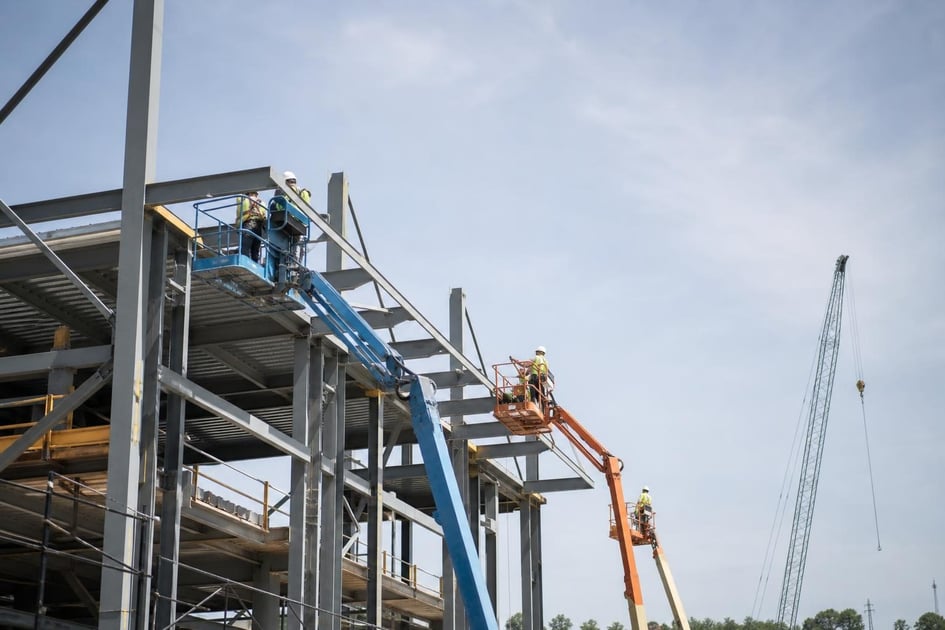
Boom lifts serve multiple industries beyond general construction. Facilities maintenance teams use them to reach HVAC units, lighting rigs, and exterior signage. Warehouse operators deploy them for high-bay rack maintenance. Arborists and forestry contractors use insulated boom lifts to work near power lines safely. Each use case carries different hour-count expectations and maintenance schedules, which lenders factor into residual value estimates.
For contractors working in colder climates, boom lift demand peaks in spring and summer. Financing in late winter positions you to take delivery before the rush, when dealer inventory is highest and prices are more negotiable. In warmer states, the buying cycle is more evenly distributed, though hurricane recovery seasons can spike demand for rental fleets.
Electricians and telecom installers often pair boom lifts with Scissor Lifts financing to cover different reach profiles. A scissor lift handles vertical elevation in open spaces, while an articulating boom lift navigates around obstacles at height. Financing both together under a single facility can streamline documentation and sometimes improve terms. The Small Business Administration publishes guidance on how equipment acquisitions fit into broader capital planning for trades businesses.
What Documentation You Need to Apply
A complete application moves faster. Gather these items before you submit:
- Business tax returns for the past two years
- Current year profit-and-loss statement and balance sheet
- Bank statements for the past three to six months
- Equipment invoice or purchase agreement with serial number, year, make, and model
- Proof of insurance naming the lender as loss payee
If you are buying from a private party rather than a dealer, we also need a bill of sale and proof that the seller holds clear title. Private-party transactions require extra verification but are fully financeable. Same-day approvals are possible when the file is complete and the equipment specs are standard.
Common Mistakes Buyers Make
The most expensive error is financing the wrong machine for the work. A 30-foot boom lift cannot safely reach a 40-foot eave line. Buyers who underestimate reach requirements often trade in too soon, absorbing depreciation twice. Measure your maximum working height, add a safety margin, and then select the platform height.
Another mistake is ignoring transport logistics. Articulating boom lifts over 40 feet often require a CDL and oversize permits to move between sites. If your crew lacks that capability, budget for a delivery contract or choose a towable boom lift that does not require a commercial license.
Finally, do not assume that zero down means zero cost at closing. Some transactions include documentation fees, filing fees, or prepaid insurance premiums. Ask for an itemized term sheet before you sign. The total cost of financing includes every fee, not just the monthly payment. Forbes business finance coverage regularly reports on how hidden fees erode the advertised savings on equipment deals.
Pro Tip: Dealer-arranged financing is not always the best deal. Dealer markups on finance contracts can add 1 to 3 percentage points to your rate. Get a quote from an independent equipment lender before you sit down with the sales manager. You can use that quote as leverage or simply finance directly and pay the dealer cash.
What Happens After You Apply
Once you submit a complete application, the review process typically takes a few hours to one business day. The underwriter verifies your business information, pulls credit, and confirms the equipment value through a third-party appraisal guide or dealer invoice. If the deal fits our parameters, we issue a term sheet outlining rate, term, payment, and any conditions.
After you accept the term sheet, we prepare the closing documents. You review and sign via electronic signature, and we issue a funding letter or pay the dealer directly. In most cases, you can take delivery within 24 to 48 hours of approval. The lender files the UCC-1 lien, and your payments begin according to the schedule.
If the application needs additional documentation, we will tell you exactly what is missing. Common requests include updated bank statements, a cosigner, or additional collateral on high-hour used equipment. Get a same-day decision on your equipment by submitting your full file upfront.
Ready to move forward?
More than 10,000 businesses have financed equipment with Provide Capital. See what you qualify for today.
Get StartedFrequently Asked Questions
Can I finance a boom lift with no money down if I have bad credit?
You may still qualify, but the structure will adjust. Expect a shorter term, a higher monthly payment, or a requirement for a cosigner. The equipment itself is the primary collateral, so a strong asset can offset a weaker credit profile. We review each application individually and do not guarantee approval.
Does the boom lift have to be new to qualify for zero-down financing?
No. Used boom lifts finance readily, though lenders cap the acceptable age based on the term length. A unit that will be 15 years old at the end of the loan may require a larger down payment or shorter amortization. Well-maintained machines under 10 years old with documented service history receive the best terms.
How long can I finance a boom lift?
Terms typically range from 24 to 72 months. New equipment qualifies for the longest terms, while used equipment may max out at 48 or 60 months. The goal is to ensure the loan retires before the collateral loses too much utility value.
What credit score do I need for boom lift financing?
There is no fixed minimum. Scores above 650 generally access the most competitive terms. Scores between 550 and 650 often still qualify, especially with strong business cash flow or newer equipment. Each lender sets its own risk thresholds.
Can I deduct boom lift payments on my taxes?
With an equipment loan, you deduct the interest and depreciate the asset. With a lease, you typically deduct the full payment. For the 2026 tax year, Section 179 may allow accelerated first-year depreciation, but you should confirm the current limits and your eligibility with a CPA before relying on any specific deduction amount.
Is a boom lift loan better than a lease?
It depends on your holding period and tax goals. A loan builds equity and suits long-term fleet ownership. A lease offers lower payments and flexibility at term end. Use the comparison table above to match the structure to your business model.
Can I finance a boom lift from a private seller?
Yes, private-party sales are financeable. You need a bill of sale, proof of clear title, and an inspection to confirm condition. The process adds a day or two for title verification, but the rates and terms are comparable to dealer transactions.
What happens if I pay off the loan early?
Most equipment loans allow early payoff, though some include a prepayment penalty or minimum interest charge in the first 12 to 24 months. Review your loan agreement for the specific prepayment language before you sign. If early payoff is likely, ask for a simple-interest loan with no prepayment penalty.
Get Started With Your Boom Lift Financing
Boom lift financing with no down payment lets you add reach and capacity without draining your operating account. Whether you need a 34-foot electric unit for warehouse maintenance or a 60-foot diesel articulating lift for commercial construction, the right financing structure keeps your cash working elsewhere. Start by gathering your financial documents and equipment details, then see what you qualify for with a quick application. We can issue a same-day decision on qualified deals, and you can be on the job site with your new equipment within days.
Disclaimer: The information provided in this article is for general educational purposes only and is not financial, legal, or tax advice. Funding terms, qualifications, and product availability may vary and are subject to change without notice. Provide Capital does not guarantee approval, rates, or specific outcomes. For personalized information about your business funding options, contact our team directly.