What "No Money Down" Boom Lift Financing Actually Means
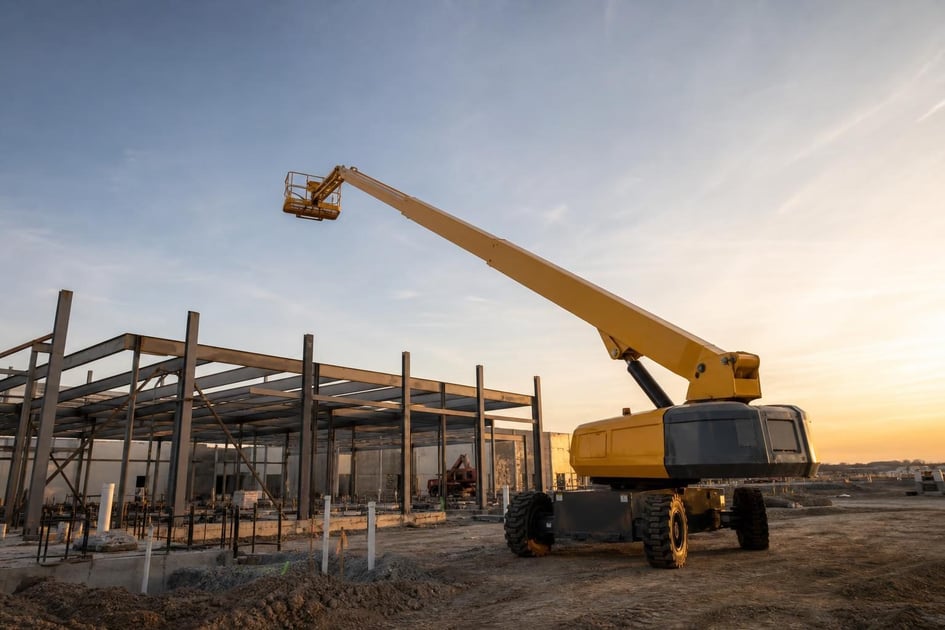
No money down boom lift financing means the lender covers the full equipment cost and the boom lift itself secures the loan. Because the machine serves as collateral, lenders can fund the entire purchase without requiring a cash down payment from your business. This preserves working capital for labor, materials, and overhead while still putting the equipment to work generating revenue immediately.
At Provide Capital, we finance new and used business equipment from $5,000 to $5 million. The equipment itself is the collateral, which keeps rates competitive and structures flexible. Same-day approvals are possible once we have a complete application and equipment details. The key is matching the financing term to the equipment's useful life so your payment stays manageable and the machine is not underwater halfway through the schedule.
Get a fast decision on your equipment
Applying takes just a few minutes, and decisions can come as soon as the same day.
Start Your ApplicationHow Boom Lift Financing Works
Equipment financing for boom lifts follows a straightforward path. You identify the machine, submit an application with basic business and financial information, and the lender evaluates the deal based on your credit profile, time in business, and the equipment's value. Because the lender holds a security interest in the boom lift, the risk profile shifts away from an unsecured signature loan and toward the asset's resale value.
This collateral-based approach is why no-money-down options exist for qualified borrowers. The lender knows that if the unexpected happens, the equipment retains value in the secondary market. Articulating boom lifts, telescopic boom lifts, and trailer-mounted units all hold resale value differently based on brand, hours, and condition. A JLG or Genie unit with under 1,000 hours will command stronger terms than an off-brand machine with high hours and deferred maintenance.
Get a same-day decision on your equipment by starting an application with the machine's serial number and seller invoice in hand.
New vs. Used Boom Lifts — What Changes Your Terms
New Equipment
New boom lifts carry full manufacturer warranties, zero-hour meter readings, and the latest safety features. Lenders view them as lower risk because the depreciation curve is predictable and warranty coverage reduces the chance of catastrophic repair bills that might strain your cash flow. Terms typically stretch longer on new units, often 48 to 60 months, because the collateral value holds steady for the first several years.
Used Equipment
Used boom lifts are where many owner-operators find the best value. A two- to four-year-old machine may sell for 30 to 50 percent less than new while retaining most of its productive life. Financing used equipment with no money down is common, but the lender will scrutinize the unit's maintenance history, hour meter, and recent inspection records. Terms may run slightly shorter, often 36 to 48 months, aligning the payoff with the remaining useful life.
Key Insight: Lenders almost always require an independent appraisal or inspection on used boom lifts priced above $75,000. Order this early in the process, because a delayed inspection is one of the most common reasons a deal misses its funding date.
Side-by-Side Comparison
| Factor | New Boom Lift | Used Boom Lift (2–5 Years) |
|---|---|---|
| Typical financing term | 48–60 months | 36–48 months |
| Down payment requirement | Often $0 for qualified buyers | Often $0 with strong credit |
| Rate influence | Lower (predictable collateral) | Slightly higher (depends on condition) |
| Warranty coverage | Full manufacturer warranty | Limited or expired; service contract recommended |
| Best for | High utilization, long-term hold | Cost-conscious buyers, backup units |
Qualifying for No-Money-Down Boom Lift Financing
Credit Profile
Your personal and business credit history shape the rate and structure, not necessarily the approval itself. A FICO score in the mid-600s and above generally opens the door to zero-down options, though the exact threshold varies by lender and deal size. Recent bankruptcies, tax liens, or judgments will complicate the picture, but they do not always close it. Many lenders look at the overall story: cash flow, equipment value, and industry experience.
Time in Business
Businesses operating for two or more years usually qualify for the most favorable structures. Companies in their first year can still secure financing, but they may need to provide additional documentation such as a personal guarantee, equipment pro forma, or larger cash reserves. The longer your track record, the more comfortable a lender feels advancing 100 percent of the purchase price.
Equipment Age and Condition
The collateral itself matters as much as the borrower. A 2024 or 2025 Genie S-65 with low hours and a clean service log is stronger collateral than a 2012 unit with unknown maintenance history. For no-money-down approvals on used equipment, expect the lender to cap the advance at a percentage of the machine's wholesale or auction value. If the purchase price aligns with that value, zero down is realistic.
Pro Tip: Before you shop, pull your own business credit report and gather three months of bank statements. Having these ready shaves days off the approval process and signals to the lender that you run a tight operation.
Lease vs. Loan — Choosing the Right Structure
Boom lift financing is not one-size-fits-all. Depending on your tax situation, growth plans, and how long you intend to keep the machine, a lease or a loan may make more sense.
$1 Buyout Lease
A $1 buyout lease functions like a loan with a nominal end-of-term purchase option. You make fixed monthly payments, and for one dollar at the end, you own the equipment outright. This structure is popular among contractors who want to build equity in their fleet and claim depreciation deductions. For tax purposes, the IRS generally treats a $1 buyout lease as a purchase, meaning you can take Section 179 and bonus depreciation on the equipment.
Fair Market Value (FMV) Lease
An FMV lease is a true lease. You pay lower monthly amounts because you are not financing the full purchase price; you are financing the equipment's use over the term. At the end, you can return the machine, buy it at fair market value, or extend the lease. This works well if you need the boom lift for a specific multi-year contract and want to avoid obsolescence. However, because you do not own the equipment, the lessor claims the depreciation, and you typically deduct the lease payments as a business expense.
Equipment Financing Agreement (EFA)
An EFA is a loan document that puts the title in your name from day one while the lender holds a lien on the equipment. It combines the ownership benefits of a loan with the documentation simplicity lenders prefer. EFAs are the most common structure for boom lifts in the $25,000 to $150,000 range, and they routinely close with no money down for qualified construction, HVAC, and facilities maintenance companies.
| Structure | Ownership | Tax Treatment | Monthly Payment | Best For |
|---|---|---|---|---|
| $1 Buyout Lease | You (after final $1 payment) | Depreciation and Section 179 eligible | Higher | Long-term fleet building |
| FMV Lease | Lessor | Lease payments deductible as expense | Lower | Short-term projects, fleet rotation |
| EFA | You (lender holds lien) | Depreciation and Section 179 eligible | Moderate | Most owner-operators |
By the Numbers: A $65,000 boom lift financed over 60 months typically runs a lower monthly payment than the same machine leased on a 36-month FMV structure, but the FMV lease requires no residual risk if you return the unit. Run the math both ways with your accountant before deciding.
Tax Treatment for Boom Lifts in 2026
The 2026 tax year offers several avenues to write off boom lift costs, but the exact figures depend on your taxable income, business structure, and whether you elect Section 179 or bonus depreciation. Section 179 allows eligible businesses to deduct the full purchase price of qualifying equipment in the year it is placed in service, subject to an annual inflation-adjusted limit and a taxable-income ceiling. For 2026, the specific dollar limits are indexed for inflation; consult IRS Publication 946 or your CPA for the exact threshold applicable to your return.
Bonus depreciation, which has been phasing down from 100 percent, continues at a reduced percentage in 2026. The exact rate depends on legislative action and IRS guidance for the tax year. Again, a qualified tax professional can model whether Section 179, bonus depreciation, or regular MACRS depreciation over five years produces the best outcome for your situation. Forbes coverage of small business equipment finance trends regularly tracks these legislative changes as they affect contractors and trades.
If you structure the acquisition as a true FMV lease, you generally deduct the monthly lease payments rather than depreciating the asset. This can be advantageous if your business lacks the taxable income to absorb a large upfront deduction. The Small Business Administration guidance on equipment loans emphasizes matching your tax strategy to your actual cash flow, not just chasing the largest possible deduction.
Always verify 2026 limits with a CPA before filing. Tax rules change, and what worked in 2025 may not carry over identically.
See what you qualify for
The equipment itself secures the financing, which keeps rates competitive. Checking your options takes minutes.
Check Your OptionsIndustries That Rely on Boom Lift Financing
Construction and General Contracting
Commercial and residential contractors are the largest buyers of boom lifts, using them for framing, exterior finish work, roofing, and site maintenance. A single telescopic boom lift can replace multiple scaffolding setups, cutting labor hours and improving safety on multi-story projects. Construction equipment financing is structured around the seasonal cash flow patterns common to the trade, with flexible documentation for businesses that see revenue spikes in spring and summer.
HVAC, Electrical, and Facilities Maintenance
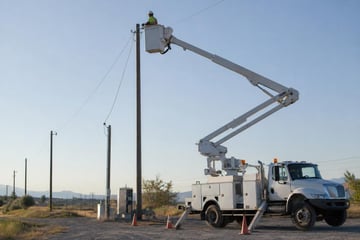
Service technicians use articulating boom lifts to access rooftop units, exterior lighting, and building envelopes. These machines often work in tight spaces where a scissor lift lacks reach or a crane is overkill. For HVAC companies adding a boom lift to an existing service fleet, no-money-down financing keeps the capital reserve intact for refrigerant, parts inventory, and payroll during slow seasons.
Related Equipment to Consider
Many contractors finance boom lifts alongside other aerial work platforms to diversify their fleet. Scissor Lifts financing covers indoor and slab work where vertical lift without horizontal outreach is sufficient. If your work involves vehicle service or heavy equipment maintenance, you may also want to explore Boom Lifts financing options that bundle multiple machines under a single master agreement, reducing paperwork and closing costs.
According to U.S. Census Bureau construction spending data, non-residential construction activity continues to drive demand for aerial lift equipment across most U.S. regions, supporting strong residual values for well-maintained units.
See what you qualify for and lock in terms before your next project starts.
Common Mistakes When Financing Aerial Lifts
Mismatching Term to Useful Life
Financing a boom lift for 60 months when the machine will be obsolete or fully depreciated in 36 is a recipe for negative equity. Match the term to how long you realistically plan to keep the equipment. If you expect to trade up every three years, do not sign a five-year loan without understanding the payoff structure.
Ignoring Delivery, Freight, and Setup Costs
The purchase price on the invoice is rarely the all-in cost. Freight from the dealer, site delivery, operator training, and initial inspection can add several thousand dollars. Some lenders allow these soft costs to be included in the financing amount; others do not. Ask upfront so you are not scrambling for cash after the deal is approved.
Overbuying Capacity
A 135-foot boom lift commands attention on the lot, but if 90 percent of your work happens under 60 feet, you are paying for capacity you rarely use. Right-size the machine to your typical job profile. It is better to finance a used 60-foot articulating lift that is fully utilized than a new mega-lift that sits in the yard.
Key Insight: Dealers often offer "free delivery" within a 100-mile radius. Beyond that, freight for a boom lift can run $3 to $5 per mile. If you are buying from an out-of-state auction, negotiate freight before you bid, or ask your lender whether transportation costs can be rolled into the financing.
Documentation You Will Need
Even for same-day approvals, have these ready: a signed equipment invoice or purchase agreement, your driver's license, three months of business bank statements, and a voided business check. For loans above $150,000, expect to provide two years of tax returns and a current year-to-date profit and loss statement. The cleaner your file, the faster the closing.
What Happens After Approval
Once approved, the lender issues a commitment letter or term sheet outlining the rate, payment, term, and any conditions. Review it carefully. Look for prepayment penalties, late fees, and insurance requirements. Most equipment lenders require you to carry physical damage insurance on the collateral naming them as loss payee.
After you sign and return the documents, the lender wires funds directly to the seller or releases them against a signed bill of sale. You take delivery, put the machine to work, and your first payment is typically due 30 to 45 days later. The entire process from application to funding can be completed in one to three business days when all parties move quickly.
Providing a clear, detailed invoice from a reputable dealer or broker is the single biggest factor in avoiding delays. Private-party sales require extra title verification and may take an additional day or two.
Put the right equipment to work
From $5,000 to $5 million, new or used, Provide Capital helps businesses nationwide finance the equipment they need.
Apply TodayFrequently Asked Questions
Can I really get boom lift financing with no money down?
Yes, qualified borrowers can finance 100 percent of the boom lift cost. The equipment itself serves as collateral, which reduces the lender's risk and eliminates the need for a cash down payment in many cases. Your credit profile, time in business, and the equipment's condition all factor into the structure.
Does no money down mean a higher interest rate?
Not necessarily. Rates vary by credit profile, equipment age and term length. A strong borrower financing a new or low-hour used boom lift can secure competitive rates without putting cash down. The collateral quality matters as much as the down payment size.
Can I finance a used boom lift with no down payment?
Yes, used boom lift financing with zero down is common. The lender will focus on the machine's age, brand, hours, and maintenance history. A well-maintained unit from a major manufacturer like JLG, Genie, or Skyjack often qualifies for the same advance rates as new equipment.
What credit score do I need for zero-down equipment financing?
There is no universal minimum, but a FICO score in the mid-600s and above generally opens the door to no-money-down structures. Businesses with lower scores may still qualify, though the lender may adjust the term, require a larger security deposit, or ask for additional documentation.
How long does approval take?
Same-day approvals are possible for deals under $250,000 with complete documentation. Larger transactions or complex ownership structures may take 24 to 48 hours. You can speed up the process by having your equipment invoice, bank statements, and business formation documents ready before applying.
Is a boom lift eligible for the Section 179 deduction in 2026?
Yes, boom lifts purchased outright or financed through a $1 buyout lease or EFA generally qualify for Section 179 in the 2026 tax year, subject to the annual inflation-adjusted limits and taxable income rules. Verify the specific 2026 thresholds with your CPA before filing.
Should I lease or loan a boom lift?
Choose a loan or $1 buyout lease if you want to build equity and claim depreciation deductions. Choose an FMV lease if you prefer lower payments, plan to upgrade frequently, or want to avoid residual value risk. Your accountant can model the after-tax cost of each option.
What happens if I want to pay off the financing early?
Prepayment terms vary by agreement. Some lenders charge no penalty; others apply a sliding scale based on remaining payments. Read the prepayment language in your term sheet before signing. If early payoff is likely, negotiate that term upfront or choose a lender with a no-penalty policy.
Next Steps
No-money-down boom lift financing puts the equipment to work immediately while preserving the cash you need for payroll, materials, and growth. Whether you are adding your first aerial lift or expanding a ten-machine fleet, the right structure depends on your credit profile, tax situation, and how long you plan to own the unit.
Gather your equipment quote, bank statements, and business formation documents. Then talk to a specialist about your specific machine and get a decision that lets you move forward with confidence.
Disclaimer: The information provided in this article is for general educational purposes only and is not financial, legal, or tax advice. Funding terms, qualifications, and product availability may vary and are subject to change without notice. Provide Capital does not guarantee approval, rates, or specific outcomes. For personalized information about your business funding options, contact our team directly.