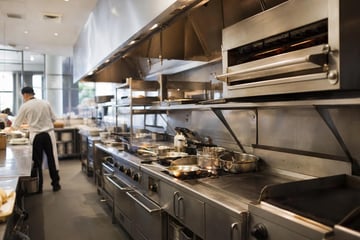
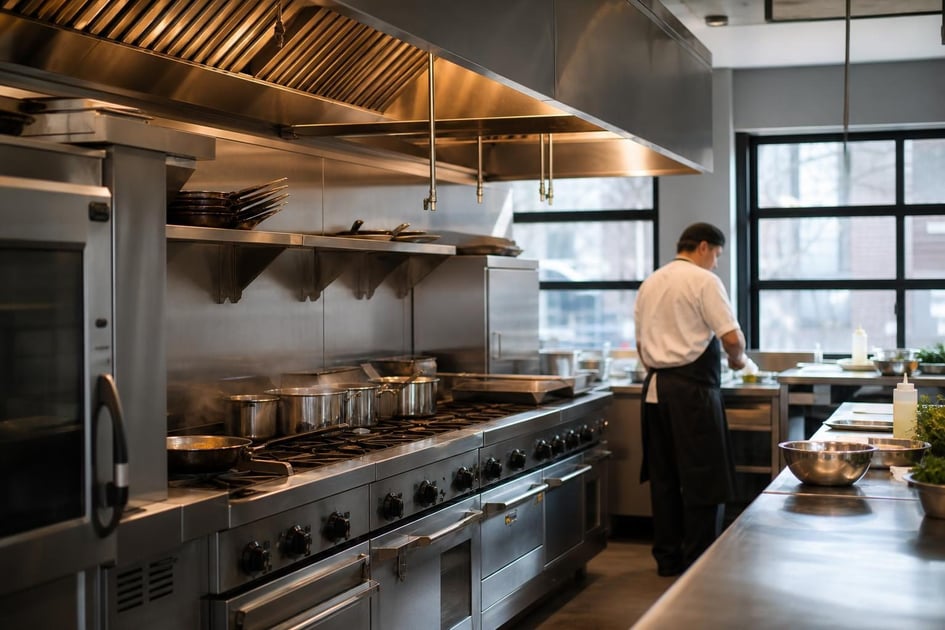
Most commercial cooking, refrigeration, prep, and serving equipment used in a food-service operation can be financed. Provide Capital finances transactions from $5,000 up to $5 million, with the equipment itself serving as collateral. That structure keeps rates competitive and allows same-day decisions for well-documented deals.
If you are wondering what restaurant food service equipment financing qualify for, the list is broad. Lenders categorize eligible items by function, condition, and resale value rather than by brand name. Below is a detailed breakdown of the categories owners ask about most often.
What Restaurant Food Service Equipment Financing Qualifies For
Cooking and Hot-Side Equipment
Gas and electric convection ovens, rack ovens, combination oven-steamers, tilt skillets, stock-pot ranges, charbroilers, griddles, wok ranges, and deep-fat fryers all qualify. Lenders look at the unit's age, manufacturer support, and remaining useful life. A ten-year-old fryer with no service history will be harder to finance than a three-year-old model with documented maintenance, but both can be eligible depending on the overall file.
Refrigeration and Cold Storage
Reach-in refrigerators and freezers, walk-in coolers and freezers, blast chillers, under-counter refrigeration, prep-table coolers, and commercial ice machines are standard collateral. Because refrigeration retains resale value well, lenders often advance a higher percentage of cost on these units. If you are buying a walk-in cooler package that includes the box, compressor, and installation, the entire package can usually be rolled into one Food Service Equipment financing schedule.
Prep and Processing Equipment
Floor mixers, planetary mixers, meat slicers, food processors, immersion blenders, dough sheeters, and vegetable cutters qualify. Even smaller ticket items can be bundled into a single financing transaction so long as the total meets the program minimum.
Front-of-House and Service Assets
Point-of-sale terminals, handheld tablets, self-order kiosks, espresso machines, and beverage dispensers are eligible. Some lenders treat furniture and décor as soft costs rather than hard collateral, so those items may need to be kept below a certain percentage of the total transaction. It is simpler to finance front-of-house equipment when it is bundled with kitchen assets on the same invoice.
Ventilation, Warewashing, and Supporting Systems
Type 1 and Type 2 hoods, fire-suppression systems, conveyor and door-type dish machines, three-compartment sinks, and water-filtration systems attached to the equipment can be included. Because these items are permanently installed, lenders verify that the business either owns the real estate or holds a long-term lease.
Key Insight: Bundling several smaller purchases into one financing transaction often improves approval terms compared with financing a single low-dollar item. A $15,000 package containing a mixer, slicer, and prep table presents less risk than a $4,000 single-item request because the collateral is more diversified and the revenue impact of the equipment is clearer.
Get a fast decision on your equipment
Applying takes just a few minutes, and decisions can come as soon as the same day.
Start Your ApplicationNew vs. Used Equipment Financing Rules
Both new and used equipment can be financed, but the terms differ. New equipment typically carries longer available terms—up to five or seven years depending on the asset—and may require little or no down payment for well-qualified borrowers. Used equipment is judged on remaining useful life. A two-year-old convection oven may qualify for a four-year term, while a six-year-old unit may be limited to two or three years. The key is the expected collateral value at the end of the term. If you are buying at auction or from a closing restaurant, provide photos, model numbers, and a condition report to speed underwriting.
When you finance used equipment, the lender also checks the secondary market. Brands with national service networks and readily available parts command better terms than obscure imports. If the seller is a licensed dealer, the transaction is usually smoother because the dealer can provide a warranty and a clear title. Private-party sales are still possible, but expect the underwriter to request a third-party inspection or an equipment appraisal.
Lease vs. Loan: What to Know Before You Sign
Restaurant owners often choose between a capital lease or finance agreement and a traditional equipment term loan. The right structure depends on your tax strategy, balance-sheet preferences, and how long you plan to keep the asset.
| Factor | Equipment Loan | Capital Lease / Finance Agreement |
|---|---|---|
| Ownership | You own the equipment; lender files a UCC lien | You own the equipment at the end for a nominal buyout |
| Down payment | Often 0% to 20% depending on credit and equipment age | Often $0 down or one payment in advance |
| Term length | 2 to 7 years, tied to equipment life | 2 to 5 years is most common |
| Monthly obligation | Fixed principal and interest | Fixed payment; may be called a lease payment for tax purposes |
| Tax treatment | Interest deduction plus depreciation; may elect Section 179 | Section 179 may apply in many structures; consult your CPA |
| Collateral | Equipment secures the loan | Equipment secures the agreement |
| Prepayment | Varies; ask about prepayment discounts before signing | May have residuals or buyout schedules; review carefully |
If you plan to keep the equipment for its full useful life and want to build equity in the asset, a loan or $1 buyout lease is usually the better fit. If you expect to upgrade every three years, ask your lender about fair-market-value options, though those are less common in kitchen equipment than in technology.
Pro Tip: Before you sign, ask whether the contract includes a prepayment penalty or a minimum interest clause. Some restaurant owners assume they can pay down the balance early without cost, only to learn that the lender is entitled to a percentage of remaining interest or a fixed fee. Get the answer in writing before you accept the terms.
How the 2026 Tax Treatment Works
For tax year 2026, the Internal Revenue Code still allows business owners to deduct the cost of qualifying equipment through depreciation and, in many cases, through Section 179 expensing. Under Section 179, a business that places qualifying equipment into service during the 2026 tax year may be able to deduct some or all of the cost on its 2026 return, subject to an inflation-adjusted annual limit and a phase-out threshold. The exact dollar limits for 2026 change with inflation adjustments, so you should confirm the current-year ceiling with a CPA before you make a purchase decision.
Bonus depreciation, which allowed accelerated first-year deductions in prior years, has been phasing down. For 2026, the available bonus-depreciation percentage is lower than in previous years, meaning more of your deduction may need to be spread over the asset's recovery period through MACRS. Again, a tax professional can model whether Section 179, bonus depreciation, or regular MACRS yields the lowest net cost for your specific situation.
If you lease the equipment, the structure of the lease determines who claims the deduction. In a true tax lease, the lessor may take the depreciation while you deduct the lease payments. In a finance lease or loan structure, you typically claim the depreciation. Do not assume; have your CPA review the documents.
Who Qualifies and What Lenders Review
Lenders evaluate restaurant equipment financing requests on several factors. The equipment itself is the primary collateral, which means the credit decision weighs heavily on the asset value, but the borrower's overall profile still matters.
Credit Profile
There is no single cutoff score. Lenders look at personal credit history, business credit if it is established, recent derogatory events, and the overall trend. A strong credit profile can improve the rate and reduce or eliminate the down payment requirement. Weaker credit does not automatically disqualify you, but it may shorten the available term or increase the upfront investment.
Revenue and Cash Flow
Underwriters review recent bank statements to verify that incoming revenue can support the new payment. They look at average daily balances, deposit frequency, and any signs of strain such as repeated overdrafts. Consistent cash flow often matters more than top-line sales volume.
Time in Business
Lenders prefer to see an operating history that demonstrates the ability to manage expenses and revenue cycles. Two or more years in business is typical for the most favorable terms, though well-capitalized operations with shorter histories can still be considered when the collateral and cash flow are strong.
Equipment Specifics
The make, model, year, and condition of the equipment affect the loan-to-value ratio. High-demand brands with national service networks receive more aggressive terms than obsolete or specialty units with limited resale channels.
By the Numbers: A typical restaurant equipment financing transaction in the $25,000 to $100,000 range carries a term of three to five years. Monthly payments vary by credit profile, equipment age and term, but structuring the deal over four years instead of two can cut the monthly obligation significantly without changing the collateral requirement.
Find the right financing structure
Tell us about the equipment you need and we will show you the options that fit your business.
See Your OptionsIndustry-Specific Use Cases
The restaurant and food service sector is one of the largest employer categories in the U.S., according to U.S. Census Bureau data. Within that broad category, different sub-sectors finance equipment in different ways.
Full-Service Restaurants
A full-service restaurant replacing a four-burner range, adding a second convection oven, and upgrading its dish machine can bundle all three into one transaction. The lender collateralizes each piece, and the owner makes a single monthly payment.
Quick-Service and Fast-Casual
QSRs often finance high-volume fryers, heated holding cabinets, and rapid-cook ovens. Because throughput directly affects revenue, lenders view this equipment as revenue-generating collateral.
Food Trucks and Mobile Caterers
Mobile operations need generators, commissary-grade cooking equipment, and cold storage built into tight spaces. Food Truck financing covers the interior build-out and cooking line when sourced from a qualified vendor. The same underwriting principles apply: the equipment must have identifiable resale value and be properly installed.
Bakeries, Cafés, and Specialty Shops
Deck ovens, proofers, dough retarders, and espresso machines are common financing targets. These businesses often seasonally upgrade equipment before holiday rushes, so timing the application six to eight weeks before the busy season is wise.
Catering Commissaries
Large-scale mixers, blast chillers, and packaging equipment help commissaries meet bulk contracts. Because the equipment serves signed agreements, lenders may factor contract value into the approval decision.
Documentation You Will Need
Having paperwork ready before you apply shortens the decision timeline. Most lenders request:
- A completed application with ownership details
- A written quote or invoice from the equipment vendor
- Three to four months of recent business bank statements
- A current profit-and-loss statement or recent tax return
- A copy of your business license or Articles of Incorporation
- Proof of property ownership or a lease agreement for installed equipment
If the equipment is used, add photos, serial numbers, and any maintenance records. For auction purchases, a bill of sale and proof of payment may be required. The Small Business Administration publishes general guidance on business-loan documentation that can help you organize these items before you apply.
Common Mistakes When Financing Kitchen Equipment
Under-sizing the Loan Amount
Owners sometimes request financing for the equipment only, then realize they need another $3,000 for delivery, rigging, electrical, or gas-line work. Ask your vendor for an installed price and consider rolling those soft costs into the transaction up to the lender's allowed percentage.
Ignoring Total Cost of Ownership
A cheaper used reach-in refrigerator may cost more over five years than a new energy-efficient model when you factor in utility rebates and repair bills. Financing the better unit often makes more sense than optimizing for the lowest monthly payment today.
Skipping the Prepayment Review
Always ask what happens if you pay off the balance early. Some agreements apply all remaining interest; others offer a discount. Know before you sign.
Not Verifying Vendor Reputation
Lenders prefer to pay established vendors with clear title. If you are buying from an individual or an out-of-business restaurant, expect extra documentation requirements and possibly a lower advance rate.
What Happens After You Apply
Once you submit a complete file, the lender reviews credit, collateral, and cash flow. For transactions under $150,000, a same-day decision is often possible when the application arrives with a clean equipment quote and bank statements. Larger requests or specialized collateral may take one to two business days.
After approval, the lender issues a term sheet or finance agreement. You review and sign, and the lender verifies the equipment—sometimes through an inspection or by paying the vendor directly. Funding usually occurs within one to three business days of final document execution. The lender files a UCC-1 financing statement on the equipment to perfect its lien, and you take possession.
Get a same-day decision on your equipment by having your vendor quote and bank statements ready when you apply.
Worked Example: Financing a Line-Cook Package
Suppose you are opening a second location and need a package for the hot line: a six-burner range, a double-stack convection oven, a 40-pound fryer, and a refrigerated prep table. The equipment invoice is $42,000, and installed costs add another $3,500. You request financing for the full $45,500.
With strong credit and two years of operating history, you might qualify for a 48-month term. Rates vary by credit profile, equipment age and term, but structuring the deal over four years instead of two keeps the monthly obligation manageable while preserving working capital for payroll and inventory. At the end of the term, you own the equipment outright, and the UCC filing is released.
If you chose a shorter 24-month term, the monthly obligation would be higher, but the total cost of financing would be lower. The right choice depends on your current cash flow and whether you plan to renovate again in three years. Industry analysts at Forbes have noted that spreading equipment costs over the useful life of the asset is one of the most reliable ways to preserve liquidity in a low-margin business.
Talk to a specialist about your specific machine and run the numbers for both term lengths before you commit.
Ready to move forward?
More than 10,000 businesses have financed equipment with Provide Capital. See what you qualify for today.
Get StartedFrequently Asked Questions
What types of restaurant equipment can be financed?
Nearly all commercial kitchen equipment qualifies, including cooking, refrigeration, prep, warewashing, ventilation, and point-of-sale systems. Items must be used for business purposes and have identifiable resale value.
Can I finance used or auction-purchased equipment?
Yes, used equipment is eligible. Lenders evaluate age, condition, and remaining useful life. Provide photos, serial numbers, and maintenance records to support the collateral value.
Does the equipment itself serve as collateral?
Yes. With Provide Capital, the equipment secures the financing, which helps keep rates competitive and can reduce the need for additional real estate or personal asset liens.
How long are typical repayment terms?
Terms range from two to seven years depending on the equipment type, age, and your credit profile. New refrigeration and cooking equipment often support longer terms than used smallwares.
Can I include installation, delivery, and sales tax in the financing?
Most lenders allow soft costs such as delivery and installation up to a set percentage of the equipment value. Sales tax can often be included. Ask your financing specialist about the specific caps.
Will financing restaurant equipment affect my line of credit?
Because equipment financing is a self-collateralized installment obligation, it typically does not reduce an existing revolving line of credit the way a draw on that line would. It appears as a separate trade line on your credit report.
What happens if I want to pay off the financing early?
Policies vary. Some agreements allow prepayment with a discount on remaining interest; others include a minimum interest clause. Review this section carefully before signing, and get any clarification in writing.
Do I need to make a down payment?
Down payment requirements vary. Well-qualified borrowers can sometimes finance 100 percent of the equipment cost. Other files may require 10 to 20 percent down, especially if the equipment is used or the credit history is limited.
Next Steps
If you are preparing to buy or upgrade commercial kitchen equipment, start by gathering your vendor quotes and recent bank statements. Review the equipment list to make sure nothing is missing—installation, delivery, and small accessories add up quickly. Then compare term options to see how the monthly obligation fits your cash flow.
Restaurant Food Service equipment financing through Provide Capital covers transactions from $5,000 to $5 million nationwide. See what you qualify for and get a decision as fast as same day.
Disclaimer: The information provided in this article is for general educational purposes only and is not financial, legal, or tax advice. Funding terms, qualifications, and product availability may vary and are subject to change without notice. Provide Capital does not guarantee approval, rates, or specific outcomes. For personalized information about your business funding options, contact our team directly.