Box Trucks Financing No Money Down: The Bottom Line
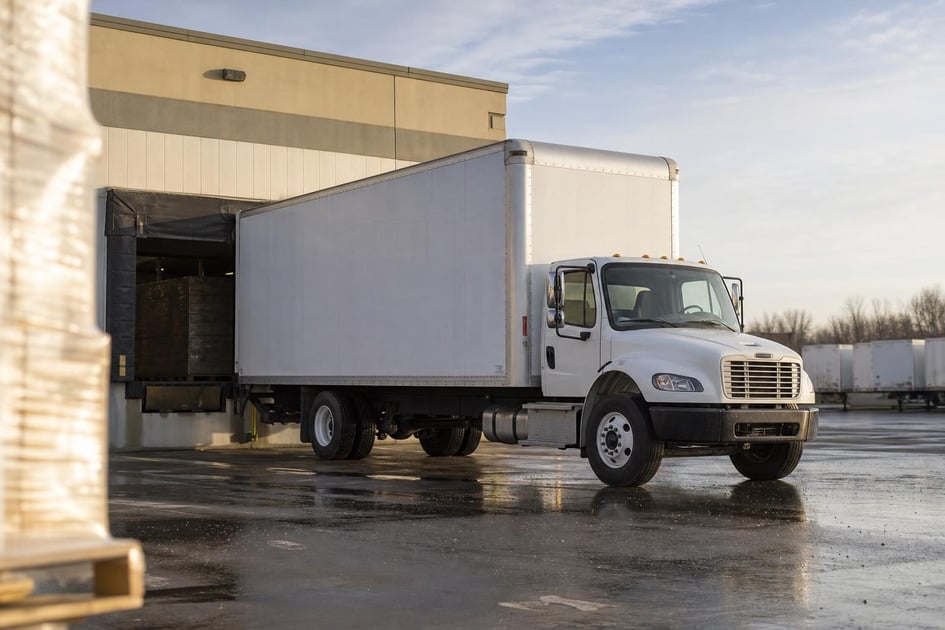
Yes, you can finance a box truck with no money down. Lenders who specialize in equipment financing use the truck itself as collateral, which means qualified buyers can secure 100 percent financing without draining operating cash. The trade-off is that your credit profile, time in business, and the age of the vehicle will shape the rate and term you are offered. Rates vary by credit profile, equipment age and term length. Provide Capital offers Box Trucks financing for new and used straight trucks, cutaway vans, and cube trucks nationwide, with amounts ranging from $5,000 to $5 million.
Get a fast decision on your equipment
Applying takes just a few minutes, and decisions can come as soon as the same day.
Start Your ApplicationWhat "No Money Down" Actually Means
A no-money-down box truck loan does not mean the truck is free. It means the lender covers the full purchase price, and you repay the balance over a fixed term. Because the truck secures the loan, the lender has collateral to recover if payments stop. That security is what makes zero-down financing possible for established businesses and strong-credit buyers.
For owner-operators and small fleet owners, preserving cash is often more valuable than minimizing total interest. A down payment reduces the financed amount and can improve the rate, but it is not always required. Rates vary by credit profile, equipment age and term length. If your business has consistent revenue and you are buying a truck that will generate income immediately, a lender may approve the full cost.
Key Insight: Lenders view newer box trucks as lower risk because the resale market for three- to five-year-old medium-duty trucks is deeper than for ten-year-old units. That resale certainty often matters more to an underwriter than a down payment.
How Box Truck Financing Works
The process is straightforward. You identify the truck, submit an application with basic business and financial information, and the lender evaluates your creditworthiness alongside the equipment value. Approval can come the same day for straightforward files, though complex situations may take longer. Same-day approvals are possible.
Once approved, the lender typically pays the seller directly. You take title and register the vehicle in your business name. Repayment terms for box trucks usually run from 24 to 72 months, depending on the truck age and your preferences. Shorter terms mean higher monthly payments but less total interest. Longer terms improve monthly cash flow.
Because the equipment itself is the collateral, rates stay competitive compared to unsecured business loans. The lender knows exactly what secures the debt, and box trucks hold value well in the commercial resale market.
Who Qualifies for Zero-Down Box Truck Financing
Lenders look at four main factors when deciding whether to approve 100 percent financing.
Credit History
A strong personal credit score helps. Most equipment lenders want to see a history of on-time payments and manageable debt loads. If your credit has blemishes, you may still qualify, but the lender may ask for a down payment or a shorter term to offset the added risk.
Time in Business
Businesses operating for two or more years have an easier path to zero-down approval. If you have been in business for less than two years, a lender may still work with you if you have strong personal credit and documented revenue, but the down payment requirement rises.
Revenue and Cash Flow
Lenders want evidence that your business can cover the new payment. Bank statements showing consistent deposits, tax returns, or profit-and-loss statements all help. The key is demonstrating that the truck will earn more than it costs each month.
Equipment Age and Condition
Newer trucks are easier to finance at 100 percent. A brand-new or one-year-old box truck from a major manufacturer carries a predictable residual value. A ten-year-old truck with high mileage may still be financeable, but the lender may cap the term or require a down payment to protect against rapid depreciation.
Pro Tip: If you are buying a used box truck, request a pre-purchase inspection report from an independent diesel mechanic. Lenders rarely require it, but submitting one with your application signals that you are a serious buyer and can speed up the decision.
New vs. Used Box Trucks
The decision between new and used affects more than the sticker price. It changes your financing terms, tax treatment, and operating costs.
New box trucks come with manufacturer warranties, lower maintenance costs in the first few years, and the latest fuel-efficiency standards. Lenders offer longer terms on new units because the depreciation curve is predictable. For a $75,000 new box truck, a 60-month term with no money down is realistic for a qualified buyer.
Used trucks cost less upfront but may carry higher interest rates or shorter maximum terms. A five-year-old box truck might be capped at a 48-month term. The savings on the purchase price can outweigh the slightly higher financing cost, especially if the truck has documented maintenance records and remaining engine warranty.
When comparing, look at total cost of ownership: purchase price, financing cost, expected maintenance, fuel economy, and insurance. A used truck that costs $35,000 but needs $10,000 in repairs in year one may be more expensive than a $65,000 new unit with a warranty.
If your operations also require off-site hauling of loose material, Dump Trucks financing is available under the same collateral-based structure.
Lease vs. Loan
Some owner-operators consider leasing instead of buying. The right choice depends on how long you plan to keep the truck and how you want to handle maintenance and disposal.
| Factor | Loan | Lease |
|---|---|---|
| Ownership | You own the truck at the end of the term | Lender owns it; you return or purchase at residual |
| Down payment | Often $0 for qualified buyers | Usually first and last payment upfront |
| Monthly payment | Higher, but you build equity | Lower, but no equity |
| Mileage limits | None | Yes, with per-mile penalties |
| Maintenance | Your responsibility | Often included or bundled |
| Tax treatment | Depreciation and interest deduction | Lease payments deducted as operating expense |
| Best for | Long-term ownership | Short-term use or frequent upgrades |
A loan makes sense if you plan to keep the truck for five or more years and want to build equity. You own the asset, can modify it, and face no mileage restrictions. A lease works better if you want predictable monthly costs, prefer to upgrade every three years, and do not want to deal with resale.
From a tax perspective, a loan lets you depreciate the truck and potentially deduct interest. A lease typically allows you to deduct lease payments as an operating expense. For tax year 2026, the specific deductions available depend on your business structure and total equipment purchases. Speak with a CPA to determine which structure minimizes your liability.
By the Numbers: A $60,000 box truck financed over 60 months with no money down might carry a monthly payment in the low four figures for a well-qualified borrower. Shorten the term to 36 months and the payment rises, but the total interest paid drops substantially. Rates vary by credit profile, equipment age and term length.
Find the right financing structure
Tell us about the equipment you need and we will show you the options that fit your business.
See Your OptionsTax Treatment for 2026
Equipment financing becomes more attractive when you factor in tax deductions. For tax year 2026, the IRS allows businesses to deduct the cost of qualifying equipment through Section 179 and bonus depreciation, subject to annual limits and phase-out thresholds.
Section 179 lets you deduct the full purchase price of qualifying equipment in the year you place it in service, up to an inflation-adjusted annual limit. Bonus depreciation allows additional first-year deductions. The exact limits for tax year 2026 are set by the IRS and adjusted for inflation. Because these figures change annually and depend on your total equipment purchases, consult a CPA before counting on a specific deduction.
If you finance the truck with no money down, you still own the equipment and can claim the depreciation or Section 179 deduction even though you have not yet paid the full purchase price out of pocket. That timing difference - deducting now while paying over time - is one of the main financial advantages of equipment financing.
Keep in mind that deduction limits apply to the total equipment you place in service during 2026, not per vehicle. If you buy multiple trucks or other machinery, the aggregate cost matters. The SBA guidance on small business financing notes that equipment loans are a primary growth tool for firms expanding physical capacity.
Industries That Rely on Box Trucks
Box trucks fill the gap between cargo vans and semis. They are essential in several industries that Transportation equipment financing serves nationwide. According to U.S. Census Bureau industry data, transportation and warehousing remain among the largest small-business employer sectors.
Last-mile delivery. E-commerce growth has made straight trucks and cutaway vans the backbone of local delivery. A 16- to 26-foot box truck handles residential routes that a tractor-trailer cannot.
Moving and storage. Local movers need reliable cube vans with lift gates. The equipment works five to six days a week, so downtime is expensive. Financing with no money down lets a moving company add capacity before peak season.
Food service and catering. Box trucks with insulated cargo areas transport perishable goods, equipment, and event supplies. Unlike reefer trucks, they do not require refrigeration units, so the purchase price and maintenance costs are lower.
Landscaping and HVAC. Crews use box trucks to haul mowers, compressors, and tools. A 24-foot truck with a ramp or liftgate keeps crews efficient and reduces trailer dependency.
Provide Capital finances box trucks for these industries and others, with amounts ranging from $5,000 to $5 million. Box Trucks financing covers new and used straight trucks, cutaway vans, and cube trucks.
Key Insight: Seasonal businesses like landscaping and moving often buy box trucks in late winter or early spring, before the busy season generates revenue. Lenders who understand your seasonality may structure payments with a skip period or seasonal schedule to match cash flow.
Common Mistakes to Avoid
First, do not shop for the truck before checking your credit and financials. Knowing where you stand prevents surprises and lets you negotiate from a position of strength. Second, avoid stretching the term to the maximum just to lower payments. A 72-month term on a used truck may leave you owing more than the vehicle is worth in year four.
Third, read the fine print on fees. Some lenders charge documentation fees, origination fees, or prepayment penalties. Ask for an amortization schedule so you see exactly how much interest you will pay over the life of the loan. Fourth, do not forget insurance. Lenders require physical damage and liability coverage, and premiums vary by truck value, driver history, and route.
Industry analysts at Forbes have noted that rising commercial vehicle demand can pressure buyers to rush purchases, which increases the risk of overpaying or accepting unfavorable financing.
What Documentation You Need
To keep the process moving, gather these items before you apply: your last two years of business tax returns, three to six months of business bank statements, a current profit-and-loss statement, a copy of the truck listing or invoice, and your driver's license. If you are buying from a private seller, the lender may also need a bill of sale and title history.
For larger requests - approaching the upper end of the range - the lender may ask for a balance sheet or a copy of your commercial insurance binder. Having these ready can mean the difference between a same-day decision and a week of back-and-forth.
Get a same-day decision on your equipment by applying with your documentation in hand.
What Happens After Approval
Once the lender approves your file, they issue a funding letter or agreement outlining the rate, term, and payment schedule. Review it carefully. After you sign, the lender sends funds to the seller or dealer. You pick up the truck, add it to your insurance policy, and begin operations.
Your first payment is typically due 30 to 45 days after funding. Set up automatic payments to avoid missed deadlines. If your business has a strong year, ask the lender about early payoff options. Some loans allow extra principal payments without penalty, which reduces total interest.
Put the right equipment to work
From $5,000 to $5 million, new or used, Provide Capital helps businesses nationwide finance the equipment they need.
Apply TodayFrequently Asked Questions
Can I really get 100 percent financing on a box truck?
Yes, if your credit, revenue, and time in business meet the lender's standards. The truck acts as collateral, which reduces the lender's risk and makes zero-down deals possible for qualified borrowers.
Does no money down mean higher rates?
Not always, but it can. A down payment reduces the lender's exposure, which may improve the rate you are offered. With no money down, the lender is financing the full purchase price, so the rate reflects that additional risk. Rates vary by credit profile, equipment age and term length.
Can I finance a box truck with bad credit?
It is possible, though harder. Expect a higher down payment requirement, a shorter term, or a higher rate. Some lenders specialize in near-prime and subprime equipment financing, but terms are less favorable than for strong-credit borrowers.
How long are box truck financing terms?
Terms typically range from 24 to 72 months. New trucks qualify for longer terms. Used trucks, especially those over five years old, may be limited to 36 or 48 months.
What credit score do I need for no money down?
There is no universal cutoff, but a personal credit score in the mid-600s or higher improves your chances significantly. Lenders also weigh business revenue, time in business, and the equipment value.
Is it better to lease or finance a box truck?
Finance if you want to own the truck, build equity, and deduct depreciation. Lease if you prefer lower monthly costs, predictable maintenance, and the ability to upgrade frequently. Your CPA can help you compare the tax impact for tax year 2026.
Can I finance a private-party sale?
Yes, many equipment lenders fund private-party transactions. You will need a clear title, a bill of sale, and often a third-party inspection to confirm the truck's condition and value.
How fast can I get approved?
Same-day approvals are possible for complete applications with strong credit and clear documentation. More complex files may take two to five business days.
Ready to Add a Box Truck to Your Fleet?
No-money-down box truck financing lets you put a revenue-generating asset to work without draining your cash reserves. Whether you need a 16-foot cutaway for city deliveries or a 26-foot straight truck for regional routes, the right financing structure keeps your balance sheet healthy and your operations moving.
Start by reviewing your credit, gathering your financial documents, and identifying the truck that fits your route. Then see what you qualify for and talk to a specialist about your specific machine.
Disclaimer: The information provided in this article is for general educational purposes only and is not financial, legal, or tax advice. Funding terms, qualifications, and product availability may vary and are subject to change without notice. Provide Capital does not guarantee approval, rates, or specific outcomes. For personalized information about your business funding options, contact our team directly.