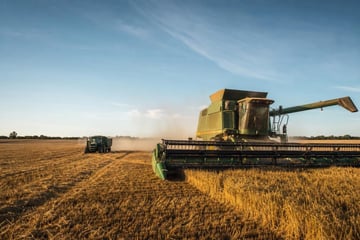
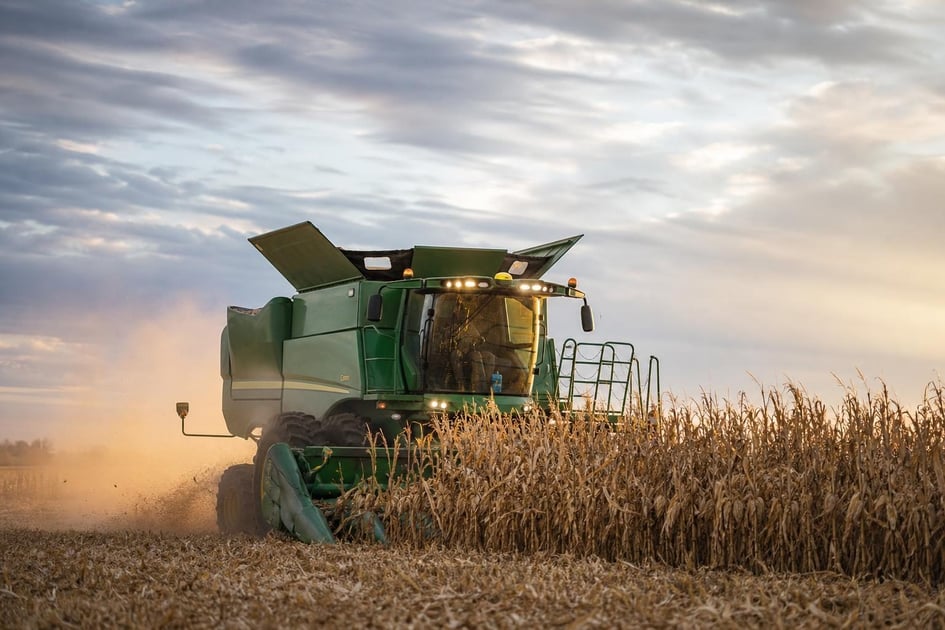
Combine financing rates vary by credit profile, equipment age and term length. For a new Class 8 or 9 machine with a strong borrower, the rate will sit at the competitive end of the agriculture equipment spectrum. For a 10-year-old combine financed by a newer operation, the rate will reflect the additional risk. The equipment itself serves as collateral, which keeps rates lower than unsecured borrowing, but the exact number depends on the specific deal.
What Determines Your Combine Financing Rate
Provide Capital finances new and used business equipment from $5,000 to $5 million nationwide. Combines fall squarely in the upper middle of that range, with new machines often running between $400,000 and $750,000 depending on header configuration, grain tank size and technology package. Used combines three to five years old typically trade between $200,000 and $450,000, while units over 10 years old can range from $75,000 to $180,000. Because the equipment secures the loan, lenders weight the asset's value and remaining useful life heavily when setting the rate.
Several factors move the rate up or down. Understanding them before you apply helps you structure the deal and avoid surprises at closing.
Credit Profile and Time in Business
A borrower with a 700-plus personal credit score, clean trade lines and two or more years of filed tax returns for the farm operation will generally access the most competitive terms. That does not mean a lower score disqualifies you. Provide Capital works with a broad range of credit profiles, but the rate adjusts to reflect the risk. A score in the low 600s may still secure approval, though the monthly obligation will be higher to compensate for the increased default probability. Time in business matters for the same reason. An operation with five years of Schedule F income demonstrates staying power; a first-year entity has no track record, so the underwriter looks harder at personal credit and liquid assets.
Equipment Age and Expected Life
The age and hours on the combine directly affect the rate. A new 2025 or 2026 model with under 100 engine hours carries the strongest collateral value. Lenders know that if the borrower defaults, they can remarket the machine and recover most of the balance. A seven-year-old combine with 2,000 separator hours still holds value, but the depreciation curve steepens. Financing a 15-year-old combine is possible, but the term may be capped at 36 or 48 months, and the rate will rise because the collateral cushion narrows. The sweet spot for used combine financing is usually three to seven years old with documented maintenance records.
Down Payment and Loan Term
The more equity you put into the deal, the lower the rate tends to be. A 10 percent down payment is often the minimum for used equipment, while 15 to 20 percent is common for new combines. The term length also changes the rate. A 36-month loan usually carries a lower rate than a 72-month loan because the lender's money is at risk for half the time. However, the 72-month term produces a lower monthly obligation, which many farms prefer for cash-flow management during thin-margin years. You can see what you qualify for and compare term options side by side.
Key Insight: Lenders often cap the term at the remaining useful life of the combine minus one year. If the underwriter expects a machine to hold value for eight years, the maximum term will be 84 months. On a 12-year-old combine, the term may be limited to 36 or 48 months regardless of your credit strength.
Get a fast decision on your equipment
Applying takes just a few minutes, and decisions can come as soon as the same day.
Start Your ApplicationNew vs. Used Combines: How Age Moves the Rate
New combines command lower rates because the collateral is strongest and the dealer warranty reduces repair risk. Used machines save money upfront but cost more to finance over time. The trade-off is straightforward: pay more for the asset and less for the money, or pay less for the asset and more for the money. For an operation that trades every three to five years, new may pencil out better. For a cash-conscious farmer who maintains equipment in-house, a late-model used combine can be the smarter bet.
| Factor | New Combine | Used Combine (3–5 Years) | Used Combine (10+ Years) |
|---|---|---|---|
| Typical price range | $400,000 – $750,000 | $200,000 – $450,000 | $75,000 – $180,000 |
| Down payment | 15% – 20% | 10% – 15% | 15% – 25% |
| Typical term | 48 – 84 months | 36 – 72 months | 24 – 48 months |
| Rate outlook | Most competitive | Moderate | Higher |
| Collateral value | Highest | Strong | Limited |
| Warranty status | Full dealer coverage | Partial or expired | None |
Lease vs. Loan: Which Structure Fits Your Operation?
Farmers often assume a loan is the only way to buy a combine, but leasing can make sense depending on your tax situation and upgrade cycle. Both structures use the equipment as collateral, but the ownership path and balance-sheet impact differ.
Equipment Loan
An equipment loan is the most common structure for combines. You make a down payment, the lender pays the dealer or private seller, and you own the machine from day one. The lender files a UCC-1 lien against the combine as collateral. Once you make the final payment, the lien releases and the title is free and clear. Loans work best for farmers who plan to keep the combine for seven or more years, who want to build equity, and who can use the depreciation deductions on their tax return.
Finance Lease
A finance lease, sometimes called a $1 buyout lease, functions almost exactly like a loan for accounting purposes. You make monthly payments, and at the end of the term you own the combine for a nominal amount, often $1. The rate may be slightly higher than a loan because the lessor retains legal title until the final payment, but the difference is usually marginal. The main advantage is simplicity: the lessor handles the titling paperwork, and the buyout is automatic. Finance leases suit farmers who want ownership but prefer a streamlined administrative process.
Operating Lease
An operating lease, or true lease, is less common for combines but worth considering if you upgrade every two to three years. In this structure, you do not own the combine at the end of the term. You return it, buy it out at fair market value, or trade into a new lease. The monthly payment is typically lower than a loan because you are only paying for the portion of the machine's life you use. However, you forgo depreciation and Section 179 benefits. Operating leases work for large row-crop operations that run high hours and want a predictable annual equipment budget without resale risk.
Tax and Balance Sheet Differences
For tax year 2026, both loans and finance leases generally allow you to claim Section 179 expensing and depreciation because you are considered the owner for tax purposes. Operating leases usually let you deduct the payment as a rental expense, which can be simpler but may yield a smaller first-year deduction. The exact benefit depends on your tax bracket, profit level and whether you have taxable income to absorb the write-off. Never structure a deal for tax reasons alone. Talk to your CPA about how a combine purchase affects your 2026 return before you sign.
Pro Tip: If you finance a combine in October, November or December, you may still place it in service before year-end and capture a 2026 tax benefit. Lenders who can fund within 24 to 48 hours of approval make this timeline possible. Waiting until the last week of December is risky, though, because dealer paperwork and insurance certificates can slip into January.
2026 Tax Treatment for Combine Purchases
The tax code treats farm equipment favorably, but the rules change frequently. For tax year 2026, Section 179 allows qualifying businesses to expense the cost of eligible equipment in the first year, subject to a total investment limit and a taxable income ceiling. The exact dollar limits are adjusted annually for inflation, so consult your CPA for the 2026 figures before you budget. Bonus depreciation continues to phase down from the elevated levels of prior years, though the specific percentage for 2026 depends on legislative updates at press time. Your accountant can run both scenarios—Section 179 alone, or Section 179 plus bonus depreciation—to see which delivers the larger 2026 deduction.
Real-world examples underscore the scale of these purchases. Forbes coverage of equipment write-offs for farm operations highlighted an Iowa corn farmer who faced an $80,000 repair bill on her combine and noted that a replacement would have cost $750,000, illustrating why upfront expensing provisions matter to working farms.
One wrinkle specific to agriculture: if you receive a USDA cost-share payment for the equipment, the basis you can depreciate may be reduced. Also, if you use the combine partly for personal use or non-farm rental, you must allocate the deduction accordingly. Keep your purchase invoice, financing agreement and insurance binder in the same file; the IRS may ask for all three if they examine your 2026 return.
How Different Terms Change Your Total Cost
Most borrowers focus on the monthly payment, but the term length changes the total cost of borrowing significantly. On a $500,000 combine, a 20 percent down payment leaves $400,000 to finance. Over 48 months, you pay the balance down fast but the monthly obligation is high. Over 72 months, the monthly load drops, giving you breathing room if commodity prices soften, yet the total interest paid over the life of the deal is higher. A 36-month term is aggressive for most farm cash flows but can work for a highly profitable operation that wants to minimize total interest.
Down payment size matters too. Every $10,000 you put down reduces the financed amount and the lender's risk. On a $350,000 used combine, a $50,000 down payment finances $300,000. A $75,000 down payment finances $275,000 and may push you into a better rate tier. If you have excess cash from a strong harvest, deploying it as equity can save thousands over the life of the agreement. Just keep enough reserves for seed, chemicals and fuel; never zero out your operating account for a down payment.
By the Numbers: A farmer who puts 20 percent down and chooses a 60-month term instead of 72 months on a mid-six-figure combine will typically save several thousand dollars in total interest cost, assuming the rate stays constant. The shorter term also builds equity faster, which improves your balance sheet if you need to pledge assets for an operating line the following spring.
See what you qualify for
The equipment itself secures the financing, which keeps rates competitive. Checking your options takes minutes.
Check Your OptionsQualifying for Combine Financing
Provide Capital serves the agriculture industry nationwide, from the corn belt to the delta. Agriculture equipment financing covers combines, tractors, planters and more, with same-day approvals possible when the file is complete. Knowing what the underwriter wants before you apply speeds the process and reduces back-and-forth.
Minimum Requirements
You do not need perfect credit. Provide Capital considers applicants across the credit spectrum. The key is demonstrating the ability to repay. For a combine in the $300,000 to $500,000 range, underwriters typically want to see that your farm's gross revenue can support the new payment alongside your existing debt. A debt-service coverage ratio above 1.25 is generally preferred, though exceptions exist for strong collateral or significant down payments. Personal credit scores below 600 may require additional documentation or a larger equity injection, but they are not an automatic decline.
Documentation You Will Need
Gather these items before you start the application: your last two years of tax returns, including Schedule F; a current personal financial statement; the equipment invoice or purchase agreement; proof of insurance with the lender listed as loss payee; and a voided business check for ACH setup. If you are buying from a private party rather than a dealer, you also need the seller's lien release or title. For corporations or LLCs, include the articles of incorporation or operating agreement and a corporate resolution authorizing the borrowing. Having everything in one PDF speeds review and can mean the difference between a same-day decision and a three-day delay.
Common Mistakes That Slow Approval
The most frequent delay is an incomplete financial picture. Farmers sometimes submit only the personal return and forget the Schedule F, which is where the farm's income lives. Another error is requesting financing for a combine priced well above the operation's revenue. A $600,000 combine on a farm that shows $200,000 in gross sales raises questions about repayment capacity unless there is a strong cosigner or substantial outside income. A third mistake is failing to secure insurance before closing. Lenders will not fund without proof of coverage. Finally, do not buy the machine before applying. The lender needs to underwrite the deal and issue a pay-off letter or wire instructions to the seller. Buying first and seeking reimbursement rarely works.
The Approval Timeline and What Comes Next
Once you submit a complete file, the review process begins. For straightforward deals—strong credit, dealer invoice, clear title—the decision can come the same day. More complex files, such as private-party sales with a missing title or borrowers with recent credit events, may take 24 to 72 hours. After approval, you receive a term sheet outlining the rate, term, down payment and payment frequency. Review it carefully. If the term sheet shows a variable-rate structure, ask how the index is set and how often it adjusts. Most equipment loans are fixed-rate, but some operating leases tie to a benchmark.
When you accept the term sheet, the lender orders a UCC search to confirm no prior liens on the combine, verifies insurance, and prepares the closing documents. You sign, send the down payment, and the lender wires funds directly to the dealer or seller. The entire process from application to funding typically takes two to five business days. If you need the combine for harvest and the season is tight, start the process at least two weeks before your first cutting or picking date. Talk to a specialist about your specific machine and lock in your approval early.
Industry Context and Resale Value
Combine values fluctuate with commodity prices, tariff policy and technology cycles. According to Census Bureau data on farm machinery manufacturing, combines are classified under NAICS 333111, a category that includes harvester-threshers and other planting and harvesting equipment. Demand for Class 9 machines with 400-plus horsepower remains strong in the corn and soybean belt, while smaller operations in the Southeast often prefer used Class 7 units with lower hours. When you finance a combine, the lender is effectively betting on the resale market five to seven years out. That is why model popularity and regional demand influence the rate. A John Deere X9 or Case IH AF11 holds value better than a niche import, which lowers the rate for the borrower.
Recent market dynamics have also affected pricing. Reuters reporting on farm equipment inventory and pricing pressures noted that falling crop prices and higher interest costs left dealers with excess inventory in 2024, leading to discounts and auction activity. For a farmer buying in 2026, this means used inventory is plentiful and dealers may be willing to negotiate, which can lower your loan amount and monthly obligation. Still, rates vary by credit profile, equipment age and term, so a discount on the sticker price does not automatically mean the cheapest financing. Run both numbers.
Related Equipment to Consider
A combine rarely works alone. Most operations also need a header or two, a tractor to move it, and a semi or grain cart to haul away the harvest. Because Provide Capital finances new and used business equipment from $5,000 to $5 million, you can bundle multiple machines into one agreement. Skid Steers financing can cover the loader that keeps your grain operation moving, while Combines financing handles the harvester itself. Bundling simplifies bookkeeping with one monthly payment and may improve the overall rate because the collateral pool is larger. If you are upgrading your fleet, list every machine you need before you apply.
Pro Tip: If you are buying a combine and a header from the same dealer, ask for a single invoice that lists both items. Some lenders treat a header priced under $20,000 as an attachment rather than a separate piece of collateral, which streamlines the UCC filing and can shave a day off closing.
Put the right equipment to work
From $5,000 to $5 million, new or used, Provide Capital helps businesses nationwide finance the equipment they need.
Apply TodayFrequently Asked Questions
What credit score do I need to finance a combine?
There is no hard cutoff. Scores in the 700s receive the most competitive rates, but approvals extend well into the 600s and sometimes lower with compensating factors such as a large down payment or strong collateral. The rate varies by credit profile, equipment age and term.
Can I finance a combine with no money down?
Zero-down deals are rare for high-dollar farm equipment. Most lenders require at least 10 percent down for used combines and 15 to 20 percent for new machines. The down payment protects the lender from the steep first-year depreciation that affects all agricultural machinery.
How long can I finance a combine?
New combines can often be financed for up to 84 months. Used machines in the three-to-five-year range typically qualify for 36 to 72 months. Combines older than 10 years may be limited to 24 or 48 months. The term caps reflect the remaining useful life of the collateral.
Is a lease better than a loan for tax purposes?
For tax year 2026, loans and finance leases generally let you claim Section 179 and depreciation, while operating leases are treated as rental expenses. The better structure depends on your taxable income, profit forecast and whether you want to own the asset long-term. Ask your CPA to model both options on your 2026 return.
Can I buy from a private seller instead of a dealer?
Yes. Private-party sales are common in farm country. You will need a clean title, a bill of sale, and proof that any existing lien has been released. The lender will verify the seller's ownership with a UCC search before funding. The rate is the same whether you buy from a dealer or a neighbor, though dealer sales close faster because the paperwork is standardized.
What happens if I sell the combine before the loan is paid off?
You can sell, but the lender's lien must be satisfied at closing. The buyer or escrow agent pays the lender the remaining balance, and the lender releases the lien. If you owe $200,000 and sell for $250,000, you keep the difference. If you owe more than the sale price, you must cover the shortfall. Some loans have prepayment penalties; read your term sheet carefully.
Does the equipment brand affect my approval?
Brand matters for collateral value but rarely disqualifies a deal. Major brands like John Deere, Case IH, New Holland, CLAAS and Gleaner hold value well, which supports stronger terms. Niche or imported brands may require a larger down payment because the resale market is thinner. The lender cares more about the machine's condition, hours and maintenance history than the paint color.
How fast can I get funded?
Complete files often receive a decision the same day. Funding usually follows within two to five business days once you accept the term sheet and provide proof of insurance. If you need the combine for a looming harvest, start the application at least two weeks ahead. Get a same-day decision on your equipment to avoid last-minute stress.
Next Step
Buying a combine is one of the largest capital decisions a farm makes. The rate you receive shapes your cash flow for the next five to seven years. Start by gathering your financials, choosing the machine that fits your acreage and crop mix, and deciding whether new or used fits your budget. Then apply with a lender who understands agriculture and can move fast when the window between application and harvest is narrow. Provide Capital finances combines and other farm equipment nationwide, from $5,000 to $5 million, with the equipment itself as collateral. See what you qualify for and get a decision before the season turns.
Disclaimer: The information provided in this article is for general educational purposes only and is not financial, legal, or tax advice. Funding terms, qualifications, and product availability may vary and are subject to change without notice. Provide Capital does not guarantee approval, rates, or specific outcomes. For personalized information about your business funding options, contact our team directly.