The Case for Financing Used Construction Equipment
Used construction equipment financing used to be an afterthought for contractors who assumed new was the only safe bet. That mindset has shifted. Today, a significant share of earthmovers, loaders, and haulers on job sites are pre-owned, and the financing market has matured to match the demand. Supply chain analysts and publications including Reuters have noted that extended lead times for new construction equipment continue to push buyers toward quality used machines. If you need a machine to start or finish a job, financing a used unit lets you preserve working capital, avoid the steepest depreciation hit, and often take delivery within days rather than months.
The equipment itself serves as collateral, which helps keep financing accessible across a wide range of credit profiles. Rates vary by credit profile, equipment age and term, so the exact cost depends on your specific situation. What does not vary is the basic structure: you identify the machine, the lender verifies value and condition, and you make fixed payments over a term that typically ranges from 24 to 72 months depending on the equipment type and expected useful life.
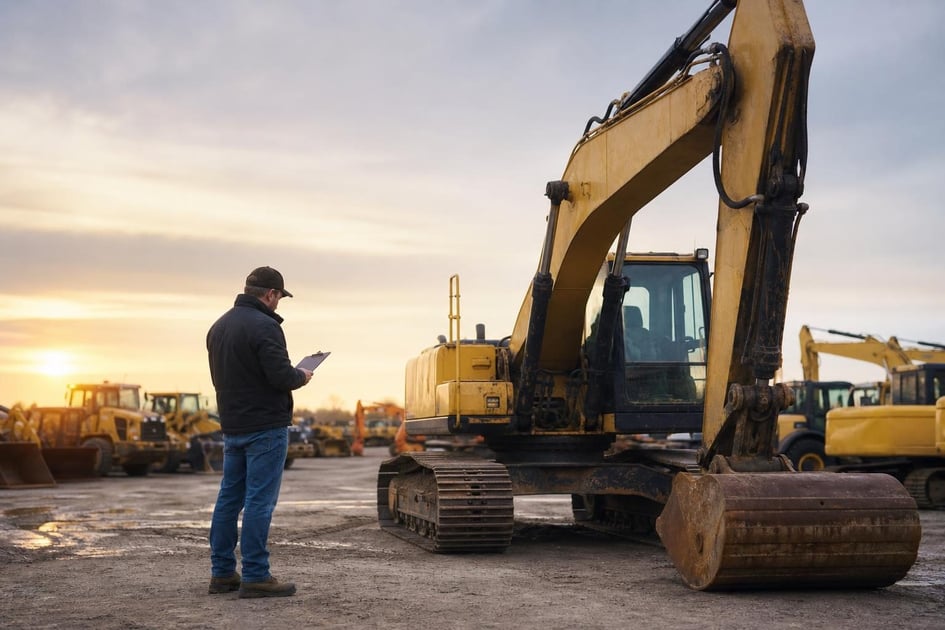
By the Numbers: A new mid-size excavator can depreciate 20 to 40 percent in the first year alone. Financing a three- to five-year-old unit means that initial depreciation is already absorbed by the first owner, while the machine retains roughly 60 to 80 percent of its productive life. On a $150,000 machine, that differential can preserve $30,000 to $60,000 in equity on your balance sheet from day one.
What "Used" Means in Construction Equipment Financing
Used does not mean worn out. In construction equipment financing, "used" typically refers to machines that have logged operating hours, may have changed owners at least once, and are being sold outside of the original dealer network. These units range from nearly new off-lease machines with under 1,000 hours to older workhorses with 5,000 hours or more. The key is remaining useful life, not just the model year on the data plate.
Hours vs. Age
Lenders care more about operating hours than calendar age. A 2019 excavator with 2,000 gentle hours is often a better collateral risk than a 2022 model with 6,000 hard hours. Most lenders set an upper limit—commonly 10,000 to 15,000 hours for major components—though exceptions exist for machines that have undergone recent rebuilds. If you are looking at high-hour units, be prepared to show maintenance records or a certified inspection.
Common Categories
Provide Capital finances used construction equipment across the categories that dominate typical job sites. Dump Trucks financing covers everything from single-axle landscaper trucks to heavy tri-axle haulers moving aggregate. Wheel Loaders financing applies to compact utility loaders up to large quarry-sized buckets. Skid Steers financing includes both wheeled and tracked variants with attachments. Other frequently financed used units include excavators, dozers, backhoes, motor graders, and compaction equipment.
Because the equipment is the collateral, the lender will verify the serial number, run a title search to check for existing liens, and review the listing or appraisal to confirm fair market value. This protects both parties and prevents a situation where you owe more than the machine is worth.
Qualification Criteria for Used Equipment Financing
Qualifying for used construction equipment financing is straightforward, but it is not automatic. The Small Business Administration recognizes equipment financing as a critical tool for contractors managing capital-intensive operations. Lenders evaluate risk based on your business history, credit profile, cash flow, and the specifics of the machine you want to buy. Understanding these criteria before you shop helps you target realistic equipment and avoid surprises.
Credit Profile
Your personal and business credit scores are starting points, not gatekeepers. Strong credit—generally 680 or above—unlocks the most favorable terms and may reduce the required down payment. Scores in the low 600s are still financeable, especially with a larger down payment or shorter term. Rates vary by credit profile, equipment age and term, so a borrower with a 720 score and a low-hour 2021 loader will see different pricing than a borrower with a 640 score financing a 2018 model.
Time in Business
Most equipment lenders prefer two years in business under the same ownership. If your operating history is shorter, you may need a larger down payment or a co-signer to strengthen the file. If you have been operating for five years or more with consistent revenue, you are in a strong position to negotiate term length and structure.
Equipment Age and Condition
For used units, lenders typically cap financing at equipment that is 10 to 15 years old at the end of the loan term. That means if you want a 60-month term, the machine should generally be no older than 10 years at closing. Some programs allow older machines if they are low-hour or have been remanufactured, but expect stricter terms. The lender may require an independent appraisal or a dealer inspection report.
Key Insight: Contractors who buy used equipment at auction often assume financing is unavailable. That is not always true, but auction purchases move fast. If you plan to finance an auction unit, get pre-qualified before the sale. Pre-approval gives you a bidding ceiling based on actual underwriting and prevents the common mistake of winning a lot only to discover the lender will not advance enough to cover your winning bid.
Get a same-day decision on your equipment to know your budget before you start shopping auctions or dealer lots.
Lease vs. Loan: Choosing the Right Structure
How you structure the deal matters as much as the machine you choose. Construction equipment can be financed through a loan, a capital lease, or an operating lease. Each has different implications for ownership, monthly payment, and tax treatment. The right choice depends on how long you plan to keep the equipment, how many hours you expect to put on it annually, and your current tax strategy.
| Feature | Equipment Loan | $1 Buyout Lease | Fair Market Value Lease |
|---|---|---|---|
| Ownership | You own the equipment from day one | You own after final $1 payment | Return or buy at fair market value |
| Monthly Payment | Higher; you are building equity | Moderate; similar to loan | Lower; no equity build |
| Down Payment | Typically 0–20% | First and last payment common | First payment or minimal deposit |
| Tax Treatment | Depreciation and interest deduction | Depreciation and interest deduction | Payment expensed; consult your CPA |
| Best For | Long-term ownership, high annual hours | Certain ownership with lower cash outlay | Short-term projects, technology turnover |
Most contractors who buy used equipment intend to run it until the wheels fall off, which makes a loan or $1 buyout lease the more common choice. An operating lease can make sense if you are taking on a two-year infrastructure project and want to walk away afterward without the hassle of resale.
Remember that rates vary by credit profile, equipment age and term. A loan on a 2020 loader with strong credit might stretch to 60 months at a competitive rate, while the same loader financed by a borrower with challenged credit might require a 36-month term to keep the lender's risk in line.
Tax Treatment in 2026
The tax implications of financing used construction equipment can significantly affect your after-tax cost. For tax year 2026, Section 179 allows businesses to expense qualifying equipment purchases up to an inflation-adjusted limit. The exact dollar limit for 2026 adjusts annually based on inflation, so you should confirm the current-year ceiling with your CPA before making a purchase decision. Additionally, bonus depreciation continues to phase down in 2026, and the applicable percentage depends on when the equipment is placed in service. Your tax professional can tell you whether bonus depreciation, standard MACRS depreciation, or Section 179 expensing delivers the best outcome for your specific tax bracket and liability.
If you structure the deal as a true lease where you do not take ownership, the monthly payments may be fully deductible as an operating expense. The rules here are nuanced, and misclassifying a lease can trigger IRS scrutiny. Always have your accountant review the lease agreement before you claim the deduction.
Pro Tip: Used equipment qualifies for the same Section 179 treatment as new equipment, provided it is new to you and placed in service during the 2026 tax year. The fact that a previous owner already depreciated the machine does not prevent you from taking a first-year write-off. This is one of the most underused advantages of buying used, but the paperwork must show a clear title transfer and a purchase price at fair market value.
Seasonal Buying Patterns and Regional Considerations
When you buy matters almost as much as what you buy. In northern states, contractors often shop for used equipment in late winter to secure machines before the spring construction rush. Prices at auction and dealer lots tend to firm up between March and May as demand peaks. In southern and western markets where construction activity stays more consistent year-round, seasonal price swings are less dramatic, but inventory turnover is faster.
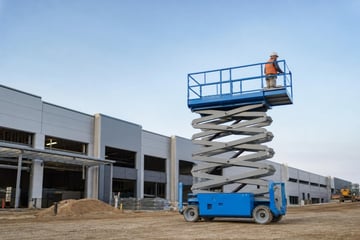
Earth-moving equipment—excavators, dozers, and motor graders—command the strongest resale values in markets with active residential and infrastructure development. Lifting equipment such as telehandlers and boom lifts see seasonal demand tied to commercial roofing and framing calendars. Hauling equipment like dump trucks moves in cycles tied to aggregate and paving seasons.
According to U.S. Census Bureau data, construction spending patterns vary significantly by region, which indirectly affects used equipment prices and availability. Markets with sustained public infrastructure budgets tend to have tighter used equipment supply and firmer pricing, while regions dependent on residential cycles may see more volatility and better deals during downturns.
Avoiding Common Mistakes
Even experienced contractors make errors when financing used equipment. The most expensive mistake is falling in love with a machine before verifying its financial viability. Always match the equipment's remaining useful life to the financing term. Financing a 12-year-old dozer over 60 months leaves you making payments on a machine that may need a major rebuild before the note is paid off.
Another common error is ignoring transport costs. A $45,000 excavator located three states away can become a $52,000 purchase after flatbed shipping. Lenders typically do not roll transport into the equipment loan unless it is bundled in the seller's invoice, so budget for logistics separately.
Title issues plague used construction equipment more than most asset classes. Always verify that the serial number on the frame matches the title, and check for outstanding liens or UCC filings. A title search costs little and prevents a scenario where a previous owner's creditor shows up to claim your machine.
Finally, do not over-leverage. The fact that you can finance up to $5 million in equipment does not mean you should max out your borrowing capacity in a single quarter. Leave room for working capital, payroll, and unexpected repairs.
What Happens After You Apply
The application process for used construction equipment financing is designed to move quickly because contractors often need to secure a machine before a competitor buys it or a job start date arrives. You will typically submit a one-page application, recent bank statements, and an equipment quote or listing. If the transaction exceeds a certain threshold, the lender may also request tax returns or a year-to-date financial statement.
Once submitted, the lender reviews credit, verifies equipment value through a third-party guide or appraisal, and issues an approval letter with terms. Same-day approvals are possible for straightforward transactions with strong credit and clear collateral. More complex deals—those involving private-party sales, very old equipment, or challenged credit—may take 24 to 48 hours.
After approval, the lender works directly with the seller to handle payment and title transfer. You sign closing documents, the lender wires funds or issues a check, and you take possession. Payments begin according to the schedule outlined in your agreement. There are no hidden steps, but responsiveness matters. Delays usually come from missing paperwork or slow responses from the seller, not from the lender.
See what you qualify for and get a clear picture of your budget before you negotiate with sellers.
Frequently Asked Questions
Can I finance used construction equipment from a private seller?
Yes. Private-party sales are financeable, though they require additional verification. The lender will still run a title search, verify the serial number, and confirm fair market value. The seller must cooperate by providing a clear title and a bill of sale. If the seller has an outstanding loan on the machine, the new lender will typically handle the payoff directly to ensure a clean transfer.
How much down payment is required for used equipment?
Down payments vary based on credit, equipment age, and the lender's risk assessment. Zero-down options exist for strong borrowers financing newer used equipment. More commonly, expect 10 to 20 percent down for standard transactions. Older machines or borrowers with credit challenges may require 20 to 30 percent to offset collateral risk.
Does the equipment have to come from a dealer?
No. While dealer sales are simpler because dealers provide invoices and handle title paperwork, auctions and private sellers are also viable sources. Auction purchases require speed, so pre-approval is essential. Private sales require both parties to cooperate on title transfer and lien payoff.
What interest rate will I pay?
Rates vary by credit profile, equipment age and term. Rather than focusing on a specific rate, compare the total cost of the financing and ensure the monthly payment fits your cash flow. A slightly higher rate on a shorter term can cost less overall than a lower rate stretched over many years.
Can I finance attachments and accessories?
Sometimes. If the attachment is purchased as part of the same transaction and included in the seller's invoice, it can often be rolled into the equipment financing. Standalone attachment financing is less common because the collateral value is harder to verify. Buckets, hammers, and augers that ship with a skid steer or excavator are easier to include than a separate trailer or generator.
What happens if the equipment needs major repairs?
You are responsible for maintenance and repairs. The lender holds a security interest in the equipment but does not warranty its condition. That is why inspections matter. Consider setting aside a repair reserve equal to two or three monthly payments, especially on older machines. Some borrowers also opt for a shorter term to ensure the equipment is paid off before major component failures become likely.
Can I pay off the financing early?
Most equipment loans allow early payoff, though some leases include prepayment penalties or require you to pay all remaining payments regardless. Ask your financing specialist to show you the payoff language before you sign. If you anticipate a large cash influx—such as a completed bond project or a tax refund—structuring the deal without prepayment penalties can save money.
Is there a minimum or maximum amount I can finance?
Provide Capital finances new and used business equipment from $5,000 to $5 million. On the used construction side, most transactions fall between $25,000 and $500,000, though larger fleet deals are common. The minimum typically covers smaller skid steers, compact excavators, and attachments, while the upper range covers heavy earthmovers and multi-unit acquisitions.
Moving Forward With Your Equipment Purchase
Financing used construction equipment is a practical way to expand capacity without draining cash reserves or taking on the steep depreciation of new machines. The key is to match the right machine, the right structure, and the right lender. Start by defining what you need: the type of work, the expected hours per year, and how long you plan to keep the machine. Then shop for equipment that fits those parameters, not just the lowest price tag.
Work with a lender that understands construction collateral. Generalist lenders may undervalue used earthmovers or impose restrictions that do not fit the reality of job-site equipment. A specialist in Construction equipment financing will understand seasonal cash flow, the difference between auction and retail value, and how to structure a deal around your specific project pipeline.
Talk to a specialist about your specific machine and find out how quickly you can get to work.
Disclaimer: The information provided in this article is for general educational purposes only and is not financial, legal, or tax advice. Funding terms, qualifications, and product availability may vary and are subject to change without notice. Provide Capital does not guarantee approval, rates, or specific outcomes. For personalized information about your business funding options, contact our team directly.