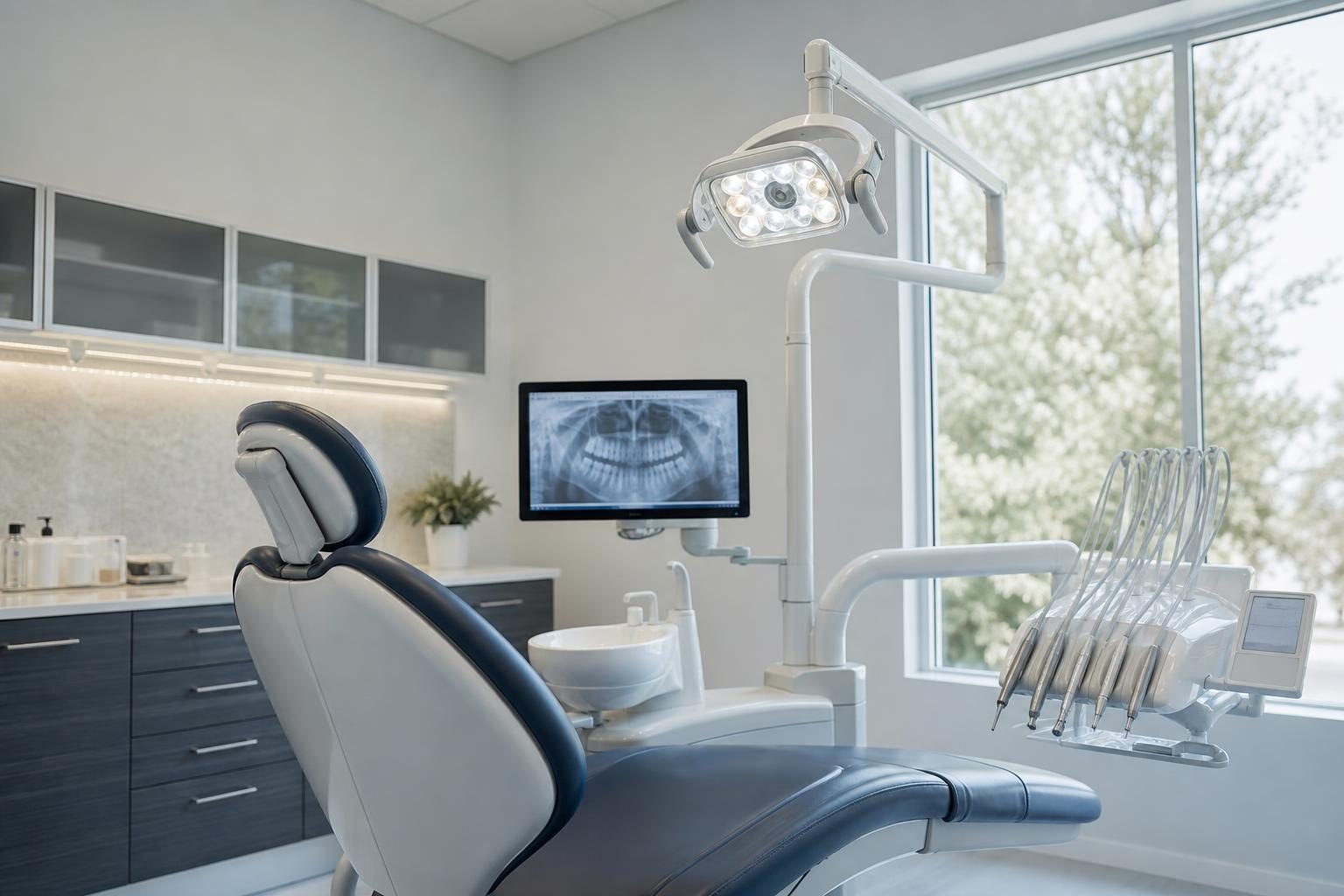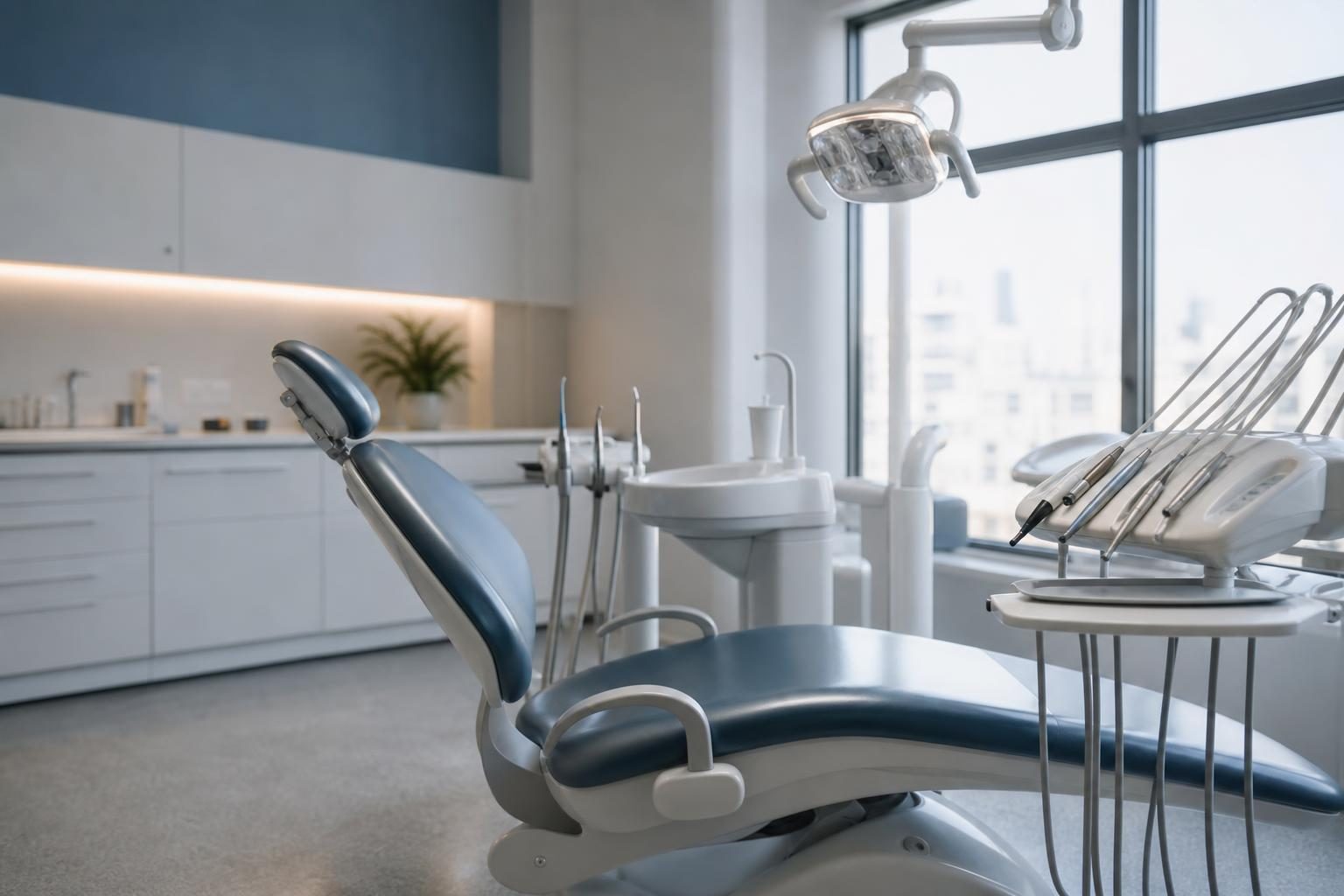
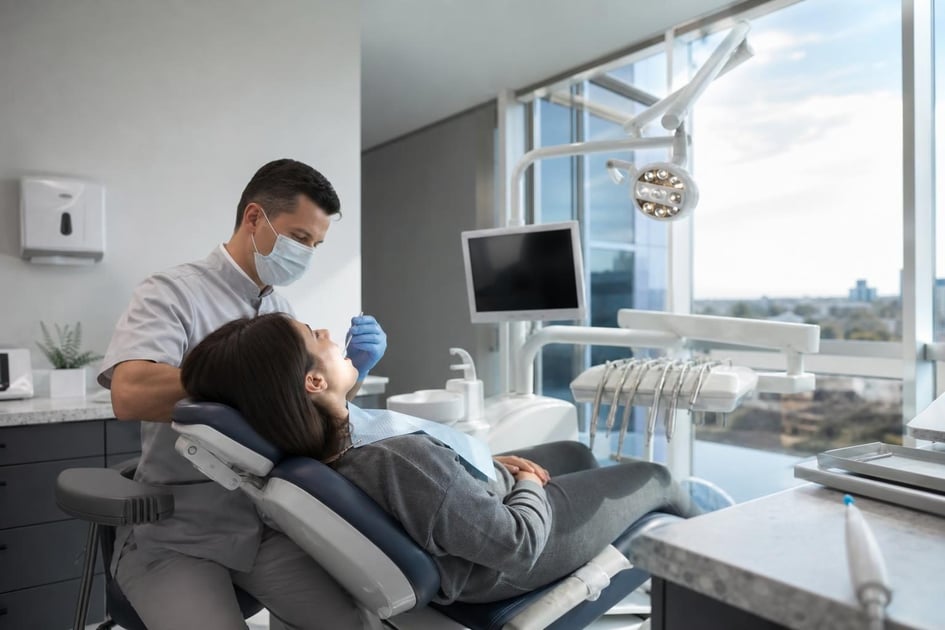
Yes, you can finance Dental Chairs financing with no down payment. The equipment itself serves as collateral, which means lenders can cover the full purchase price without requiring cash upfront. For a dentist adding an operatory or replacing aging chairs, this preserves working capital for payroll, supplies, and marketing while spreading the cost over a term that matches the equipment's useful life. What matters is understanding the structure, the qualification requirements, and the trade-offs between leasing and loan products before you sign.
Dental chairs occupy a unique position in equipment finance. They are high-value, durable, and essential to production. Unlike a computer or scanner, a quality operatory chair generates revenue for 10 to 15 years. Lenders know this, which is why they are often willing to advance 100 percent of the cost on a single chair or a full practice buildout. The key is presenting a complete picture of your practice finances and choosing a term that aligns with how long you plan to keep the equipment.
What "No Down Payment" Actually Means
When equipment finance companies advertise no down payment, they mean 100 percent financing. The lender pays the vendor or private seller directly, and your first out-of-pocket expense is the monthly payment. This is standard in equipment finance because the collateral—the dental chair—secures the transaction. Rates vary by credit profile, equipment age and term, so the exact monthly cost depends on your specific situation.
There are two common structures for zero-down dental equipment. The first is an Equipment Finance Agreement, which functions like a loan with fixed payments and a $1 or small buyout at the end. You own the chair from day one for tax purposes. The second is a Fair Market Value lease, where you make lower monthly payments but face a larger residual at the end if you want to keep the equipment. FMV leases are popular for technology that obsoletes quickly, but many dentists prefer the EFA because dental chairs have a long usable life.
How Collateral Protects Both Parties
The dental chair is the security interest. If cash flow tightens, the lender can repossess and resell the specific equipment. Because the collateral has value in the secondary market—especially brands like A-dec, Pelton & Crane, or Midmark—the lender's risk is lower than with an unsecured loan. Lower risk translates into more competitive terms and the ability to finance the full amount. This is why equipment finance rates are typically more favorable than unsecured business lines of credit or credit cards.
Already have a machine in mind?
Provide Capital finances new and used equipment from $5,000 to $5 million, with same-day decisions possible.
Apply NowHow Dental Chair Financing Works
The process is built for speed because equipment sellers rarely hold inventory indefinitely. Most applications start with a one-page form and a quote from the vendor. The lender reviews your credit, time in business, and the equipment details. Same-day approvals are possible for well-qualified buyers, though complex practice acquisitions or new-practice situations may take several business days. Provide Capital finances new and used business equipment from $5,000 to $5 million, so a single chair or a multi-location rollout can fit within the same program.
Once approved, the lender issues a purchase order or funds the transaction directly. You take delivery and start using the chairs immediately. Payments usually begin 30 to 45 days after funding. The entire cycle—from application to delivery—can happen within a week if the vendor has stock and the documentation is clean.
Get a same-day decision on your dental chairs by starting an application with your vendor quote in hand.
Key Insight: Lenders value dental chairs highly as collateral because the secondary market for refurbished operatory equipment is deep. A chair that costs $18,000 new might retain 40 to 50 percent of its value after five years, which gives the lender confidence to advance 100 percent of the purchase price.
Qualification Criteria in Detail
Equipment lenders look at four factors: personal credit, business credit, time in practice, and the equipment itself. No single factor disqualifies you, but the combination determines the rate, term, and whether a down payment becomes necessary.
Credit Profile
For 100 percent financing on dental chairs, a personal FICO score in the mid-600s or higher generally opens the door to competitive structures. Scores below that do not mean automatic denial, but the lender may ask for additional collateral, a shorter term, or a personal guarantee with more stringent covenants. Business credit history helps, especially if the practice has existing equipment loans paid on time. If the practice is new, the underwriter will rely heavily on the dentist's personal credit and any associate employment history.
Time in Business
Practices operating for two or more years receive the most favorable terms because they have tax returns and bank statements demonstrating cash flow. That said, lenders do finance equipment for newer practices and even recent acquisitions, often by reviewing the production schedule, patient base, and the selling dentist's historical collections. The key is showing that the new equipment will generate revenue that covers the payment.
Equipment Age and Condition
New chairs are easiest to finance at 100 percent. Used or refurbished chairs are also financeable, but the lender will consider the remaining useful life. A ten-year-old chair with outdated plumbing may require a larger equity contribution or a shorter amortization. Most lenders prefer equipment that is less than seven years old for full advance structures. If you are buying from a private seller, be prepared for an equipment inspection or appraisal.
Debt-Service Coverage
Lenders also calculate debt-service coverage ratio, which compares your practice's cash flow to the proposed equipment payment. A ratio above 1.25 is generally preferred, meaning the practice generates $1.25 in cash for every $1 of equipment debt. If you are adding a chair that allows you to see more patients, the lender may factor in projected revenue increases, but conservative underwriters usually rely on historical collections. Having clean bank statements that show consistent deposits makes this calculation straightforward.
New vs. Used Dental Chairs
The decision between new and used affects your monthly payment, tax timing, and maintenance costs. New chairs come with manufacturer warranties, modern ergonomic features, and integration with digital imaging systems. Used chairs cost less upfront but may require plumbing or electrical upgrades to fit your operatory. When evaluating used equipment, look for certified refurbished units from dealers who specialize in dental operatory equipment. These chairs have been torn down, reupholstered, and tested for hydraulic integrity. A refurbished chair from a reputable dealer often carries a six-month to one-year warranty, which reduces the risk of immediate repair costs.
| Feature | New Dental Chairs | Used/Refurbished Dental Chairs |
|---|---|---|
| Typical price per operatory | $7,000 – $25,000 | $3,500 – $12,000 |
| Financing advance | Up to 100% | Up to 100%, subject to inspection |
| Warranty | Full manufacturer warranty | Limited or remainder only |
| Tax depreciation schedule | 5-year MACRS | 5-year MACRS, but basis is lower |
| Monthly payment estimate (60 mo) | Varies by credit and term | Lower due to reduced principal |
| Ideal for | Long-term practices, tech integration | Startups, secondary operatories |
From a financing perspective, the structure is similar for both. The lender advances against the invoice or purchase agreement. With used equipment, the underwriter may request photos, serial numbers, and proof of maintenance. If the seller is a dental equipment dealer, the process is smoother because the dealer provides a warranty and installation support.
Pro Tip: When buying used dental chairs, ask the seller for the service history and confirm that the chair's mounting pattern matches your operatory floor plates. Retrofitting plumbing or electrical can add $1,500 to $3,000 per chair, which lenders may not cover if the cost is not embedded in the equipment invoice.
Lease vs. Loan: Choosing the Right Structure
Dentists have three primary structures to consider. Each affects ownership, monthly cash outlay, and tax treatment differently.
Equipment Finance Agreement
An EFA is essentially an equipment loan. You make fixed monthly payments, and at the end of the term you own the chair outright, sometimes for a nominal fee like $1. For dental chairs, which typically last 10 to 15 years with proper maintenance, an EFA matches the asset's life. You claim depreciation and Section 179 expensing on the full equipment cost. This is the most common structure for dentists financing operatory fixtures.
Fair Market Value Lease
An FMV lease gives you lower monthly payments because you are only paying for the portion of the chair's life you use, plus interest. At the end of the term, you can purchase the chair at fair market value, return it, or upgrade. This structure works well for imaging equipment and computers that obsolesce quickly, but it is less common for dental chairs because chairs do not become obsolete every three to five years. If you plan to keep the chair for a decade, the FMV lease often costs more over time. Additionally, the tax treatment differs: FMV lease payments are typically deductible as operating expenses, while an EFA or $1 buyout allows you to depreciate the asset or take Section 179. Your CPA can model which approach yields the better after-tax result for your 2026 filing.
$1 Buyout Lease
A $1 buyout lease looks like an EFA for accounting purposes but is structured as a lease on paper. You make payments and own the equipment for $1 at the end. The tax treatment is essentially identical to an EFA for most dental practices. The difference is usually in how the lender books the transaction internally. Ask your CPA which structure optimizes your balance sheet and tax position for 2026.
Tax Treatment for Dental Equipment in 2026
For the 2026 tax year, dental chairs qualify for Section 179 expensing and bonus depreciation because they are tangible personal property used in a trade or business. Section 179 allows you to deduct the full purchase price in the year you place the equipment in service, subject to annual limits set by the IRS and indexed for inflation. Bonus depreciation may also apply at a percentage set for 2026, though recent legislative adjustments have changed the phase-down schedule.
Because tax rules change and every practice's situation differs, you should consult a CPA before deciding whether to expense the equipment immediately or spread depreciation over the MACRS schedule. The choice affects your cash flow, your loan covenants, and your future equipment purchasing power. Do not rely on internet summaries for a final tax position.
See what you qualify for
The equipment itself secures the financing, which keeps rates competitive. Checking your options takes minutes.
Check Your OptionsWorked Cost Examples
These examples illustrate monthly payment ranges for different scenarios. Rates vary by credit profile, equipment age and term, so treat these as directional estimates only.
Single-Chair Replacement
A practice buys one new operatory chair with delivery and installation for $14,500. On a 60-month term, the monthly payment might fall in the low-$300 range for a well-qualified borrower. Over the life of the agreement, the practice pays roughly $18,000 to $19,500, depending on the rate. The chair goes into service immediately, and the practice begins generating production revenue from the new operatory without a $14,500 cash outlay. Because the equipment serves as collateral, the lender does not place a blanket lien on the practice's bank accounts or accounts receivable. The security interest is limited to the chair itself.
Three-Chair Upgrade
A growing practice replaces three aging chairs and adds integrated LED lighting and monitors. Total invoice: $58,000. Structured over 60 months with 100 percent financing, monthly payments might land in the mid-$1,100 to $1,300 range. The practice preserves $58,000 in cash for marketing and payroll while deducting the equipment cost under 2026 Section 179 rules, subject to IRS limits and CPA guidance. If the practice generates an additional $8,000 to $10,000 in monthly production from the new operatories, the chairs pay for themselves and contribute to overhead within the first few months.
Full Operatory Buildout
A dentist opening a second location needs four chairs, delivery systems, and stools. Total equipment cost: $82,000. Financed over 72 months, the monthly obligation could range from $1,400 to $1,700. Even though the term extends longer, the lender still requires no down payment because the equipment collateral covers the advance. The dentist keeps liquid capital available for leasehold improvements and initial staffing. Spreading the cost over six years keeps the monthly burden low during the ramp-up phase when the patient base is still building.
By the Numbers: A dental chair financed at 100 percent over 60 months typically breaks even on its monthly payment after 10 to 15 productive patient visits, assuming an average production per visit of $350 to $500. That means the chair pays for itself within the first two to three weeks of each month, leaving the remainder of the month as net contribution to overhead and profit.
Common Mistakes Dentists Make
The first mistake is mixing equipment financing with working capital needs. If you need $20,000 for chairs and $30,000 for office buildout, do not roll them into a single equipment loan unless the lender explicitly covers soft costs. Most equipment finance agreements are designed for hard assets only. Use a separate line of credit or practice loan for tenant improvements.
The second mistake is ignoring the end-of-term details. On an FMV lease, the buyout number is not fixed. If you expect to own the chair but choose an FMV structure, you may face a $4,000 or $5,000 balloon payment after five years. Read the residual language carefully.
The third mistake is overleveraging multiple operatories at once. Adding three chairs requires three sets of handpieces, three assistants, and a patient base to fill them. If you finance the chairs but cannot generate the production, the payments become a drag on cash flow. Match equipment additions to realistic growth timelines.
The fourth mistake is neglecting to insure the financed equipment. Most lenders require proof of property insurance listing them as loss payee. If a chair is damaged in transit or by a plumbing leak and you lack coverage, you remain personally liable for the balance while unable to generate revenue from the operatory. Add the new chairs to your policy before delivery.
Keep in mind that while Provide Capital finances hard assets across many categories, from Commercial Hvac System financing to heavy machinery, soft costs like drywall and flooring are typically excluded from equipment finance agreements.
Documentation You Will Need
For a clean approval, gather the following before applying: a vendor quote or purchase agreement listing the chairs, serial numbers if used, your last two years of business tax returns, three months of business bank statements, and a personal financial statement. If the practice is newly acquired, include the purchase agreement and production reports from the previous owner. Some lenders also request a copy of your dental license and your business entity documents, such as articles of incorporation or operating agreement, to verify ownership structure.
For used chairs bought privately, the lender may also want photos, proof of ownership, and a condition report. If the seller owes money on the chairs, the lender will need a payoff letter to ensure clear title. Having these documents ready can cut approval time from several days to a few hours.
What Happens After Approval
Once the lender issues a commitment letter, review the payment schedule, buyout language, and any personal guarantee requirements. If everything looks correct, you sign and the lender issues a purchase order to the vendor or pays the seller directly. You schedule delivery and installation. Most dental equipment vendors offer white-glove delivery, which includes placement, plumbing connections, and electrical testing. Factor this into your timeline. A chair that arrives on Tuesday may not be ready for patients until Thursday or Friday depending on your contractor's schedule. Payments to the lender typically begin 30 to 45 days after funding, giving you a short window to start generating revenue before the first bill arrives. During that window, update your practice management software to reflect the new operatory and train staff on any ergonomic adjustments so that scheduling can begin immediately.
Key Insight: Some lenders offer seasonal or graduated payment schedules for dental practices. If you are opening a new location in a summer tourism market or a college town where August and January are slow, ask whether the first three payments can be reduced. Not every lender offers this, but it is worth negotiating before you sign the commitment letter.
Put the right equipment to work
From $5,000 to $5 million, new or used, Provide Capital helps businesses nationwide finance the equipment they need.
Apply TodayFrequently Asked Questions
Can I finance dental chairs with no money down if my practice is less than a year old?
Yes, but the lender will rely more heavily on your personal credit, dental school credentials, and any associate employment history. You may also be asked to provide a personal guarantee. The equipment collateral helps, but newer practices sometimes see slightly shorter maximum terms.
Will financing dental chairs hurt my credit?
A hard inquiry will appear on your credit report during underwriting, which may cause a temporary dip of a few points. Making on-time payments on an equipment finance agreement typically strengthens your business credit profile over time, making future equipment purchases easier to finance.
Can I include delivery and installation in the financing?
Most lenders allow freight and installation to be rolled into the equipment finance agreement if they appear on the vendor's invoice. Soft costs like operatory remodeling or electrical upgrades are usually excluded. Ask your lender for a clear breakdown of what qualifies.
What happens if I want to pay off the financing early?
Equipment Finance Agreements often have fixed interest structures, so prepaying may not reduce the total interest owed unless the agreement explicitly includes a prepayment discount. Some lenders offer a sliding discount based on how early you pay off the balance. Review the prepayment clause before signing.
Are used dental chairs harder to finance than new ones?
Used chairs are financeable, but the lender may require an inspection, a shorter term, or a slightly higher rate to account for residual value risk. Buying from a reputable dealer with a warranty simplifies the process significantly compared to a private-party sale.
Can I deduct the full cost of financed dental chairs on my 2026 taxes?
For the 2026 tax year, you may be eligible to deduct the full cost under Section 179 or bonus depreciation, subject to IRS limits and your taxable income. Because tax law is complex and changes frequently, confirm your specific deduction strategy with a CPA before filing.
How long does approval take?
Same-day approvals are possible when the application is complete and the practice has established cash flow. Complex transactions, large dollar amounts, or special documentation needs may extend the timeline to two to five business days.
What credit score do I need for 100 percent financing?
There is no universal cutoff, but personal credit scores in the mid-600s and above generally qualify for 100 percent advance structures on dental equipment. Lower scores may still be approved with additional conditions. Rates vary by credit profile, equipment age and term.
Next Steps for Your Practice
If you are evaluating chairs for a new operatory or planning a full practice renovation, 100 percent equipment financing can keep your cash reserves intact while you generate revenue from the new equipment. The process is straightforward, the collateral is the equipment itself, and the terms can be structured to match your production goals. According to U.S. Census Bureau data, healthcare practitioner offices continue to be one of the more stable small-business categories in economic downturns, which is why lenders remain active in Dental equipment financing. Whether you are replacing a single unit or building out four new operatories, the structure of the deal matters as much as the interest rate. Take time to compare the total cost of ownership across lease and loan products, confirm your 2026 tax strategy with a CPA, and gather your documentation before you shop so you can move quickly when you find the right chairs.
The SBA notes that equipment loans secured by the asset itself often carry more favorable terms than unsecured credit because the collateral reduces lender risk. Forbes reporting on dental practice economics has highlighted how financing preserves capital for patient acquisition during expansion phases. When you are ready to move forward, gather your vendor quote and recent bank statements so the underwriting team can move quickly.
See what you qualify for and lock in terms before your vendor's inventory changes.
Disclaimer: The information provided in this article is for general educational purposes only and is not financial, legal, or tax advice. Funding terms, qualifications, and product availability may vary and are subject to change without notice. Provide Capital does not guarantee approval, rates, or specific outcomes. For personalized information about your business funding options, contact our team directly.