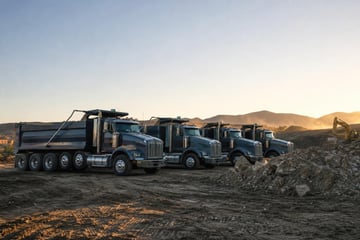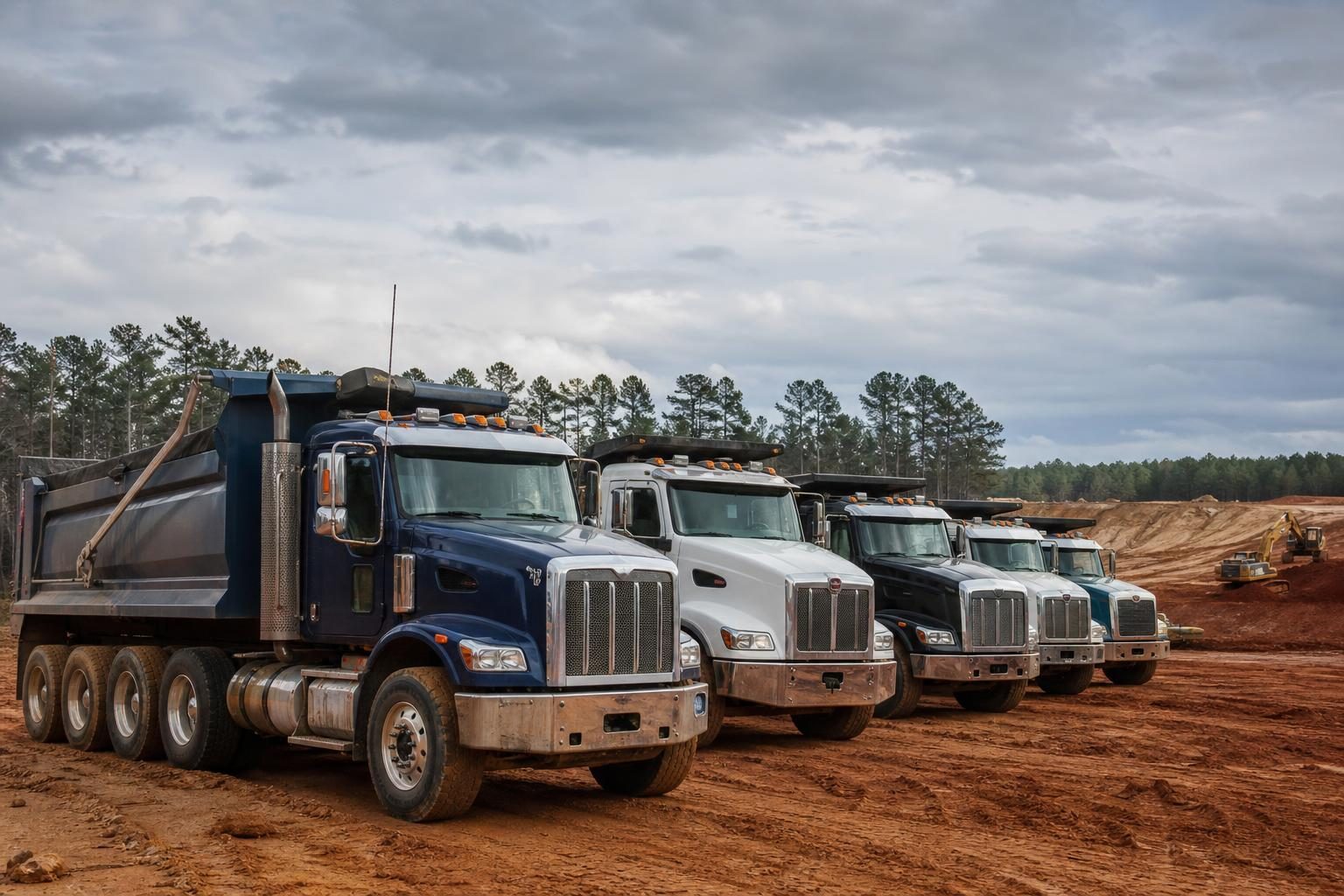
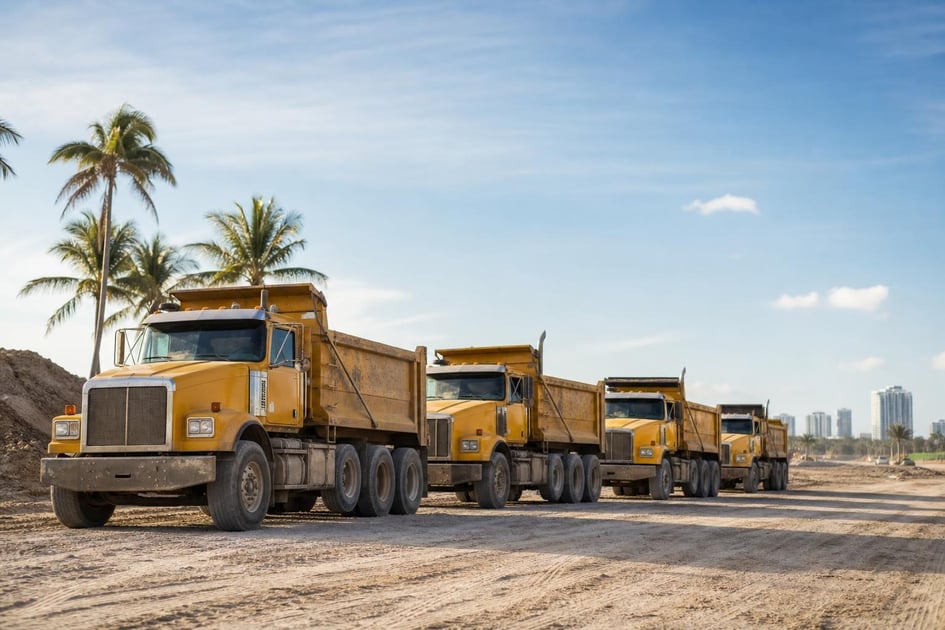
Florida contractors and fleet owners can finance new and used dump trucks through equipment lenders that use the truck itself as collateral, keeping qualification requirements more flexible than unsecured bank loans. Whether you are adding a single ten-wheeler for a Palm Beach site or expanding a fleet across the Gulf Coast, financing spreads the cost across the revenue the truck generates instead of tying up working capital.
How Dump Truck Financing Works in Florida
Equipment financing for dump trucks is a secured transaction. The lender files a UCC-1 lien against the vehicle, which means the truck serves as collateral for the loan or lease. Because the lender has a secured interest, credit requirements are typically more accommodating than for an unsecured line of credit, and the structure keeps rates competitive based on your credit profile, equipment age and term length.
You can finance dump trucks starting at $5,000, with options running up to $5 million for larger fleet acquisitions. Terms generally range from 24 to 84 months, though the exact structure depends on the truck's age, mileage, and expected useful life. Newer trucks with lower hours and documented maintenance histories receive the most favorable terms, while older vocational trucks may require slightly larger down payments or shorter amortization schedules.
The application process starts with a short form and equipment details. Many lenders, including Provide Capital, can deliver same-day approvals when the file is complete. Once approved, the lender pays the seller or dealer directly, and you take possession with a payment schedule that matches your cash flow.
Key Insight: Florida's year-round construction cycle means dump trucks often retain stronger resale values than in northern states with seasonal shutdowns. Lenders account for this residual value when setting terms, which can improve approval odds for owner-operators in the state.
Already have a machine in mind?
Provide Capital finances new and used equipment from $5,000 to $5 million, with same-day decisions possible.
Apply NowQualifying for Dump Truck Financing
Lenders evaluate four primary factors when reviewing a dump truck application: credit history, time in business, revenue, and the equipment itself.
Credit History
Your personal and business credit scores matter, but they are not the only factor. A strong credit profile with established trade lines and low revolving utilization will secure the best rates, yet established businesses with solid cash flow can still qualify with challenged credit. The equipment's value provides the lender with downside protection, which allows more flexibility than unsecured products.
Time in Business
Most equipment lenders prefer two or more years in operation, though some programs accept newer businesses with compensating factors such as strong personal credit, significant down payments, or prior industry experience. Startups or new businesses present higher risk, so they are generally outside the scope of standard equipment financing programs.
Revenue and Cash Flow
Lenders want evidence that your business generates enough cash to cover the new payment. They typically review three to six months of bank statements or tax returns. The debt-service coverage ratio, which measures net operating income against debt obligations, should generally show comfortable headroom above the new equipment payment.
Equipment Condition and Documentation
The truck itself influences approval. Lenders need the VIN, year, make, model, mileage, and photos. For used trucks, a clean title and maintenance records strengthen the file. Dump beds, hydraulics, and chassis condition all factor into the lender's valuation.
New vs. Used Dump Trucks: What to Finance
The decision between a new and used dump truck depends on your budget, utilization rate, and maintenance tolerance.
New dump trucks carry manufacturer warranties, lower maintenance costs in the early years, and the latest emissions and fuel-efficiency technology. They also command higher monthly payments and steeper depreciation in the first two years. For Florida contractors bidding on municipal or state work, newer trucks may meet stricter emissions requirements for certain job sites.
Used dump trucks offer lower acquisition costs and slower depreciation curves. A three- to five-year-old truck with documented fleet maintenance often represents the best value. However, higher-mileage units or trucks with prior rough-service histories can bring surprise repair bills. Used trucks may also carry slightly higher rates or require 10 to 20 percent down, depending on age and condition.
| Factor | New Dump Truck | Used Dump Truck (3-5 Years) |
|---|---|---|
| Monthly Payment | Higher | Lower |
| Down Payment | Often $0 to 10% | Often 10% to 20% |
| Warranty Coverage | Full manufacturer | Limited or expired |
| Maintenance Costs | Lower initially | Higher, but predictable with records |
| Financing Term | Up to 84 months | Typically 36 to 60 months |
| Emissions Compliance | Latest standards | Verify against job requirements |
| Depreciation | Steep early curve | Flatter, slower write-off |
Pro Tip: Florida's salt-air coastal environments accelerate corrosion on frame rails and dump bodies. If you are financing a used truck that operated near the coast, budget for an independent frame inspection. A clean bill of health from a mechanic can prevent a $4,000 to $8,000 surprise repair and strengthens your financing application.
Lease vs. Loan: Choosing the Right Structure
Equipment financing generally takes one of two forms: a capital lease (or finance lease) that leads to ownership, or a true lease with a purchase option at the end.
A capital lease treats the equipment as an asset on your balance sheet from day one. You claim depreciation and, if applicable, the Section 179 deduction. At the end of the term, the truck is yours for a nominal buyout, often one dollar. This structure suits contractors who plan to run the truck for its full useful life and want the tax advantages of ownership.
A true lease, sometimes called an operating lease, functions more like a rental with a purchase option. Monthly payments are often lower, and the buyout at the end is based on the truck's residual value. This structure works for fleet owners who want to upgrade every five to seven years or who are uncertain about long-term utilization.
By the Numbers: A contractor financing a $125,000 dump truck on a 60-month capital lease might see a monthly payment ranging from the high $2,000s to the low $3,000s, depending on credit and term variables. Over the full term, the total cost of ownership includes the buyout, maintenance, insurance, and registration. Spreading the acquisition cost over five years preserves roughly $100,000 in working capital that would otherwise leave the business on day one.
Tax Treatment and Section 179 for 2026
Tax year 2026 allows businesses to deduct the full purchase price of qualifying equipment under Section 179, subject to annual limits set by Congress. The deduction applies to both new and used equipment, provided it is placed in service during the tax year and used for business more than 50 percent of the time. Because the specific dollar limits for 2026 are set by statute and adjusted for inflation, you should confirm the exact ceiling with your CPA before finalizing a purchase.
Bonus depreciation, which has acted as a complement to Section 179 in prior years, has been phasing down. For 2026, the available percentage depends on current federal law. Your accountant can model whether Section 179, bonus depreciation, or standard MACRS depreciation delivers the best after-tax outcome for your specific situation.
Interest on equipment financing is generally deductible as a business expense. If you choose a capital lease structure, you may be able to deduct the full payment rather than separating interest and depreciation, depending on how the lease is structured for tax purposes. Again, a CPA should review the specific arrangement.
Key Insight: Florida has no state income tax, which means the full benefit of federal equipment deductions flows directly to your bottom line without being offset by state-level recapture. Contractors in high-tax states often face a more complicated depreciation recalculation at the state level; Florida businesses avoid that friction entirely.
See what you qualify for
The equipment itself secures the financing, which keeps rates competitive. Checking your options takes minutes.
Check Your OptionsFlorida-Specific Considerations
Florida's economy runs on construction, agriculture, transportation, and land development. Each sector places different demands on dump truck specifications and financing timing.
Construction and Infrastructure
Florida's population growth drives constant roadwork, residential development, and commercial site prep. According to Census Bureau data, Florida has been among the fastest-growing states for several consecutive years, which translates directly into demand for earthmoving and hauling equipment. Contractors in Orlando, Tampa, and Southwest Florida often need Class 7 and Class 8 dump trucks with steel bodies for demolition debris and asphalt hauling. The state's year-round building season means trucks accumulate hours faster than in northern climates, which lenders consider when setting terms.
Agriculture and Nursery Operations
Central Florida's nursery and sod farms use medium-duty dump trucks to move soil, mulch, and plant material. These trucks see lighter duty than construction units but may operate on softer ground. For agricultural buyers, lenders may want to see how the truck fits into a broader equipment lineup and whether the operation has seasonal revenue fluctuations.
Transportation and Aggregate Hauling
Fleet owners hauling limestone, shell rock, or fill dirt across the state need heavy-spec tri-axle dumps. These trucks carry higher price tags, often $150,000 to $250,000 for newer models, but they also generate more revenue per load. Lenders will review your contracts or customer base to confirm consistent freight volume.
Seasonal Buying Patterns
Florida's wet season runs roughly June through October, and heavy rains can slow construction activity in low-lying areas. Many contractors time equipment purchases for late fall or early winter, when cash flow is stronger and dealers are motivated to move inventory. Financing applications often spike in November and December as businesses position themselves for the dry-season rush.
Florida requires commercial vehicles with a GVWR over 26,000 pounds to carry the appropriate registration and, if operating interstate, comply with Unified Carrier Registration. Have your DOT number, MC authority, and Florida commercial registration ready when you apply. Lenders view complete documentation as a signal of operational seriousness, and it can shave a day off the approval process.
Industry-Specific Use Cases
Dump trucks serve multiple verticals in Florida, and the financing structure should match the revenue model.
Site Development and Excavation
Excavation contractors use dump trucks to haul spoils, imported fill, and demolition debris. These jobs are typically bid by the load or by the job, so payment timing varies. A 60-month term with seasonal skip payments can match cash flow if the contractor has predictable slow months.
Asphalt and Paving
Paving contractors need insulated or aluminum dump bodies for hot-mix asphalt. These specialized bodies add $15,000 to $30,000 to the base chassis price. Financing the total package as a single transaction simplifies bookkeeping and ensures the body warranty aligns with the chassis financing term.
Landscaping and Sod
Landscape operations use lighter-duty single-axle or tandem dumps for mulch and soil delivery. Because these trucks cost less, often $50,000 to $90,000, they fit neatly into equipment financing programs with minimal down payment requirements.
Forestry and Land Clearing
North Florida timber and land-clearing operations use heavy-duty dumps with reinforced beds for brush and log hauls. These trucks work in abrasive conditions, so lenders pay close attention to frame integrity and prior usage when financing used units in this segment.
Common Mistakes When Financing a Dump Truck
Borrowers repeatedly make the same errors that delay approval or lead to unfavorable terms.
Shopping Without Pre-Approval
Walking into a dealership without financing in hand limits your negotiating power. You may feel pressured to accept dealer-arranged terms that are not competitive. A pre-approval letter from an equipment lender lets you negotiate as a cash buyer.
Ignoring Total Cost of Ownership
The monthly payment is only one line item. Insurance on a commercial dump truck in Florida can run $8,000 to $15,000 annually depending on coverage limits, driving history, and radius of operation. Maintenance, fuel, tires, and registration add thousands more. Run the full numbers before committing.
Overextending on a Single Truck
A $250,000 tri-axle dump with every option looks appealing, but if your current contracts only support $12,000 per month in trucking revenue, the payment will strain cash flow. Match the equipment to the revenue base.
Buying Without a Mechanic's Inspection
Used dump trucks hide expensive problems. Hydraulic cylinder rebuilds, frame cracks, and engine aftertreatment failures can cost $10,000 to $30,000. A $300 pre-purchase inspection is cheap insurance.
What Documentation You Need
A complete file moves faster. Gather these items before applying:
- Completed application with business and personal information
- Last three to six months of business bank statements
- Current year financials or tax returns (one to two years)
- Equipment quote or invoice with VIN, year, make, model, mileage, and price
- Proof of insurance or insurance quote
- Florida commercial vehicle registration details
- DOT and MC numbers, if applicable
Self-employed contractors without formal financial statements can often qualify with bank statements and tax returns alone. The key is demonstrating consistent deposits that support the new payment. The Small Business Administration publishes guidance on organizing business financial records that can streamline this process.
What Happens After Approval
Once approved, the lender issues a commitment letter or term sheet outlining the rate, term, payment, and any conditions. You review and sign. The lender then wires funds directly to the seller or pays off the invoice. You take possession and begin making payments according to the schedule.
Most lenders do not blanket-file UCC liens against all business assets for a single truck. They file against the specific vehicle, which keeps your other equipment unencumbered. Confirm this with your lender before closing.
Some lenders offer automatic payment options and online account portals. Setting up ACH autopay eliminates the risk of missed payments and may qualify you for a modest rate reduction.
If your business grows and you want to add a second truck, established payment history on the first financing makes the second approval faster. Many lenders offer streamlined re-ups for existing customers. As Forbes has noted in coverage of small-business equipment trends, predictable access to capital is one of the primary drivers of fleet expansion among mid-sized contractors.
How to Apply for Dump Truck Financing in Florida
The application process is straightforward. You submit a short application and equipment details. The lender reviews credit, revenue, and the truck's specifications. With a complete file, same-day approval is possible. The lender pays the seller, and you take delivery.
If you are looking at a dump truck for your construction, transportation, or aggregate operation, see what you qualify for by starting an application at Provide Capital. The process takes only a few minutes, and a specialist can review your specific machine and revenue model.
For broader heavy-equipment needs, explore our Construction equipment financing and Transportation equipment financing pages. If you are also considering other vocational vehicles, we offer programs for Dump Trucks financing, Tow Truck financing, and Bucket Trucks financing.
Ready to move forward?
More than 10,000 businesses have financed equipment with Provide Capital. See what you qualify for today.
Get StartedFAQ
How long does dump truck financing take?
With a complete application and equipment details, approval can come the same day. Funding typically follows within one to three business days after you accept the terms and the lender verifies the title and insurance.
Can I finance a dump truck with bad credit?
Credit is one factor among several. Established businesses with consistent revenue and viable equipment collateral can often qualify even with credit challenges. Rates and down payment requirements may adjust to reflect the risk profile.
What is the typical down payment for a dump truck?
Down payments vary by credit profile, equipment age and term. Newer trucks and stronger credit files may qualify with little or nothing down. Older trucks or challenged credit may require 10 to 20 percent.
Should I buy or lease a dump truck?
Buy if you plan to keep the truck for its full useful life and want depreciation and Section 179 benefits. Lease if you prefer lower monthly payments, predictable upgrades, or uncertain long-term utilization.
Can I finance a dump truck from a private seller?
Yes, many equipment lenders finance private-party sales. The lender will verify title cleanliness, order a valuation, and may require an inspection. The process adds a day or two compared to dealer purchases.
What credit score is needed for dump truck financing?
There is no hard cutoff. Strong credit in the mid-600s and above secures the best terms, but lower scores are not automatically disqualified if revenue and collateral are sufficient.
Does the dump truck need to be new to qualify?
No. Both new and used dump trucks are eligible. Used trucks must have a clean title and sufficient remaining useful life to collateralize the loan.
Are there tax benefits to financing a dump truck in 2026?
Yes. Section 179 allows a first-year deduction for qualifying equipment placed in service in 2026. The specific limit depends on that year's inflation-adjusted cap. Consult your CPA to confirm the exact figure and how it applies to your return.
Next Steps
Dump truck financing in Florida is a practical tool for contractors and fleet owners who want to preserve cash while adding revenue-producing equipment. The secured structure, flexible qualification criteria, and potential tax advantages make it a better fit than most unsecured credit products for heavy vocational trucks.
If you are ready to move forward, get a same-day decision on your equipment by applying through Provide Capital. A financing specialist can walk through your specific truck, credit profile, and revenue model to find a structure that fits.
Disclaimer: The information provided in this article is for general educational purposes only and is not financial, legal, or tax advice. Funding terms, qualifications, and product availability may vary and are subject to change without notice. Provide Capital does not guarantee approval, rates, or specific outcomes. For personalized information about your business funding options, contact our team directly.