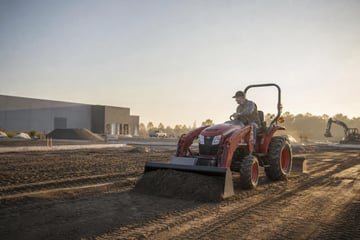
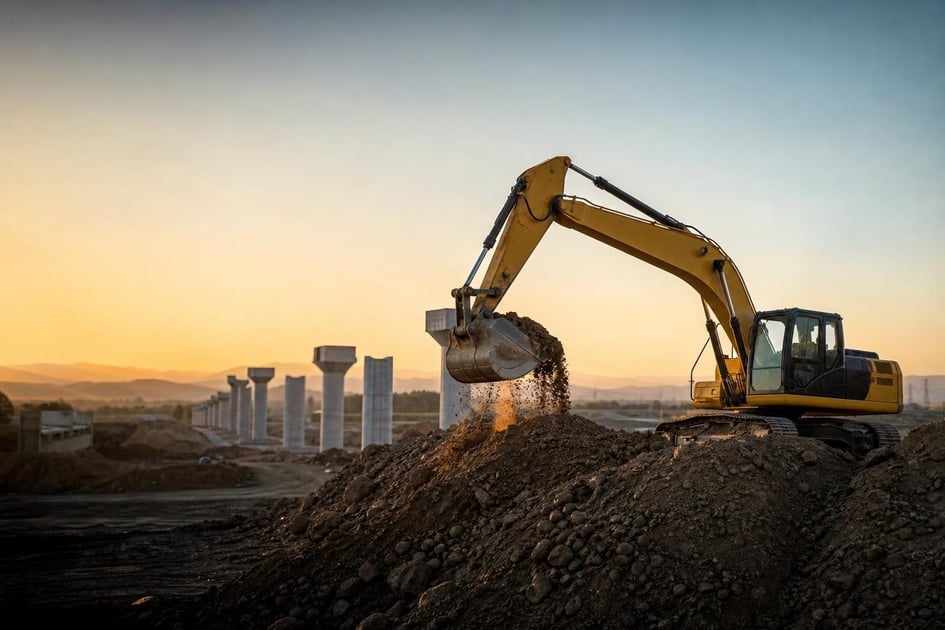
Equipment financing rates are driven by your credit profile, the age and type of equipment you are buying, the length of the term, and the size of your down payment. There is no single published rate sheet that applies to every borrower. A strong business with established revenue financing a new machine with a short term will see very different numbers than a newer operation buying a ten-year-old truck over seven years. Provide Capital finances transactions from $5,000 to $5 million, so the rate conversation changes whether you are buying a single oven or a full fleet of trucks. Rates vary by credit profile, equipment age and term, so the only way to know your exact cost is to have a lender review your specific transaction.
What Determines Your Equipment Financing Rate
Credit History and Business Financials
Lenders look at both your personal credit and your business financials. Most equipment finance companies want to see a personal credit score north of 600, but the rate tier you land in moves significantly once you cross 680 and again above 720. They also review your business bank statements, tax returns, and debt-service coverage. If your business generates steady cash flow and your existing debt is low relative to income, you will generally be offered more competitive terms.
Equipment Age and Condition
The collateral itself matters. New equipment carries less residual risk for the lender because it has a longer useful life and a deeper resale market. Used equipment can absolutely be financed, but as an asset ages past five years, rates typically shift to reflect the higher recovery risk. Specialty equipment with a narrow resale pool may also carry a pricing adjustment compared to a common skid steer or dump truck.
Term Length and Down Payment
A shorter term means less time for things to go wrong, so lenders often price shorter loans more favorably. A two- or three-year term usually carries a lower rate than a seven-year term on the same profile. Conversely, a larger down payment reduces the lender's exposure. While zero-down programs exist for strong borrowers, putting 10% to 20% down can move you into a better pricing band and lower your monthly obligation.
Key Insight: Lenders often reserve their best pricing tiers for transactions where the equipment is under five years old, the term is sixty months or less, and the borrower has been in business for at least two years with documented revenue.
Get a fast decision on your equipment
Applying takes just a few minutes, and decisions can come as soon as the same day.
Start Your ApplicationNew vs. Used Equipment Financing
The decision between new and used affects not only your purchase price but also your financing structure. New equipment commands lower rates and longer available terms because the collateral value is more certain. Used equipment saves capital upfront but may require a larger down payment or a shorter amortization to keep the lender comfortable. According to Census Bureau retail trade data, capital investment cycles often shift toward used equipment when owner-operators want to preserve liquidity.
| Factor | New Equipment | Used Equipment |
|---|---|---|
| Typical down payment | 0% to 10% | 10% to 20% |
| Maximum term | 60 to 84 months | 36 to 60 months |
| Rate outlook | More competitive | Slightly higher |
| Collateral requirement | Equipment only | Equipment only; age limits apply |
| Best for | Long-term ownership, high utilization | Lower monthly cost, immediate need |
Used equipment financing is common in construction, agriculture, and transportation. A three-year-old excavator or a low-mileage delivery van can be a smart buy, but the lender will verify the serial number, hour meter, or odometer before finalizing terms.
Pro Tip: If you are buying used, have the service records and a recent inspection report ready. Lenders price the deal partly on their confidence in the asset's condition, and incomplete maintenance histories can push you into a higher rate or require a larger down payment.
Equipment Financing Rates by Transaction Type
You can finance equipment through a loan or a lease, and the structure changes how your rate is expressed. A loan separates the interest rate from the principal, and you own the asset at the end. A lease bundles the cost of funds into periodic payments, and the buyout terms determine whether ownership transfers to you. The SBA 7(a) loan program offers an alternative for general working capital, but dedicated equipment financing usually moves faster because the collateral is specific and easy to value.
| Feature | Equipment Loan | $1 Buyout Lease | Fair Market Value Lease |
|---|---|---|---|
| Ownership | You own from day one | You own after final $1 payment | Return or purchase at FMV |
| Rate format | Stated interest rate | Implicit rate in payments | Implicit rate in payments |
| Down payment | Often none to 10% | Often one or two payments upfront | Often one or two payments upfront |
| Tax treatment | Interest deducted, depreciation on asset | Full payment deduction possible | Payments deducted as expense |
| Best for | Long-term ownership, equity building | Eventual ownership with lower payments now | Short-term use or frequent upgrades |
Rates vary by credit profile, equipment age and term in both structures, but loans often make more sense if you plan to run the equipment for its full useful life. A fair market value lease can preserve cash flow, though you may face a balloon payment or return conditions at the end. If you are weighing a loan against a lease for your next machine, see what you qualify for and compare the total cost of each structure side by side.
How Tax Treatment Affects Your Real Cost in 2026
The rate on your financing is only part of the cost equation. For the 2026 tax year, Section 179 allows businesses to deduct the full purchase price of qualifying equipment up to an annual limit set by Congress, subject to your taxable income. Because that limit adjusts for inflation and may be affected by pending or recently passed legislation, you should speak with your CPA about the exact 2026 ceiling before you rely on it for cash-flow planning.
Bonus depreciation may also apply to new and used equipment in 2026, though the percentage has been phasing down from the 100% level in prior years. Again, the exact percentage for 2026 depends on current law, so confirm the figure with your accountant. When combined with Section 179, these deductions can offset a significant portion of your first-year cost, which makes a slightly higher financing rate more palatable if the equipment generates revenue immediately. Some states also offer their own depreciation incentives or credits for capital investment. These vary by jurisdiction, so ask your CPA whether your state piggybacks on the federal Section 179 rules or offers separate treatment for 2026.
By the Numbers: A borrower in the 24% federal tax bracket who can fully deduct a $100,000 equipment purchase in 2026 effectively reduces the net cost by $24,000 in the first year, before state benefits. The actual savings depend on your bracket, entity type, and whether you have sufficient taxable income to absorb the deduction.
Find the right financing structure
Tell us about the equipment you need and we will show you the options that fit your business.
See Your OptionsQualification Criteria Lenders Actually Review
Time in Business
Most equipment lenders prefer borrowers with at least two years in operation. If you have been operating for less than two years, expect to provide a larger down payment or a personal guaranty, and the rate may reflect the additional risk.
Revenue Requirements
There is no universal revenue floor, but lenders want evidence that your business can cover the new debt. Many look for monthly bank deposits that exceed the proposed payment by a factor of 1.25 to 1.5. For a $1,500 monthly equipment payment, that means showing consistent deposits of roughly $2,000 to $2,250 after expenses.
Credit Score Bands
While minimum scores start around 600, the best pricing is usually reserved for borrowers above 700. Between 600 and 650, approvals are possible but often come with shorter terms or higher rates. Below 600, you may need to add a co-signer, increase your down payment, or select a newer piece of equipment to strengthen the collateral.
Documentation to Prepare Before You Apply
Having your paperwork ready speeds up the process and can improve your offer. Gather the last three months of business bank statements, your most recent two years of business tax returns, a copy of the equipment quote or invoice, and your driver's license. If the equipment is used, add the maintenance records and photos. For transactions above $150,000, lenders may also request an interim financial statement or a debt schedule.
Common Mistakes That Raise Your Rate
One common mistake is applying for the maximum term without considering how the equipment ages. Stretching a used truck over seven years means you may owe more than it is worth before the note is paid. Another mistake is failing to disclose existing debt. Lenders will find it during underwriting, and surprises delay approval or trigger risk-based pricing. A third mistake is shopping only by rate without comparing total cost. A lower rate with a large origination fee can be more expensive than a slightly higher rate with minimal fees. CNBC business coverage has highlighted how focusing solely on headline rates can lead owners to overlook origination costs and prepayment penalties that drive up the real cost of capital.
Another oversight is letting insurance lapse before the lender records their lien. Equipment lenders require proof of physical damage and liability coverage naming them as loss payee. If your policy lapses during underwriting, funding stalls until you provide a current certificate.
What Happens After You Apply
Once you submit an application and supporting documents, the lender reviews your credit and the equipment details. For transactions under $150,000, same-day approvals are possible if the file is clean. Larger requests or complex collateral may take 24 to 48 hours. After approval, the lender issues a term sheet or lease agreement. You review and sign, and the lender pays the vendor or reimburses you if the purchase already occurred. Funding usually happens within one to three business days of signed documents.
You will also need to schedule delivery or pickup so the lender can verify the asset before releasing funds. Some lenders send an inspector to photograph the serial plate and confirm the condition matches the invoice.
Equipment Financing in Action
Consider a landscaping company buying a Skid Steers financing package. A new loader might cost $65,000. With strong credit and a five-year term, the monthly payment could fall in a range that preserves cash flow for payroll and fuel. A used model at $40,000 with a four-year term might carry a slightly higher rate but a lower total financed amount, making the monthly payment comparable.
A dump truck for a construction crew works similarly. Dump Trucks financing on a $120,000 vehicle often spans five to six years. Because the truck serves as collateral, the borrower does not need to pledge real estate or other assets. Rates vary by credit profile, equipment age and term, but the structure keeps the borrowing cost competitive compared to unsecured credit.
In food service, a growing restaurant might use Commercial Ovens financing to add a second location. A $35,000 oven package financed over four years leaves working capital intact for inventory and staff training. The equipment itself secures the loan, so the owner does not have to tap a personal line of credit.
Industry-Specific Considerations
Different industries face different seasonal cash flows, and lenders account for that. Construction borrowers often see higher activity in spring and summer, so a lender may structure payments with a seasonal skip or lower initial payments. Healthcare and dental practices usually have stable revenue, which can support longer terms and larger equipment packages.
Agriculture and forestry operate on harvest and logging cycles. Forestry Logging equipment financing may include chippers, skidders, and feller bunchers. Because these machines work in harsh conditions, lenders pay close attention to the equipment's age and the borrower's experience in the trade. A well-established logging contractor buying a five-year-old skidder will generally see better terms than a newcomer financing the same machine.
HVAC and transportation also have distinct patterns. HVAC companies often replace fleets on predictable cycles, while transportation owner-operators may buy a single high-mileage tractor and run it hard. In each case, matching the term to the equipment's expected revenue life prevents you from being upside down on the loan.
Pro Tip: In the restaurant and food service sector, lenders often view equipment financed inside an existing operating location more favorably than equipment for a brand-new concept, because the historical revenue reduces uncertainty. If you are expanding an established location, highlight your sales history.
Put the right equipment to work
From $5,000 to $5 million, new or used, Provide Capital helps businesses nationwide finance the equipment they need.
Apply TodayFAQ
How fast can I get approved?
For transactions under $150,000 with complete documentation, same-day approvals are possible. Larger or more complex files may take 24 to 48 hours.
Does the equipment have to be new?
No. Used equipment can be financed, though terms and down payment requirements may differ based on age and condition.
Will applying hurt my credit?
Most equipment lenders perform a hard credit inquiry during underwriting. The impact is typically small and temporary, but you should be prepared for the pull.
Can I finance private-party equipment?
Yes, many lenders will finance a purchase from a private seller as long as the title can be cleared and the equipment inspected. The process may require additional verification.
What is the minimum transaction size?
Provide Capital finances new and used business equipment from $5,000 to $5 million.
Is a down payment always required?
Not always. Strong borrowers with solid credit and established revenue may qualify for zero-down programs. However, a down payment often improves your rate and lowers your monthly obligation.
Can I pay off the loan early?
Most equipment loans allow early payoff, but some leases include prepayment penalties or require you to pay all remaining payments. Review your specific agreement before signing.
Do I need to own a business to apply?
You must be a business entity or a sole proprietor using the equipment for commercial purposes. Consumer-use purchases do not qualify.
Next Steps
The rate you receive depends on the specific machine, your financial history, and how the deal is structured. Rather than guessing, gather your equipment quote, bank statements, and tax returns, then talk to a specialist about your specific machine. You can get a same-day decision on your equipment and lock in terms before the seller moves the unit to another buyer.
Disclaimer: The information provided in this article is for general educational purposes only and is not financial, legal, or tax advice. Funding terms, qualifications, and product availability may vary and are subject to change without notice. Provide Capital does not guarantee approval, rates, or specific outcomes. For personalized information about your business funding options, contact our team directly.