Equipment financing in South Carolina works the same way it does across the country: the equipment itself serves as collateral, which means you do not need to pledge real estate or drain your operating account to acquire a machine. Rates vary by credit profile, equipment age and term length, and same-day approvals are possible when your documentation is complete. Whether you run a grading crew outside Greenville, a timber operation in the Lowcountry, or a restaurant on the Grand Strand, the structure of the deal depends on your business revenue, time in operation, and the useful life of the asset you are buying.
Why South Carolina Businesses Finance Instead of Paying Cash
South Carolina's economy is more equipment-intensive than it looks from the interstate. The Upstate I-85 corridor hosts advanced manufacturing plants that require precision CNC machines, robotic welders, and heavy material-handling equipment. Charleston's port expansion and the resulting warehouse and logistics boom have increased demand for forklifts, container handlers, and delivery trucks. In the Midlands and Pee Dee, row-crop farming, poultry operations, and timber harvesting depend on tractors, skidders, and loaders that can cost more than a house. According to U.S. Census Bureau data on South Carolina, the state is home to more than 122,000 employer establishments, many of them in sectors that rely on expensive capital equipment.
Forests cover roughly two-thirds of the state, and the South Carolina Forestry Commission tracks approximately 12.6 million acres of timberland. That makes forestry and logging one of the most equipment-dependent sectors in the state, alongside construction, agriculture, and manufacturing. When a logging contractor needs a grapple skidder or a feller buncher, paying cash can tie up hundreds of thousands of dollars that might otherwise cover payroll, fuel, and stumpage payments. Financing preserves liquidity while putting the machine to work generating revenue immediately.
Seasonal patterns also push South Carolina owners toward financing. Construction crews often try to beat the summer hurricane season and the winter rainy period, which means equipment purchases cluster in late winter and early spring. Farmers face a narrow planting window. Forestry operators prefer dry-weather harvesting. Financing lets you acquire equipment ahead of the season and spread the cost over the months when the machine is actually earning.
Key Insight: In South Carolina, the equipment itself is the collateral. That means a lender can offer more competitive terms than an unsecured working-capital loan, because the asset secures the deal and can be repossessed and resold if necessary. This structure is especially valuable for owner-operators who do not want to risk a personal residence or who have already leveraged real estate for other business needs.
Get a fast decision on your equipment
Applying takes just a few minutes, and decisions can come as soon as the same day.
Start Your ApplicationWhat Equipment Qualifies and Typical Terms
Provide Capital finances new and used business equipment from $5,000 to $5 million. That range covers everything from a single commercial oven for a Columbia bakery to an entire fleet of dump trucks for an earthmoving contractor in Rock Hill. The equipment must be used for business purposes, and it should have a useful life that extends beyond the financing term.
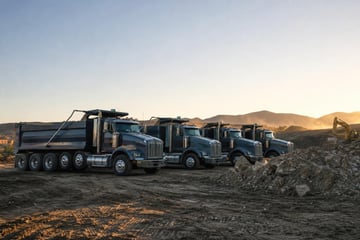
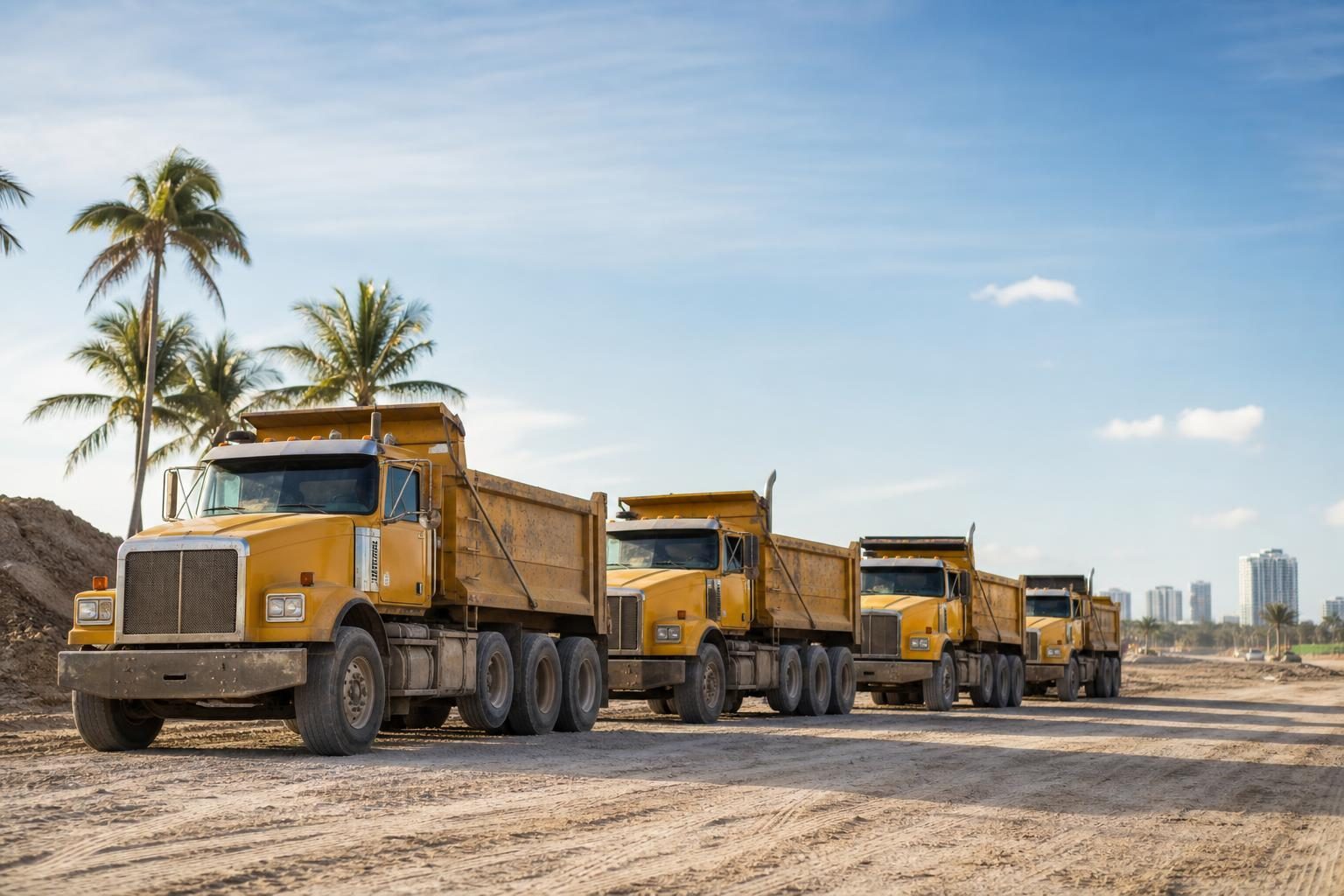
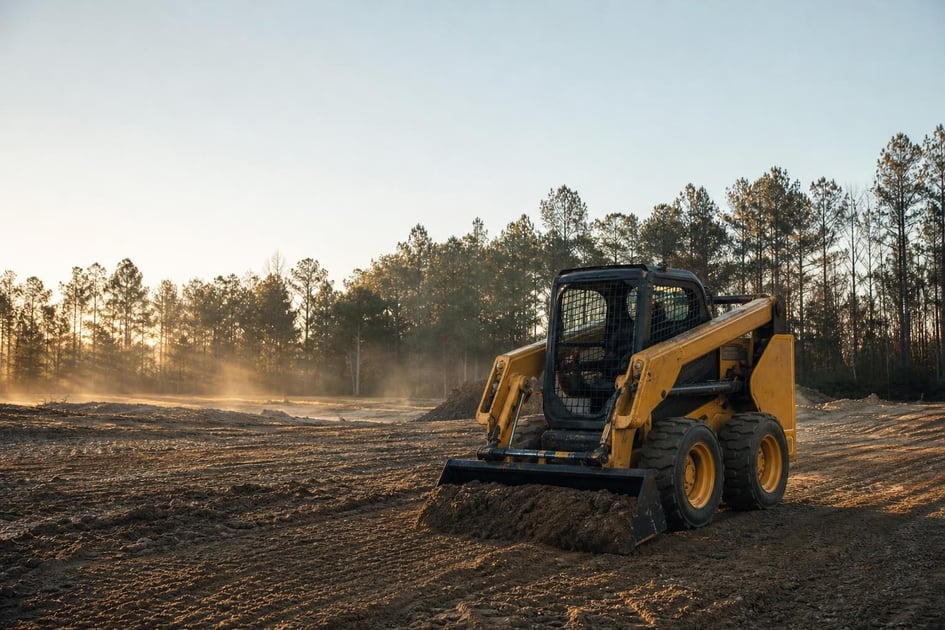
Eligible assets include construction equipment like Skid Steers financing and Dump Trucks financing, commercial kitchen equipment, manufacturing machinery, agricultural tractors and combines, forestry equipment, and Commercial Hvac System financing for installers and property managers. We also finance bucket trucks for utility contractors, wheel loaders for material yards, and scissor lifts for facilities maintenance crews.
Terms typically range from 24 to 84 months, depending on the equipment type and its expected useful life. A $15,000 commercial mower might carry a 36-month term, while a $300,000 motor grader could amortize over 60 or 72 months. Down payment requirements vary by credit profile and equipment age, though some transactions can be structured with minimal money down for well-qualified borrowers. Because the equipment backs the loan, the approval decision focuses heavily on the cash flow of the business and the resale value of the collateral.
If you are looking at a piece of equipment and wondering whether the payment fits your budget, the simplest next step is to see what you qualify for based on your specific revenue and the machine you have identified.
New vs. Used Equipment: Financing Differences
New equipment commands the lowest rates and the longest terms because the collateral holds value longer and the lender's downside risk is smaller. Manufacturers may also offer promotional rates or deferred-payment programs, though those are separate from third-party financing. The downside is depreciation: a new excavator or commercial truck loses value the moment it goes to work, and if your business cycles are uncertain, that first-year depreciation can sting.
Used equipment is where many South Carolina owner-operators find the best value. A three-year-old skid steer with 1,200 hours may sell for 40 to 50 percent less than a new unit while retaining 70 percent of its productive life. Financing used equipment requires a closer look at condition, maintenance records, and remaining warranty. Lenders will typically cap the term based on the age of the asset: a machine that is already five years old might qualify for 36 or 48 months rather than 72. Rates on used equipment are slightly higher than new, reflecting the faster depreciation curve and the smaller secondary market.
One practical consideration for South Carolina buyers: humidity and coastal salt air accelerate corrosion on equipment stored near the coast. A used machine that spent its life in the Upstate may command a higher resale value than an identical unit from Charleston, simply because rust is less of a concern. Ask for maintenance records and inspect undercarriages, hydraulic lines, and electrical connections carefully.
Pro Tip: When buying used, get the serial number and run it through the manufacturer's dealer network before you apply for financing. A dealer can tell you if the machine has outstanding recalls, warranty claims, or service bulletins. That information protects your investment and speeds up the lender's collateral review.
Equipment Loan vs. Lease: What South Carolina Buyers Should Know
The choice between a loan and a lease depends on how long you plan to keep the equipment, how many hours you expect to put on it annually, and your tax strategy. A loan puts the title in your name; a lease keeps the title with the lender until you exercise a purchase option. Both structures report to commercial credit bureaus and can strengthen your business profile if paid on time.
| Feature | Equipment Loan | Equipment Lease |
|---|---|---|
| Ownership | You own the equipment; lender holds a lien | Lender owns the equipment; you have use rights |
| Down payment | Often 0% to 20% depending on credit and collateral | Usually first and last payment upfront |
| Term length | 24 to 84 months, tied to useful life | 24 to 60 months, with option to renew or buy |
| Monthly payment | Higher than a lease for the same equipment | Lower monthly cost; may include maintenance |
| End of term | You own the equipment free and clear | $1 buyout, fair-market-value purchase, or return |
| Best for | Equipment you plan to keep 7+ years or customize | Rapidly evolving technology or seasonal use |
Loans make sense for assets with long lifespans and stable technology: dump trucks, commercial ovens, HVAC package units, and traditional machine-shop equipment. Leases work better when obsolescence is a risk, such as diagnostic equipment in a dental practice or computer-controlled fabrication machinery that may be superseded in three years. If you are unsure which structure fits your situation, talk to a specialist about your specific machine before you sign a purchase order.
How to Qualify for Equipment Financing in South Carolina
Approval decisions rest on three pillars: credit history, business revenue, and the quality of the collateral. You do not need perfect credit, but a pattern of recent delinquencies, charge-offs, or bankruptcies will narrow your options and raise your rate. Most lenders want to see at least two years in business, though some programs accept twelve months of operating history if revenues are strong and the equipment is in high demand. As SBA guidance on small-business loans explains, lenders evaluate character, capacity, and collateral when reviewing applications for equipment-backed financing.
Revenue requirements vary by transaction size. A $25,000 equipment loan might require only $8,000 to $10,000 in monthly gross revenue, while a $500,000 construction equipment package will trigger deeper scrutiny of your profit and loss statements, tax returns, and existing debt obligations. The lender calculates a debt-service coverage ratio—typically looking for at least 1.25x—to ensure you can handle the new payment alongside rent, payroll, and fuel.
Documentation requirements usually include:
- One to two years of business tax returns
- Three to six months of business bank statements
- A current year-to-date profit and loss statement
- An equipment quote or invoice from a dealer or private seller
- Proof of business registration and any required licenses
For South Carolina contractors, that last item matters more than in some states. General and mechanical contractors must hold licenses from the South Carolina Department of Labor, Licensing and Regulation for projects above certain thresholds. Lenders may verify that your license is current and in good standing before funding equipment tied to contracted work. Agriculture and forestry operators should have any required timber-dealer or pesticide-applicator permits ready if requested.
By the Numbers: A forestry contractor financing a $180,000 grapple skidder over 60 months at competitive rates might see a monthly payment in the low-to-mid four figures. Over the life of the deal, the machine can harvest thousands of tons of timber. At current stumpage and hauling rates in the South Carolina Piedmont, many operators target full payback within 18 to 24 months of active use, even after accounting for fuel, maintenance, and crew costs.
Find the right financing structure
Tell us about the equipment you need and we will show you the options that fit your business.
See Your OptionsTax Treatment and Section 179 for Tax Year 2026
The tax code offers several ways to deduct equipment costs, and the right strategy depends on your 2026 taxable income, your forecast for next year, and whether you are financing or leasing. For tax year 2026, Section 179 allows businesses to deduct the full purchase price of qualifying equipment up to an inflation-adjusted limit, subject to a phase-out threshold and taxable income constraints. Bonus depreciation may also apply to new and used qualified property, though the percentage and eligibility rules shift from year to year.
Because Congress adjusts these limits annually based on inflation, and because the interaction between Section 179, bonus depreciation, and regular MACRS depreciation can get complicated, you should consult a CPA before you structure a large equipment purchase. A qualified accountant can model whether accelerating deductions in 2026 makes sense or whether spreading them over the standard depreciation schedule better matches your revenue curve.
One point that surprises some South Carolina buyers: if you finance equipment in December 2026 but place it in service before January 1, 2027, you may still qualify for the 2026 deduction. The key date is when the equipment is ready and available for use, not when you finish making payments. Keep your delivery receipts, installation records, and any dealer pre-delivery inspection reports in case the IRS asks for proof of the in-service date. A Forbes guide to small business financing notes that understanding the timing of deductions is critical when structuring year-end equipment purchases.
Industry-Specific Equipment Needs Across South Carolina
South Carolina is not a monolithic market. The equipment a contractor needs in Horry County differs sharply from what a manufacturer needs in Spartanburg. Understanding your regional economy helps you choose the right machine and the right financing structure.
Construction and Earthmoving
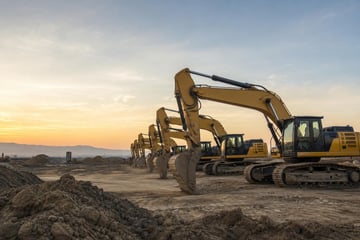
The Charleston metro, Greenville-Spartanburg, and Columbia areas have seen sustained residential and commercial building activity. Interstate 85 widening projects, port-related warehouse construction, and storm-recovery work create steady demand for excavators, dozers, motor graders, and Dump Trucks financing. Many contractors run mixed fleets of owned and rented equipment, financing the core machines they use daily and renting specialty attachments for one-off jobs.
Forestry and Logging
With 12.6 million acres of timberland and a positive growth-to-removals ratio, South Carolina remains a significant timber producer despite recent mill closures. Logging crews need feller bunchers, skidders, loaders, and chip vans. Forestry Logging equipment financing is structured around seasonal cash flow: lenders understand that timber operators do not cut year-round and may structure payments to match harvest cycles.
Agriculture and Agribusiness
South Carolina farms produce peaches, cotton, soybeans, peanuts, and poultry on a commercial scale. Row-crop operators need tractors, planters, sprayers, and combines. Poultry growers need housing equipment, feed systems, and climate-control machinery. Because agricultural income is seasonal, many lenders offer skip-payment or balloon structures that align with harvest receipts.
HVAC and Mechanical Contracting
The subtropical climate means air conditioning is not a luxury; it is a year-round necessity for businesses, schools, and healthcare facilities. HVAC contractors in South Carolina install and service package units, chillers, ductless mini-splits, and geothermal systems. Financing Commercial Hvac System financing lets a contractor keep inventory on hand rather than waiting for a customer signature to order equipment from a distributor.
Manufacturing and Fabrication
The Upstate's automotive and aerospace supply chain—anchored by BMW, Michelin, Boeing, and hundreds of Tier 1 and Tier 2 suppliers—depends on CNC machines, presses, welders, and automated inspection equipment. Manufacturing equipment tends to have longer useful lives and higher price tags, which pushes many buyers toward 60- to 84-month loan terms.
Pro Tip: If you are a South Carolina contractor bidding on state or federal infrastructure work, check the contract's equipment-age requirements before you buy used. Some Department of Transportation specifications require equipment to be less than ten years old or under a certain hour threshold. Financing a machine that does not meet the spec can leave you with a payment and no qualifying asset.
Common Mistakes South Carolina Buyers Make
First, buying equipment before checking financing. A surprising number of owner-operators write a deposit check assuming they will get approved, then discover that their credit profile or the age of the machine does not fit the lender's guidelines. Get pre-qualified before you negotiate price.
Second, ignoring total cost of ownership. The monthly payment is only part of the equation. Fuel, insurance, maintenance, and storage add up. A cheaper machine with poor parts availability can cost more over five years than a slightly more expensive unit with a robust dealer network in South Carolina.
Third, mismatching the term to the equipment life. Financing a high-hour used skid steer over 72 months is risky because the machine may need major repairs—or fail entirely—before you finish paying for it. Match the loan term to the realistic remaining life of the asset.
Fourth, neglecting to register the equipment properly. South Carolina requires certain commercial vehicles and heavy equipment to be registered with the Department of Motor Vehicles or the Department of Revenue. If the lender discovers title or registration issues after funding, it can delay disbursement or trigger a default clause.
What Happens After You Submit an Application
Once you submit an application through our application page, the review process typically moves fast. For transactions under $150,000, many approvals come back the same business day if your documentation is complete. Larger deals or complex credit profiles may take 24 to 72 hours while the underwriter verifies revenue, checks references, and orders a collateral evaluation.
After approval, you receive a term sheet outlining the rate, payment, term, and any conditions. Read it carefully. Look for prepayment penalties, documentation fees, and insurance requirements. If the terms meet your expectations, you sign and return the documents. The lender then pays the dealer or seller directly, or wires funds to your business account if you have already purchased the equipment and are seeking reimbursement.
Most lenders require proof of insurance naming them as loss payee before releasing funds. For heavy equipment, that usually means a commercial inland marine or equipment policy with physical damage coverage. If you do not have a policy in place, factor that cost into your first-year budget.
Ready to move forward?
More than 10,000 businesses have financed equipment with Provide Capital. See what you qualify for today.
Get StartedFrequently Asked Questions
Can I finance equipment in South Carolina if my business is less than two years old?
Yes, though your options are narrower. Some lenders accept twelve months of operating history if revenues are strong and the equipment is in a high-demand category like construction or transportation. Expect a larger down payment or a shorter term than a seasoned business would receive.
Does the equipment have to be purchased from a dealer?
No. Private-party sales and auction purchases are financeable, but the process takes longer. The lender must verify clear title, inspect the equipment, and sometimes order an independent appraisal. Dealer sales are faster because the dealer provides the invoice, handles the title work, and often has an existing relationship with the lender.
Will financing heavy equipment affect my personal credit?
It depends on the lender and the structure. Some equipment finance companies report only to commercial bureaus, while others require a personal guarantee and report to both commercial and consumer bureaus. Ask before you apply if keeping the debt off your personal report matters to you.
Can I finance the sales tax and delivery costs?
In many cases, yes. Lenders can roll soft costs like freight, installation, and sales tax into the loan amount up to a certain percentage of the equipment value. South Carolina sales tax on commercial equipment varies by jurisdiction, so get a detailed quote that separates the machine cost from taxes and fees before you structure the loan.
What credit score do I need for equipment financing?
There is no hard cutoff, but borrowers with scores above 650 generally see the most competitive terms and the lowest down payment requirements. Scores between 600 and 650 are still financeable, though rates will be higher and terms shorter. Below 600, you may need significant collateral, a strong co-signer, or a larger equity injection.
Is it better to lease or buy equipment for a seasonal business?
Seasonal businesses in South Carolina—such as coastal landscaping, agricultural operations, and some construction crews—often prefer leases or loans with seasonal payment structures. A lease with a $1 buyout gives you ownership at the end while keeping monthly costs predictable. A loan with a balloon payment lets you pay down the balance during peak season and refinance or sell when work slows.
How fast can I get funded?
Same-day approvals are possible for well-qualified buyers on transactions under $150,000, assuming the equipment is standard collateral and you provide bank statements and tax returns promptly. Larger transactions, used equipment from private sellers, or complex ownership structures can add 24 to 72 hours.
Do I need a business license to finance equipment?
For most transactions, yes. Lenders want to see that you are legally authorized to operate in South Carolina. Depending on your industry, that may mean a city business license, a contractor license from LLR, a DOT number for commercial vehicles, or an agriculture permit. Have those documents ready when you apply.
Your Next Step
If you have identified the equipment your South Carolina business needs, the next step is to get a decision. Bring your equipment quote, your last two tax returns, and three months of bank statements. We can review your file and give you a clear picture of what terms are available for your specific credit profile and collateral. Get a same-day decision on your equipment and move from shopping to working.
Disclaimer: The information provided in this article is for general educational purposes only and is not financial, legal, or tax advice. Funding terms, qualifications, and product availability may vary and are subject to change without notice. Provide Capital does not guarantee approval, rates, or specific outcomes. For personalized information about your business funding options, contact our team directly.