Equipment loan requirements center on four things: your credit profile, business history, revenue, and the equipment itself. Lenders want evidence that you can afford the payments and that the collateral holds enough value to cover their exposure. At Provide Capital, we finance new and used business equipment from $5,000 up to $5 million, using the equipment itself as collateral, which keeps rates competitive and lets us move fast. Same-day approvals are possible when your documentation is in order.
Credit Profile and Time in Business
Most equipment lenders evaluate both personal and business credit. A FICO score in the mid-600s or higher generally opens the door to stronger terms, though we work with a range of credit profiles. If your score is lower, expect a larger down payment or a shorter term. Time in business matters just as much as the score itself. Two years under the same ownership is the standard benchmark, but we regularly finance owner-operators with one year of operation when revenue is steady and documented. Businesses newer than that face closer scrutiny and may need to provide additional guarantors or a larger equity injection.
Lenders are not looking for perfect credit. They are looking for patterns: on-time rent or lease payments, no recent bankruptcies, and a debt-to-income ratio that leaves room for a new obligation. If you have a prior bankruptcy, it usually needs to be discharged at least two years before application, with clean credit established since. According to U.S. Census Bureau data, small businesses with fewer than 20 employees account for the bulk of equipment financing volume, which is why lenders design programs around owner-operator cash flow rather than corporate-scale balance sheets.
Key Insight: A borrower with a 660 FICO and three years of consistent $40,000 monthly revenue will often qualify for better terms than a 720 FICO borrower with six months of erratic deposits. Lenders weight cash-flow stability heavily because the equipment generates the income that repays the loan.
Get a fast decision on your equipment
Applying takes just a few minutes, and decisions can come as soon as the same day.
Start Your ApplicationRevenue and Debt-Service Coverage
Lenders calculate your debt-service coverage ratio to see whether incoming cash can absorb a new payment. A ratio of 1.25 or higher is typical, meaning you generate $1.25 in operating income for every $1 of debt obligation. We verify this through three to six months of business bank statements and your most recent tax returns. If your revenue is seasonal—common in construction, agriculture, and forestry—disclose that upfront. We can structure payments to match your cash-flow cycle, with lower payments in off-peak months.
We also look at your average daily balance and the frequency of overdrafts. A business that clears $30,000 in monthly sales but carries a near-zero balance and bounces checks monthly is a riskier profile than one that clears $20,000 with a steady $5,000 cushion. Keep your accounts clean for at least three months before applying.
The Equipment as Collateral
The machine you are buying secures the loan. That is why lenders care about age, hours, and condition. New equipment up to $5 million is straightforward: a dealer invoice and serial number usually suffice. Used equipment is also financeable, but generally must be less than 10 to 15 years old at the end of the term, with documented maintenance history. Serial numbers, invoices, and seller information are required so we can verify ownership and value. For specialized assets like Dump Trucks financing or commercial refrigeration, we may request an independent appraisal if the resale market is narrow.
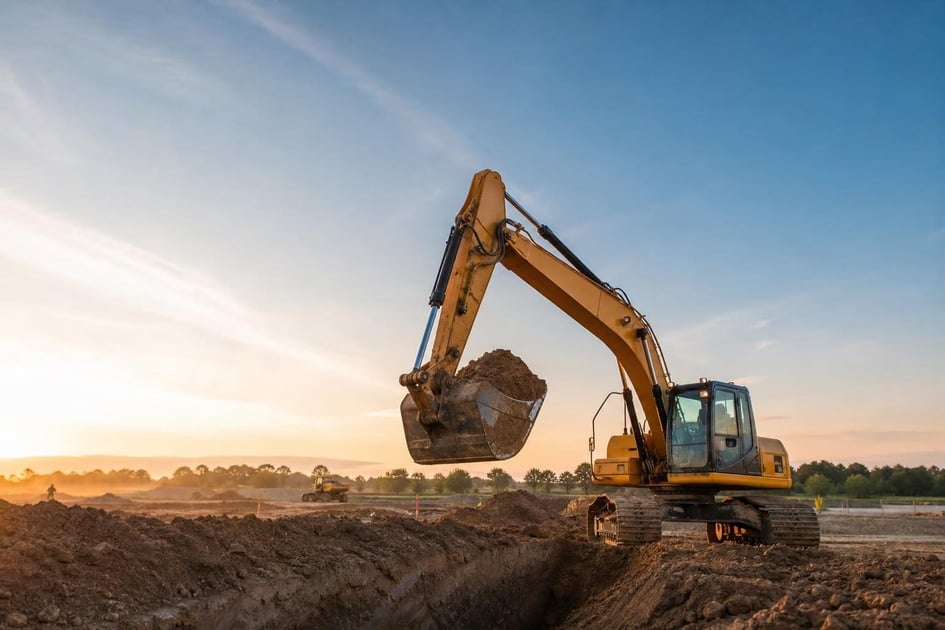
The collateral value directly affects your advance rate. A $100,000 excavator in excellent condition might qualify for 90 to 100 percent financing for a strong borrower. A $100,000 unit with 8,000 hours and a patchy service record may cap out at 80 percent, requiring a larger down payment. Rates vary by credit profile, equipment age and term.
By the Numbers: A construction contractor financing a $150,000 machine over 60 months with strong credit might see a monthly payment in the low four figures. The same machine for a borrower with challenged credit and a shorter 36-month term could run 40 to 60 percent higher per month. Rates vary by credit profile, equipment age and term.
New vs. Used Equipment Requirements
New equipment usually requires only a purchase order or invoice from a dealer. Warranty coverage, clear title, and manufacturer support all reduce lender risk. Used equipment demands more: a bill of sale, maintenance records, and sometimes a third-party inspection. Private-party sales add another layer because we must verify the seller actually owns the asset free and clear. Forbes analysis indicates that buyers who compare total cost of ownership across loan and lease structures typically reduce lifetime equipment costs compared with those who focus only on monthly payments.
Down payment expectations vary by credit profile, equipment age, and term. New equipment may qualify for zero-down programs for well-qualified buyers. Used equipment, especially past 5 years old, often requires 10 to 20 percent down to offset depreciation risk. Rates vary by credit profile, equipment age and term.
Loan terms for new equipment typically stretch 60 to 84 months. Used equipment caps out closer to 48 to 60 months, and sometimes 36 months for assets over 10 years old. The goal is to ensure the loan matures before the machine becomes obsolete or unreliable.
Documentation Checklist
Before you apply, gather the following. Incomplete files are the number one cause of delays. SBA guidance consistently lists organized financial records as the single biggest factor in speeding up small-business credit decisions.
- Driver's license or passport for every guarantor
- Last two years of business tax returns
- Three to six months of business bank statements
- Current equipment quote or invoice
- Business debt schedule if you are refinancing existing equipment
- Articles of incorporation, operating agreement, or partnership docs
- Proof of insurance covering the new equipment
If you are buying from a private party, add the seller’s payoff letter or title. Having these ready can cut approval time from days to hours. Get a same-day decision on your equipment by submitting a complete package upfront.
Lease vs. Loan: How Requirements Differ
Leases and loans solve different problems, and their qualification standards reflect that.
| Factor | Equipment Loan | Equipment Lease |
|---|---|---|
| Ownership | You own it after the final payment | Ownership at end depends on buyout structure |
| Down payment | Typically 0% to 20% | Often one or two payments upfront |
| Credit emphasis | Weighted toward business history and revenue | May weigh personal credit more heavily |
| Collateral | The equipment secures the loan | Lessor retains title until buyout |
| Tax treatment | Interest deductible; depreciation available | Payments often fully deductible as operating expense |
| End-of-term | No balloon; you own the asset outright | $1 buyout, fair-market-value purchase, or return |
Loans build equity on your balance sheet. Leases preserve working capital and can offer faster approval because the lessor’s risk model is different. If you plan to keep the asset for 10 years and it holds residual value, a loan usually wins. If you upgrade every 36 months, explore a lease. Talk to a specialist about your specific machine to see which structure fits your cash flow.
Find the right financing structure
Tell us about the equipment you need and we will show you the options that fit your business.
See Your OptionsTax Treatment for the 2026 Tax Year
For the 2026 tax year, Section 179 allows eligible businesses to deduct the full purchase price of qualifying equipment up to a statutory limit set by the IRS and adjusted annually for inflation. Bonus depreciation may also apply at a percentage determined by current federal law. These provisions can substantially reduce the after-tax cost of acquiring equipment, but the exact dollar caps and phase-out thresholds change each year.
Because tax rules depend on your entity structure, prior-year taxable income, and whether the equipment is used more than 50 percent for business, consult a CPA before making a purchase decision based on tax benefits. Never rely on a blog post for your final tax strategy. You can find the latest thresholds in the most recent IRS guidance on Section 179.
Pro Tip: If you are near the Section 179 cap for 2026, consider placing the equipment in service before December 31 to capture the deduction this year rather than next. The IRS cares about the in-service date, not the order date. A CPA can model whether accelerating or deferring the purchase saves more based on your expected 2027 income.
Industry-Specific Qualification Nuances
Construction firms financing Skid Steers financing or dump trucks often see seasonal revenue spikes in spring and summer. We structure payments to match. Forestry Logging equipment financing involves highly specialized collateral with limited resale markets, so we may require more detailed appraisals and proof of timber contracts or operating agreements. Dental and healthcare practices buying diagnostic equipment face different documentation needs, including proof of licensure and malpractice insurance.
Restaurants seeking Commercial Ovens financing should expect us to verify health department permits and, where applicable, liquor licenses. Transportation and trucking clients need DOT numbers, authority, and proof of compliant drivers. Manufacturing buyers often finance multiple machines at once; in those cases we look at the aggregate collateral value and how the new capacity affects projected output.
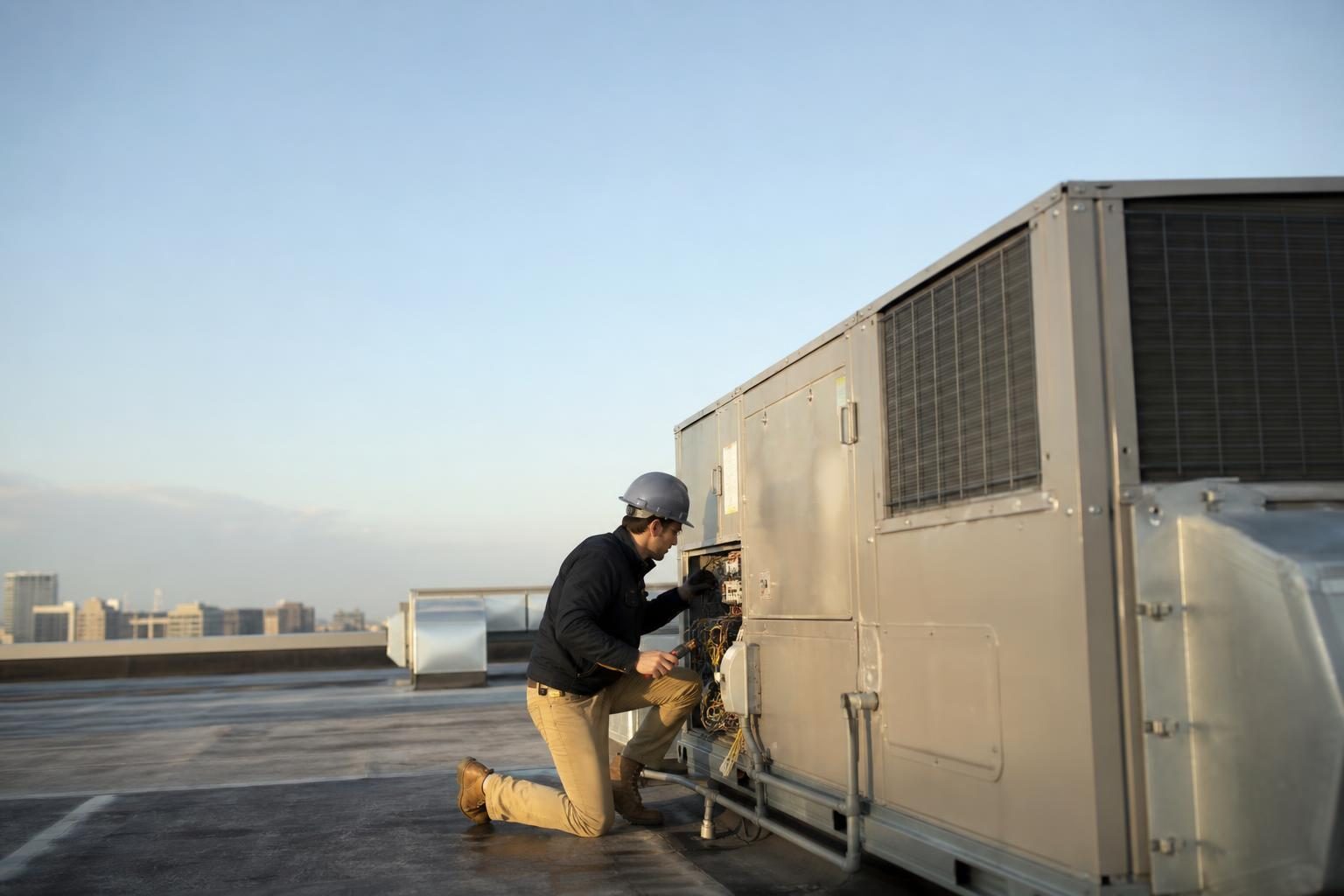
Agriculture and HVAC contractors each have seasonal cash-flow curves. An irrigation equipment loan might skip payments in winter. A commercial HVAC system loan might step up payments after the spring installation rush. Rates vary by credit profile, equipment age and term.
Common Application Mistakes
The biggest delay we see is incomplete documentation. Applicants often forget to include the equipment invoice or submit personal bank statements instead of business accounts. Another mistake is shopping for equipment before checking financing capacity. Know your approximate approval range before negotiating with a seller so you do not commit to a machine you cannot comfortably cover.
Do not overstate revenue. Lenders verify tax returns against bank deposits, and discrepancies trigger additional scrutiny. Avoid equipment with cloudy title history. If a used machine has undisclosed liens, missing serial plates, or a salvage record, the deal stops until title is cleared. Run a title search on any used purchase over $25,000.
Finally, do not ignore insurance. Lenders require proof that the collateral is covered against theft, fire, and liability before funding. If you add the equipment to an existing policy, request a certificate of insurance naming the lender as loss payee.
What Happens After Approval
Once approved, you receive a term sheet detailing the structure, payment amount, and any remaining conditions. Read it carefully. Look for prepayment penalties, default provisions, and personal guarantee language. After you accept, we issue a purchase order or pay the seller directly. You take delivery, and payments begin according to the schedule.
Most equipment loans report to business credit bureaus. Timely payments build your profile, which improves terms on your next acquisition. Keep copies of the UCC filing release once the loan is paid off; you will need it to prove clear title when you sell or trade the asset later.
Key Insight: If you anticipate selling the equipment before the loan matures, ask about a simple-interest loan rather than a pre-computed structure. Simple interest lets you save on interest by paying off principal early, while pre-computed loans embed the full interest charge into the balance from day one. Rates vary by credit profile, equipment age and term.
Put the right equipment to work
From $5,000 to $5 million, new or used, Provide Capital helps businesses nationwide finance the equipment they need.
Apply TodayFrequently Asked Questions
What credit score do I need for an equipment loan?
There is no hard cutoff. Scores in the mid-600s and above generally qualify for the broadest range of terms, but we review the full picture including revenue, time in business, and collateral quality. Lower scores are not automatic rejections; they simply shift the structure toward more equity or a shorter term.
Can I finance used equipment?
Yes. Used equipment is a significant portion of what we finance. The asset generally needs to be under 10 to 15 years old at the end of the term, with verifiable maintenance history and clear title. Private-party sales require extra documentation to confirm the seller owns the asset free and clear.
How long does the approval process take?
Same-day approvals are possible when your file is complete. Deals requiring appraisals, complex entity structures, or private-party title clearance can take two to five business days. Submitting clean bank statements, tax returns, and a firm equipment quote upfront is the best way to stay on the fast track.
Is the equipment the only collateral?
In many cases, yes. The equipment itself secures the loan, which is why rates can stay competitive compared to unsecured products. However, strong loans for higher amounts or challenged credit may also include a personal guarantee or a blanket lien on business assets.
Can I pay off the loan early?
Most of our loan structures allow early payoff, but the savings depend on whether the loan uses simple interest or a pre-computed structure. Ask your specialist to walk through the specific math before you sign. There is no substitute for reading the prepayment language in the term sheet.
What industries do you serve?
We finance equipment nationwide for construction, healthcare, dental, restaurant and food service, manufacturing, transportation, agriculture, HVAC, and forestry. If the equipment produces revenue for a business, we can usually find a structure that works.
Do you finance private-party sales?
Yes, but the requirements are stricter than dealer purchases. We need a bill of sale, proof the seller holds clear title, and sometimes an independent inspection. The extra steps protect both you and us from title disputes after funding.
What happens if I miss a payment?
Contact us immediately. Most lenders prefer to restructure rather than repossess. Ignoring the issue triggers default provisions, potential credit damage, and loss of the equipment. Early communication almost always produces a better outcome.
Next Steps
Equipment loan requirements are not mysterious. They boil down to demonstrating that you are a stable operator buying a sound asset with a payment you can afford. Gather your documentation, confirm the equipment meets age and condition standards, and know whether a loan or lease fits your tax and cash-flow goals.
If you are ready to move, see what you qualify for today. We can review your file, discuss the right structure for your equipment, and get you a decision quickly so you can get back to work.
Disclaimer: The information provided in this article is for general educational purposes only and is not financial, legal, or tax advice. Funding terms, qualifications, and product availability may vary and are subject to change without notice. Provide Capital does not guarantee approval, rates, or specific outcomes. For personalized information about your business funding options, contact our team directly.