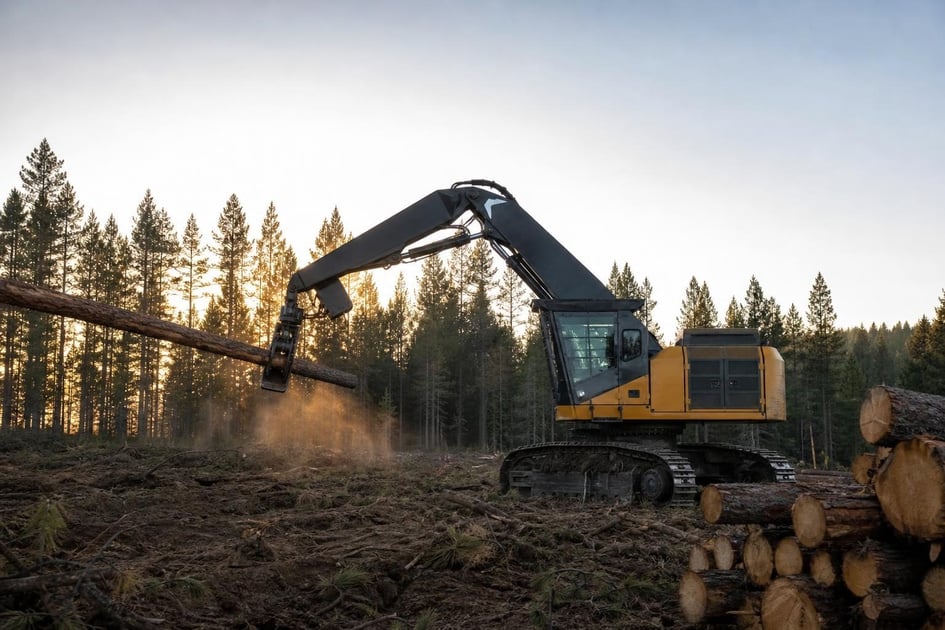
Forestry logging equipment financing rates vary by credit profile, equipment age and term length. A logger with strong credit financing a newer feller buncher over 36 months will see different terms than a startup operation buying a 15-year-old skidder over 60 months. Because the equipment itself serves as collateral, lenders can keep rates competitive compared to unsecured business credit. Provide Capital finances new and used forestry equipment from $5,000 to $5 million nationwide, with same-day approvals possible for complete applications.
If you are mid-purchase on a harvester or loader and need to know what you will actually pay, the short answer is that your rate will sit somewhere on a spectrum driven by four factors: personal and business credit, the age and hours of the machine, how long you want to pay it off, and how long you have been in business. Below is a detailed breakdown of how each factor works, what equipment qualifies, and how to structure the deal to keep payments manageable.
What Determines Your Forestry Equipment Financing Rate
Lenders do not use a single posted rate for forestry equipment. They price each deal based on risk, and risk in equipment finance is measured by the strength of the borrower plus the quality of the collateral.
Credit Profile
Your personal credit score carries more weight than business credit in most logging equipment deals, especially for owner-operators and small crews. A credit score above 700 typically unlocks the best available terms. Scores between 650 and 700 still qualify but may require a larger down payment or shorter term. Below 650, financing is still possible through collateral-heavy structures, though the rate will reflect the added risk.
Equipment Age and Hours
A 2024 feller buncher with under 1,000 hours commands better terms than a 2012 model with 8,000 hours. Older machines depreciate faster and carry higher maintenance risk, so lenders either reduce the loan-to-value ratio or shorten the term. For equipment older than 10 years, some lenders cap terms at 36 months or require 20% down. The make and matter too: a Tigercat or John Deere with a strong dealer network holds residual value better than an orphaned brand.
Term Length
Stretching a $250,000 harvester over 60 months lowers the monthly payment but increases the total interest paid. A 24-month term carries less risk for the lender and therefore receives a better rate, though the payment jumps sharply. Most logging equipment is financed between 36 and 60 months, with used machines clustering toward the shorter end.
Time in Business
Loggers with two or more years of filed tax returns and consistent revenue history receive better terms than newer operations. That does not mean a first-year contractor cannot qualify. It simply means the lender may ask for a larger down payment, a personal guarantee, or additional collateral to offset the lack of operating history.
Key Insight: Lenders evaluate forestry equipment differently than highway construction machines because logging assets work in harsher conditions and have narrower resale markets. A lender who specializes in Forestry Logging equipment financing will understand that a well-maintained 2018 skidder with 4,000 hours can still hold value, whereas a generalist lender might penalize the deal based on age alone.
Get a fast decision on your equipment
Applying takes just a few minutes, and decisions can come as soon as the same day.
Start Your ApplicationTypes of Forestry Equipment You Can Finance
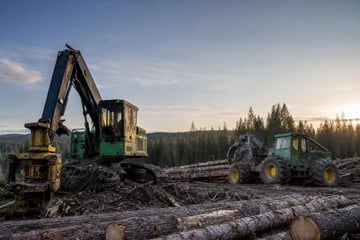
Provide Capital finances the full range of logging and land-clearing machinery, from single-axe processors to whole-tree chippers. Common collateral includes feller bunchers, harvesters, forwarders, skidders, delimbers, loaders, chippers, and mulching tractors. Support equipment matters too: Wheel Loaders financing and Skid Steers financing are frequently packaged with a primary logging machine because both are essential for moving cut timber and clearing landing decks.
Trucks also qualify. Many logging operations need log trucks to move timber from the stump to the mill, and those units can be financed alongside the cutting equipment. The key is that the equipment must be used for business purposes. Personal-use ATVs or property-maintenance tractors do not qualify under the same terms.
Attachments and accessories can usually be rolled into the same financing package. A grapple saw, a winch, or a set of tracks purchased at the same time as the base machine can be included in a single schedule, which simplifies bookkeeping and often improves the blended rate compared to financing the attachment separately on a credit card.
New vs. Used Forestry Equipment: Financing Considerations
The decision between new and used forestry equipment is rarely about prestige. It is about utilization, maintenance capacity, and cash flow. New machines come with warranties, lower hourly operating costs, and stronger residual values, but they also require larger monthly payments and steeper down payments. Used machines offer lower entry costs and slower depreciation, though maintenance reserves must be higher.
From a financing perspective, new equipment typically qualifies for longer terms and lower rates because the collateral is more predictable. Used equipment, especially units older than seven years or with more than 6,000 hours, may be restricted to 36-month terms or require 15% to 20% down. The sweet spot for many loggers is a late-model used machine, three to five years old, that has already taken the steepest depreciation hit but still has modern emissions compliance and remaining warranty.
Seasonal timing affects the used market. Late winter and early spring see an influx of used equipment at auction as operators upgrade before the season or retire. Prices can drop 10% to 15% below fall levels, but so does selection. Financing a winter auction purchase requires a pre-approval letter so you can act quickly when the right machine crosses the block.
By the Numbers: A new feller buncher can run $400,000 to $600,000 depending on head type and carrier size. A five-year-old unit with 3,500 hours might sell for $220,000 to $280,000. Over a 48-month term, the used machine saves roughly $4,000 to $5,500 per month in payments, though the operator should budget $1,500 to $2,500 monthly for maintenance and wear-part reserves.
Lease vs. Loan: Choosing the Right Structure
Most loggers think first of an equipment loan, but leasing can make sense in specific situations. If you need the lowest possible monthly payment and plan to return the machine at term end, a fair market value lease keeps cash in the business. If you want to own the equipment and claim depreciation, a $1 buyout lease or a standard equipment loan is the better tool.
| Feature | Fair Market Value Lease | $1 Buyout Lease | Equipment Loan |
|---|---|---|---|
| Monthly payment | Lowest | Medium | Medium to high |
| Ownership at end | Return or purchase at FMV | $1 purchase option | You own it outright |
| Tax treatment | Deduct lease payments | Claim depreciation | Claim depreciation + interest |
| Best for | Short-term or high-obsolescence equipment | Want ownership with lower upfront cost | Long-term core fleet assets |
| Credit requirement | Higher credit usually needed | Moderate to high | Flexible; collateral helps |
For a logging operation, the loan usually wins because the equipment has a long useful life and the operator wants the equity. A loan also avoids mileage or hour restrictions that some leases impose. If you are unsure which structure fits your tax situation, talk to your CPA before signing.
Tax Treatment for the 2026 Tax Year
Forestry equipment is capital equipment, which means the IRS allows you to recover the cost over time through depreciation. For the 2026 tax year, Section 179 may allow you to deduct the full purchase price of qualifying equipment in the year you place it in service, subject to annual limits that adjust for inflation. The exact 2026 limit and phase-out threshold should be confirmed with your CPA or by checking current-year IRS guidance, because these figures change annually.
Bonus depreciation has been phasing down. For 2026, bonus depreciation may still be available at a reduced percentage compared to prior years. The interaction between Section 179 and bonus depreciation is complex, and the optimal strategy depends on your taxable income, equipment cost, and business structure. A CPA who knows logging operations can model whether to take immediate expensing, spread depreciation over the MACRS schedule, or split the benefit across multiple years.
Interest paid on equipment financing is generally deductible as a business expense. If you finance a $300,000 harvester and pay $35,000 in interest over the life of the loan, that interest reduces your taxable income. The principal repayment does not. Keep clean records separating the two so your accountant does not have to reconstruct the amortization at year-end.
SBA guidance on equipment financing and leasing offers additional background on how to evaluate the structure of your deal before tax season.
Qualification Criteria in Detail
Provide Capital evaluates applications holistically. There is no single disqualifying factor, but there are benchmarks that help you understand where you stand before applying.
Credit Score
A minimum personal credit score of 600 is a practical floor for most equipment finance deals, though exceptions exist for strong collateral or substantial down payments. The best terms start appearing around 680 and improve steadily up to 750 and above. Business credit scores from Dun & Bradstreet or Experian Business are reviewed but rarely override a thin or strong personal file.
Revenue and Bank Statements
Lenders want to see that your current cash flow can cover the new payment. Most require the last three to six months of business bank statements. If your average monthly deposits are $25,000 and the new equipment payment is $4,500, the deal looks comfortable. If the payment would consume 60% of your deposits, the lender may ask for a co-signer, additional collateral, or a larger down payment.
Down Payment
Zero-down forestry equipment financing exists for strong borrowers buying newer collateral, but it is not the norm. Expect to put down 5% to 20% depending on credit and equipment age. A 10% down payment on a $200,000 machine is $20,000. That down payment reduces the lender's risk, lowers your monthly obligation, and improves your chances of same-day approval.
If you have been in business at least two years, carry a credit score above 680, and are buying equipment under five years old, you may qualify for minimal or no down payment. Everyone else should plan on at least 10%.
Find the right financing structure
Tell us about the equipment you need and we will show you the options that fit your business.
See Your OptionsSeasonal Buying Patterns and Industry Timing
Logging is seasonal, and seasonality drives both equipment prices and financing volume. In the Southeast, pine harvesting runs nearly year-round but slows in late summer when pulpwood demand dips. In the Northeast and Great Lakes, winter ground conditions can halt operations, so many loggers schedule equipment purchases in late winter to be ready for the spring push.
Dealers know these patterns. They often discount leftover inventory in January and February to make room for new models arriving in March. Financing a February purchase can save 5% to 10% on the machine itself, which on a $350,000 harvester is $17,500 to $35,000 off the invoice. The trade-off is that your first payment may come due before revenue ramps up in April, so structure the first few months with that cash-flow gap in mind.
Pro Tip: Never bid at a logging equipment auction without a financing pre-approval in hand. Auction houses typically require a 10% deposit the day of the sale and full payment within 24 to 72 hours. A lender who specializes in forestry assets can issue a pre-approval letter based on your credit and a general equipment type, letting you bid up to a set limit with confidence. Get a same-day decision on your equipment before you register for the auction.
Common Mistakes Loggers Make When Financing
Even experienced operators trip over predictable errors. Avoiding these saves money and headaches.
Underfinancing Attachments and Soft Costs
A feller buncher without a head is just a carrier. Yet some operators finance only the base machine and pay cash for the head, freight, and installation. If cash is tight, roll everything into one financing package. Lenders understand that a logging machine is not operational until it is fully equipped and delivered.
Ignoring Transport and Setup Costs
Moving a 40-ton harvester 400 miles can cost $3,000 to $5,000. Setup, first service, and initial wear parts add another $2,000 to $4,000. If you drain your cash reserves on the down payment and leave nothing for these costs, you start the season undercapitalized. Build freight and setup into the financing request or maintain a separate operating reserve.
Overlooking Maintenance Reserves
A new machine under warranty still needs daily grease, periodic track tensioning, and cutting-tool replacement. A used machine outside warranty needs a full maintenance budget. Lenders do not require maintenance reserves, but you should. A good rule of thumb is to set aside 8% to 12% of the equipment's purchase price annually for maintenance and repairs.
Buying Without an Inspection
Used forestry equipment lives a hard life. Hydraulic leaks, cracked booms, and worn undercarriages are expensive to fix. A $500 independent inspection before purchase can reveal $15,000 in deferred maintenance. If the seller will not allow an inspection, that is a signal to walk away.
What Documentation You Need to Apply
Speed matters when a machine is listed for sale or coming up at auction. Having your documents ready before you apply eliminates back-and-forth and makes same-day approval possible.
- Government-issued photo ID for all owners or guarantors
- Voided business check for bank account verification
- Equipment quote, invoice, or auction listing showing make, model, year, serial number, and seller information
- Last three to six months of business bank statements
- Most recent two years of business tax returns (if available)
- Current profit and loss statement for operations without filed returns
For loans above $500,000, additional documentation may include interim financials, a business debt schedule, and proof of insurance. The insurance requirement is non-negotiable: the lender will be named as loss payee and additional insured on a policy covering the full replacement value of the collateral.
Key Insight: The Uniform Commercial Code filing, or UCC-1, is how the lender secures its interest in the equipment. It is a public record that shows the lender has a lien on the machine until the loan is paid off. A UCC filing does not appear on your personal credit report as a negative mark, but it does show up on business credit. Paying off the loan triggers a UCC-3 termination, which removes the lien. Always request a termination filing within 30 days of your final payment.
What Happens After Approval
Once approved, you or the lender issues a purchase order to the seller. For dealer purchases, the lender typically pays the dealer directly within 24 to 48 hours of receiving signed documents and proof of insurance. For private-party or auction purchases, the process is similar, though the lender may require a title search or bill of sale verification before releasing funds.
You will sign a promissory note, a security agreement, and sometimes a personal guarantee. Read the prepayment terms: some equipment finance agreements allow full prepayment without penalty, while others charge a small fee or retain a portion of the remaining interest. If you expect a large timber contract to pay off early, negotiate prepayment language upfront.
After funding, your responsibility is to maintain insurance, pay on time, and keep the equipment in good working order. Most lenders do not inspect the machine annually, but they do verify insurance coverage. A lapse in insurance is technically a default, even if you have never missed a payment.
Reuters reporting on lumber tariffs highlights why domestic equipment demand remains strong, as North American sawmills adjust supply chains and logging contractors play a critical role in feeding those mills.
Ready to move forward?
More than 10,000 businesses have financed equipment with Provide Capital. See what you qualify for today.
Get StartedFrequently Asked Questions
Can I finance forestry equipment with bad credit?
Yes, though the structure changes. Credit scores below 620 usually require a larger down payment, a shorter term, or a co-signer. The equipment itself is collateral, which gives the lender recourse if the loan defaults. Be prepared to put down 15% to 20% and to show strong recent bank deposits that prove you can afford the payment.
How long can I finance a used skidder or feller buncher?
Terms range from 24 to 60 months depending on the equipment age and your credit. A used machine under five years old can often qualify for 48 to 60 months. A machine over 10 years old is typically capped at 36 months. The lender matches the term to the equipment's remaining useful life so the loan does not outlast the collateral.
Is a down payment always required?
No, but it is common. Strong borrowers purchasing new or near-new equipment may qualify for 100% financing. Most other scenarios require 5% to 20% down. The down payment protects the lender against initial depreciation and demonstrates your commitment to the asset.
Can I finance equipment from a private seller or auction?
Yes. Provide Capital finances dealer purchases, private-party sales, and auction wins. For private sales, the lender verifies the seller's ownership through a title search or bill of sale. For auctions, a pre-approval letter lets you bid with confidence, and funds are released once you provide the signed auction invoice and proof of insurance.
Does financing logging equipment affect my personal credit?
Most equipment finance agreements require a personal guarantee, which means the account reports to your personal credit bureaus. On-time payments help build your profile. Missed payments hurt it. Some lenders also report to business credit bureaus, which helps establish a separate business credit history over time.
What tax benefits apply to financed forestry equipment in 2026?
For the 2026 tax year, you may be able to deduct the full cost of qualifying equipment under Section 179, subject to annual inflation-adjusted limits. Bonus depreciation may also be available at a reduced rate. Interest on the financing is deductible as a business expense. Because tax law changes frequently, confirm your specific strategy with a CPA before filing.
Can I bundle multiple machines into one financing agreement?
Yes. If you are buying a harvester, a skidder, and a log truck in the same quarter, bundling them under one schedule often produces better terms than financing each separately. The administrative cost is lower for the lender, and the combined collateral pool reduces risk. You still get individual serial numbers on the UCC filing for tracking and insurance.
How quickly can I get funded?
Same-day approvals are possible for straightforward applications with complete documentation. After approval, funding typically occurs within 24 to 48 hours once the seller is verified and insurance is bound. Complex deals, large loan amounts, or private-party sales may take three to five business days.
Your Next Step
Financing forestry equipment is not about finding the lowest rate on a billboard. It is about matching the right structure, term, and collateral to your specific operation. Whether you are adding a second crew for the spring rush or replacing a worn-out processor before the next contract, the time to line up financing is before you are staring at a purchase deadline.
Gather your last three months of bank statements, the equipment quote or listing, and your tax returns. Then talk to a specialist about your specific machine to see what terms you qualify for. A few minutes of preparation can save thousands over the life of the loan and put you in the cab while your competitors are still sorting out their cash.
For additional context on the scale of the U.S. forestry sector, Census Bureau data on forestry and logging establishments shows thousands of active operations nationwide, underscoring why specialized equipment finance matters in this industry.
Disclaimer: The information provided in this article is for general educational purposes only and is not financial, legal, or tax advice. Funding terms, qualifications, and product availability may vary and are subject to change without notice. Provide Capital does not guarantee approval, rates, or specific outcomes. For personalized information about your business funding options, contact our team directly.