What a Forklift Financing Calculator Actually Tells You
A forklift financing calculator gives you a monthly payment estimate based on the equipment price, your credit profile, the age of the lift, and how many months you want to spread the cost over. It is not a firm offer. The final rate and payment come only after a lender reviews your application and the equipment details. Think of it as a budgeting tool that lets you decide whether a $25,000 warehouse forklift or a $75,000 rough-terrain telehandler fits your cash flow before you talk to a financing team.
Most calculators ask for a purchase price, an estimated credit tier, a term length, and sometimes a down payment. They return a ballpark monthly number. What they rarely show is how collateral changes the math. Because the forklift itself secures the loan, lenders can offer more competitive structures than unsecured working-capital products. If you are weighing a new Toyota against a used Hyster, the calculator helps you compare the monthly impact of each choice without committing to either. See what financing you qualify for on that forklift before you settle on a model.
Key Insight: Lenders evaluate the resale value of the exact make and model you are buying. A late-model Crown with documented maintenance and low hours will support a stronger approval than a no-name import with missing service records, even if both calculators spit out the same payment at first glance.
Get a fast decision on your equipment
Applying takes just a few minutes, and decisions can come as soon as the same day.
Start Your ApplicationHow a Forklift Financing Calculator Works
What inputs matter
The purchase price is the starting point. For standard warehouse forklifts, that range usually runs from about $20,000 for a basic used cushion-tire truck to more than $50,000 for a new reach truck with attachments. Rough-terrain forklifts and telehandlers can climb higher, depending on lift capacity and features. Enter the actual invoice price or auction hammer price, not the MSRP, because sales tax and delivery can shift the financed amount by several thousand dollars.
Credit tier is the next lever. Most calculators use broad buckets—excellent, good, fair, or challenged. Rates vary by credit profile, equipment age and term, so a fair-credit borrower financing a seven-year-old unit over 60 months will see a different structure than a good-credit borrower taking a new lift over 36 months. Some calculators also ask for time in business. Two years or more generally opens up better terms because the lender has operating history to weigh alongside the collateral.
Term length changes both the payment and the total cost. Stretching a $35,000 balance over 60 months drops the monthly outlay but increases the lifetime finance charges compared with a 36-month schedule. Down payment matters too. Putting 10% to 20% down lowers the financed amount and can improve the risk profile enough to move you into a better rate band.
What the output actually tells you
The number you see is an estimated monthly payment. It may or may not include documentation fees, filing fees, or insurance requirements. Ask the lender whether the quote is all-in or if additional costs roll in at funding. A calculator that shows $680 per month on a $40,000 forklift might become $720 once fees are capitalized.
The output should also remind you that approval is not guaranteed. Same-day approvals are possible when the file is clean and the equipment is easy to value, but every deal depends on verification of income, credit, and collateral. Use the calculator to set internal budgets, then confirm the real numbers with a financing specialist who can validate the equipment serial number and condition.
New vs. Used Forklift Financing
New forklifts carry full manufacturer warranties, predictable maintenance schedules, and longer useful lives. That predictability makes them easier to finance. Lenders know the residual value curve on a 2026 model, and the lower risk of major repair bills during the loan term often translates to more favorable structures. The trade-off is a higher financed amount and steeper depreciation in the first two years.
Used forklifts let you acquire capacity for less cash outlay. A three-year-old propane cushion-tire truck with 4,000 hours might cost half of its new equivalent. But used equipment financing demands more scrutiny. Lenders want to know the hour meter reading, the service history, and whether the unit was part of a rental fleet or a single-owner operation. Private-party sales add another layer of verification because the lender must confirm clear title and proper UCC filings.
| Factor | New Forklift | Used Forklift |
|---|---|---|
| Purchase price | $25,000 – $55,000+ | $10,000 – $35,000 |
| Typical term | 36 – 60 months | 24 – 48 months |
| Warranty coverage | Full manufacturer warranty | Limited or expired |
| Financing ease | Simpler; standard collateral | Requires inspection and history |
| Depreciation hit | Steepest in first 24 months | Slower; previous owner absorbed initial drop |
| Best for | High-use, long-term operations | Budget-conscious or seasonal needs |
Pro Tip: Always request the previous owner’s maintenance log before you finance a used forklift. A unit with 6,000 hours and complete dealer service every 250 hours is often a safer collateral bet than a 3,000-hour lift with no records, and some lenders will price that difference into your approval.
Lease vs. Loan: The Real Cost Breakdown
An equipment loan makes you the owner. You claim depreciation and any applicable tax deductions, and at the end of the term you hold an asset with residual value. Loans work well if you plan to run the forklift for seven to ten years, or if you expect high annual hours that would trigger excess-use charges on a lease.
A fair-market-value lease gives you lower monthly payments and an end-of-term choice: buy the unit at its then-current value, return it, or extend the lease. Leasing fits operations that refresh equipment every three to five years, or businesses that want to avoid obsolescence risk as battery and automation technology evolve. The downside is that you build no equity, and early termination can trigger stiff penalties.
| Factor | Equipment Loan | Fair-Market-Value Lease |
|---|---|---|
| Ownership | You own the forklift after the final payment | Lessor owns it; you may purchase at maturity |
| Monthly payment | Higher; you are paying off full cost plus finance charges | Lower; you pay for use plus lessor’s risk |
| Tax treatment | Interest deduction plus depreciation/Section 179 | Lease payments generally deductible as operating expense |
| End of term | Free and clear asset | Return, buy, or renew |
| Best for | Long-haul ownership, high annual hours | Frequent turnover, technology refresh cycles |
Rates vary by credit profile, equipment age and term, so run both scenarios through a calculator before you decide. A loan on a $40,000 new electric forklift over 48 months might land in one monthly band, while a 36-month lease on the same unit could drop the payment by 20% to 30%. Match the structure to how long you realistically expect to keep the asset.
What Determines Your Monthly Payment
Credit profile
Personal and business credit both matter. Most equipment lenders pull business credit through Experian or Equifax commercial bureaus, and they often review personal credit as well, especially for owner-operators and businesses with fewer than three years of history. A 700+ personal score and clean commercial tradelines generally open the most competitive structures. That does not mean lower scores kill the deal. Because the equipment itself is the collateral, lenders can approve files across a wider credit spectrum than unsecured lenders, but the rate and down-payment requirements adjust to match the risk.
Equipment age and type
A new 2026 model is the easiest to value and the easiest to resell if the lender ever needs to liquidate. That low risk feeds directly into pricing. A ten-year-old unit is harder to value and slower to move at auction, so lenders either shorten the term, require more money down, or price for the extra risk. Specialty attachments—paper-roll clamps, multiple pallet handlers, or carton clamps—can also affect approval because they narrow the pool of secondary buyers. If you need those attachments to operate, finance them with the base truck rather than adding them later on a separate transaction.
Term length
Shorter terms mean less total interest but higher monthly payments. A $30,000 note at a competitive rate over 36 months might run near $950 per month. Stretch it to 60 months and the monthly outlay could fall toward $620, but the total finance charges increase. Choose the shortest term your cash flow can tolerate. If your forklift is generating $4,000 in monthly labor savings or revenue enablement, a 36-month schedule keeps you in positive territory while minimizing lifetime cost.
By the Numbers: A $35,000 electric sit-down forklift financed over 48 months might carry a monthly payment in the mid-$800 range, while the same unit over 60 months could drop to the high-$600 range. Rates vary by credit profile, equipment age and term, so treat these as directional benchmarks, not guarantees.
Find the right financing structure
Tell us about the equipment you need and we will show you the options that fit your business.
See Your OptionsTax Treatment for the 2026 Tax Year
For the 2026 tax year, Section 179 may allow you to deduct the full purchase price of qualifying equipment in the year you place it in service, up to an inflation-adjusted dollar limit and phase-out threshold. The exact 2026 limits are set by the IRS based on inflation data. Because those ceilings change annually, confirm the current-year figure with your CPA before you file. If your total equipment purchases exceed the phase-out threshold, the deduction begins to reduce dollar-for-dollar, and you may need to fall back to bonus depreciation or standard MACRS schedules.
Bonus depreciation is also available in 2026, though the percentage has been stepping down from the 100% level that applied to prior years. Again, the precise rate for 2026 depends on federal legislation and IRS guidance, so ask your tax advisor how it interacts with Section 179 and whether your state conforms to federal depreciation rules. Some states decouple from federal bonus depreciation, which can create a timing difference between your federal and state returns.
Lease payments are generally treated as deductible operating expenses, which simplifies recordkeeping but does not deliver the front-loaded deduction of a purchase. The right structure depends on your 2026 taxable income, your anticipated equipment additions, and whether you are trying to accelerate deductions or smooth them across several years. Talk to a CPA who knows your books before you sign.
Industry-Specific Considerations
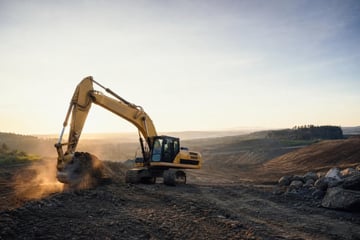
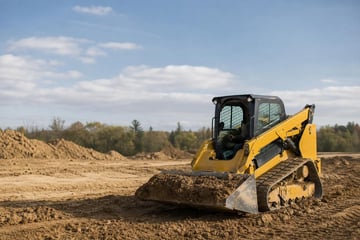
Construction firms often need rough-terrain forklifts and telehandlers that bounce between job sites. Those units take more abuse than warehouse trucks, so lenders look closely at hourly usage estimates and maintenance reserves. Construction equipment financing can cover the lift and compatible attachments in one schedule, which keeps your field operations moving without juggling multiple payments.
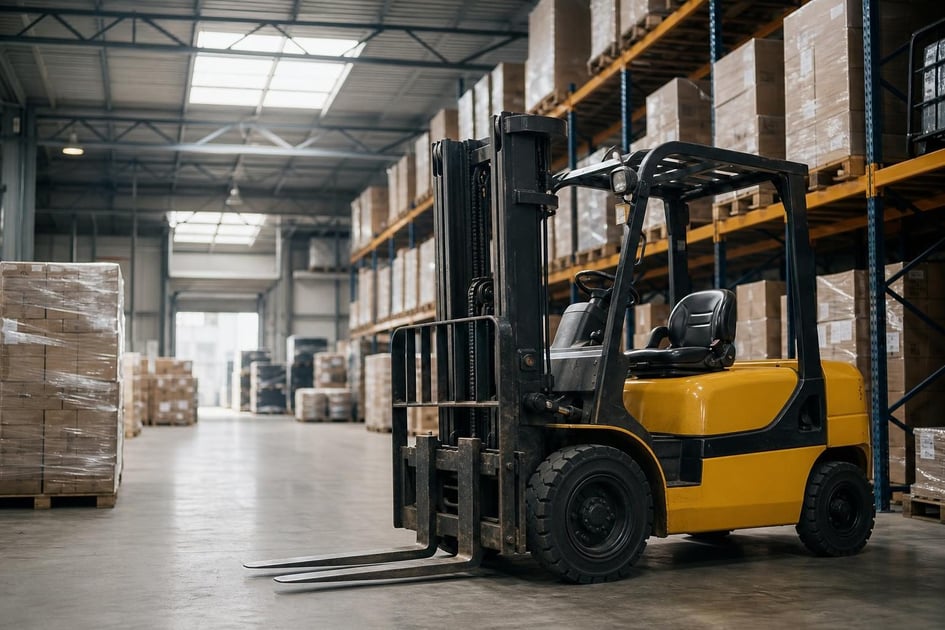
Manufacturing and warehousing operations run high annual hours on standard cushion-tire or pneumatic forklifts. If you are moving palletized goods eight to sixteen hours a day, a new electric model with fast-charge capability may save enough in fuel and maintenance to justify a higher payment. Forklift Battery Charger financing can bundle into the same transaction, so you are not scrambling for cash to power the asset after it arrives.
Food service distributors and cold-storage facilities face extra scrutiny because forklifts operate in corrosive environments. Lenders want to know whether the unit is rated for cooler or freezer use and whether it has corrosion-resistant coatings. Transportation and logistics yards that run 24/7 shifts need backup units to avoid downtime during maintenance. Transportation equipment financing can cover both primary and secondary lifts so your dock stays active even when one truck is in service.
Agriculture and forestry buyers use all-terrain forklifts for hay, palletized seed, or logging support. Seasonal cash flow means some borrowers prefer skip-payment structures that align with harvest cycles. Not every lender offers seasonal schedules, so ask before you commit. Get a decision on your equipment, possibly the same day, and ask about payment timing that matches your revenue curve.
Common Mistakes When Using Financing Calculators
Entering the MSRP instead of the actual negotiated price is the most common error. Dealers discount, auctions sell below retail, and private sellers negotiate. A calculator fed an inflated price will overstate your monthly obligation and may scare you away from a deal that actually fits your budget.
Another mistake is ignoring the down payment. A zero-down calculator result looks attractive, but putting even 10% down can improve your approval odds and lower the lifetime cost. If you have cash earmarked for the purchase, run the calculator both ways to see the trade-off.
Buyers also forget to factor in sales tax, delivery, and dealer prep. On a $45,000 forklift, those extras can add $3,000 to $5,000 to the amount you need to finance. A calculator that only covers the sticker price will leave you short at closing.
Finally, do not treat the calculator result as a pre-approval. It is a budgeting aid. The actual offer depends on verification of your credit, business revenue, and the equipment’s condition. Use the tool to narrow your search, then submit a real application to lock in terms.
Pro Tip: Gather your last three months of bank statements and the equipment invoice before you run the numbers. Having real figures in hand prevents the temptation to guess at revenue or price, and it speeds up the conversation when you are ready to apply.
What Documentation You Actually Need
For transactions under $150,000, most lenders ask for a one-page application, your last three months of business bank statements, and a quote or invoice for the forklift. They may also request a copy of your driver’s license and, for newer businesses, a personal financial statement. The equipment itself is the collateral, so heavy documentation is rarely required unless the credit profile is thin or the equipment is unusually old.
For larger transactions—say a fleet of five lifts totaling $250,000 or more—expect to provide two years of business tax returns, a current year-to-date financial statement, and an equipment list with serial numbers. Some lenders also want a business debt schedule so they can see your existing obligations. The stronger your file, the faster the approval.
If you are buying at auction, have the auction listing, condition report, and payment terms ready before you apply. Auction purchases often close within 24 to 48 hours of the winning bid, and a lender who already has your file can issue an approval letter you can present at checkout. If you are unsure how to pull together a business plan or financial projections, Small Business Administration resources include free counseling through local partners.
What Happens After You Apply
Once you submit an application, the lender reviews credit, verifies revenue through bank statements or tax returns, and runs a collateral check on the equipment. For standard warehouse forklifts from major brands—Toyota, Hyster, Yale, Crown, Cat—valuation is straightforward. For obscure brands or heavily modified units, the lender may request an independent appraisal or additional photos.
Same-day approvals are possible when the file is complete and the collateral is easy to value. If the lender needs more information, they will typically ask within a few hours. After approval, you receive a term sheet outlining the monthly payment, term, down payment, and any fees. Review it carefully. If the structure matches your budget, you sign and the lender pays the dealer or private seller directly. You take delivery and the first payment is usually due 30 to 45 days later.
If the approval comes back with a higher payment than the calculator suggested, ask why. It could be a credit-tier adjustment, a shorter term required for the equipment age, or an additional collateral requirement. A good financing team will walk you through the variables and, if possible, restructure to meet your cash-flow needs. Lender appetites can also shift with the broader economy; Reuters reported that core capital goods orders plunged as businesses postponed capital projects amid policy uncertainty, which reminds buyers that financing availability can tighten when lenders grow cautious.
Put the right equipment to work
From $5,000 to $5 million, new or used, Provide Capital helps businesses nationwide finance the equipment they need.
Apply TodayFrequently Asked Questions
Does using a financing calculator affect my credit?
No. Most calculators on lender websites use self-reported information and do not trigger a hard credit inquiry. Your credit is pulled only after you submit a formal application.
Can I finance a forklift from a private seller?
Yes, but the lender must verify clear title and may require a bill of sale and proof of ownership. Private-party deals sometimes take an extra day or two for title checks.
What credit score do I need to finance a forklift?
There is no universal minimum. Because the equipment secures the loan, lenders can approve a wide range of credit profiles. Strong credit opens the most competitive terms, but challenged credit does not automatically disqualify you.
Should I finance the attachments separately?
Usually no. Rolling attachments into the base truck financing keeps everything on one schedule and avoids split collateral issues. It also simplifies your books.
How long does approval take?
Many equipment finance applications receive a decision within hours, and same-day approvals are possible with complete files. Larger transactions or unusual collateral may take one to two business days.
Can I pay off the loan early?
Most equipment lenders allow early payoff, but some charge a prepayment penalty or require you to pay a portion of remaining interest. Ask for the prepayment language before you sign.
Is a down payment always required?
Not always, but down payments reduce the lender’s risk and can improve your rate or term. Zero-down options exist for strong credits, while weaker files or older equipment often require 10% to 20% down.
Does the lender need to inspect the forklift before funding?
For newer units from reputable dealers, usually no. For older used equipment or private-party sales, the lender may request photos, an appraisal, or a third-party inspection to confirm condition and value.
Next Steps
A forklift financing calculator is the right place to start, but it is only a starting point. Run the numbers on the models you are considering, gather your bank statements and equipment quote, and then move from estimate to actual approval. Whether you need a single electric pallet jack for a small warehouse or a fleet of internal-combustion trucks for a distribution yard, matching the right structure to your cash flow keeps your operation moving. Start an application in a few minutes and get a real decision on the equipment your business needs.
Small manufacturers make up the majority of U.S. manufacturing establishments, according to Census Bureau data on small businesses. Forklifts financing covers new and used units nationwide, from $5,000 to $5 million, with the equipment itself backing the loan. That collateral structure keeps rates competitive and approvals moving fast.
Disclaimer: The information provided in this article is for general educational purposes only and is not financial, legal, or tax advice. Funding terms, qualifications, and product availability may vary and are subject to change without notice. Provide Capital does not guarantee approval, rates, or specific outcomes. For personalized information about your business funding options, contact our team directly.