Most forklift financing decisions come down to three questions: how much you need to borrow, how long you plan to keep the machine, and whether your cash flow can handle the payment structure. Whether you are looking at a $15,000 used electric pallet jack or a $150,000 fleet of reach trucks for a new distribution contract, the qualification process and documentation requirements change meaningfully. Because the equipment itself serves as collateral, lenders can offer more competitive rates than unsecured borrowing, though your credit profile, time in business, and the age of the forklift all factor into the final structure. If you need clarity before speaking with a vendor, see what you qualify for and get a same-day decision on your equipment.
What Forklift Financing Actually Covers
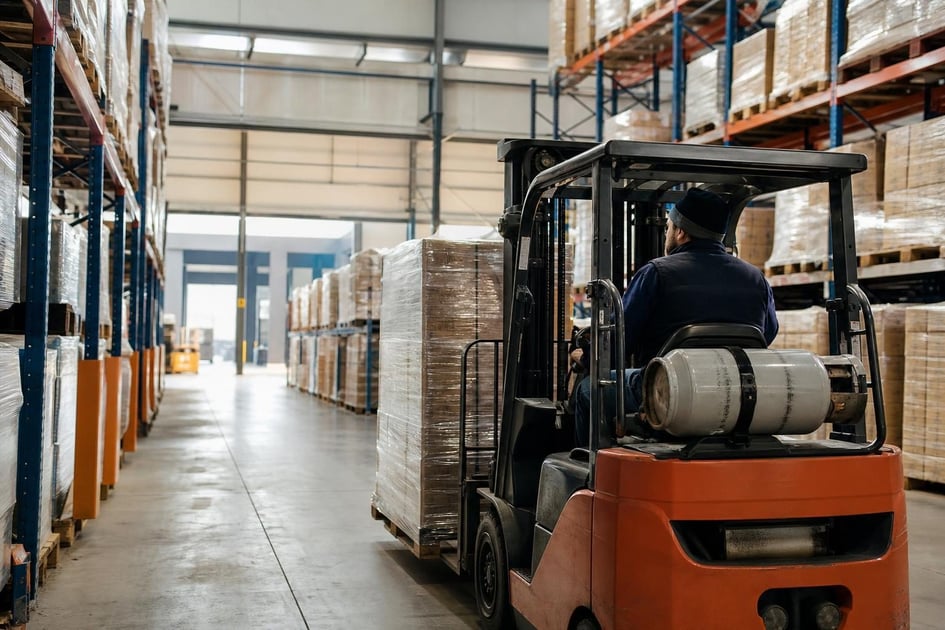
Forklift financing covers the machine, essential attachments, batteries, chargers, and sometimes telematics or fleet-management software bundled into the same transaction. Lenders generally categorize forklifts by fuel type and application. Electric warehouse forklifts, internal-combustion pneumatic tire models for outdoor yards, and narrow-aisle reach trucks all qualify, though terms differ by expected useful life and resale value. We finance new and used business equipment from $5,000 to $5 million, which means a single forklift or an entire fleet can fall within the same program.
The collateral value matters. A three-year-old 5,000-pound capacity propane forklift from a major manufacturer typically holds its value well, which makes the loan easier to secure. A twenty-year-old specialty order picker with limited aftermarket demand may still qualify, but expect a shorter term and a larger down-payment requirement. Lenders look at auction results and wholesale guides to set advance rates, so buying a brand with strong secondary-market demand works in your favor.
Key Insight: If you are financing a battery-electric forklift, ask whether the lender will include the battery and charger in the same lease or loan. Some lenders treat batteries as consumables and cap their advance rate at 70 percent, while others roll the full power package into the equipment note at standard terms.
Already have a machine in mind?
Provide Capital finances new and used equipment from $5,000 to $5 million, with same-day decisions possible.
Apply NowNew vs. Used: How the Math Changes
New forklifts generally qualify for the longest terms and lowest rates because the lender can predict residual value with confidence. A new sit-down counterbalance forklift might qualify for a sixty-month term with competitive monthly payments. Used equipment, especially units with more than 7,000 operating hours or older than seven years, may be limited to thirty-six or forty-eight months. The down-payment requirement on used equipment often runs higher as well, sometimes 10 to 20 percent of the purchase price, compared with zero-down or 5-percent programs for new machines.
That does not mean used is the worse choice. If you operate a seasonal business or need a secondary machine for overflow work, a $25,000 used forklift paid off in three years can generate positive cash flow faster than a $55,000 new unit on a five-year term. The key is matching the equipment's remaining useful life to the financing term. You do not want to owe money on a machine that has reached the end of its productive service.
Lease vs. Loan: A Practical Comparison
The decision between a forklift lease and a forklift loan depends on your tax strategy, mileage or hour-usage expectations, and whether you want to own the asset at the end. A loan builds equity; a lease preserves capital. Below is a side-by-side look at how the two structures typically play out for a $40,000 forklift purchase.
| Feature | Equipment Loan | Equipment Lease |
|---|---|---|
| Ownership | You own the forklift after the final payment; lender releases the lien. | You return the equipment or buy it for residual value at lease end. |
| Down payment | Often 0% to 10% for qualified buyers. | Usually one or two advance payments upfront. |
| Term range | 24 to 72 months depending on equipment age. | 24 to 60 months; shorter terms common for technology-sensitive assets. |
| Monthly payment | Higher than a lease because you are paying off full cost plus interest. | Lower because you are paying for use plus finance charge, not full depreciation. |
| Tax treatment | Depreciation and Section 179 deduction belong to you as the owner. | Payments are generally fully deductible as an operating expense. |
| End-of-term | Free and clear ownership; no additional paperwork. | Return, renew, or purchase at fair-market or predetermined residual. |
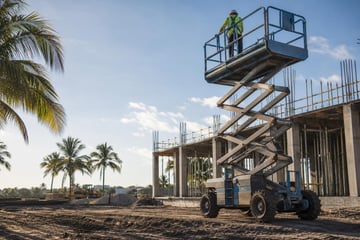
If you run a high-hour operation and plan to keep a forklift for eight to ten years, a loan usually wins. If you upgrade every three years to gain fuel-efficiency improvements or new safety features, a lease keeps you out of the used-equipment resale market. For a deeper look at related lifting equipment, explore Scissor Lifts financing to compare vertical-access options.
Pro Tip: Negotiate the purchase-option language before you sign the lease. A $1 buyout lease treats you as the owner for tax purposes and works like a loan, while a fair-market-value buyout lease gives lower payments but leaves you with an open-ended balloon at the end. Know which structure your accountant prefers before you commit.
Who Qualifies for Forklift Financing
Lenders evaluate three core factors: time in business, credit history, and cash flow. Each carries different weight depending on the size of the transaction and the age of the equipment. Equipment financing is one of the most common ways owner-operators acquire machinery, and the Small Business Administration outlines long-term equipment programs for manufacturers and contractors.
Time in Business
Companies with two or more years of operating history have the easiest path. Startups or businesses with less than twelve months of revenue can still qualify, especially if the owners have strong personal credit and can offer a personal guarantee, but the down-payment requirement and rate range move to reflect the additional risk. If you have been in business for five years and can show consistent revenue, you are likely to see the most aggressive terms.
Credit Profile
Personal credit scores in the mid-600s and above open the door to most programs. Scores below that do not trigger an automatic denial, but they narrow the lender pool and may push the deal toward a shorter term or a larger equity injection. Business credit matters too. A strong Dun & Bradstreet Paydex score or positive trade lines with equipment vendors can offset a thin personal credit file. Negative items such as recent bankruptcies, open tax liens, or active judgments will slow the process and may require additional collateral or a co-signer.
Revenue and Bank Activity
Most lenders want to see average daily bank balances sufficient to cover at least one to three monthly payments. They also look for regular deposits that match the revenue figures on your tax returns or financial statements. Seasonal businesses, such as construction firms or agricultural suppliers, should expect to provide twelve months of bank statements rather than three, so the underwriter can see the full revenue cycle. If your slow season is dramatic, be ready to explain how you will make payments in the off months.
By the Numbers: A typical $50,000 forklift loan at competitive rates for a qualified borrower might carry a term of 48 to 60 months with monthly payments ranging from roughly $950 to $1,250, depending on credit profile, equipment age, and term. Rates vary by credit profile, equipment age and term, so the only way to pin down your exact number is to run the application.
The Documentation You Need Ready
Preparation speeds approval. Most deals that close same-day do so because the borrower had the paperwork organized before applying. Here is what you should gather:
- Equipment invoice or vendor quote. The lender needs a detailed description, serial number if available, year, make, model, and purchase price.
- Business bank statements. Usually the last three to six months; seasonal businesses may need twelve.
- Business tax returns. One or two years for established businesses; personal returns may substitute for younger companies.
- Business formation documents. Articles of incorporation, operating agreement, or partnership agreement.
- Driver's license and voided business check. For identity verification and automatic payment setup.
- Proof of insurance. The lender will be listed as loss payee or additional insured, so have your agent ready to add the lender's information.
Used purchases require extra diligence. The lender may ask for an independent appraisal or a condition report from a certified technician if the forklift is more than ten years old or has over 10,000 hours. Private-party sales also trigger additional verification to confirm the seller has clear title.
What Happens After You Apply
Once you submit the application and documentation, the lender runs credit, verifies time in business, and reviews the equipment specs. For transactions under $150,000, automated decisioning can return an answer within hours. Larger transactions or complex credit profiles go to a human underwriter, which may take one to two business days. Business news outlets regularly report on how owner-operators time their equipment purchases to match revenue cycles.
After approval, you receive a term sheet detailing the financed amount, payment, term, and any conditions. Review it carefully. If the rate range is wider than you expected, ask whether a larger down payment or a co-signer would tighten the numbers. Once you accept, the lender issues a funding letter or purchase order to the vendor. In most cases, the vendor is paid directly, and you take delivery. The lender files a UCC-1 financing statement to perfect its lien on the collateral. You make payments according to the schedule, and at the end of the term the lender releases the lien or transfers title.
Same-day approvals are possible when the file is clean and the equipment is straightforward. Delays usually come from missing paperwork, title issues on used equipment, or discrepancies between stated revenue and bank deposits.
See what you qualify for
The equipment itself secures the financing, which keeps rates competitive. Checking your options takes minutes.
Check Your OptionsTax Treatment for the 2026 Tax Year
For the 2026 tax year, equipment owners can still take advantage of Section 179 expensing and bonus depreciation, though the exact dollar limits and phase-out thresholds are set by the IRS annually. Rather than quote a specific cap that may change with inflation adjustments or legislative updates, you should speak with your CPA about the current-year limits and how they apply to your taxable income. Generally, if you purchase and place a forklift into service during 2026, you may be able to deduct the full cost or a substantial portion of it in the first year, subject to business-income limitations and any applicable caps.
Leasing treats the equipment differently. Because you do not own the asset, you generally cannot take depreciation or Section 179. Instead, you deduct the lease payments as an operating expense over the lease term. The after-tax cost difference between leasing and buying depends on your marginal tax rate, the length of the financing, and your ability to use accelerated depreciation in the early years. A CPA can model both scenarios with your actual 2026 projections. Never make a financing decision based solely on tax treatment, but do run the numbers both ways before you sign.
Industry-Specific Forklift Use Cases
Forklifts are not one-size-fits-all. The right machine and financing structure depend heavily on your industry.
Warehousing and Logistics
Third-party logistics providers and e-commerce fulfillment centers typically run high-hour, multi-shift operations. Electric sit-down and stand-up reach trucks dominate. Because these machines accumulate hours quickly, a three-to-four-year lease or a five-year loan with a maintenance reserve makes sense. If you are bidding on a new contract that requires additional capacity, financing lets you scale the fleet without draining the operating line. For businesses in this space, Forklifts financing can align the payment schedule with the contract term.
Construction and Contracting
Rough-terrain forklifts and telehandlers see harsh conditions, seasonal use, and transport between job sites. Lenders understand the cyclicality of construction revenue, but they will want to see a backlog of contracts or a history of steady winter maintenance income. A used rough-terrain forklift financed over three years often matches the length of a major project. Construction spending data from the U.S. Census Bureau tracks investment in industrial and warehouse builds, which drives demand for material-handling equipment. For broader equipment needs, Construction equipment financing covers the full range of job-site machinery.
Manufacturing
Manufacturers use forklifts for raw-material receiving, work-in-process movement, and finished-goods shipping. Because production schedules are predictable, a fixed-rate loan over five years is easy to budget. If you are retooling for a new product line, consider whether the forklift will handle the new load dimensions and weights. Financing the upgrade alongside other production equipment can sometimes improve the overall rate by increasing the total transaction size.
Food Service and Wholesale
Restaurants, food distributors, and cold-storage operations need electric forklifts that meet emissions and safety standards for indoor use. Refrigerated environments add wear, so lenders may shorten the allowable term or require a larger down payment for used units that have operated in freezer conditions. If you are expanding a distribution kitchen or adding a second location, finance the forklift with the other equipment to simplify vendor management and payment tracking.
Common Mistakes Buyers Make
First, buying capacity you do not need. A 15,000-pound-capacity forklift costs significantly more than a 5,000-pound unit, and the financing scales with it. If you only occasionally lift heavy loads, renting or using an attachment is cheaper than carrying the payment for excess capacity.
Second, ignoring total cost of ownership. The monthly payment is only part of the picture. Maintenance, fuel or electricity, insurance, and operator training all add up. Electric forklifts have lower fuel costs but higher upfront battery replacement expense. Internal-combustion models need more frequent engine maintenance. Build a five-year operating budget before you choose the machine and the financing structure.
Third, mismatching term to useful life. Financing a ten-year-old forklift over five years means you may still owe money when the machine needs a major overhaul or loses reliability. Set the term so the loan or lease matures while the equipment still has productive value.
Fourth, failing to shop the vendor as carefully as the lender. A low price from a distant seller can evaporate if the machine arrives with hidden damage and no warranty. Work with reputable dealers who provide inspection reports and stand behind their reconditioning. If the lender has a preferred vendor network, ask whether using it speeds approval or improves terms.
Pro Tip: Before you sign, confirm whether the financing includes a prepayment penalty. Some equipment loans carry a declining-penalty structure in the first two years; others allow payoff at any time with no extra charge. If you expect a seasonal cash surge or a large customer payment, the ability to retire the debt early can save meaningful interest.
Put the right equipment to work
From $5,000 to $5 million, new or used, Provide Capital helps businesses nationwide finance the equipment they need.
Apply TodayFrequently Asked Questions
What credit score do I need to finance a forklift?
There is no universal minimum, but personal credit scores in the mid-600s and above generally unlock the broadest set of programs and the most competitive rate ranges. Borrowers with lower scores can still qualify, though they may need a larger down payment, a shorter term, or additional collateral. The lender also weighs time in business, revenue stability, and the equipment's collateral value alongside the credit score.
Can I finance a used forklift?
Yes. Used forklifts are financed routinely. Expect terms to run shorter than new-equipment loans, and be prepared for a down payment of 10 to 20 percent if the unit is older than seven years or has high operating hours. The lender will verify the serial number, check for existing liens, and may require an independent appraisal on high-mileage units.
How long can I finance a forklift?
New forklifts often qualify for terms of 48 to 72 months. Used forklifts typically top out at 36 to 60 months, with the exact limit driven by the machine's age, brand, and expected remaining useful life. The goal is to match the payoff date to the point where the forklift still holds reliable value.
Is it better to lease or buy a forklift?
Buy if you plan to keep the forklift for its full useful life, want to build equity, and can use depreciation or Section 179 deductions against your 2026 taxable income. Lease if you prefer lower monthly payments, upgrade frequently, or want to avoid residual-value risk. Your accountant can tell you which structure delivers the lower after-tax cost for your specific situation.
What paperwork do I need for forklift financing?
Gather the vendor invoice or quote, three to six months of business bank statements, one to two years of tax returns, business formation documents, a driver's license, a voided check, and proof of insurance. Seasonal or high-risk profiles may need additional documentation such as a personal financial statement or interim balance sheet.
Can I finance multiple forklifts at once?
Yes. Financing a fleet under a single schedule often simplifies accounting and can improve pricing because the lender earns a larger relationship. Transactions from $5,000 up to $5 million are possible, so whether you need two machines or twenty, the structure can accommodate the deal.
Does the forklift brand matter for financing?
Brand matters indirectly. Major manufacturers with strong dealer networks and active secondary markets produce collateral that lenders can value confidently. Niche or discontinued brands may still qualify, but the advance rate could drop or the term could shorten because resale value is harder to predict.
What happens if I need to upgrade before the term ends?
If you financed with a loan, you can sell or trade the forklift and pay off the remaining balance, provided the sale price covers the payoff. If you leased, check whether your agreement includes an early-upgrade clause or a technology refresh option. Some lessors will roll the remaining payments into a new lease on upgraded equipment, though this usually extends your commitment.
Next Steps
Forklift financing works best when you match the equipment to the job, the term to the useful life, and the structure to your tax and cash-flow goals. Start by defining the lift capacity, fuel type, and application. Then get a detailed quote from a reputable dealer. With that in hand, talk to a specialist about your specific machine and find out what terms are available. Same-day approvals are possible when your file is complete, so having your bank statements and tax returns ready puts you in the best position to move quickly.
Disclaimer: The information provided in this article is for general educational purposes only and is not financial, legal, or tax advice. Funding terms, qualifications, and product availability may vary and are subject to change without notice. Provide Capital does not guarantee approval, rates, or specific outcomes. For personalized information about your business funding options, contact our team directly.