Healthcare equipment financing rates vary by credit profile, equipment age, and term length. A rural clinic financing a $45,000 exam table and diagnostic set over four years will see different terms than an ambulatory surgery center acquiring a $400,000 C-arm fluoroscope over six years. Because the equipment itself serves as collateral, lenders can keep rates competitive compared to unsecured lending. The exact range you receive depends on your practice's financial history, the asset's expected useful life, and how you structure the repayment schedule.
What Drives Healthcare Equipment Financing Rates
Several factors determine where your rate falls within the available range. Lenders look at the borrower's risk profile, the equipment's resale value, and the structure of the deal itself.
Credit Profile and Business History
Lenders evaluate both personal and business credit when underwriting healthcare equipment deals. A practice with three or more years of consistent revenue and business credit in the good-to-excellent range will generally qualify for the most favorable tier. For owner-operators, personal credit history still carries weight, particularly for practices with fewer than ten employees. Most equipment lenders look for personal credit scores in the mid-600s or higher to access preferred rates. If your score is below that threshold, financing remains available, but you may see a shorter maximum term or a request for additional collateral. Medical practices benefit from the fact that healthcare revenue is considered relatively stable compared to seasonal industries, which can offset minor credit blemishes if cash flow is strong.
Equipment Type and Age
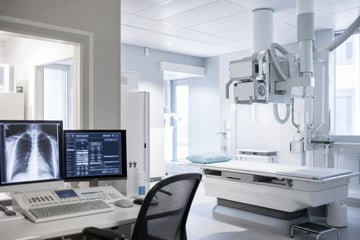
New equipment from established manufacturers almost always carries lower financing costs than used or refurbished alternatives. A new digital X-ray system with a ten-year depreciation schedule and a full manufacturer warranty presents lower residual risk to the lender than a six-year-old ultrasound unit with unknown service history. Specialized devices with narrow resale markets, such as certain surgical lasers or custom prosthetics fabrication systems, may also command slightly higher rates because the lender cannot easily liquidate the asset if needed. Diagnostic imaging equipment—CT scanners, MRI machines, and digital radiography systems—tend to secure the best terms because they retain value and have active secondary markets.
Loan Term and Payment Structure
Shorter terms reduce the lender's exposure and therefore typically carry lower rates, though the monthly payment is higher because you are amortizing the principal over fewer months. A $100,000 equipment loan over 36 months will usually have a lower rate than the same principal spread over 84 months. Some healthcare practices prefer seasonal payment structures that match patient volume cycles, such as higher payments during flu season and lower payments in summer months. These custom schedules can be arranged but may adjust the rate slightly to account for the irregular cash flow pattern.
Key Insight: Medical equipment typically retains 50 to 70 percent of its value after five years if properly maintained, which is why lenders view diagnostic imaging as lower-risk collateral than equipment in seasonal industries. A used C-arm unit with verified service history can still command strong resale prices at auction, keeping your rate competitive even on a secondary-market purchase.
New vs. Used Medical Equipment Financing
New medical equipment typically qualifies for the lowest available rates because it arrives with manufacturer warranties, predictable maintenance schedules, and longer useful lives. A new patient monitoring system financed over five years might land at the lower end of the rate range, while the same model at eight years old could push you into a higher tier or reduce the available term by two years.
Used equipment financing remains popular among cost-conscious practices. A refurbished MRI machine purchased at 35 to 50 percent of new cost can generate identical per-scan revenue while preserving working capital. The trade-off is in the term length. Where new diagnostic equipment might qualify for seven-year financing, used units often max out at four or five years, which raises the monthly payment even though the principal is smaller. You also need to budget for more frequent maintenance and potential software upgrade costs.
Warranties and Service Contracts
Many lenders require an active service contract or warranty on used medical equipment as a condition of closing. This protects both parties from a total loss if the machine suffers a catastrophic failure. When comparing new versus used, add the service contract cost to your total project cost. A $25,000 used autoclave with a required $2,400 annual maintenance agreement has a different monthly impact than the sticker price alone suggests. Some vendors offer refurbished equipment with extended warranties specifically designed for financing, which can bridge the gap between new and used rate tiers.
Pro Tip: Before you sign a used equipment quote, confirm that the vendor can transfer the FDA 510(k) clearance documentation, software licenses, and calibration certificates to your practice. Without these, the machine cannot be used legally in a clinical setting and becomes unsellable collateral, which can void your financing approval.
Equipment Lease vs. Equipment Loan for Healthcare Practices
The decision between leasing and taking an equipment loan affects your monthly payment, balance sheet, and tax position. An equipment loan places the asset on your practice's books, builds equity, and allows you to claim depreciation and Section 179 deductions for the 2026 tax year. A true operating lease keeps the asset off your balance sheet, may offer lower monthly payments, and gives you flexibility to upgrade at the end of the term, but you do not automatically own the equipment unless you exercise a purchase option.
For long-lived assets like exam tables, sterilizers, and standard diagnostic equipment, a loan is usually the better financial fit. You pay it off, own it outright, and eliminate the monthly obligation. For technology that evolves rapidly—such as digital imaging software bundles, 3D dental scanning systems, or certain patient monitoring platforms—a lease with a refresh clause lets you stay current without repeating a large capital outlay every three years.
| Factor | Equipment Loan | Equipment Lease |
|---|---|---|
| Ownership | You own the equipment after the final payment | Lender retains ownership; buyout option may exist |
| Monthly Payment | Higher; you are paying down principal and interest | Often lower; you are paying for use, not full value |
| Tax Treatment (2026) | Section 179 deduction and depreciation possible; consult your CPA | Payments typically treated as deductible operating expense; consult your CPA |
| Typical Term | 2 to 7 years, matching the asset's useful life | 2 to 5 years, with upgrade or return options |
| End of Term | No further payments; equipment is a practice asset | Return equipment, renew lease, or purchase at fair market value |
| Best For | Equipment you plan to keep 7+ years, like surgery tables and sterilizers | Rapidly evolving technology, like imaging software or short-life diagnostic tools |
Consider how the equipment generates revenue before choosing a structure. A loan makes sense for a piece of equipment that will perform the same function for a decade. A lease makes sense when the technology's value is in being current, not in long-term ownership. Some practices use a hybrid approach: loans for the core physical infrastructure and leases for the technology components that require frequent updates.
If you have a vendor quote in hand, see what you qualify for and compare loan and lease payments for your specific equipment.
Tax Treatment and Section 179 for the 2026 Tax Year
The tax implications of healthcare equipment financing can substantially affect the true cost of borrowing. For the 2026 tax year, Section 179 of the Internal Revenue Code allows qualifying businesses to deduct the full purchase price of eligible equipment in the year it is placed into service, subject to an overall annual limit and a phase-out threshold that adjusts yearly for inflation. The exact dollar limits for 2026 should be confirmed with your CPA before you structure a transaction around them.
Bonus depreciation may also apply to qualifying new and used equipment in 2026, though the percentage has been declining from the 100 percent level available in earlier years. Your CPA can tell you whether bonus depreciation is available for your specific purchase and how it interacts with Section 179.
Structuring Around Tax Timing
Some practices accelerate equipment purchases in November or December to claim deductions in the current tax year. This strategy only works if the equipment is delivered and placed in service before December 31. Do not let tax timing override due diligence. A rushed purchase of faulty equipment from an unvetted vendor destroys value faster than any deduction can recover. If you are close to year-end, verify vendor lead times and installation schedules before committing.
By the Numbers: A $120,000 equipment loan over 60 months typically produces a monthly payment between $2,200 and $2,600 depending on credit tier and equipment age. Over the full term, total financing costs can range from $12,000 to $36,000 above the purchase price. A Section 179 deduction for the 2026 tax year, if fully applicable to your practice, could offset a meaningful portion of that cost in the first year.
Qualification Criteria in Detail
Lenders evaluate healthcare equipment financing applications differently than general working capital loans. Because the equipment secures the deal, the focus shifts to the asset's value and the practice's ability to generate revenue with it.
Time in Business
Most equipment lenders prefer two or more years of operating history. Practices newer than that can still qualify, but they often need to provide a larger down payment or demonstrate stronger personal credit. Revenue consistency matters more than top-line growth. A family medicine clinic doing $500,000 annually with steady patient volume is often viewed more favorably than a specialty practice doing $900,000 with lumpy, insurance-delayed collections. According to U.S. Census Bureau data, healthcare remains one of the most stable sectors for small employer firms, which supports lenders' confidence in practice cash flow.
Credit Requirements
While no universal minimum exists, business credit profiles in the 650+ range and personal scores in the 680+ range generally unlock the best available rate tiers. Recent bankruptcies, unresolved tax liens, or judgments will require explanation and may result in a shorter term or higher down payment requirement. Medical professionals carrying significant student debt should know that personal debt-to-income ratios are reviewed, but they do not automatically prevent approval if practice cash flow is healthy.
Down Payments
Zero-down financing is available for well-qualified borrowers, but contributing 5 to 20 percent down improves your rate and signals commitment to the lender. On a $150,000 equipment purchase, a 10 percent down payment reduces the financed amount and can lower your monthly payment by $75 to $250 depending on term length and credit tier.
Revenue and Debt Service Coverage
Lenders want evidence that your practice can absorb the new payment without strain. A common benchmark is that the equipment payment should not exceed 15 to 20 percent of monthly gross revenue. If the new machine will immediately generate additional billable procedures—such as adding a second diagnostic station that doubles your daily imaging capacity—some lenders will factor that projected revenue into the underwriting decision.
Documentation You Will Need
Having complete documentation ready before you apply can mean the difference between a same-day approval and a week of back-and-forth. Most healthcare equipment financing applications require two years of business tax returns, a year-to-date profit and loss statement, a current balance sheet, and a personal financial statement for any owner holding 20 percent or more of the practice. You will also need a formal equipment quote or invoice from the vendor.
For transactions above $500,000, expect to provide a brief business plan or pro forma showing how the equipment will increase revenue or reduce costs. If you are financing used equipment, gather maintenance records, service history, and proof that software licenses and FDA registrations are transferable to your practice. Following Small Business Administration guidance on organizing financial statements can streamline this process. Lenders may also request your state medical license, business registration, and malpractice insurance declarations page to confirm you are in good standing.
Common Mistakes Practice Owners Make
Even experienced practice owners can leave money on the table by approaching equipment financing without a clear plan.
Shopping by Monthly Payment Alone. A lower monthly payment stretched over seven years can cost thousands more in total interest than a higher payment over five. Always calculate the total cost of borrowing before making a decision. Ask your financing specialist to run an amortization schedule for multiple term lengths.
Ignoring Soft Costs. Delivery, installation, calibration, and staff training are often financeable if you include them in the original quote. Rolling these soft costs into the loan preserves your working capital for operations. Forgetting to account for them means paying cash later, which can strain your accounts just when you are ramping up with the new equipment.
Skipping the Service Plan. Medical equipment downtime is expensive. A diagnostic machine without an active service contract is a liability. Some lenders require proof of ongoing coverage because a broken machine generates no revenue and loses value as collateral. Even if not required, budget for coverage.
Overlooking End-of-Term Obligations. On a lease, understand exactly what happens when the term ends. Is the buyout $1, fair market value, or 10 percent of the original cost? On a loan, verify whether there is a prepayment penalty. If you plan to sell the practice, know whether the financing is assumable by a buyer.
What Happens After Approval
Same-day approvals are possible when your documentation is complete and your credit profile is straightforward. Once approved, the lender issues a formal commitment letter or lease agreement outlining the rate, term, payment schedule, and any collateral requirements. You review and sign, and the lender typically pays the vendor directly within 24 to 48 hours of document execution.
After payment, you take delivery and install the equipment. The lender files a UCC-1 financing statement against the specific equipment to perfect its security interest. You begin making payments according to the schedule. If your deal included installation or training costs, those may be funded in stages as milestones are completed. Throughout the term, you maintain the equipment, keep insurance coverage active, and make payments on time. Some lenders offer quarterly check-ins to discuss future equipment needs, which can streamline your next purchase.
Industry-Specific Equipment Use Cases
Different healthcare settings finance different equipment, and the rates reflect those use cases. Primary care and urgent care clinics often finance exam tables, EKG machines, autoclaves, and basic diagnostic sets in the $25,000 to $150,000 range. Because this equipment is standardized and holds value, rates tend to be competitive.
Ambulatory surgery centers finance higher-ticket items like anesthesia machines, surgical lights, and sterilization equipment, with transactions often running $250,000 to $2 million. Rates remain competitive because the equipment is essential to revenue and the centers typically have strong payer contracts. As healthcare industry analysis regularly notes, outpatient investment continues even during broader economic uncertainty, reinforcing lender confidence in these collateral types.
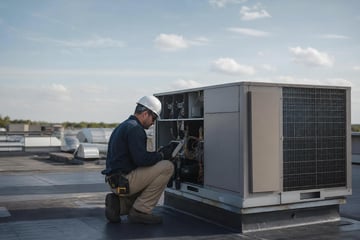
While medical devices are the core need, many practices also finance supporting infrastructure. Provide Capital offers financing across equipment categories, including Healthcare equipment financing, Commercial Hvac System financing for surgery suites and clinics, and Skid Steers financing for site preparation when building a new facility.
Frequently Asked Questions
What credit score do I need to finance healthcare equipment?
There is no hard cutoff, but personal credit scores in the mid-600s and higher, combined with two or more years in business, generally access the best available terms. Lower scores are not automatically declined, though they may require a larger down payment or a shorter maximum term.
Can I finance used or refurbished medical equipment?
Yes. Used equipment is financeable and is common in healthcare, but terms are typically shorter and rates may be slightly higher than new equipment. The key is verifying that the machine has remaining useful life, transferable software licenses, and maintenance records.
How long can I finance medical equipment?
Terms usually range from 24 to 84 months. New equipment with a long useful life, such as exam tables or sterilizers, may qualify for the longer end of that range. Used equipment or rapidly evolving technology typically caps out at 48 to 60 months.
Is the interest on my equipment financing tax-deductible?
Interest paid on a business equipment loan is generally deductible as a business expense. The principal is not deductible, but Section 179 and depreciation provisions for the 2026 tax year may allow you to deduct a significant portion of the equipment cost in the first year. Consult your CPA.
Can I include installation and training in the financed amount?
Yes. Most equipment loans and leases allow you to roll in soft costs such as delivery, installation, and staff training up to a certain percentage of the hard equipment cost. This preserves cash flow and simplifies budgeting.
Does the lender take a lien on my entire practice?
Typically, no. The lender files a UCC lien on the specific equipment being financed. The equipment itself serves as collateral, which is why rates remain competitive and why the lender does not usually require a blanket lien on your practice's real estate or general receivables.
How quickly can I get funded?
With complete documentation, approval can come the same day. Funding usually follows within one to two business days after you sign final documents and the vendor confirms delivery availability. Complex transactions over $1 million may take slightly longer due to additional underwriting review.
Can I pay off the loan early without penalty?
Some equipment loans include prepayment penalties; others do not. This varies by lender and deal structure. If early payoff is important to your financial planning, ask about it specifically before you sign the agreement.
Next Steps
Financing healthcare equipment is a straightforward way to add capacity without draining your practice's cash reserves. Whether you need diagnostic imaging, patient monitoring, or clinical infrastructure, the right structure depends on your credit profile, the equipment's age, and how long you plan to use it. Provide Capital finances new and used business equipment from $5,000 to $5 million nationwide, with same-day approvals possible for qualified applicants.
Ready to move forward? Talk to a specialist about your specific machine and get a same-day decision on the equipment your practice needs.
Disclaimer: The information provided in this article is for general educational purposes only and is not financial, legal, or tax advice. Funding terms, qualifications, and product availability may vary and are subject to change without notice. Provide Capital does not guarantee approval, rates, or specific outcomes. For personalized information about your business funding options, contact our team directly.