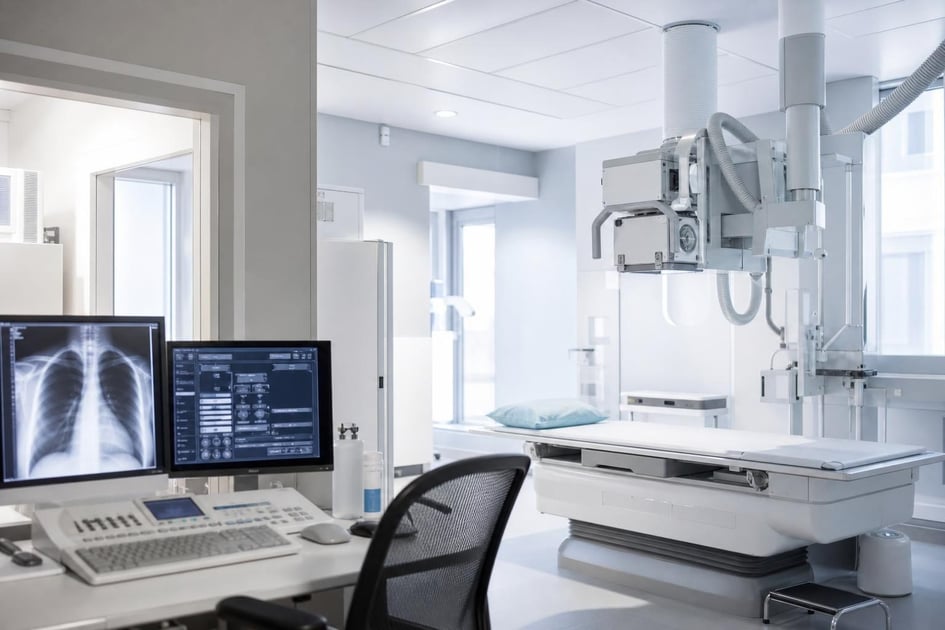
Yes, you can finance healthcare equipment with no down payment. Provide Capital finances new and used medical equipment from $5,000 to $5 million, using the equipment itself as collateral. That collateral structure keeps rates competitive, and same-day approvals are possible when your documentation is complete. Whether you run a dental practice, a veterinary clinic, or a physical therapy center, financing lets you preserve cash flow while upgrading the tools that generate revenue.
Unlike general working-capital loans, equipment financing is tied to a specific asset. The lender secures the loan with the machine, which reduces the emphasis on real estate collateral and can speed up the decision. For practice owners who need a diagnostic imager, a patient monitor bank, or an exam table, that means the barrier to funding is often lower than expected.
Key Insight: Because the equipment serves as collateral, lenders weight the asset’s resale value and useful life more heavily than your real estate holdings. A $75,000 C-arm with a strong secondary market can be easier to finance than an unsecured loan of the same size, even if your building is leased.
How No-Down-Payment Equipment Financing Works
A true no-down-payment structure means the lender covers 100 percent of the equipment’s hard cost. You bring the invoice or purchase agreement, and the financing pays the vendor directly. You repay over a fixed term with regular payments. Because the equipment secures the financing, the risk profile differs from an unsecured line of credit, which often translates to a more straightforward approval process.
Soft costs—delivery, installation, training—may or may not roll into the financing depending on the program and the equipment type. If you need those bundled, mention it early in the conversation so the term sheet reflects the total project cost. Some programs allow soft costs up to a set share of the equipment price; others finance only the machine itself. Ask before you sign.
The Equipment as Collateral
The financed asset is the collateral. If you finance a digital X-ray system, that X-ray system secures the note. This structure is why lenders can offer financing without a cash down payment: they retain a security interest in an asset that retains value. Rates vary by credit profile, equipment age and term, but the collateral itself provides the backstop that makes the transaction feasible.
What “No Down Payment” Actually Means
No down payment does not mean no personal guarantee. Most medical equipment financing for owner-operated practices still requires a personal guarantee from the practice owner. It also does not mean zero out-of-pocket cost. You may still need to cover sales tax, freight, or initial service contracts upfront if they are not included in the financing amount. Read the term sheet carefully to see what is capitalized and what is billed separately.
Already have a machine in mind?
Provide Capital finances new and used equipment from $5,000 to $5 million, with same-day decisions possible.
Apply NowWhat Healthcare Equipment Can Be Financed
Almost any revenue-generating medical asset can be financed. Common examples include digital X-ray machines, MRI and CT equipment, ultrasound systems, patient monitoring stations, sterilization equipment, exam tables, EHR software and hardware bundles, laboratory analyzers, and dental chairs with integrated delivery systems. Provide Capital handles both new and used equipment, so a refurbished imaging suite or a late-model autoclave is as eligible as a factory-new unit.
As CNBC healthcare coverage has reported, independent practices face rising pressure to modernize diagnostics while managing cash flow. The key is that the equipment must be for business use. Personal medical devices do not qualify. If you are expanding a practice, replacing a broken sterilizer, or opening a second location, the financed assets must be owned by the practice entity and used to generate revenue.
Pro Tip: If you are buying used, have the serial number, year of manufacture, and current service records ready. Lenders verify the asset’s remaining useful life before finalizing terms. A 2019 ultrasound with a clean maintenance log often funds on better terms than a 2022 unit with gaps in service history.
New vs. Used Medical Equipment Financing
New equipment carries full manufacturer warranty, the latest compliance certifications, and longer expected life. Used or refurbished equipment carries a lower acquisition cost and can often be depreciated on the same schedule, but financing terms may be slightly shorter because the lender models the remaining useful life. The right choice depends on your patient volume, cash flow, and how long you plan to keep the practice.
| Factor | New Equipment | Used or Refurbished |
|---|---|---|
| Acquisition cost | Higher upfront invoice | Lower upfront invoice |
| Financing term | Longer terms available | Terms aligned with remaining life |
| Warranty | Full manufacturer coverage | Limited or third-party coverage |
| Depreciation schedule | Standard MACRS or Section 179 | Same schedule if qualifying |
| Best for | High-volume, long-term use | Cost-conscious expansions or backups |
Neither option is universally better. A busy orthopedic practice that runs an MRI ten hours a day may need the reliability and warranty of a new unit. A mobile vaccination clinic that needs a refrigerated centrifuge for six months may do fine with a used unit and a shorter term.
Lease vs. Loan: Which Structure Fits Your Practice?
Equipment financing generally takes one of two forms: a capital lease (or finance lease) that ends with you owning the asset, or a true lease (operating lease) where you return the equipment at the end. A loan is a straight note secured by the equipment, with title transferring to you at funding. Each structure has different balance-sheet and tax implications.
With a loan or capital lease, you typically claim depreciation and possibly interest expense. With a true lease, you generally deduct the lease payment as an operating expense. For the 2026 tax year, the deductibility rules depend on your entity type, existing tax position, and whether you are subject to the alternative minimum tax. Speak with a CPA before choosing a structure solely for tax reasons.
| Structure | Ownership | Monthly obligation | End-of-term | Typical best for |
|---|---|---|---|---|
| Equipment loan | You own from day one; lender holds lien | Principal + interest | Free and clear title | Long-term core equipment |
| Capital lease | You own at end for nominal buyout | Lease payment | $1 or 10% buyout | Equipment you intend to keep |
| Operating lease | Lessor owns; you rent | Lease payment | Return, renew, or purchase at FMV | Rapidly obsolescing technology |
Some practices prefer a loan because they want the asset on their balance sheet and the ability to sell or trade it later. Others prefer an operating lease because they plan to upgrade to the next model in three years and do not want to manage resale. The decision usually comes down to how long you expect the equipment to meet your clinical needs.
By the Numbers: Provide Capital finances equipment from $5,000 to $5 million. A $5,000 exam table might finance over two to three years, while a $450,000 imaging suite could run five to seven years. Rates vary by credit profile, equipment age and term, but structuring the deal around the asset’s revenue generation—not your available cash—lets you match payments to the income the equipment produces.
Qualifying for Healthcare Equipment Financing
Lenders look at three broad categories: the borrower, the business, and the asset. On the borrower side, they review personal credit history, industry experience, and any past defaults or bankruptcies. On the business side, they look at time in business, revenue trends, and existing debt service. On the asset side, they review the equipment’s age, condition, manufacturer, and resale market.
According to Census Bureau business statistics, healthcare practices are among the most equipment-intensive small businesses in the country. You do not need perfect credit. Because the equipment is collateral, lenders can approve files with bruised credit if the asset is strong and the cash flow supports the payment. However, the rate and term will reflect the risk. The stronger your credit and the newer the equipment, the more favorable the structure. If your credit is challenged, a shorter term or a co-signer may help secure the approval.
Revenue consistency matters more than top-line growth. Steady monthly collections show you can handle a fixed payment. Lenders also weigh your existing debt obligations against your cash flow. If your practice already carries a high level of debt relative to income, the underwriter may propose a shorter term to keep the monthly obligation manageable.
If you have an equipment quote in hand, see what you qualify for and get a same-day decision on your equipment. Having the vendor invoice, your last three months of bank statements, and your business tax returns ready will keep the process moving.
Tax Treatment for the 2026 Tax Year
Medical equipment is generally depreciable property. Under Section 179 of the Internal Revenue Code, you may be able to deduct the full cost of qualifying equipment in the year you place it in service, up to an inflation-adjusted annual limit. For the 2026 tax year, the exact limit and phase-out threshold depend on IRS inflation adjustments. Consult a CPA for the precise figure before you make a purchase decision.
Bonus depreciation may also apply to new and used qualifying equipment in 2026, though the percentage has been stepping down in recent years. The interaction between Section 179 and bonus depreciation is complex; using one can affect your eligibility for the other. A tax professional can model whether an immediate deduction, bonus depreciation, or standard MACRS recovery over five to seven years produces the best outcome for your practice.
Interest expense on an equipment loan is generally deductible as a business expense, subject to any limitation on business interest. Lease payments on a true operating lease are typically deductible in full. Do not choose a financing structure based on a tax strategy you read online. The rules change, and your practice’s tax profile is unique.
Find the right financing structure
Tell us about the equipment you need and we will show you the options that fit your business.
See Your OptionsDocumentation You Will Need
Having your paperwork ready before you apply can mean the difference between a same-day approval and a week of back-and-forth. The SBA guide to financing your business emphasizes the importance of clean financial records when applying for asset-backed loans. Most lenders ask for:
- A completed application
- The equipment quote or invoice from the vendor
- Last three to six months of business bank statements
- Most recent two years of business tax returns
- A copy of your business license or articles of incorporation
- Proof of insurance on the equipment once approved
If your practice is a partnership or multi-physician group, be prepared to provide an operating agreement or partnership resolution authorizing the borrowing. Lenders need to confirm that the person signing has authority to encumber the practice. For equipment being purchased from an auction or a retiring physician, a bill of sale and proof of clear title may be required in addition to the standard invoice.
For higher-dollar deals, you may also need an interim financial statement or a debt schedule. If you are buying used equipment from a private party rather than a dealer, the lender may require an independent appraisal. Ask your financing specialist what is required for your specific transaction so you are not scrambling for documents after the credit pull.
Common Mistakes Practices Make
The most expensive mistake is financing equipment before you know what your monthly patient volume can support. A $3,000 monthly payment on a machine that generates $4,000 in net revenue is manageable. The same payment on a machine that generates $800 because you overestimated referrals is a cash-flow drain. Model the revenue conservatively.
Another mistake is failing to separate personal and business credit. Mixing the two complicates underwriting and can trigger a higher rate. Make sure the application is in the practice’s legal name, using the practice’s EIN, even if a personal guarantee is required.
Some buyers also forget to negotiate soft costs. If the vendor quotes the machine at one price but installation and training add thousands more, your financing may fall short. Get an all-in quote before you submit the deal. If the lender does not finance soft costs, you will need to cover the gap from operating cash.
Another error is skipping the insurance quote until after approval. Medical equipment insurance can vary widely depending on whether the asset stays in a fixed location or travels to nursing homes and surgery centers. Get a preliminary quote early so the annual premium does not surprise you after closing.
Finally, do not assume new is always better. A late-model refurbished analyzer from a reputable dealer can deliver identical clinical results at a lower monthly payment. Always compare the total cost of ownership, including service contracts, before you decide.
Healthcare and Beyond: Related Equipment for Your Facility
While diagnostic and treatment machines get the attention, a practice also runs on facility infrastructure. Reliable climate control keeps imaging equipment within operating temperature ranges, and safe access for maintenance protects your investment in the building itself. Provide Capital finances a wide range of business equipment, including Commercial Hvac System financing for medical suites and Scissor Lifts financing for facility upkeep and renovation.
The same collateral-based structure applies. Whether you are adding a CT scanner or replacing the rooftop unit above your surgery suite, the equipment secures the financing. That is why Healthcare equipment financing covers not just the clinical tools but also the infrastructure that keeps your practice operational.
Talk to a specialist about your specific machine and whether a loan or lease fits your 2026 budget.
What Happens After You Apply
Once you submit your application and equipment quote, the underwriting team reviews the credit, the business financials, and the asset. For deals under a certain threshold, automated decisioning can produce an answer within hours. For larger or more complex files, a human underwriter may need a day or two to verify collateral value and review bank statements.
After approval, you receive a term sheet detailing the payment, term, and any conditions. Read it carefully. If you accept, the lender prepares the closing documents. You sign, the lender pays the vendor directly, and you take delivery. Some lenders will pay a private seller via wire after receiving the bill of sale and UCC filing. Others pay authorized dealers through a standard vendor portal.
Once the UCC-1 financing statement is filed in your state, the lender’s security interest is public record. This protects the lender and prevents the seller from offering the same collateral to another buyer. If you are trading in old equipment, handle that transaction separately; trade-in credit complicates the collateral value and can delay funding.
Insurance is required before funding. The lender is named as loss payee and additional insured on the policy. Once proof of insurance is on file, funds are released. The entire process, from application to vendor payment, can take as little as one business day for straightforward deals. More complex transactions may take a week, especially if an appraisal or additional documentation is needed.
Ready to move forward?
More than 10,000 businesses have financed equipment with Provide Capital. See what you qualify for today.
Get StartedFrequently Asked Questions
Can I really get healthcare equipment financing with no down payment?
Yes. Provide Capital offers financing structures that cover 100 percent of the equipment cost for qualifying buyers. The equipment itself serves as collateral, which reduces the need for a cash down payment. Your rate and term will depend on your credit profile, the equipment age, and the length of repayment.
Does my practice need perfect credit?
No. While stronger credit produces better terms, the collateral-based nature of equipment financing means lenders can approve practices with credit challenges. Expect a shorter term or a higher rate if your credit history has blemishes. Providing solid bank statements and a clean equipment quote helps offset credit concerns.
Can I finance used or refurbished medical equipment?
Yes. Used and refurbished equipment is eligible, often with the same tax benefits as new equipment for the 2026 tax year. The financing term may align with the remaining useful life of the asset, so a five-year-old machine may finance over three years instead of five.
How fast can I get funded?
Same-day approvals are possible when your file is complete and the equipment is standard collateral. After approval, funding usually occurs within one to three business days once insurance and closing documents are in place. Private-party sales or specialized equipment may add time for appraisal or title verification.
What is the difference between a lease and a loan?
A loan secures the equipment with a note; you own the asset and the lender holds a lien. A capital lease functions similarly but uses lease language, often with a nominal buyout at the end. An operating lease is a rental; you return the equipment at the end of the term. Loans and capital leases typically allow depreciation; operating leases typically allow deduction of the lease payment. Ask a CPA which structure fits your 2026 tax strategy.
Will financing medical equipment affect my practice’s credit?
The financing will appear on your business credit report as an installment obligation or lease, depending on the structure. Making payments on time builds your business credit profile. Missing payments damages it. The lender may also report the personal guarantee to consumer credit bureaus, depending on the program.
Can I include installation and training in the financing?
Sometimes. Many lenders allow soft costs to be included up to a certain percentage of the equipment cost, while others finance only the hard asset. Ask before you apply so you know whether you need cash for delivery, installation, or training fees.
What happens if I want to pay off early?
It depends on the contract. Some equipment loans have no prepayment penalty; others charge a fixed percentage of the remaining balance or a set number of months’ interest. Leases may have different rules for early buyout. Review the prepayment language in the term sheet before you sign.
Next Steps
Upgrading your practice’s equipment should not require draining your operating account. With financing from $5,000 to $5 million, collateral-backed structures, and terms tailored to the asset, you can match the cost of new or used medical equipment to the revenue it produces. Gather your equipment quote, your bank statements, and your last two tax returns, then get a same-day decision on your equipment. A specialist can walk you through the qualification criteria, compare loan and lease options, and help you lock in terms that fit your 2026 budget.
Disclaimer: The information provided in this article is for general educational purposes only and is not financial, legal, or tax advice. Funding terms, qualifications, and product availability may vary and are subject to change without notice. Provide Capital does not guarantee approval, rates, or specific outcomes. For personalized information about your business funding options, contact our team directly.