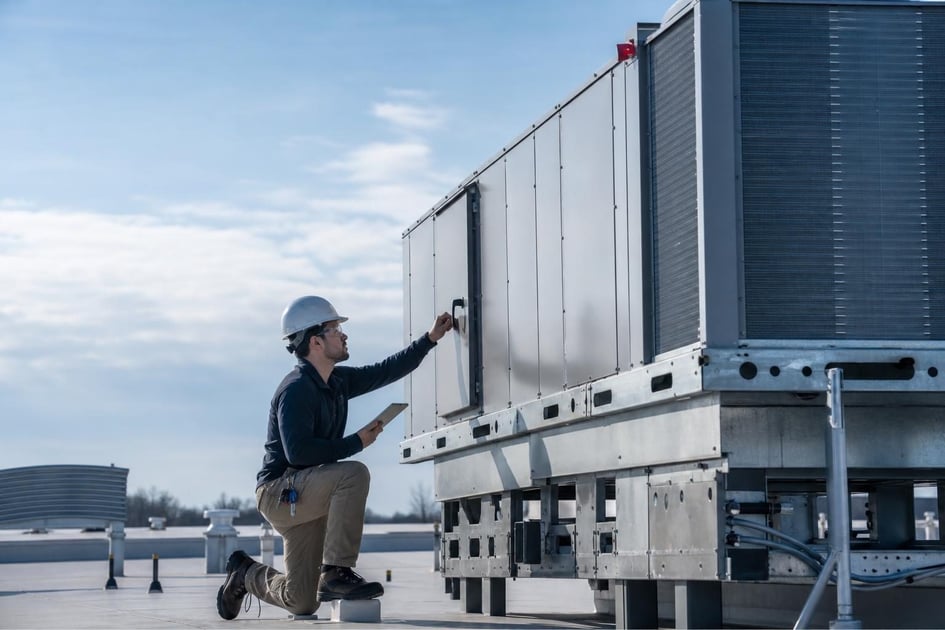
Hvac equipment financing no money down is available to owner-operators and small business owners across the country. You can use the equipment itself as collateral to preserve working capital while still getting the heating, cooling, and ventilation systems your operations require. At Provide Capital, we finance new and used business equipment from $5,000 to $5 million, with same-day approvals possible in many cases. Whether you are replacing a failed rooftop unit or expanding your service fleet, a no-money-down structure keeps your cash reserves intact.
What "No Money Down" Actually Means in HVAC Financing
A no-money-down structure means 100 percent of the equipment cost is financed, including soft costs like freight and installation in many cases. You do not write a check for 10 or 20 percent upfront. Instead, the lender takes a security interest in the HVAC equipment itself. Because the machine serves as collateral, the lender can offer more competitive terms than an unsecured line of credit, and you keep your cash for payroll, inventory, or unexpected repairs.
This is not the same as "no credit check" or "guaranteed approval." The lender still reviews your business credit, time in operation, and equipment details. What changes is the cash required at closing. For a Commercial Hvac System financing deal, that can mean preserving $15,000 or more in working capital on a single large replacement.
Key Insight: Lenders offering true no-money-down programs often require the equipment to be business-use only and may cap the advance at the lesser of the invoice price or appraised value. If you are buying from a private party without an invoice, expect the lender to order a third-party appraisal, which can add 24 to 48 hours to the timeline.
Get a fast decision on your equipment
Applying takes just a few minutes, and decisions can come as soon as the same day.
Start Your ApplicationHow HVAC Equipment Financing Works
The process starts with an equipment quote or invoice. You submit an application along with basic business documentation. The lender evaluates the credit profile, the equipment age and type, and the term you request. Approval can come the same day for well-qualified applicants financing new equipment. Once approved, the lender pays the vendor or private seller directly, and you take delivery. Payments begin according to the schedule, typically monthly.
Rates vary by credit profile, equipment age and term. Newer equipment and stronger credit generally produce lower payments. Used equipment and longer terms can increase the rate slightly because the lender's collateral depreciates faster and the exposure lasts longer. The equipment itself is the collateral, which keeps rates competitive compared with unsecured borrowing.
Most HVAC equipment qualifies: package units, split systems, chillers, boilers, vrf systems, ductless mini-splits, and ventilation equipment. We serve construction, healthcare, dental, restaurant and food service, manufacturing, transportation, agriculture, HVAC and forestry nationwide. If the equipment is essential to your business operations, it likely qualifies for financing.
New vs. Used HVAC Equipment Considerations
New equipment carries full manufacturer warranty, lower maintenance risk, and often qualifies for longer financing terms. A brand-new 20-ton rooftop unit might cost $80,000 to $120,000 installed, depending on complexity and location. Because the collateral is new, lenders are comfortable stretching the term to 72 or 84 months, which lowers the monthly payment.
Used equipment lowers your total financed amount and can make sense when the unit has remaining useful life. A comparable used unit, 5 to 10 years old, might run $35,000 to $65,000. The trade-off is shorter available terms—often 36 to 60 months—and a higher rate to reflect the increased collateral risk. You also inherit maintenance history you may not fully know.
When deciding, weigh the monthly savings of a lower principal against the shorter term and potential repair bills. If you plan to keep the building or grow the business for the long term, new equipment often wins on reliability and energy efficiency. If you need a temporary solution or are flipping a property, used equipment preserves more capital.
Pro Tip: Many contractors buy used package units in the off-season—October through March—when replacement demand drops and suppliers are more willing to negotiate. Financing a used unit bought in November can save 10 to 20 percent on the purchase price compared with a July emergency replacement.
Lease vs. Loan: Which Structure Fits Your Business?
Equipment financing generally takes one of two forms: a loan (equipment finance agreement) or a lease (fair market value or $1 buyout). Each treats ownership, tax deductions, and end-of-term obligations differently. The right choice depends on how long you plan to keep the equipment, your tax strategy, and whether you want to own the asset outright.
| Feature | Equipment Loan / Finance Agreement | Fair Market Value Lease |
|---|---|---|
| Ownership | You own the equipment from day one; lender holds lien | Lessor owns equipment; you return or purchase at end |
| Monthly payment | Higher, but builds equity | Lower, treated as operating expense |
| Tax treatment | Interest deduction + depreciation (Section 179/bonus) | Full lease payment deducted as operating expense |
| End of term | No balloon; lien released after final payment | Fair market value buyout, return, or renew |
| Best for | Long-term owners who want the asset on books | Businesses that refresh equipment every 5–7 years |
If you plan to run the equipment for 10 years or more, a loan usually makes more sense. You build equity, and the total cost of ownership is lower. If you prefer to trade up every few years as efficiency standards improve, a fair market value lease keeps payments low and removes the hassle of resale. Hvac equipment financing specialists can walk you through the trade-offs for your specific replacement cycle.
By the Numbers: A $45,000 package unit financed over 60 months on a loan structure might carry a monthly payment in the range of $850 to $1,100, depending on credit and equipment age. The same unit on a 60-month fair market value lease could run $700 to $900 monthly, but you would owe a residual payment or return the unit at the end of the term.
Qualification Criteria in Detail
Lenders look at three pillars: the borrower, the business, and the equipment. On the borrower side, personal credit matters because most small business owners guarantee the debt. A score above 650 opens more programs, though we work with lower scores by adjusting term or requiring additional collateral. Time in business counts too; two years or more is the sweet spot, but younger operations can qualify with strong credit or a larger deal size.
Business revenue must support the new payment. Underwriters typically want to see that the equipment payment does not exceed a reasonable percentage of monthly gross revenue. Bank statements for the last three to six months are standard. Tax returns may be required for larger requests or more complex situations.
The equipment itself must have a clear title, a verifiable serial number, and a useful life that extends beyond the financing term. We finance deals from $5,000 up to $5 million, so the range is wide enough to cover a single residential-style split system or a full commercial chiller plant. The equipment must be for business use; personal-residence systems do not qualify.
Tax Treatment for the 2026 Tax Year
For the 2026 tax year, businesses should consult their CPA about how to deduct HVAC equipment. Section 179 allows qualifying businesses to deduct the full purchase price of equipment in the year it is placed in service, subject to annual limits that adjust for inflation. Bonus depreciation may also be available, though the percentage has been phasing down in recent years. The exact 2026 Section 179 limit and bonus depreciation rate should be confirmed with your accountant, as these figures are set by the IRS and can change with new legislation.
Loan borrowers generally deduct interest paid and claim depreciation through Section 179 or MACRS. Lease borrowers typically deduct the full lease payment as an operating expense. Which structure saves more tax dollars depends on your profit level, other deductions, and whether you are in an AMT situation. Never choose a financing structure solely for tax reasons, but do run the numbers with your CPA before you sign.
According to SBA guidance on business financing, keeping clear records of equipment cost, financing fees, and placement-in-service dates is essential for a clean audit trail. Your CPA will need the invoice, the financing agreement, and proof of delivery to substantiate any first-year deduction.
Find the right financing structure
Tell us about the equipment you need and we will show you the options that fit your business.
See Your OptionsIndustry-Specific Use Cases
HVAC is not one-size-fits-all. A restaurant running 12 hoods and 8 walk-in coolers faces different replacement cycles than a rural school district heating four buildings with boilers. Here is how no-money-down financing plays out across sectors we serve.
Construction and Contracting: General contractors often need temporary heating and cooling for job sites, then permanent systems for finished commercial space. According to Census Bureau data on construction spending, commercial building activity continues to drive demand for climate-control systems in new and renovated structures. Financing a combination of package units and portable equipment lets contractors bid larger jobs without tying up bonding capacity.
Healthcare and Dental: Patient comfort and air quality are regulatory and liability issues. A failed chiller in a surgery center can force cancellations. No-money-down financing lets practices replace equipment immediately while preserving cash for payroll and malpractice premiums.
Restaurant and Food Service: Kitchen ventilation and refrigeration are mission-critical. A 25,000-square-foot food processing plant upgrading to energy-efficient ammonia recovery can finance $400,000 in equipment without a down payment, paying for the upgrade out of utility savings over time.
Manufacturing: Dust collection and climate control affect both safety and product quality. As Forbes reporting on small business equipment trends has noted, using the equipment itself as collateral is one of the most capital-efficient ways for established businesses to expand capacity without diluting ownership. Financing allows manufacturers to match the equipment payment to the revenue generated by the new production line the HVAC supports.
Agriculture: Poultry houses, greenhouses, and dairy barns require precise ventilation. A fleet of 6 service vans plus portable heaters can be financed together under one approval, simplifying bookkeeping.
Worked Cost Examples
Numbers help. Below are realistic scenarios for owner-operators considering Hvac System financing with no money down. Rates vary by credit profile, equipment age and term, so treat these as directional estimates, not quotes.
Scenario 1: Single Package Unit Replacement
A contractor needs to replace a failed 10-ton package unit on a retail client's roof. The installed cost is $45,000. Financing over 60 months with no money down preserves the contractor's cash for payroll and materials. Monthly payments might fall in the range of $850 to $1,100. Over the full term, total out-of-pocket depends on the rate and any fees, but the contractor keeps the client happy and earns revenue from day one.
Scenario 2: Commercial Chiller Upgrade
A property management firm upgrades a 20-year-old chiller in a medical office building. The new chiller, installation, and controls run $150,000. Structured over 84 months, the monthly payment could run $2,200 to $2,800. The firm avoids a special assessment on tenants and captures immediate utility rebates from the local utility.
Scenario 3: Multi-Unit Residential Split Systems
An apartment owner replaces 8 aging split systems in a 20-unit complex. Total equipment cost is $32,000. Financed over 48 months, payments might range from $650 to $850 monthly. Because the units are new, the owner qualifies for manufacturer rebates and extended warranties, reducing maintenance risk.
Talk to a specialist about your specific machine to get a payment estimate tailored to your credit and equipment selection.
Common Mistakes Owner-Operators Make
The biggest error is waiting until equipment fails. Waiting until a 15-year-old unit fails in July means emergency pricing, rushed decisions, and potential revenue loss while tenants or patients endure heat. Plan replacements during off-peak seasons when vendors have capacity and may discount installation labor.
Another mistake is underestimating soft costs. Freight, crane rental, rigging, and disposal of the old unit can add 15 to 25 percent to the sticker price. Make sure your financing request includes these items, or you will pay them out of pocket despite the "no money down" structure.
Some borrowers also fail to match the term to the equipment life. Financing a used unit with 5 years of remaining life over 7 years leaves you paying for equipment you have already retired. Align the term with the realistic useful life, and ask your vendor for an expected lifespan estimate in writing.
What Documentation Is Needed
Preparation speeds approval. Most deals close faster when you have these items ready: a signed equipment invoice or purchase agreement, your last two years of business tax returns, three to six months of business bank statements, a voided business check for ACH setup, and proof of insurance naming the lender as loss payee. For larger deals or complex ownership structures, a personal financial statement and interim year-to-date financials may be requested.
If you are buying from a private party rather than a dealer, add a bill of sale, equipment photos, and proof of clear title. The lender will verify the serial number and may require an appraisal. Having these items organized before you apply can turn a 3-day process into a same-day approval.
Pro Tip: Order a preliminary title check on any used equipment priced above $50,000. A $50 title search can reveal existing liens, salvage history, or ownership disputes that would derail financing at the last minute. Dealers usually clear title before listing, but private sellers sometimes forget old repair-shop liens.
What Happens After Approval
Once approved, the lender issues a funding package or pays the vendor directly. You review and sign the closing documents, which include the finance agreement, UCC-1 filing authorization, and insurance requirements. The vendor is paid, and you schedule delivery or installation. The lender files a UCC-1 lien on the equipment, which is standard and releases automatically when you pay off the balance.
Your first payment is typically due 30 to 45 days after funding. Some lenders offer seasonal or skip-payment structures for HVAC contractors whose revenue spikes in summer and winter. Ask about these programs if your cash flow is cyclical. According to Reuters coverage of commercial real estate markets, building owners are increasingly prioritizing energy-efficient HVAC upgrades to manage operating costs, so timing your replacement to coincide with rebate windows can improve your return.
Ready to move forward?
More than 10,000 businesses have financed equipment with Provide Capital. See what you qualify for today.
Get StartedFrequently Asked Questions
Can I really get HVAC equipment with zero down payment?
Yes. Many qualified borrowers finance 100 percent of the equipment cost, including soft costs. The equipment itself serves as collateral, so you do not need to put cash down. Approval depends on credit, time in business, and the equipment details.
Does no money down mean no credit check?
No. A no-money-down program still involves a credit review. The phrase refers to the cash required at closing, not the underwriting standards. Lenders evaluate your ability to repay, the equipment value, and the term.
What credit score do I need for HVAC equipment financing?
A score above 650 opens the most competitive programs, but we work with lower scores by adjusting term, rate, or structure. Time in business, revenue, and equipment quality also factor into the decision. There is no single cutoff.
Can I finance used HVAC equipment?
Yes. Used equipment is common in HVAC financing. Terms may be shorter, and rates may be slightly higher than for new equipment, but the overall financed amount is lower. The unit must have verifiable value, clear title, and remaining useful life.
How long does approval take?
Many applications receive a decision the same day, especially for new equipment and straightforward ownership structures. Complex deals, private-party sales, or requests requiring appraisals can take 24 to 72 hours. Having documentation ready speeds the process.
Can I include installation and freight in the financing?
Often yes. Many lenders allow soft costs like freight, installation, and even extended warranties to be included in the financed amount, provided they are itemized on the invoice. This is one advantage of financing over paying cash: you preserve working capital for the total project, not just the machine.
Is leasing better than buying for HVAC equipment?
It depends on your holding period and tax strategy. Leasing offers lower monthly payments and simple expensing, while buying builds equity and may offer larger upfront deductions through Section 179. Run both scenarios with your CPA before deciding.
What happens if I want to pay off the loan early?
Most equipment finance agreements allow early payoff, though some include a prepayment penalty or minimum interest charge. Review your specific agreement before signing. If early payoff is important to you, ask your financing specialist to structure the deal accordingly.
Your Next Step
Hvac equipment financing no money down lets owner-operators acquire reliable climate control without draining cash reserves. Whether you are replacing one rooftop unit or outfitting an entire building, the key is matching the right structure—loan or lease, new or used, term length—to your actual business needs and cash flow pattern.
Gather your equipment quote, your last few bank statements, and your tax returns. Then get a same-day decision on your equipment and see how much working capital you can preserve on your next HVAC purchase.
Disclaimer: The information provided in this article is for general educational purposes only and is not financial, legal, or tax advice. Funding terms, qualifications, and product availability may vary and are subject to change without notice. Provide Capital does not guarantee approval, rates, or specific outcomes. For personalized information about your business funding options, contact our team directly.