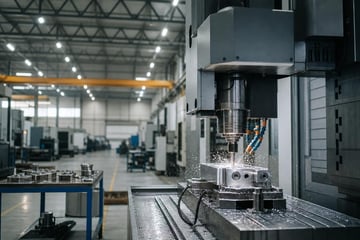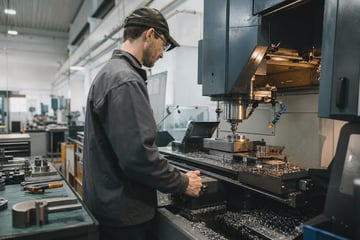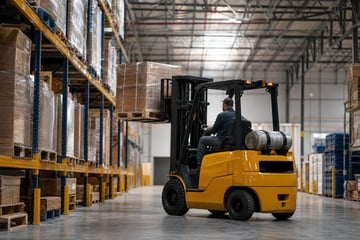
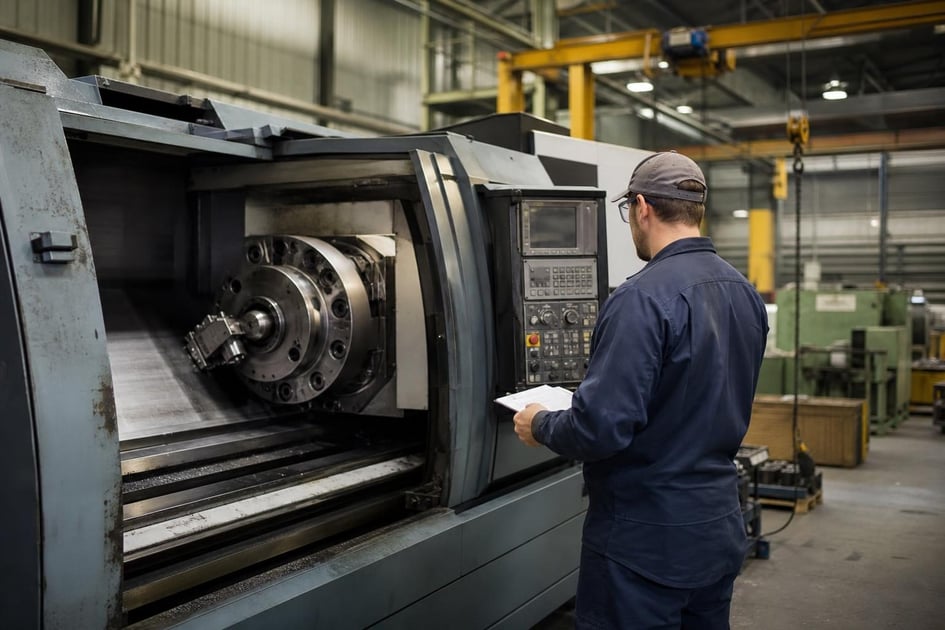
Used manufacturing equipment financing lets owner-operators acquire production machinery without draining operating cash or tying up lines of credit. At Provide Capital, we finance used CNC machines, lathes, press brakes, injection molders and fabrication equipment from $5,000 up to $5 million, with the equipment itself serving as collateral. Rates vary by credit profile, equipment age and term, and same-day approvals are possible once we have a complete file.
Whether you run a ten-person machine shop or a regional fabrication plant, financing a pre-owned asset can put revenue-generating capacity on your floor while you preserve liquidity for payroll and materials. The key is understanding how lenders evaluate used equipment, what documentation matters, and how to structure the transaction so the monthly payment aligns with the revenue the machine produces.
Why Owner-Operators Choose Used Manufacturing Equipment
Cost Savings and Faster Payback
A new CNC machining center can run $300,000 to $500,000. A three- to five-year-old unit from a reputable brand often sells for 40 to 60 percent less. That lower acquisition cost shortens the payback period and reduces the total financed amount, which means lower monthly obligations and less interest paid over the life of the loan. For a job shop bidding on tight-margin contracts, that math can be the difference between winning and losing work.
Immediate Availability
New equipment frequently carries lead times of six to twelve months, especially for specialized machines. Used equipment is usually available now. In a market where customers expect four-week turnaround, waiting half a year for a new lathe is not always an option. Financing a used machine that is already on a dealer's floor or at auction lets you quote jobs you could not otherwise take.
The used equipment market is large and well-established. The U.S. Small Business Administration highlights the role of small manufacturers in domestic supply chains, and many of those firms rely on secondary machinery to remain cost-competitive.
Key Insight: Lenders typically cap financing at the appraised fair-market value or the purchase price, whichever is lower. If you negotiate a used machine well below book value, your down payment requirement drops, but the lender will still order a third-party appraisal to confirm the collateral value before funding.
Get a fast decision on your equipment
Applying takes just a few minutes, and decisions can come as soon as the same day.
Start Your ApplicationWhat Used Manufacturing Equipment Can You Finance?
Provide Capital finances a wide range of pre-owned production and plant equipment. Common qualifying assets include CNC mills and lathes, horizontal and vertical machining centers, press brakes, shears, ironworkers, bandsaws, welding systems, injection molding machines, extruders, blow molders, grinders, routers and dust-collection systems. We also finance material handling and facility equipment that keeps a plant moving, such as forklifts, overhead cranes and Skid Steers financing for outdoor yard work.
The secondary market for industrial machinery has grown substantially. As Forbes reported, online platforms now list millions of used machines, making it easier for buyers to find specific models and for lenders to verify fair-market values.
Because the equipment acts as collateral, condition matters. A machine with documented maintenance, low operating hours and available parts is easier to finance than a high-hour unit with a questionable service record. We do not require perfect credit, but we do verify that the asset can hold value for the term of the financing. If you are expanding into a new capability, Manufacturing equipment financing can cover the primary production asset and the auxiliary equipment needed to support it.
Facilities upgrades also qualify alongside machine tools. A shop adding a second bay may need a Commercial Hvac System financing package to climate-control the new space. Bundling the HVAC with the machine under a single facility improvement note keeps paperwork simple and preserves your bank line for raw materials.
New vs. Used Manufacturing Equipment
The decision between new and used is not just about sticker price. It affects financing terms, tax treatment, maintenance budgets and uptime risk.
According to U.S. Census Bureau data, manufacturing shipments remain a significant component of domestic economic activity, which means demand for productive capacity is steady even when capital budgets are tight.
| Factor | New Equipment | Used Equipment |
|---|---|---|
| Acquisition cost | Higher; full retail plus options | 30–60% lower depending on age and hours |
| Lead time | 6–18 months for some CNC and fabrication lines | Immediate to 30 days |
| Financing term | Up to 7 years or 84 months | Typically 3–5 years; older units may see shorter terms |
| Warranty | Full manufacturer warranty | Limited or as-is; third-party service contracts available |
| Collateral value | Predictable depreciation curve | Varies by brand, condition and market demand |
| Down payment | Often 0–10% | 10–20% for units over 10 years old |
Used equipment often commands a slightly higher rate or shorter term because the collateral value is harder to predict. That does not mean the deal is expensive; it means the lender manages risk by asking for more equity or a faster amortization. The lower purchase price usually keeps the monthly payment competitive even with a shorter term.
Lease vs. Loan for Used Manufacturing Equipment
You can acquire used manufacturing equipment through a capital lease, an operating lease or an equipment loan. Each structure changes who owns the asset, how the payment is treated for tax purposes and what happens at the end of the term.
A capital lease, or $1 buyout lease, is effectively a loan in lease clothing. You make monthly payments, claim depreciation and interest, and own the machine for a nominal sum at the end. An operating lease keeps the asset off your balance sheet, and you return or upgrade it at term end. An equipment loan gives you title upfront, with the lender holding a lien on the machine until the final payment.
For used equipment, loans and capital leases are more common than operating leases. Lenders prefer them because the residual value of a ten-year-old press brake is harder to predict than that of a new truck. If you plan to run the machine for fifteen years, a loan or capital lease makes more sense than an operating lease that forces a return or refinance in three years.
If you have a machine picked out and want to compare a loan against a lease structure, talk to a specialist about your specific machine and we will run both scenarios.
How Used Manufacturing Equipment Financing Works
Application and Quote
The process starts with a short application and a description of the equipment: year, make, model, hours, serial number and purchase price. We also need to know whether the machine is at a dealer, a private seller or an auction house. If the price looks reasonable relative to the market, we issue a preliminary quote showing term options, estimated monthly payments and any down payment requirement.
Appraisal and Verification
Because used collateral values fluctuate, we order an independent appraisal or equipment inspection for transactions over a certain threshold. The appraiser examines the machine, reviews maintenance logs and compares recent auction results. This step protects both parties: you confirm you are not overpaying, and the lender confirms the collateral supports the advance.
Documentation and Funding
Once the appraisal matches the purchase price, we move to final docs. You will sign a UCC-1 financing statement giving the lender a security interest in the equipment, along with the promissory note or lease agreement. We wire funds directly to the seller or escrow agent, typically within one to three business days of receiving signed documents and proof of insurance. Same-day approvals are possible early in the process, but funding always requires signed docs and verified collateral.
Pro Tip: Insure the machine for replacement cost, not just the loan balance. If a financed CNC router is damaged in transit or suffers a shop-floor accident, a balance-only payout may leave you owing money on a machine you cannot use. We require proof of insurance before funding, and we recommend naming the lender as loss payee.
What It Takes to Qualify
Provide Capital serves established businesses nationwide. We do not work with startups or new ventures; we look for owners who have been operating for at least two years and can demonstrate the cash flow to service the debt. That said, we do not have a single minimum credit score. A strong applicant might have a 680 or higher, while a challenged credit profile can sometimes be offset by a larger down payment, strong revenue or newer collateral.
Time in business matters because manufacturing equipment is specialized. A lender wants to see that you understand the machine, the market and the revenue model. A shop that has run Haas mills for eight years is a better candidate for a third used Haas than a general contractor buying a lathe for the first time.
The age and condition of the equipment also drive approval. We routinely finance machines that are five to ten years old. Units older than fifteen years may still qualify, but they often require a larger down payment or a shorter term. Hour meters, maintenance records and the availability of replacement parts all factor into the final structure.
Find the right financing structure
Tell us about the equipment you need and we will show you the options that fit your business.
See Your OptionsTax Treatment for the 2026 Tax Year
Used manufacturing equipment qualifies for the Section 179 deduction in the 2026 tax year, provided it is placed in service before December 31, 2026 and is used more than 50 percent for business. Section 179 allows businesses to deduct the full purchase price of qualifying equipment up to an annual limit that adjusts yearly for inflation. Because these limits change each year, you should confirm the exact 2026 ceiling with your CPA before making a purchase decision.
Bonus depreciation is also available under current federal law, though it is subject to a scheduled phase-down. Used equipment qualifies if it is new to your business, but the applicable percentage for 2026 depends on when the asset is placed in service and whether Congress has enacted any late-year adjustments. Your accountant can model whether Section 179, bonus depreciation or standard MACRS recovery yields the best outcome for your 2026 return.
Interest paid on an equipment loan is generally deductible as a business expense. Lease payments are typically deductible in full as an operating expense, though capital leases are treated differently. Tax rules for manufacturing equipment are complex, and the optimal strategy depends on your entity type, taxable income and state obligations. Always review the structure with a CPA who knows your books.
By the Numbers: A $150,000 used machining center financed over 60 months with a 15% down payment leaves a $127,500 note. At competitive rates, that often produces a monthly obligation in the low $2,000s. If the machine produces $8,000 in billable work each month, the equipment pays for itself three times over before the note matures.
Common Mistakes to Avoid
The biggest error is buying at auction without an inspection. Online auction photos hide worn spindle bearings, cracked castings and obsolete control systems. Always hire a qualified technician to power the machine and check critical tolerances before you bid.
Another mistake is underestimating rigging and transport. A 12,000-pound VMC may cost $3,000 to $8,000 to move depending on distance, crane needs and foundation requirements. Buyers who finance only the purchase price and forget the soft costs end up paying those expenses out of pocket at the worst possible time.
Finally, verify clear title. Used equipment sometimes carries hidden liens or seller lease-payoff balances. We run UCC searches before funding, but you should confirm the seller actually owns the asset free and clear before you commit a deposit.
Documentation You Will Need
To keep the process moving, gather the following before you apply: two years of business tax returns, a current year-to-date profit-and-loss statement, a personal financial statement for each guarantor, the equipment invoice or auction listing, a specification sheet showing year, make, model and serial number, and proof of insurance once approved. If the machine is highly specialized, a third-party appraisal ordered early can prevent delays.
Industry-Specific Use Cases
Metal Fabrication
Job shops and structural steel fabricators rely on press brakes, plasma tables and ironworkers. A used 175-ton press brake that costs $45,000 can handle the same mild-steel jobs as a new unit costing $120,000. Financing it over four years keeps the payment manageable while the shop bids on architectural metalwork and OEM contracts.
Food Processing and Packaging
Small food manufacturers often need mixers, fillers, sealers and labeling lines. Used stainless-steel equipment that meets USDA sanitation standards is in high demand. We finance these assets alongside facility equipment like Commercial Ovens financing for bakeries and production kitchens.
Plastics and Injection Molding
A used 200-ton injection molder might cost $25,000 to $40,000 versus $150,000 new. For a custom molder serving automotive or medical device clients, that gap makes entry into a new tonnage range possible. We structure terms around the mold program: if the machine runs a two-year contract, we can align the financing term with the revenue stream.
Woodworking and Cabinetry
Cabinet shops use CNC routers, edge banders and wide-belt sanders. A five-year-old industrial router with a vacuum table and automatic tool changer can cost 50 percent less than new. Because woodworking margins are thin, preserving cash through financing is often the only way to upgrade capacity before the busy spring building season.
Material Handling and Yard Operations
Manufacturing plants with large outdoor storage yards use Wheel Loaders financing to move raw steel, lumber or bulk materials. These assets work alongside the production line, and we can bundle them with indoor machine tools under a single credit facility.
Ready to move forward?
More than 10,000 businesses have financed equipment with Provide Capital. See what you qualify for today.
Get StartedFrequently Asked Questions
Can I finance used manufacturing equipment from a private seller?
Yes. We finance dealer sales, auction purchases and private-party transactions. The key requirements are a verifiable bill of sale, clear title and an acceptable appraisal. Private sales sometimes take a few extra days while we confirm the seller's ownership and release any outstanding liens.
Does used equipment qualify for the Section 179 deduction in 2026?
Yes, used equipment qualifies for Section 179 in the 2026 tax year as long as it is new to your business and used more than 50 percent for business purposes. The deduction is subject to an annual dollar limit and a phase-out threshold that adjusts for inflation. Speak with your CPA to confirm the exact 2026 limits and how they apply to your taxable income.
What credit score do I need for used equipment financing?
We do not publish a minimum score because we underwrite the full picture. A credit score in the mid-600s or higher helps secure the best rates, but strong revenue, a healthy down payment or newer collateral can offset a lower score. Rates vary by credit profile, equipment age and term.
How old can the equipment be?
We regularly finance machines that are five to ten years old. Equipment older than fifteen years may still qualify, but it often requires a larger down payment or a shorter term to match the remaining useful life of the asset. The brand, condition and availability of parts also matter.
Can I include installation, rigging and shipping in the loan?
Soft costs like delivery, rigging and initial tooling can sometimes be included, but they must be documented on the invoice or purchase agreement. We cannot finance costs that are not directly tied to the equipment acquisition. Ask your representative about bundling eligible soft costs when you request a quote.
Is a down payment always required?
Not always, but it is common for used equipment. New machines sometimes qualify for zero-down programs, while used assets—especially those over ten years old—often require 10 to 20 percent down. The down payment reduces the lender's risk and demonstrates your commitment to the asset.
How long does approval take?
Same-day approvals are possible when the application is complete and the equipment is straightforward. Complex transactions, large dollar amounts or specialized machines that need an appraisal may take two to five business days. You can speed the process by having your financials and equipment details ready.
What happens if I want to pay off the loan early?
Most of our loan structures allow early payoff, though some may include a prepayment schedule for the first year. The loan may not be interest-free if paid early, so review the prepayment language in your promissory note before signing. If flexibility matters, ask us to structure the deal with open prepayment terms.
Next Steps
Financing used manufacturing equipment is one of the fastest ways to add capacity without draining cash reserves. Start by identifying the machine, gathering your financials and requesting a quote. We will review your credit profile, the equipment value and the proposed term, then present options that fit your monthly budget.
Get a same-day decision on your equipment and see how much production capacity you can add to your floor this quarter. Whether you are bidding a new contract or replacing a worn-out spindle, used manufacturing equipment financing can keep your shop competitive and your balance sheet intact.
Disclaimer: The information provided in this article is for general educational purposes only and is not financial, legal, or tax advice. Funding terms, qualifications, and product availability may vary and are subject to change without notice. Provide Capital does not guarantee approval, rates, or specific outcomes. For personalized information about your business funding options, contact our team directly.