Restaurant Equipment Financing With No Down Payment Explained
Yes, you can finance restaurant and food service equipment without a down payment. The lender secures the loan by taking a security interest in the equipment itself, which means the oven, fryer, or refrigeration unit serves as the collateral. Because the financing is secured by a hard asset, rates are typically more competitive than unsecured borrowing, and established operators can often qualify with no cash out of pocket at closing. Provide Capital finances transactions from $5,000 up to $5 million, covering everything from a single convection oven to a full commercial kitchen build-out.
A no-down-payment structure preserves working capital for payroll, inventory, and the unexpected expenses that define restaurant cash flow. Instead of tying up $20,000 or $50,000 in a single equipment purchase, you spread the cost over the useful life of the asset while keeping your line of credit untouched. This is especially useful when opening a second location, replacing a failed walk-in freezer during peak season, or upgrading from used to new equipment to handle increased volume.
Key Insight: Lenders evaluate the equipment's resale value and expected lifespan alongside your business financials. A $35,000 reach-in freezer with a 10-year useful life and strong resale demand is often easier to approve with zero down than a highly specialized $8,000 piece of equipment with no secondary market.
Get a fast decision on your equipment
Applying takes just a few minutes, and decisions can come as soon as the same day.
Start Your ApplicationWhat Equipment Qualifies for Zero-Down Financing
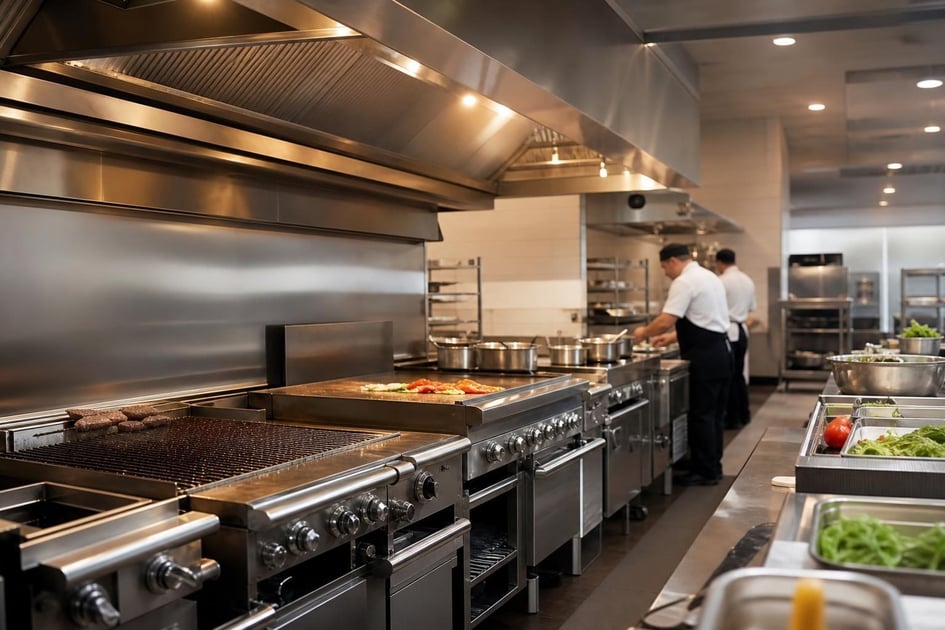
Nearly every major category of restaurant and food service equipment can be financed with no down payment, provided the transaction meets minimum size and credit requirements. Eligible assets include gas and electric ranges, convection and combination ovens, deep fryers, griddles, charbroilers, commercial mixers, slicers, food processors, reach-in and walk-in refrigerators and freezers, ice machines, dishwashers, exhaust hoods, fire-suppression systems, point-of-sale terminals, and furniture. The restaurant industry is one of the largest small-business sectors in the country, according to U.S. Census Bureau data, and the constant need for equipment replacement creates steady demand for financing.
The equipment can be new or used. Used equipment financing is common in the restaurant industry because well-maintained assets from closed locations often sell for 40% to 60% below replacement cost and still carry years of service life. Provide Capital finances both new and used assets, and the equipment itself is the collateral regardless of whether it rolled off the assembly line last month or three years ago. For operators expanding into mobile service, Food Truck financing is available under the same structure.
By the Numbers: A typical independent restaurant spends between $25,000 and $150,000 to equip a new kitchen. A second-location expansion or full renovation often runs higher, but even a single critical failure—like a combi-oven or walk-in freezer—can create a $10,000 to $30,000 replacement need that working capital cannot cover.
Who Qualifies for No-Down-Payment Equipment Financing
Qualification depends on three factors: time in business, credit history, and revenue consistency. Lenders prefer to see at least two years of operating history, though some programs accept 12 months with strong cash flow. A personal credit score in the mid-600s or higher opens the door to the best terms, but lower scores do not automatically disqualify you; they simply shift the deal toward a shorter term or require additional documentation. Monthly revenue should be sufficient to cover the proposed payment with a comfortable margin. U.S. Small Business Administration research consistently shows that access to capital is a top concern for food service operators, which is why equipment-specific financing exists as an alternative to general working capital loans.
Startups and businesses with less than one year of revenue are generally not eligible for zero-down programs. The lender needs evidence that the business can service the debt. Same-day approvals are possible when the application is complete and the equipment has a clear title and verifiable value, but approval speed depends on the complexity of the transaction and the responsiveness of the borrower. No lender can guarantee approval, and every application is underwritten individually.
If your operation is established and you are looking to add or replace equipment, see what you qualify for without affecting your cash reserves.
New vs. Used Equipment: What to Know Before You Finance
New equipment carries a manufacturer's warranty, predictable maintenance schedules, and the latest energy-efficiency ratings. It also commands a higher price, which means a larger financed amount and a longer term to keep payments manageable. Used equipment lowers the financed balance and can shorten the payoff period, but you should verify the remaining service life and request maintenance records. A three-year-old convection oven from a high-volume chain location may have more wear than a five-year-old unit from a low-volume catering kitchen.
Financing terms for used equipment typically run 24 to 60 months, depending on the asset age and condition. New equipment can sometimes stretch to 72 months or longer when the cost justifies the extended term. The key is matching the term to the equipment's useful life; financing a piece of equipment for five years when it will likely need replacement in three creates a cash-flow trap. Food Service Equipment financing covers both new and used assets, and the approval criteria focus more on the asset value and your business performance than on whether the unit is new.
Pro Tip: Before committing to a used reach-in refrigerator or ice machine, check whether replacement parts are still manufactured for that model. A $4,000 savings on the purchase price evaporates quickly if you wait three weeks for a discontinued compressor coil.
Equipment Lease vs. Equipment Loan
Restaurant owners often confuse a lease with a loan. In an equipment loan, you own the asset from day one, build equity, and claim depreciation and interest deductions. In a true lease, the lessor retains ownership, and you make monthly payments for the right to use the equipment. At the end of the lease term, you may have the option to purchase the equipment for its fair market value, a fixed amount, or $1, depending on the lease structure.
A loan is generally the better choice if you plan to keep the equipment for its full useful life and want the tax benefits of ownership. A lease can make sense if you need lower monthly payments, expect to upgrade frequently, or want to avoid the risk of technological obsolescence. Below is a comparison of the two structures for a typical $50,000 kitchen equipment package.
| Factor | Equipment Loan | Equipment Lease |
|---|---|---|
| Ownership | You own the equipment; lender holds a lien | Lessor owns the equipment during the term |
| Down payment | Often $0 for qualified borrowers | Usually first and last payment upfront |
| Monthly payment | Higher than a lease in some cases | Often lower, especially on FMV leases |
| Tax treatment | Depreciation and interest deduction | Lease payment may be fully deductible |
| End of term | You own the equipment free and clear | Return, renew, or purchase at FMV or fixed price |
| Best for | Long-term assets like hoods, walk-ins, ranges | Technology that changes quickly, like POS systems |
Both structures can be arranged with no down payment or minimal upfront cost, but the total cost of ownership differs. A loan usually costs less over the full term if you keep the equipment, while a lease offers flexibility at the expense of long-term equity. Discuss the structure with your accountant before signing, because the tax implications for the 2026 tax year will affect your effective cost.
Find the right financing structure
Tell us about the equipment you need and we will show you the options that fit your business.
See Your OptionsTax Treatment for the 2026 Tax Year
The tax benefits of equipment financing can significantly reduce the net cost of a kitchen upgrade. Under Section 179 of the Internal Revenue Code, businesses that purchase qualifying equipment may be able to deduct the full cost in the year the equipment is placed in service, subject to an annual limit that adjusts for inflation. For the 2026 tax year, the exact dollar limit and phase-out threshold have not been finalized in publicly available guidance at the time of writing, so you should consult a CPA for the current-year figures before making a purchase decision. Forbes has reported that restaurant owners who coordinate equipment purchases with their tax strategy often capture larger deductions than those who buy on an emergency basis without planning.
Bonus depreciation is also available in 2026, though it is phasing down from prior-year levels. The percentage you can claim in 2026 is lower than in 2025, which means the upfront deduction may be smaller than in previous years. Again, because the exact percentage depends on final IRS guidance for the 2026 tax year, speak with a qualified tax professional to model the impact on your specific return. The combination of Section 179 and bonus depreciation can still create a meaningful tax shield, but the rules change annually, and relying on outdated limits can lead to surprises.
Key Insight: If you finance equipment in December but do not place it in service until January, the deduction shifts to the next tax year. Restaurant owners timing a year-end purchase for tax purposes must coordinate delivery and installation with their accountant to ensure the equipment is operational before December 31.
How the Approval and Funding Process Works
The process starts with a simple application covering your business information, the equipment you intend to purchase, and the seller's details. Provide Capital reviews your credit profile, business bank statements, and the equipment quote or invoice. For transactions under $150,000, approvals can often come the same day if the documentation is complete. Larger transactions or deals involving multiple locations may take 24 to 48 hours for a decision.
Once approved, you receive a term sheet outlining the monthly payment, term length, and any fees. After you accept, the lender pays the vendor directly or issues a check to you and the seller jointly, depending on the structure. You take delivery of the equipment, and payments begin according to the schedule. Because the equipment is the collateral, there is rarely a need for additional liens on your real estate or personal assets beyond a standard personal guarantee.
The entire process, from application to funding, can take as little as 24 to 72 hours for straightforward deals, though complex transactions involving multiple pieces of equipment or out-of-state sellers may take slightly longer. Having your vendor quote, insurance certificate, and bank statements ready before you apply is the single biggest factor in hitting a same-day or next-day funding timeline. Get a same-day decision on your equipment by having your paperwork ready when you apply.
Common Mistakes to Avoid
One of the most expensive errors is financing equipment for a term that exceeds its useful life. A POS system financed over five years may be obsolete in three, leaving you with payments on hardware you no longer use. Another mistake is failing to budget for installation, delivery, and electrical or plumbing hookups. These soft costs can add 10% to 20% to the total project, and not every lender includes them in the financing. Ask upfront whether delivery and installation can be rolled into the lease or loan.
Underinsuring financed equipment is another risk. If a fire or flood destroys a $40,000 kitchen line that you still owe $28,000 on, your general liability policy may not cover the replacement cost. Lenders require evidence of insurance naming them as loss payee, but the coverage limit is your responsibility to set correctly. Finally, do not assume that a low monthly payment is automatically the best deal. A longer term lowers the payment but increases total interest cost. Compare the total outlay, not just the monthly amount.
Shopping without a pre-approval is a fourth common mistake; knowing your budget before you negotiate with a vendor strengthens your position and prevents you from falling in love with equipment you cannot afford. Pre-approval also helps you compare vendor quotes on an apples-to-apples basis because you already know the term and payment structure you can support.
Ready to move forward?
More than 10,000 businesses have financed equipment with Provide Capital. See what you qualify for today.
Get StartedFrequently Asked Questions
Can I really finance restaurant equipment with no down payment?
Yes, qualified borrowers can finance 100% of the equipment cost. The equipment itself serves as collateral, which reduces the lender's risk and allows them to fund the full purchase price. Your credit profile, time in business, and the equipment type will determine whether you qualify for a zero-down structure.
Does no down payment mean higher monthly payments?
Not necessarily. The monthly payment is driven by the total amount financed, the term length, and the rate. While financing 100% of the cost produces a higher balance than putting money down, stretching the term over 48 or 60 months can keep the payment comparable to a shorter-term loan with a down payment. The trade-off is more total interest paid over the life of the loan.
What credit score do I need?
There is no universal cutoff, but a personal credit score in the mid-600s or higher generally opens access to the most competitive zero-down programs. Scores below that range do not automatically disqualify you, though they may result in a shorter term, a higher payment, or a requirement for additional documentation. Each application is reviewed individually.
Can I finance used equipment with no down payment?
Yes. Used equipment is common in the restaurant industry, and lenders regularly finance pre-owned assets. The key is that the equipment must have a verifiable value, a remaining useful life that matches the term, and a clear title. Maintenance records and an independent appraisal can strengthen the application.
How long does approval take?
Many applications receive a decision the same day if the documentation is complete and the transaction is straightforward. Larger deals, more complex credit profiles, or transactions requiring multiple pieces of equipment may take 24 to 48 hours. You can speed up the process by having your bank statements, equipment quote, and tax returns ready before you apply.
What documents do I need?
At minimum, expect to provide a government-issued ID, a voided business check, the last three months of business bank statements, and the invoice or quote for the equipment. For transactions above roughly $150,000 or for borrowers with limited credit history, two years of tax returns and a year-to-date profit-and-loss statement may also be required.
Is a food truck different from a brick-and-mortar restaurant?
The financing structure is similar, but food trucks involve additional considerations like vehicle registration, commissary agreements, and health department permits. The truck and its kitchen equipment can often be financed together as a single package. Restaurant Food Service equipment financing covers both stationary and mobile operations.
Can I include installation, delivery, and soft costs?
In many cases, yes. Lenders understand that a $30,000 oven is useless if you cannot pay the electrician to run the line or the contractor to cut the hood opening. Some programs allow you to finance up to 110% or 115% of the equipment invoice to cover installation and delivery, while others cap financing at the hard cost of the asset. Ask your financing specialist about soft-cost inclusion before you sign the vendor contract.
Next Steps
Restaurant equipment financing with no down payment is a practical tool for preserving cash while building a kitchen that can handle your menu and your volume. Whether you are opening a new location, replacing a failed freezer, or upgrading from a two-door reach-in to a full walk-in, the right financing structure keeps your working capital where it belongs—in the business.
Start by gathering your last three months of bank statements, the quote for the equipment you need, and a clear idea of your preferred term length. Then talk to a specialist about your specific machine and see what structure fits your cash flow. Provide Capital serves restaurants nationwide, from single-unit independents to multi-location groups, with financing from $5,000 to $5 million.
Disclaimer: The information provided in this article is for general educational purposes only and is not financial, legal, or tax advice. Funding terms, qualifications, and product availability may vary and are subject to change without notice. Provide Capital does not guarantee approval, rates, or specific outcomes. For personalized information about your business funding options, contact our team directly.