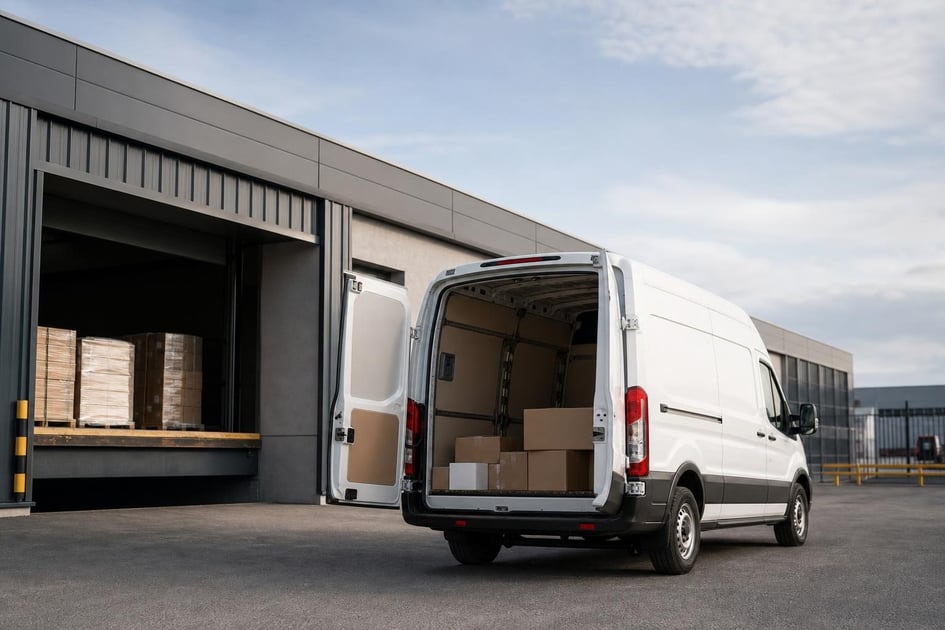
Yes, you can finance a cargo van with no money down. Because the equipment itself serves as collateral, lenders can structure deals that preserve your working capital while still securing the asset. At Provide Capital, we finance cargo vans from $5,000 to $5 million for businesses nationwide, and same-day approvals are possible when your documentation is complete and the equipment quote is in hand.
That does not mean every applicant receives zero-down terms. Your credit profile, time in business, and the age of the van all influence whether a down payment is required and how the rate is structured. This article explains what to expect when you apply for Cargo Vans financing with no money down, who qualifies, and how to prepare.
How No-Money-Down Cargo Van Financing Works
Equipment financing is collateral-based lending. The lender secures a lien on the cargo van, which reduces reliance on large cash reserves or real estate collateral. For a business owner who needs a van to generate revenue, this structure keeps cash in the business rather than locked up in a depreciating asset.
When you request no-money-down terms, the lender increases its risk slightly because there is no upfront equity cushion. To offset that, the underwriter weighs your credit score, monthly revenue, and business history more heavily. A strong file—two or more years in business, a credit score above 650, and consistent bank deposits—makes $0 down far more likely than a thin file with recent delinquencies.
The term length usually tracks the useful life of the van. Most cargo van loans run 36 to 72 months. Rates vary by credit profile, equipment age and term. A newer van with a strong borrower often receives the most favorable structure, while a high-mileage used van with a marginal credit file may require a modest down payment or a shorter term.
Key Insight: Lenders view cargo vans as lower-risk collateral than highly specialized equipment because the resale market is broad. A standard Ford Transit or Mercedes-Benz Sprinter can be remarketed to dozens of industries, which gives underwriters confidence to approve higher advance rates—sometimes 100 percent of the invoice plus soft costs.
Already have a machine in mind?
Provide Capital finances new and used equipment from $5,000 to $5 million, with same-day decisions possible.
Apply NowWho Qualifies for Zero-Down Terms
Credit Profile
A personal credit score in the mid-600s is generally the practical floor for no-money-down equipment financing. Scores above 700 open access to longer terms and lower monthly payments. Scores below 600 do not automatically disqualify you, but the lender may offset the risk by requiring 10 to 20 percent down or a shorter amortization.
Lenders also look at the recency of negative marks. A bankruptcy discharged three years ago with clean credit since is viewed differently than a 60-day late payment from last month. Public records such as unpaid tax liens or active judgments can stall approval until they are resolved or paid.
Time in Business
Businesses operating for two or more years have the easiest path to $0 down. The lender can verify revenue trends through tax returns and bank statements. Startups under one year old face tighter scrutiny because there is no proven track record. If you are newer, expect to provide a larger personal guarantee, and the lender may cap the advance at 90 to 95 percent of the equipment cost rather than 100 percent.
Revenue and Cash Flow
Most lenders want to see monthly revenue that can comfortably cover the new payment. A common benchmark is a debt-service coverage ratio of 1.25 or higher, meaning your business generates $1.25 in operating cash flow for every $1.00 of debt payment. If your bank statements show irregular deposits or large recent overdrafts, the underwriter may ask for a down payment to reduce exposure.
Pro Tip: Before applying, gather three months of business bank statements and your most recent two years of tax returns. Having these ready can mean the difference between a same-day approval and a conditional offer that requires additional documentation.
New Cargo Vans vs. Used Cargo Vans
The age and mileage of the van matter as much as your credit file. New vans carry full manufacturer warranties, predictable maintenance costs, and longer useful lives, which lets lenders stretch terms to 60 or 72 months. Used vans cost less upfront but may carry higher rates or shorter terms because the collateral depreciates faster and the resale window narrows.
| Factor | New Cargo Van | Used Cargo Van |
|---|---|---|
| Typical financing term | 48–72 months | 36–60 months |
| Warranty coverage | 3 years / 36,000 miles or more | Limited or expired |
| Down payment requirement | Often $0 with strong credit | May require 5–15% depending on age |
| Monthly payment | Higher total, lower repair risk | Lower total, higher repair risk |
| Best for | High-mileage operators, fleet buyers | Budget-conscious buyers, second vehicles |
If you are considering a used van, aim for fewer than 100,000 miles and a model year within the last five to seven years. Lenders hesitate to finance vehicles beyond a certain age because the collateral value drops too quickly. Always obtain a vehicle history report and have a mechanic inspect the van before submitting your equipment quote.
Lease vs. Loan: Which Structure Fits
Equipment Loan
A loan puts the title in your business name, subject to a lender lien. You claim depreciation and interest deductions, and you own the asset outright once the final payment clears. For a cargo van you plan to drive for 150,000 miles or more, a loan is usually the better fit because there are no mileage penalties or return conditions.
Fair Market Value Lease
A fair market value lease functions like a rental with a purchase option at the end. Monthly payments are often lower than a loan, but you do not build equity unless you exercise the buyout. This structure works well if you expect to refresh your fleet every three to four years or if you want to preserve borrowing capacity for other needs.
$1 Buyout Lease
A $1 buyout lease is technically a lease for accounting purposes, but functionally it behaves like a loan. You make higher monthly payments than an FMV lease, and at the end you purchase the van for $1. This is common when a borrower wants the tax treatment of a lease but the certainty of ownership.
By the Numbers: A $45,000 cargo van financed over 60 months with no money down typically carries a monthly payment ranging from the high $800s to the low $1,100s depending on credit profile, equipment age and term. A 36-month term on the same van pushes the payment into the mid-$1,200s to low-$1,400s but cuts total interest expense significantly.
Tax Treatment for the 2026 Tax Year
The tax benefits of financing a cargo van can be substantial, but the exact figures depend on the current tax code. For the 2026 tax year, Section 179 allows businesses to deduct the cost of qualifying equipment, subject to annual limits that adjust for inflation. The precise dollar cap and phase-out threshold for 2026 should be confirmed with your CPA because these numbers change yearly and interact with your total equipment purchases.
Bonus depreciation is also available in 2026, though it has been phasing down from its peak level. You may be able to deduct a significant portion of the van's cost in the first year, but the exact percentage depends on IRS guidance for 2026. Again, a CPA can model whether Section 179, bonus depreciation, or regular MACRS depreciation produces the best outcome for your specific tax bracket and business structure.
If you use the van for both business and personal driving, only the business percentage of the cost is deductible. Keep a mileage log from day one. The IRS scrutinizes vehicle deductions closely, and sloppy records can turn a legitimate write-off into a disallowed expense plus penalties.
See what you qualify for
The equipment itself secures the financing, which keeps rates competitive. Checking your options takes minutes.
Check Your OptionsIndustry-Specific Use Cases
Cargo vans are not one-size-fits-all. The right van and financing structure depend on what you haul, where you drive, and how many stops you make per day. According to U.S. Census Bureau sector data, transportation and warehousing remains one of the largest employer categories for small businesses, which explains why lenders are comfortable collateralizing commercial vans.
Last-Mile Delivery
E-commerce growth has tightened delivery windows. A delivery contractor running 80 to 120 stops per day needs a reliable chassis and upfit configuration—shelves, bins, or lockable compartments. Delivery Van financing covers the vehicle and often the upfit costs rolled into one note, preserving cash for fuel and route software.
HVAC and Mechanical Contractors
An HVAC technician carries tools, refrigerant tanks, and sometimes small compressors. Weight adds up quickly. A 3/4-ton cargo van with interior shelving and ladder racks is standard. Because the van generates revenue directly through service calls, lenders view the collateral favorably and often approve $0-down terms for established contractors.
Mobile Service Businesses
Mobile pet groomers, locksmiths, and detailers convert vans into rolling workshops. These builds can add $10,000 to $25,000 on top of the chassis cost. Equipment financing can cover both the van and the upfit as long as the total is documented on a single invoice or purchase order. Transportation equipment financing specialists understand how to structure these bundled deals.
Food Service and Catering
A refrigerated cargo van—or a standard van with a refrigeration upfit—lets caterers and specialty food distributors maintain cold-chain integrity. Refrigerated Cargo Van financing addresses the higher cost of insulated panels and cooling units, often with the same collateral-based structure as a standard van.
Documentation You Need Ready
Same-day approvals are possible only when the file is complete. The SBA notes that preparedness is one of the strongest predictors of fast equipment-loan decisions. Before you apply, collect the following:
- Driver's license or government-issued ID for each guarantor
- Three months of business bank statements
- Most recent two years of business tax returns (if available)
- A signed equipment quote or purchase invoice from the dealer or private seller
- Proof of insurance, or a quote naming the lender as loss payee
- Voided business check for automatic payment setup
If the van is used, the lender may also require the vehicle identification number, mileage, and a condition report. Private-party sales trigger extra scrutiny because the seller has no dealer reputation to back the transaction. Expect the lender to verify the title is clean and that there are no undisclosed liens.
Common Mistakes Buyers Make
Applying with incomplete documentation is the most common delay. The second is shopping for the van before understanding what you can afford. Get pre-qualified or at least speak with a financing specialist about your expected monthly payment range before you visit the dealership. Walking onto the lot with no budget ceiling invites overspending.
Another error is ignoring the total cost of ownership. A cheap used van with 140,000 miles may finance easily, but if the transmission fails in month four, your cash savings evaporate. Budget for maintenance, tires, and commercial insurance. A commercial auto policy for a cargo van typically runs higher than a personal auto policy, especially if employees drive the vehicle.
Finally, do not forget to factor in upfitting. Shelving, ladder racks, graphics, and refrigeration add to the financed amount but also increase the lender's risk if the upfit is permanently attached and reduces resale appeal. Keep upfits modular where possible, and document every add-on with receipts. As Forbes has reported, commercial vehicle demand stays resilient even in shifting rate environments because the equipment directly generates revenue, but only if the asset remains operable.
Pro Tip: If you plan to wrap the van with company graphics, install the wrap after funding closes. Some lenders view heavy vinyl wraps as alterations that complicate collateral recovery. Once you own the van outright, wrap it without restriction.
What Happens After Approval
Once approved, the lender issues a funding letter or authorization to the dealer. If you buy from a dealership, funds are usually wired within 24 to 48 hours. Private-party transactions may take slightly longer because the lender must verify title transfer and lien perfection.
You will sign a UCC-1 financing statement giving the lender a security interest in the van. The lender holds the title or is named as lienholder until the balance is paid. Your first payment is typically due 30 to 45 days after funding. Set up automatic withdrawals to avoid missed payments, which can trigger default terms and jeopardize future equipment financing relationships.
Most lenders do not charge prepayment penalties, but confirm this before signing. If your business has a strong season and you want to pay the note off early, a simple interest loan lets you do so without extra fees.
See what you qualify for before you shop, and you will walk into the dealership knowing exactly what monthly payment fits your cash flow.
Ready to move forward?
More than 10,000 businesses have financed equipment with Provide Capital. See what you qualify for today.
Get StartedFrequently Asked Questions
Can I really finance a cargo van with no money down?
Yes, provided your credit profile, revenue, and time in business meet the lender's standards. The van itself acts as collateral, which makes 100 percent financing possible for qualified borrowers. If your file is thin or the equipment is older, the lender may require a small down payment.
What credit score do I need?
A score in the mid-600s is the practical minimum for no-money-down terms. Scores above 700 improve your chances of longer terms and lower monthly payments. Scores below 600 may still qualify, but expect to put 10 to 20 percent down or accept a shorter term.
Can I finance a used cargo van with high mileage?
It depends on the age, mileage, and condition. Most lenders prefer used vans under 100,000 miles and fewer than seven model years old. High-mileage vans can still finance, but the term may be capped at 36 months and a down payment may be required to offset collateral risk.
How long are the terms?
Cargo van loans typically range from 36 to 72 months. New vans qualify for the longest terms. Used vans or borrowers with weaker credit may be limited to 36 or 48 months. Rates vary by credit profile, equipment age and term.
Can I include upfitting costs in the loan?
Yes, in many cases. Shelving, ladder racks, refrigeration units, and other permanent upfits can be rolled into the financing as long as they are itemized on the equipment invoice. Modular upfits are preferred because they preserve resale value.
Is commercial insurance required?
Yes. The lender will require proof of comprehensive and collision coverage naming the lender as loss payee. If employees drive the van, you may need additional coverage. Premiums vary by state, driver history, and mileage.
Can a new business qualify for no money down?
New businesses face higher hurdles. Without two years of tax returns, the lender relies heavily on personal credit and any prior industry experience. Zero down is possible but less common for businesses under one year old. A strong personal guarantor and clean credit help.
What if I have a tax lien or judgment?
Unpaid tax liens and active judgments are red flags. Most lenders require these to be paid, settled, or on a payment plan before approval. If the lien is old and already resolved, provide the release documentation with your application.
Your Next Step
No-money-down cargo van financing is available if you know what lenders evaluate and you prepare accordingly. Start by gathering your bank statements, tax returns, and a firm equipment quote. Then get a same-day decision on your equipment and shop with confidence knowing exactly what fits your budget.
Disclaimer: The information provided in this article is for general educational purposes only and is not financial, legal, or tax advice. Funding terms, qualifications, and product availability may vary and are subject to change without notice. Provide Capital does not guarantee approval, rates, or specific outcomes. For personalized information about your business funding options, contact our team directly.