Equipment Financing for Restaurant Startups: What You Need to Know
Yes, a startup restaurant or food-service concept can finance commercial kitchen equipment even if the business has no operating history and the owner cannot post real estate as collateral. The equipment itself serves as the collateral for the financing, which keeps rates competitive and lets lenders focus on the value of the asset rather than the full weight of the company’s financial track record. Provide Capital finances new and used business equipment from $5,000 up to $5 million for restaurant and food-service operators nationwide, and same-day approvals are possible once the application and equipment details are in order.
That does not mean every file is approved on the spot. Rates vary by credit profile, equipment age and term, and a brand-new venture will face more documentation requirements than an established concept. But the structure of an equipment loan or lease—where the oven, range, or refrigeration unit secures the transaction—opens doors that conventional bank lines of credit often close to first-time owners. Whether you are opening a full-service dining room, a food truck, or a ghost kitchen, understanding how startup equipment financing works before you sign a purchase order will save you time, cash, and costly revisions to your build-out budget. While Provide Capital serves construction, healthcare, dental, restaurant and food service, manufacturing, transportation, agriculture, HVAC and forestry nationwide, this guide focuses specifically on the needs of restaurant startups financing their first kitchen.
What Restaurant Equipment Can Be Financed
Almost every capital item that turns raw ingredients into revenue can be financed. Lenders categorize eligible assets by expected useful life, resale value, and whether the equipment is essential to operations. For a restaurant startup, that list is long.
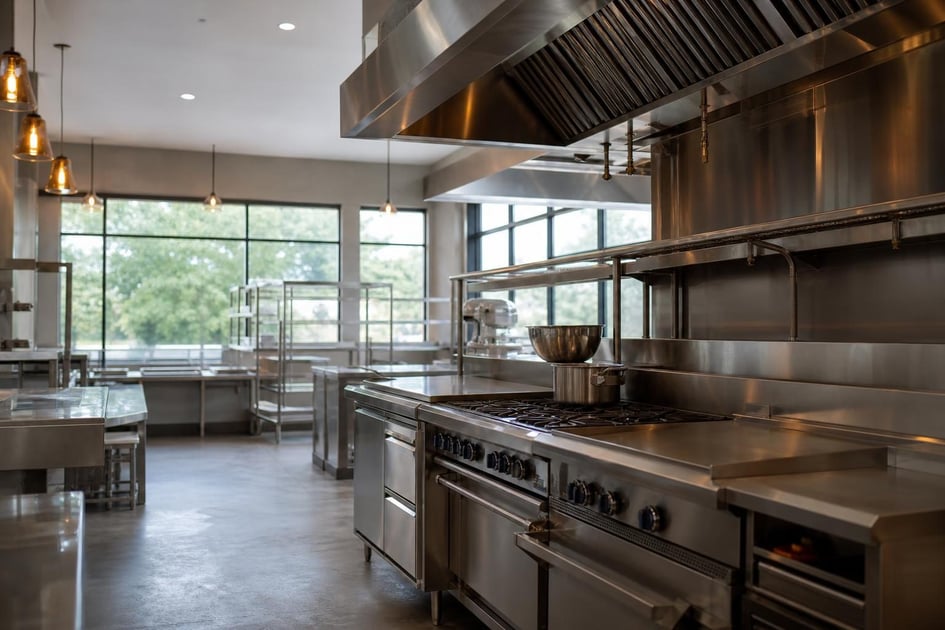
Common financed items include cooking suites and gas ranges, convection and combi ovens, fryers, griddles, and charbroilers. Refrigeration and freezing equipment—reach-in coolers, walk-in boxes, blast chillers, and under-counter units—are also standard collateral because they retain value well in the resale market. Prep equipment such as mixers, slicers, food processors, and stainless-steel work tables qualify, as do dishwashers, exhaust hoods with fire-suppression systems, and point-of-sale systems. Even smaller-ticket items that bring a kitchen up to code can be bundled into a single schedule if the total meets the minimum threshold.
Used equipment is eligible as long as it is being sold by a commercial dealer or reputable refurbisher and has sufficient remaining life. Many startup operators save twenty to forty percent upfront by choosing refurbished cooking lines or previously leased refrigeration, and those units can be folded into the same financing structure as new assets. If you need a broad mix of assets for your opening, you can learn more about our Food Service Equipment financing options to see how items can be bundled.
How Equipment Financing Works When You Are New
Traditional commercial banks often require two years of tax returns, audited financials, and unsecured personal guarantees backed by home equity. An equipment finance agreement works differently. Because the lender holds a security interest in the specific equipment, the underwriting emphasis shifts from historical cash flow to personal creditworthiness, the vendor’s reputation, and the liquidated value of the asset.
For a startup, that means the owner’s personal credit score carries significant weight. Most approved startup files show a score north of 650, though exceptions exist when the borrower brings a larger down payment or the equipment holds an exceptionally strong resale value. Time in business is less of a barrier than many owners assume. Provide Capital works with restaurant entrepreneurs who have not yet opened their doors, provided they can produce a business plan, a vendor quote, and proof of any required municipal permits or lease agreements.
Rates vary by credit profile, equipment age and term. A twelve-month term on a new convection oven for a borrower with strong credit will price differently than a sixty-month term on a ten-year-old range for a borrower repairing past delinquencies. The key is that the equipment collateral reduces the lender’s risk, which in turn keeps the financing cost lower than unsecured alternatives. Same-day approvals are possible when the application is clean, the equipment is clearly described, and the vendor is responsive. If you are ready to review your specific deal, you can see what you qualify for and get a same-day decision on your equipment.
New vs. Used Equipment: What Startups Should Know
Cost and Depreciation
New equipment arrives with manufacturer warranties, the latest energy-efficiency ratings, and immediate compliance with current health and safety codes. It also commands the highest price and steepest first-year depreciation. Used equipment lowers the financed amount, which lowers the monthly payment, but may carry shorter remaining warranty periods or require earlier maintenance budgeting.
Availability and Lead Times
In the current equipment market, lead times for new stainless-steel fabrication and imported refrigeration compressors can stretch eight to sixteen weeks. Used or in-stock refurbished units can be delivered and installed faster, letting a startup open before the high-season rush. If you are targeting a soft opening in a specific month, factor vendor lead time into your financing timeline so you are not paying rent on an empty space while waiting for a cooking suite to arrive.
Warranty and Maintenance Risk
Startup cash reserves are thin. A new fryer with a two-year parts-and-labor warranty removes uncertainty from the first year of operations. A used unit with no warranty adds risk, though setting aside three to five percent of the purchase price for immediate repairs often offsets the difference. The financing itself does not change based on warranty status, but the total cost of ownership should inform whether you target new or used collateral.
Lease or Loan? A Side-by-Side Look
Restaurant startups encounter two primary structures: the equipment finance loan and the equipment lease. Both use the equipment as collateral, but ownership, tax treatment, and end-of-term options differ. The right choice depends on how long you intend to keep the asset, your accountant’s advice on the 2026 tax year, and whether you want to own the equipment outright at the end.
| Feature | Equipment Loan ($1 Buyout) | FMV Lease (Fair Market Value) |
|---|---|---|
| Ownership | You own the equipment from day one; lender holds a lien | Lessor owns the equipment; you are the lessee |
| Monthly Payment | Higher; paying off full value plus interest | Lower; paying for use plus residual |
| End-of-Term Option | Title releases automatically after final payment | Return, renew, or purchase at fair market value |
| Tax Treatment (general) | Interest deductible; may claim depreciation and Section 179 | Lease payments often fully deductible as operating expense |
| Best For | Core kitchen equipment you will use for seven to ten years | Technology, POS systems, or assets you plan to upgrade quickly |
A $1 buyout lease is legally a lease for accounting purposes but functions almost identically to a loan because you intend to own the equipment. An FMV lease keeps the asset off your balance sheet and may preserve borrowing capacity for future expansion. Many quick-service startups choose loans for heavy iron—ovens, hoods, coolers—and shorter FMV structures for items that technology will make obsolete within three years. Because tax rules for the 2026 tax year affect each structure differently, review the lease-versus-buy decision with a CPA before you commit.
2026 Tax Treatment and First-Year Write-Offs
The 2026 tax year offers several paths to accelerate deductions on commercial kitchen equipment, but the exact numbers depend on inflation adjustments and any late legislative changes. Section 179 allows businesses to expense qualifying equipment in the first year rather than recovering the cost over a multi-year depreciation schedule. For the 2026 tax year, the deduction limit and the total-equipment phase-out threshold are indexed to inflation, so the precise dollar caps will differ from 2025. A CPA can confirm the exact 2026 Section 179 limits and whether your total equipment purchases fall below the phase-out ceiling.
Bonus depreciation is scheduled to continue stepping down from prior-year percentages for the 2026 tax year, reducing the immediate first-year write-off available on qualifying new and used equipment. The exact percentage applicable to 2026 purchases depends on IRS guidance and any congressional action, so do not assume the rate matches what you may have claimed in earlier years. Between Section 179, bonus depreciation, and regular MACRS depreciation, most restaurant startups can front-load the tax benefit of an equipment purchase, which improves early cash flow. Because these provisions interact in complex ways—especially when paired with startup organizational costs—you should rely on a CPA to model the 2026 tax impact before you choose between a loan and a lease. For technical background, refer to IRS Publication 946 guidance on depreciation, and discuss your specific situation with a qualified accountant.
Qualifying for Financing as a Restaurant Startup
Underwriting for a restaurant startup centers on three pillars: the borrower’s personal credit, the equipment’s collateral value, and the viability of the business concept. Unlike general working-capital loans, equipment financing does not demand decades of profitability, but it does require evidence that the new venture can generate enough revenue to cover the monthly obligation.
Credit Profile
Personal credit scores below 600 make approval difficult unless the borrower can offset the risk with a larger down payment or a strong co-signer. Scores between 620 and 680 fall into a mid-tier range where approval is common but rates vary by credit profile, equipment age and term. Scores above 680 generally unlock the most competitive structures. Expect to provide two years of personal tax returns, even if the business itself has no returns yet.
Down Payment and Equity
Down payments for startups typically range from ten to twenty percent of the equipment cost, though zero-down programs exist for well-qualified borrowers financing new equipment from Tier 1 brands. Used equipment and borrowers with past credit challenges usually require more skin in the game. The equipment serves as collateral, but the lender still looks for borrower commitment.
Business Plan and Location
A detailed equipment quote from a recognized vendor is non-negotiable. Lenders need the manufacturer, model number, condition, and sale price. Soft costs such as delivery, installation, and sales tax can often be included in the financing, but they must be itemized. If you are renovating a leased space, the lender may also want to see a copy of the commercial lease to confirm you have the right to install the equipment and operate for the duration of the loan term. You can read more about our broader Restaurant Food Service equipment financing programs to see how we support concepts at every stage.
Time in business is noted but not disqualifying. Provide Capital regularly funds first-restaurant concepts because the underwriting model weights the asset heavily. That said, a startup with a signed lease, completed build-out plans, and health-department pre-approval is a stronger file than an applicant still hunting for a location. If you have your equipment list and vendor quotes ready, you can get a same-day decision on your equipment and move your opening date forward.
Where Different Concepts Put Their First Dollar
Not every restaurant startup spends its equipment budget the same way. The financing structure should match the concept’s revenue model, square footage, and speed of service. The restaurant sector remains one of the largest private-employer categories in the United States, which means lenders have decades of collateral-value history to draw on when underwriting kitchen equipment, according to Bureau of Labor Statistics restaurant industry data.
Full-Service Restaurants
A sit-down concept with a full bar and open kitchen needs cooking suites, ventilation, refrigeration, dish pits, and bar equipment. The ticket can easily land between $75,000 and $250,000 for a seventy-seat dining room. Financing these items over five to seven years keeps the pre-opening cash burn manageable while the front-of-house build-out consumes the rest of the capital stack.
Food Trucks and Mobile Concepts
A mobile kitchen requires a commercial vehicle and an onboard generator, griddle, fryer, refrigeration, and hand-washing sinks. The truck itself is often the largest line item, sometimes exceeding the cost of the kitchen package. Because the asset is mobile, lenders want to verify the vehicle title status and any existing liens. You can explore Food Truck financing to see how the vehicle and kitchen bundle together under one schedule.
Ghost Kitchens and Delivery-Only Concepts
Stripping away the dining room removes front-of-house furniture and décor costs, but the back-of-house equipment list remains intense. Delivery-only startups often invest in high-volume fryers, multiple refrigerated prep stations, and packaging workflows. Because they rely on aggregator apps for early revenue, lenders may scrutinize the projected ticket volume more closely than they would for a dine-in concept with built-in foot traffic.
Quick-Service and Self-Service Kiosks
Coffee shops, bakeries, and fast-casual concepts are increasingly adding self-order kiosks and automated beverage systems to reduce labor costs. These technology-heavy assets depreciate faster than traditional kitchen iron, so the financing term should align with the asset’s useful life. If your concept includes customer-facing automation, read more about Self Service Kiosk financing to understand how terms differ from heavy kitchen equipment.
Catering and Off-Site Service
Catering startups need transport as much as they need cooking capacity. A used step van or refrigerated service van can move prepared food safely to venues, while on-site warming cabinets and portable bars extend the service footprint. Financing the van alongside the kitchen package lets a caterer preserve liquidity for event deposits and staffing. Details on vehicle bundling are available through Service Vans financing.
Common Mistakes New Operators Make
First-time buyers often treat equipment financing like a consumer auto loan, which leads to mismatched expectations and closing delays. Avoid these specific pitfalls:
- Underbudgeting for soft costs. Delivery, rigging, electrical, gas, and exhaust installation can add twenty to thirty percent to the invoice. Ask your vendor for a landed and installed quote before you apply.
- Buying residential-grade equipment. Home-kitchen appliances do not survive commercial volume, and lenders may decline to finance them because the resale market is weak. Specify NSF-rated or UL-listed commercial units.
- Ignoring utility rough-ins. A new eight-burner range may require a larger gas line and makeup air than the previous tenant used. Confirm with your general contractor before ordering.
- Applying without a vendor quote. Lenders cannot approve an amount based on a rough estimate. Get an itemized quote with serial numbers or model numbers.
- Overextending on non-essential items first. A $12,000 espresso machine is tempting, but if it delays your ability to finance the hood and fire-suppression system, your health department inspection will fail. Finance must-haves before nice-to-haves.
The Paperwork You Will Actually Need
Startup applications move faster when the borrower anticipates document requests. Have the following ready:
- Driver’s license or passport for every owner with twenty percent or more ownership.
- Business registration, EIN confirmation letter, and any operating agreement or corporate bylaws.
- Personal bank statements for the most recent three months.
- If the business account is already open, include those statements as well.
- Two years of personal federal tax returns.
- A business plan or pro forma showing projected monthly revenue and expenses for the first year.
- An itemized equipment quote from the vendor, including sale price, condition, and any trade-in details.
- Copies of the commercial lease or letter of intent for the restaurant space.
- Any required health-department approvals or building permits tied to the equipment installation.
- A voided business check for ACH setup.
If you are buying used equipment from a private party rather than a dealer, the lender may require an independent appraisal or a condition inspection before funding. Build three to five business days into your timeline for this step.
From Application to Equipment Delivery
Once you submit a complete file, the review process focuses on credit, collateral value, and vendor verification. Same-day approvals are possible when the file is straightforward and the equipment is standard. More complex deals—such as those involving multiple vendors, private-party used sales, or borrowers with prior credit events—may require additional documentation and take twenty-four to seventy-two hours.
After approval, the lender issues a term sheet or finance agreement. You review the payment schedule, confirm there are no hidden fees, and sign. The lender then pays the vendor directly or funds an escrow account held until delivery. A UCC-1 filing is recorded against the specific equipment to perfect the lender’s security interest. You take delivery, install, and typically begin payments thirty to forty-five days later, depending on the funding date and first-payment structure.
Because Provide Capital finances new and used business equipment from $5,000 to $5 million, a single startup kitchen or a multi-unit rollout can be structured under the same program. The collateral-based approach means you do not need to own real estate to access capital, and you can preserve your bank line for inventory and payroll.
Frequently Asked Questions
Can a brand-new restaurant with no revenue get equipment financing?
Yes, provided the owner has qualifying personal credit and can supply a business plan, vendor quote, and proof of a viable location. The equipment itself acts as collateral, which lowers the barrier for pre-revenue concepts compared with unsecured lending.
Does the equipment have to be new?
No. Used and refurbished commercial kitchen equipment is eligible as long as it is purchased from a dealer or reputable seller and retains sufficient value. Used financing may require a slightly larger down payment depending on the asset age and the borrower’s credit profile.
What credit score is needed for restaurant equipment financing?
There is no universal cutoff, but startup approvals most often involve personal scores above 650. Borrowers in the 600 to 650 range may still qualify with compensating factors such as a larger down payment or strong co-signer. Rates vary by credit profile, equipment age and term.
How fast can the process move?
Same-day approvals are possible when the application is complete, the equipment is clearly described, and the vendor responds quickly to verification requests. Deals requiring appraisals, private-party inspections, or additional documentation may take one to three business days.
Can I finance installation, delivery, and sales tax?
Soft costs are often included in the financed amount up to a certain percentage of the equipment value. They must be itemized on the vendor invoice or quote. Rolling these costs into the loan preserves the startup’s cash for working capital needs.
Should I choose a loan or a lease for my kitchen equipment?
If you plan to keep the equipment for its full useful life and want to claim depreciation and Section 179 for the 2026 tax year, an equipment loan or $1 buyout lease is usually preferable. If the asset will be obsolete in three years or you want lower payments with no ownership obligation, an FMV lease may fit. Confirm the structure with a CPA before signing.
What happens if I need multiple pieces from different vendors?
Multiple assets from multiple vendors can be bundled into a single financing schedule as long as the total meets the minimum threshold and all vendors are verifiable. This simplifies your bookkeeping with one monthly payment and one end-of-term date.
Do I need a down payment?
Startups should expect to put ten to twenty percent down, though well-qualified borrowers financing new Tier 1 equipment may qualify for zero-down programs. The exact requirement depends on personal credit, time in business, and the equipment’s collateral value.
Moving Forward With Your Kitchen Build-Out
Opening a restaurant demands capital for dozens of line items, but the equipment that actually produces your menu is the one category you can finance without a long operating history or real estate collateral. By structuring the transaction around the ovens, coolers, and prep tables themselves, you keep cash free for permits, inventory, payroll, and the inevitable surprises of a first build-out. Provide Capital works with restaurant and food-service entrepreneurs nationwide, from food trucks to full-service dining rooms, and we structure each deal based on the asset, the operator, and the realistic cash-flow timeline of a new concept.
If you have your equipment quotes and are ready to move, talk to a specialist about your specific machine and learn how quickly you can get your kitchen operational. The right financing structure turns a daunting upfront expense into a predictable monthly line item, and it starts with a clear picture of what your equipment is worth and how it fits your business plan.
Disclaimer: The information provided in this article is for general educational purposes only and is not financial, legal, or tax advice. Funding terms, qualifications, and product availability may vary and are subject to change without notice. Provide Capital does not guarantee approval, rates, or specific outcomes. For personalized information about your business funding options, contact our team directly.