Financing a Scissor Lift in Houston Is Straightforward
You do not need to pay cash upfront to put a reliable aerial work platform on your Houston job site. Provide Capital finances new and used business equipment from $5,000 to $5 million, and the equipment itself serves as collateral, which keeps rates competitive. Whether you are bidding a tenant finish in the Heights, a maintenance contract along the Ship Channel, or a new build in The Woodlands, you can structure payments around the revenue the lift generates. Same-day approvals are possible when your paperwork is in order, and you can finance the machine, delivery, and attachments in one line item.
With the Houston metro adding residents and commercial square footage faster than national averages, contractors who can self-perform vertical work keep more margin in-house. Owning a scissor lift eliminates daily rental charges, transport back-and-forth, and availability conflicts during peak season.
Why Houston Contractors Finance Scissor Lifts
Construction from the Port to the Suburbs
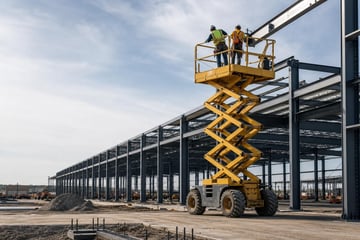
Houston’s construction pipeline runs from downtown high-rises to petrochemical expansion in Pasadena and residential infill inside Loop 610. That volume creates constant demand for vertical access. Contractors who win these jobs need slab scissor lifts for finished interiors and rough-terrain units for muddy, undeveloped lots. Buying outright ties up cash needed for payroll, bonding, and materials. Construction equipment financing lets you preserve liquidity while still meeting OSHA-compliant elevation requirements on every site.
The Energy Corridor along I-10 and the Highway 290 corridor are seeing steady office and multifamily development. Each site needs interior slab lifts for MEP rough-in and finish work. Subcontractors who show up with owned equipment avoid the rental yard line and can start earlier, which matters when general contractors enforce liquidated damages for late trades.
Seasonal Buying Patterns on the Gulf Coast
Houston’s subtropical climate means outdoor work slows only slightly in summer, but many contractors accelerate purchasing in late winter and early spring to lock in fleet capacity before the busy season. Hurricane recovery cycles also spike demand for aerial platforms when commercial properties need fast roof and facade repairs. Financing removes the delay of saving cash for these urgent replacements.
What Scissor Lifts Cost and How Financing Covers Them
A new 19-foot electric slab scissor lift from a mainstream manufacturer typically runs $15,000 to $25,000 delivered. A used unit 3 to 5 years old with under 1,000 platform hours often sells for 40% to 60% less. Rough-terrain lifts with 32-foot working heights routinely start near $35,000 and can exceed $60,000 when outfitted with swing-out decks or hybrid powertrains.
Because Provide Capital handles transactions from $5,000 to $5 million, a single lift fits easily into the program, as does a package of 5 machines for a growing fleet. You can also roll in soft costs like freight, tax, and initial inspection. Rates vary by credit profile, equipment age and term, so your monthly outlay is matched to your cash flow rather than a rigid retail price.
Consider a contractor buying a $22,000 electric scissor lift. Instead of drawing down the operating account, he finances it over 48 months. The lift goes to work immediately on a medical office build near the Texas Medical Center, and the payments map to the job’s monthly draw schedule. Once the note is paid, the unit stays in the fleet with zero additional lien.
Delivery charges in the Houston market vary by manufacturer warehouse location. Major brands ship from Dallas, San Antonio, or Louisiana, and freight on a 19-foot slab lift can add several hundred dollars. Rather than paying that out of pocket, folding it into the note keeps your line of credit untouched for mobilization and payroll.
Matching the Machine to the Job
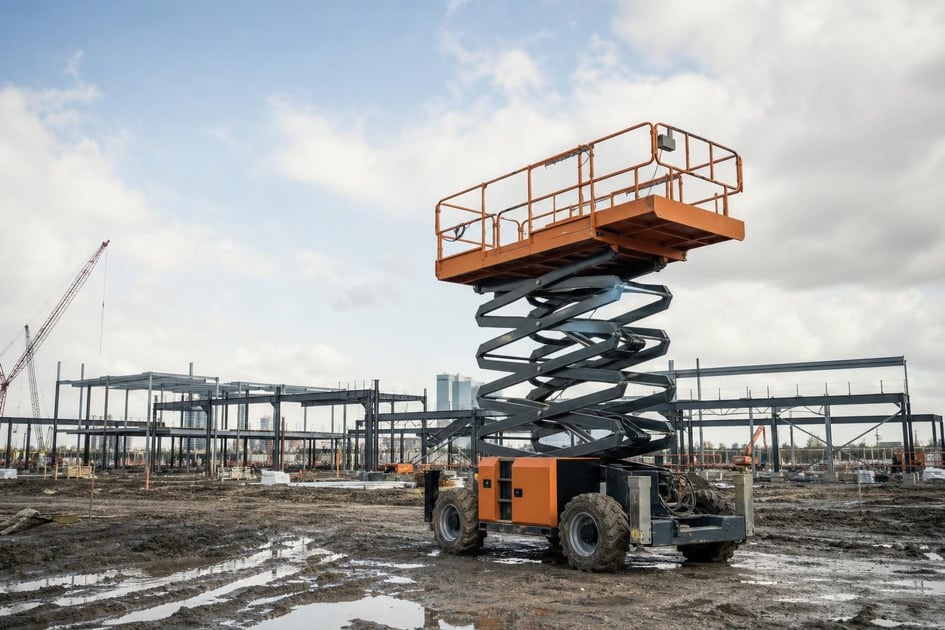
Scissor lifts are not interchangeable. A warehouse installer working on smooth concrete in a distribution center near Bush Intercontinental needs a slab model with non-marking tires. A steel erector working on a pad site in Katy after a rainstorm needs a rough-terrain unit with four-wheel drive and a 32-foot platform height.
Scissor Lifts financing covers both categories, as well as narrow electric models for office fit-outs in Midtown where floor loading is limited. If the job requires accessing a tight atrium or courtyard where even a standard scissor lift will not fit, Spider Lifts financing offers a tracked alternative with comparable reach. Choosing the right spec upfront prevents costly rental swaps later.
New vs. Used Aerial Work Platforms
New lifts carry the full manufacturer warranty, the latest ANSI standards compliance, and no hidden wear. They also command higher acquisition prices and steeper initial depreciation. Used lifts cost less at purchase and can still qualify for favorable terms if they are late-model, low-hour units from reputable dealers.
For Houston buyers, used inventory moves fast at regional auction yards, but condition reports vary. Financing a used lift through a captive lender or bank can be restrictive on age and hours. Provide Capital evaluates the collateral value of the specific unit, not just the model year. That means a 2019 lift with 800 hours and a solid maintenance log can still secure competitive terms. Rates vary by credit profile, equipment age and term, so a newer machine will generally yield a stronger structure than a 15-year-old platform with obsolete parts.
Loan vs. Lease: A Side-by-Side Comparison
Most Houston owner-operators choose between an equipment loan and a finance lease. Your tax strategy for 2026 also plays a role. The right path depends on how long you plan to keep the lift, who handles maintenance, and your cash flow needs.
| Factor | Equipment Loan | Finance Lease |
|---|---|---|
| Ownership | You own the lift, and the lender files a UCC lien until payoff. | The lessor owns the lift, and you may have a $1 or 10% buyout at the end. |
| Down Payment | The down payment is often 0% to 20% depending on credit and collateral. | The lease usually requires 1 or 2 advance payments. |
| Collateral | The scissor lift secures the note. | The scissor lift secures the lease. |
| Tax Treatment for 2026 | Interest is deductible, and you may claim depreciation and Section 179 subject to 2026 caps. Consult a CPA. | Lease payments are generally deductible as an operating expense, and Section 179 may apply depending on structure. Consult a CPA. |
| Best For | This suits owners who want equity and plan to run the lift 7 or more years. | This suits contractors who refresh fleet every 36 to 60 months or want lower payments. |
Loans build equity. Once the final payment clears, the lien releases and the asset is yours. Leases preserve capital and can simplify disposal when ANSI standards change or when you need to scale up for a major Port Authority contract. Both structures allow you to include delivery and tax in the financed amount.
Qualifying for Scissor Lift Financing
You do not need perfect credit, but the file needs to tell a coherent story. Provide Capital looks at your business credit, personal credit of the guarantor, time in business, and the equipment’s value.
Most approvals require at least 6 months of operating history, though 2 or more years opens access to higher advance rates and longer terms. Bank statements showing consistent revenue matter more than a single high month. If your company is new, a strong personal credit score and a detailed invoice from a reputable dealer can still move the deal forward.
The equipment itself is the collateral. That is why rates stay competitive even for borrowers with challenged credit, because the lender can secure the asset. For transactions under $150,000, minimal paperwork is typically required: a single-page application, last 3 months of business bank statements, and the equipment invoice. Deals from $150,000 to $5 million may need 2 years of tax returns, a personal financial statement, and an equipment appraisal.
Underwriters also look at your existing debt service. If you already carry a truck note or a line of credit from a previous project, the new lift payment should fit inside your typical monthly cash flow. Provide Capital underwrites to the equipment's useful life, so a 5-year-old lift may receive a 36-month term while a new unit qualifies for 60 months. That alignment prevents a payment mismatch when the machine is still productive.
Because same-day approvals are possible, it pays to have your documents ready before you shop. When you find the right lift at a Houston dealership or auction, you can move fast and avoid losing the unit to a cash buyer. If you have your invoice and bank statements ready, see what you qualify for.
2026 Tax Treatment and Deductions
For the 2026 tax year, Section 179 allows businesses to deduct the cost of qualifying equipment, subject to annual limits and phase-out thresholds. The exact dollar caps adjust for inflation each year. Because the limits change annually, you should confirm the 2026 threshold with your CPA before you close.
If you finance a scissor lift in 2026, you may be able to deduct the full purchase price—or a significant portion—under Section 179 in the first year, provided your taxable income supports it. Alternatively, you can spread depreciation over the modified accelerated cost recovery system schedule. Bonus depreciation continues to phase down under current federal law; the percentage applicable to 2026 equipment purchases depends on the schedule in effect. A CPA can model whether Section 179, bonus depreciation, or standard MACRS delivers the lowest net cost after taxes for your specific situation.
Remember that the vehicle must be placed in service during the 2026 tax year to count toward the 2026 deduction. If you buy in December but the lift does not arrive until January, the deduction shifts to tax year 2027. Your CPA will need the bill of sale and delivery receipt to document the in-service date.
IRS guidance on Section 179 outlines the qualification rules, and IRS Publication 946 covers depreciation methods in detail.
Houston Industry Use Cases
Construction is the obvious user, but scissor lifts show up across the Houston economy. Refinery maintenance crews in Baytown and Deer Park use explosion-proof personnel lifts during turnaround season. Hospital systems in the Texas Medical Center rely on compact electric platforms to reach HVAC and lighting in atriums without scarring floors. Restaurants in Montrose and the Heights use low-weight lifts for exterior painting and sign installation. Warehouse operators near the Port of Houston need 26-foot working heights to reach top-rack shelving.
Each setting imposes different weight, power, and emissions constraints. A contractor working inside a food-processing plant may need a lithium battery unit with zero emissions, while an outdoor roofer in Sugar Land needs a diesel rough-terrain lift. Financing lets you match the spec to the job without settling for a one-size-fits-all rental.
Event venues and church facilities in River Oaks and Pearland use scissor lifts quarterly for lighting and rigging maintenance. These organizations rarely need a lift full-time, but the cost of repeated rentals often exceeds the annual payments on a financed used unit. A 5-year-old electric lift stored on-site pays for itself compared to a boom truck rental for every bulb change.
Common Mistakes Buyers Make
First, buying on price alone. A $12,000 lift with 3,000 hours and a leaking manifold costs more in downtime than a $20,000 certified used unit. Second, ignoring freight. Houston is a large metro, and hauling a 3,500-pound platform from Dallas or San Antonio adds $800 to $1,500. Finance that delivery cost so it does not wipe out your cash cushion. Third, mismatching the duty cycle. A slab lift driven onto dirt once a week will fail prematurely. Fourth, forgetting to budget for annual inspections and required ANSI recertification.
Fifth, neglecting to verify dealer reputation. Houston has dozens of equipment resellers, but not all recondition lifts to OEM standards. A financed purchase from a disreputable seller can leave you with a lien risk or failed inspection. Always request a serial-number search and a current ANSI inspection before you sign the invoice.
Paperwork and Approval Timeline
Speed matters when a lift is listed at a Houston auction with a 48-hour removal clause. The fastest path is a digital application plus your last 3 months of business bank statements and a clean equipment invoice. For larger transactions, add your 2025 and 2026 financials or interim statements if 2026 taxes are not yet filed.
If the seller is a private party, add a title search to your checklist. Texas UCC filings move quickly, but an unreleased lien from a prior owner can delay funding. Provide Capital handles the payoff and lien release coordination directly with the seller’s lender when needed, which keeps your focus on the jobsite rather than the back office.
Once submitted, credit review and collateral valuation run concurrently. Same-day approvals are possible on straightforward files. DocuSign closing packages and direct payment to the vendor mean you can schedule pickup or delivery within 24 to 48 hours of saying yes.
Because the process moves quickly, get a same-day decision on your equipment before you commit to a rental extension.
Frequently Asked Questions
What credit score do I need to finance a scissor lift in Houston?
There is no single cutoff. Strong files often show scores above 650, but collateral-based lending means lower scores can still qualify with a larger down payment or shorter term. Rates vary by credit profile, equipment age and term.
Can I finance a used scissor lift?
Yes. Provide Capital finances used equipment if the unit has verifiable hours, a clear title, and functional utility. Age and hours affect the term and advance rate.
How fast can I get approved?
Same-day approvals are possible when the application, bank statements, and equipment details arrive together. Complex deals above $500,000 may take 24 to 72 hours for full underwriting.
Is the lift itself the collateral?
Yes. The scissor lift secures the financing. That structure keeps rates competitive and reduces the need for additional real estate or cash collateral.
Can I finance attachments or delivery fees?
Yes. Freight, taxes, and attachments can be included in the financed amount as long as they appear on the invoice and the total transaction falls within the $5,000 to $5 million program range.
What happens if I need to upgrade mid-term?
If you finance with a loan, you can sell or trade the lift at any time subject to paying off the remaining balance. Some lease structures offer upgrade paths at the 36-month mark. Ask your specialist about early buyout options before you sign.
Do you finance purchases from private sellers?
Yes, provided the seller can deliver a clear title and a bill of sale. An inspection may be required to confirm hours and condition.
How does financing affect my 2026 taxes?
You may be able to claim Section 179 deductions, bonus depreciation, or standard depreciation depending on the structure you choose. Because 2026 limits and phase-outs apply, review the transaction with your CPA before closing.
Ready to Add a Lift to Your Fleet?
A scissor lift is essential equipment in Houston’s construction, maintenance, and logistics markets. Financing it through Provide Capital keeps your cash available for labor, materials, and the next bid. You can move from quote to jobsite quickly, with the equipment acting as collateral and terms structured around your revenue cycle.
If you are reviewing quotes for a slab electric or a rough-terrain platform, talk to a specialist about your specific machine and find out how fast you can get to work.
Disclaimer: The information provided in this article is for general educational purposes only and is not financial, legal, or tax advice. Funding terms, qualifications, and product availability may vary and are subject to change without notice. Provide Capital does not guarantee approval, rates, or specific outcomes. For personalized information about your business funding options, contact our team directly.