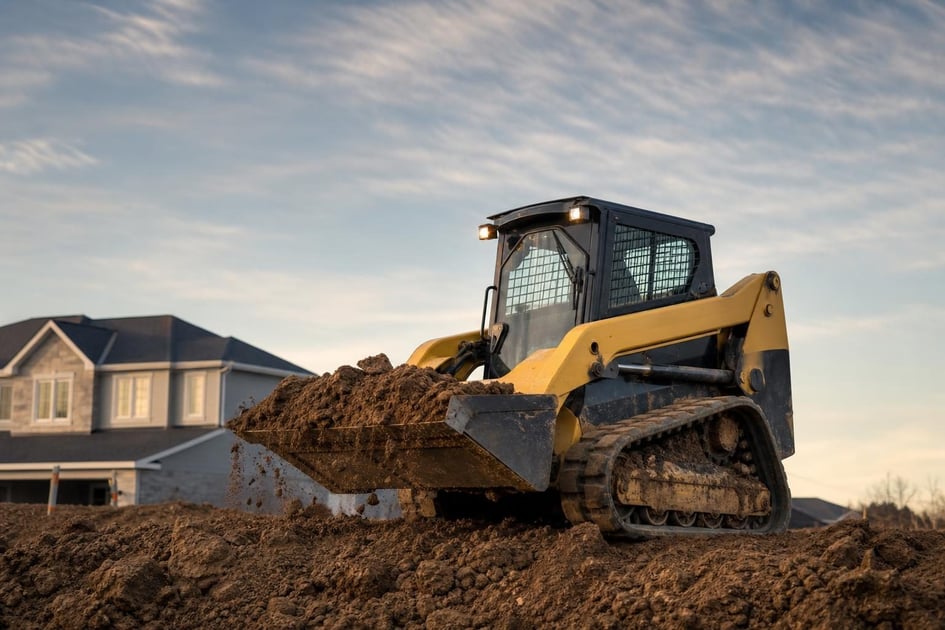
You can finance a skid steer with bad credit. The equipment itself acts as collateral, which means lenders weigh the machine's value and your business revenue more heavily than a low personal credit score. Expect to put down 10% to 20%, show proof of revenue, and possibly accept a shorter term than a prime borrower. Rates vary by credit profile, equipment age and term.
How Bad Credit Changes the Application
A credit score below 650 does not automatically disqualify you from skid steer financing, but it shifts the structure of the deal. Lenders typically view scores in the 600 to 649 range as subprime and scores below 600 as higher risk. With a 580 score, you may still qualify if your business shows consistent monthly deposits and you have been operating for at least 12 months. The key difference is that lenders mitigate risk by requiring more equity in the machine, verifying revenue more closely, and shortening the term.
Where a prime borrower might secure 72-month financing on a new loader, a borrower with challenged credit is more likely to see 36-month or 48-month terms. The lender wants the balance to pay down faster than the equipment depreciates. That protects both parties. You still build equity quickly, and the lender holds collateral that is worth more than the remaining balance for most of the term.
Banks that do not specialize in equipment often reject applications below a 700 credit score because they rely on unsecured lending models. Equipment lenders use the skid steer as security, so they can look at the whole picture. A 550 score with $15,000 in monthly revenue and a clean equipment inspection is a fundamentally different file than a 550 score with erratic deposits and no documented income.
What Lenders Actually Review
When you apply for Skid Steers financing with imperfect credit, underwriters focus on five areas.
Time in Business
Most equipment lenders prefer 2 or more years in operation, but startups with 6 to 12 months of history can still qualify if revenue is documented and consistent. If you have been in business for less than 6 months, approval is harder unless you have substantial compensating factors, such as a large down payment or significant prior industry experience.
Revenue Consistency
Expect to show 3 to 6 months of business bank statements. Some lenders ask for 12 months if your credit is below 600. They are looking for average daily balances, the frequency of deposits, and whether months are lumpy. A landscaping company that earns $40,000 in May and $8,000 in January is normal if the annual average supports the payment.
Equipment Age and Hours
Lenders cap equipment age differently, but many draw the line at 10 years or 10,000 hours for borrowers with lower credit scores. A 2019 skid steer with 2,000 hours is stronger collateral than a 2012 model with 7,000 hours. Newer machines break less, retain value better, and are easier to remarket if the lender needs to recover the asset.
Down Payment Size
For credit profiles under 620, a down payment of 15% to 20% is common. At 650 or above, you may find 10% programs. The down payment does more than reduce the lender's exposure. It also lowers your monthly obligation and proves you have skin in the game. If you can put 20% down on a $35,000 machine, the lender is financing $28,000 on an asset worth more than the loan balance for most of the term.
Bank Statements and Tax Documentation
Lenders use recent bank statements to verify cash flow. If you have 2 years of tax returns, provide them. They add credibility. If your most recent return shows a loss but your current year is profitable, include year-to-date financials to tell the full story.
If your revenue and equipment quote are ready, see what you qualify for and get a same-day decision on your equipment.
New vs. Used Skid Steers
New skid steers typically range from $45,000 to over $100,000 depending on lift capacity, track vs. wheeled configuration, and brand. Used machines in good condition often fall between $18,000 and $50,000. For a borrower with bad credit, used equipment can be easier to qualify for because the total financed amount is lower and the monthly payment drops.
However, lenders scrutinize used collateral more carefully. A used machine with 3,000 hours and a clean maintenance record is viewed favorably. The same model with 6,000 hours and an unknown service history raises red flags. If you choose used, buy from a reputable dealer who can provide an inspection report. Private-party sales are harder to finance because verifying value and title status is more complicated.
New equipment usually qualifies for longer terms, which can help cash flow even if the total dollar amount is higher. The warranty also reduces the risk of a broken machine that still requires payments. Weigh the monthly budget against the total cost. A $25,000 used machine paid over 36 months may cost less per month than a $65,000 new machine over 60 months, but the new unit might generate more revenue if it has higher capacity or better attachments.
Lease vs. Loan for Borrowers with Bad Credit
Both equipment loans and leases can work with subprime credit, but the structures behave differently. Understanding the trade-offs keeps you from signing a deal that does not match how long you plan to keep the machine.
| Factor | Equipment Loan | $1 Buyout Lease | Fair Market Value Lease |
|---|---|---|---|
| Ownership | You own after final payment | You own after final $1 payment | Return or buy at FMV |
| Down payment | Usually 10% to 20% | First and last payment | First and last payment |
| Term length | 24 to 72 months | 24 to 60 months | 12 to 48 months |
| Credit flexibility | Highest | Moderate | Lowest |
| Best for | Long-term ownership | Ownership with lower upfront cash | Short-term or high obsolescence risk |
With challenged credit, the equipment loan is usually the most accessible. The lender has a straightforward security interest in the machine, and you build equity with every payment. A $1 buyout lease is essentially a loan in lease clothing, but lease companies sometimes have stricter credit boxes. An FMV lease may offer the lowest monthly payment, but approval is tighter because the lender assumes residual risk at the end of the term.
Tax Treatment for Tax Year 2026
For tax year 2026, Section 179 may allow you to deduct the full purchase price of qualifying equipment up to an annual inflation-adjusted limit, with a phase-out threshold that reduces the benefit if your total equipment purchases exceed a certain amount. Bonus depreciation may also apply to new and used equipment, though the percentage and eligibility rules are subject to legislative change. Because these limits adjust every year and your specific tax situation changes the outcome, speak with a CPA before counting on a deduction. You can review IRS Publication 946 guidance on depreciation for the statutory framework.
If you structure the deal as a true lease, you typically deduct the monthly lease payment as an operating expense rather than depreciating the asset. A loan or capital lease usually puts the equipment on your balance sheet and lets you pursue Section 179 or bonus depreciation. The right structure depends on your tax bracket, profit level, and whether you need to show assets on your books for bonding or contracting purposes. For contractors, this decision often ties directly to Construction equipment financing strategy.
Real-World Cost Examples
Because rates vary by credit profile, equipment age and term, the examples below illustrate structure rather than exact monthly payments.
A landscaping company purchases a $32,000 used wheeled skid steer with 2,500 hours. The owner has a 605 credit score and 18 months in business. By putting 15% down, the financed amount drops to $27,200. The lender approves a 48-month term. The monthly payment lands in the mid-hundreds, and the shorter term means the machine is paid off before the 4-year mark, preserving resale value.
A general contractor buys a $68,000 new track loader. The owner has a 585 credit score but 4 years of tax returns showing $180,000 in annual revenue. With a 20% down payment of $13,600, the lender finances $54,400 over 60 months. The longer term keeps the monthly obligation manageable during winter months when construction revenue slows. The machine serves as collateral, and the lender files a UCC-1 to perfect the lien.
A startup excavation company with 8 months of history and a 640 score finds a $22,000 used skid steer at a dealer auction. The lender requires 20% down and a 36-month term because of the short time in business. The lower total amount means the monthly payment stays under the cash flow the owner has demonstrated, making the file approvable despite thin credit history.
Industry Use Cases and Seasonal Timing
Skid steers cross multiple industries, and the financing approach changes with the use case. In construction, contractors use loaders for site prep, material handling, and backfilling. A general contractor adding a skid steer to an existing fleet often qualifies more easily than a first-time buyer because the revenue history is established. Industry employment data from the Bureau of Labor Statistics shows why construction remains a core market for equipment lenders. If you are also adding haul vehicles, Dump Trucks financing can be structured alongside the loader under a master equipment line.
Landscapers rely on skid steers for grading, brush clearing, and snow removal. That year-round revenue stream is attractive to lenders. Agricultural operators use smaller-frame loaders for barn cleaning and feed handling. Forestry crews need high-flow hydraulics for mulching heads, which pushes the machine price higher and may require a larger down payment.
Seasonal timing matters. Buying in January or February, before the spring rush, gives you time to train operators and prep the machine. It also means you have the asset generating revenue before the first payment is due. Waiting until May to finance a skid steer can mean tighter delivery schedules and less time to absorb the payment before peak season cash flow arrives.
Common Mistakes to Avoid
Shopping by Monthly Payment Alone
A low monthly payment stretched over 72 months looks affordable, but if the term is too long for a used machine, you may owe more than the skid steer is worth. Negative equity makes it hard to trade up later.
Skipping the Mechanical Inspection
On used equipment, always get an independent inspection. A $300 inspection can reveal hydraulic leaks, frame cracks, or engine issues that cost $5,000 to repair. Lenders may also require an appraisal for private-party sales over $20,000.
Ignoring Insurance Requirements
Equipment lenders require physical damage insurance naming them as loss payee. If you forget to bind coverage, funding stalls. Get an insurance quote before you apply so the policy can be activated the day the loan closes.
Applying Only at Traditional Banks
A bank that offers general business loans may decline a 600 credit score without looking at the equipment value. Specialized equipment lenders price the deal around the collateral. If you have been declined by a bank, that is not the final word on whether you can finance the machine.
Documentation Checklist
Gather these items before you apply to avoid delays:
- Business bank statements for the last 3 to 6 months
- Business tax returns for the last 2 years, if available
- Current year profit-and-loss statement or YTD financials
- Equipment quote or invoice from a dealer or private seller
- Proof of insurance quote or binder
- Driver's license and business registration documents
Having these ready lets the underwriter review the file in one pass. Missing documents are the most common reason a same-day approval turns into a 3-day process.
After Approval: Timeline and Funding
Once approved, the funding timeline depends on how quickly you return the signed documents and whether the lender needs to verify the equipment serial number and condition. In many cases, Provide Capital can issue same-day approvals, and funding occurs within 24 to 72 hours after all conditions are met.
The lender pays the dealer or seller directly. If you buy at auction, the lender may issue a check or wire to the auction house and list you as the titled owner with a lien recorded. The lien releases when you make the final payment. Until then, keep the machine serviced and insured. Deferred maintenance lowers the value of your collateral and can violate the loan covenant.
Get a same-day decision on your equipment by starting an application with your quote and bank statements in hand.
Frequently Asked Questions
Can I finance a skid steer with a 500 credit score?
It is possible with substantial compensating factors. A 500 score is well below standard thresholds, but a large down payment of 20% or more, documented monthly revenue above $10,000, and a low-hour used or new machine can make the deal work. The lender will price for risk, so expect a shorter term and a higher monthly payment relative to the borrowed amount.
Does the equipment's age matter more than my credit?
They matter in different ways. Credit score predicts your willingness and ability to pay. Equipment age predicts the lender's recovery value if they need to repossess. A low credit score paired with a brand-new machine is often easier to approve than a low credit score paired with a 15-year-old loader, because the new machine holds value and has warranty coverage.
How much down payment do I need for bad credit skid steer financing?
Most borrowers with credit below 620 should plan on 15% to 20%. Above 650, 10% may be available. Startups or borrowers with recent bankruptcies sometimes need 25% to 30%. The down payment is tied to the lender's risk model, not an arbitrary rule, so it varies by file.
Can a new business get approved?
Yes, if the business has 6 to 12 months of revenue documentation and the owner has relevant industry experience. A brand-new LLC with no revenue and no down payment is unlikely to qualify. A 6-month-old excavation company with $12,000 monthly deposits and a 10% down payment has a realistic path.
Is a skid steer lease better than a loan with bad credit?
Usually, a loan is easier to obtain with bad credit because the collateral is straightforward and the lender does not assume residual value risk. A fair market value lease often requires stronger credit because the lender bets on the future value. A $1 buyout lease functions like a loan but may have slightly stricter underwriting.
What paperwork do I need to apply?
At minimum, a current equipment quote, 3 to 6 months of business bank statements, a driver's license, and proof of insurance. If you have tax returns, bring them. If your business is new, include any contracts or work orders that show future revenue.
How long does funding take after approval?
Same-day approvals are possible. After approval, funding typically occurs within 24 to 72 hours once you sign documents and the lender verifies the equipment. Private-party sales or auction purchases sometimes take an extra day to clear title.
Can I finance attachments along with the skid steer?
Often, yes. Buckets, augers, grapples, and trenchers can be rolled into the same financing package if they are part of the original invoice from the dealer. Standalone attachment financing after the fact may require a separate transaction. Ask your lender to structure the quote to include everything upfront.
Bad credit does not have to stall your job site. If the machine generates revenue and you can document that revenue, collateral-based financing is built for exactly this situation. Review your equipment quote, pull your bank statements, and decide whether a shorter-term loan or a longer-term structure fits your cash flow.
Talk to a specialist about your specific machine to compare loan and lease options side by side and lock in terms before the busy season starts.
Disclaimer: The information provided in this article is for general educational purposes only and is not financial, legal, or tax advice. Funding terms, qualifications, and product availability may vary and are subject to change without notice. Provide Capital does not guarantee approval, rates, or specific outcomes. For personalized information about your business funding options, contact our team directly.