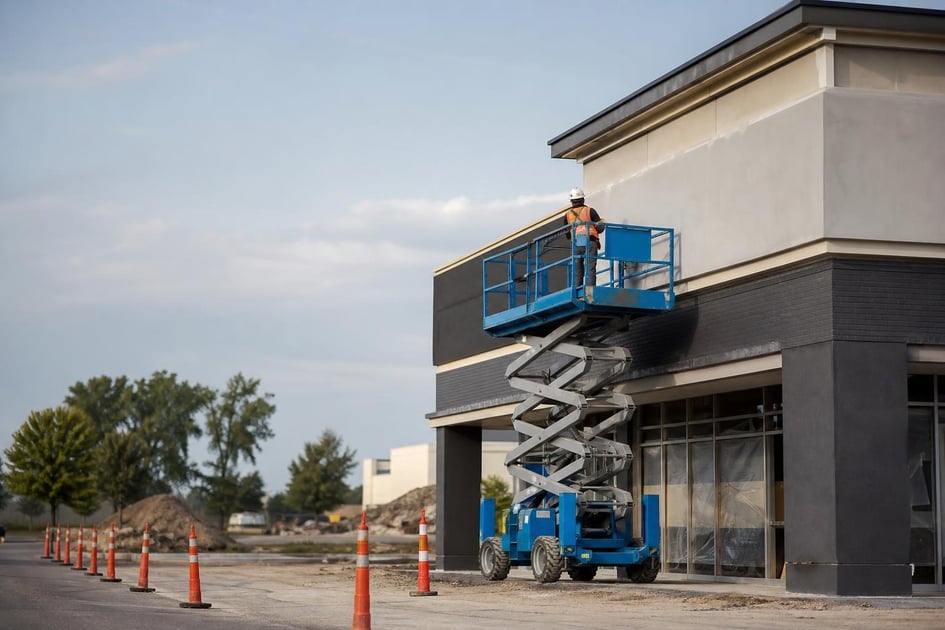
You can finance a scissor lift with bad credit. The equipment itself acts as collateral, which shifts the lender's focus from your personal score to the asset value and your company's ability to generate revenue with that asset. You will likely need a larger down payment or accept a shorter term than a prime borrower, but a low credit score does not close the door. At Provide Capital, we finance new and used business equipment from $5,000 to $5 million nationwide, and the collateral-based structure is what keeps rates competitive even for owner-operators rebuilding credit.
How Collateral Changes the Math for Bruised Credit
Traditional unsecured lending treats a low credit score as a wall. Equipment finance treats it as one data point among many. When you apply for scissor lift financing, the underwriter looks at the lift's liquidation value, the vendor selling it, and the revenue it will help you earn. A slab scissor lift for a commercial flooring contractor holds clear value; the lender knows it can recover most of the balance if needed. That security allows us to look past a rough patch on your report. We still review credit history, but we also weigh time in business, monthly revenue consistency, and the equipment's suitability for your operation. If you have been operating for a reasonable period and can show bank deposits that cover the proposed payment, you have a workable file.
The key is transparency. Disclose the credit issues upfront, explain the cause—whether it was a medical event, a past divorce, or a slow season—and show how the lift will pay for itself on your next job. Lenders are not looking for perfection; they are looking for a story that makes sense and a payment that fits your cash flow.
The Difference Between a Bank Loan and Equipment Collateral
A traditional bank loan asks you to pledge real estate or cash savings as security, and it weighs your personal credit heavily because there is no specific asset to repossess. An equipment finance agreement works differently. The lender files a UCC lien on the scissor lift itself, not on your house. If the unexpected happens, the lender recovers the equipment rather than chasing your personal assets. That structural difference is why an owner-operator with a recent short sale or a settled collections account can still walk away with a competitive approval. The lender's risk is tied to the machine, not your entire balance sheet.
What the Underwriter Actually Reviews
Lenders want a narrative, not just a number. A score that dropped because of a bankruptcy discharged years ago is different from a file with recent delinquencies. Underwriters also look at whether you have an existing equipment finance relationship that paid well. They will verify that the scissor lift matches your stated use case. A drywall crew buying a standard electric model for retail fit-outs is a logical fit. A bakery buying the same lift is not, unless there is a clear expansion plan. Be ready to submit your most recent bank statements, a quote from the vendor, and a brief summary of how the lift will increase revenue or reduce labor costs. The more specific you are about cutting setup time or accessing high-bill-rate work, the stronger your file looks.
Terms and Pricing When Credit Is Challenged
We do not publish a single rate sheet because rates vary by credit profile, equipment age and term. A new lift financed over a longer term will produce a different payment than an older unit on a short amortization. With bruised credit, you should expect to pay more over the life of the contract than a prime borrower, but the equipment collateral keeps the pricing within reach. You may see a shorter term than the maximum available, which means a higher monthly payment but less total interest paid and a faster path to owning the asset outright. Some borrowers prefer this structure because they want the lien released quickly so the lift becomes an unencumbered asset on their books. Others prioritize cash flow and negotiate for the longest term possible, even if it costs slightly more over time. Used equipment can also carry slightly higher rates because the collateral value depreciates faster. The best way to know your exact numbers is to request a quote with the specific serial number and invoice price so the underwriter can price the risk accurately.
New vs. Used Scissor Lifts: A Side-by-Side Comparison
Choosing between a new and used unit affects both your monthly payment and the lender's comfort level. The table below breaks down the practical differences for an owner-operator with credit challenges.
| Factor | New Scissor Lift | Used Scissor Lift |
|---|---|---|
| Collateral confidence | Highest; full warranty and known history | Depends on hour meter, maintenance records, and brand |
| Typical term | Longer amortization available | Shorter amortization to match remaining useful life |
| Cash due at signing | Minimal for strong credits; more for challenged credit | More upfront for challenged credit |
| Monthly obligation | Lower monthly payments spread over time | Higher monthly payments compressed into fewer months |
| Approval speed | Same day possible with vendor quote | Same day possible if serial number and inspection check out |
| Rate environment | Rates vary by credit profile, equipment age and term | Rates vary by credit profile, equipment age and term; older units add risk |
New lifts give lenders the most collateral confidence, which can translate to more forgiving terms for a buyer with bad credit. Used lifts cost less upfront, but the financing may require more cash down and a tighter amortization because the resale value drops faster. Either way, the equipment secures the deal, so both paths are open.
Paperwork That Gets You a Same-Day Answer
Same-day approvals are possible, but only if the file is complete. Gather your recent business bank statements, a signed equipment quote showing the serial number and sale price, and your driver's license. If your business is incorporated, include your articles of incorporation and an ownership breakdown. For challenged credit, a brief letter explaining any derogatory marks and how they have been resolved can speed up the decision. The underwriter does not want a novel; a few sentences covering dates and current status is enough. If the vendor is an established dealer, that also helps because the lender trusts the inspection and title transfer process. Private-party sales are still doable, but they may require an independent appraisal and a longer funding timeline because the lender needs to verify clear title and equipment condition before releasing funds.
Tax Year 2026 and Section 179
For tax year 2026, Section 179 allows businesses to deduct the full purchase price of qualifying equipment, including scissor lifts, up to an annual limit that the IRS adjusts for inflation. Because the exact dollar cap for 2026 depends on your total equipment purchases and taxable income, you should consult your CPA before you rely on a specific deduction amount. Bonus depreciation may also be available for 2026, but the applicable percentage and phase-out schedules are specific to this tax year. A CPA can tell you whether Section 179, bonus depreciation, or standard MACRS depreciation gives you the best outcome for your 2026 filing.
Other Lift Options If a Scissor Lift Is Not the Right Fit
If your jobsite has narrow access or uneven ground, a scissor lift may not be the best tool. Spider Lifts financing can get you into a lightweight, tracked unit that fits through a standard doorway and sets up on slopes. For warehouses that need to move palletized materials rather than personnel, Material Lifts financing covers vertical transport devices that keep aisles clear. And if you are ready to move forward with the classic platform design, our Scissor Lifts financing page details the application process and collateral requirements. Each product page lists the same collateral-backed structure, so your credit challenges are handled with the same underwriting approach regardless of lift type. Choosing the right lift for the job also strengthens your approval odds because the underwriter sees a clear connection between the equipment and your revenue.
Frequently Asked Questions
Can I finance a scissor lift with bad credit?
Yes. The equipment secures the transaction, which means the lender cares as much about the asset and your revenue as it does about your score. You may need a larger down payment or a shorter term, but bad credit alone does not disqualify you.
Will the lender check my credit?
Yes. We review credit as part of every application. There is no guaranteed approval and no program that skips a credit review entirely. A full picture of your history helps us price the deal accurately.
How fast can I get approved?
Same-day approvals are possible when your paperwork is complete and the vendor quote is clear. If you have credit challenges, submitting a complete package with bank statements and an explanation letter prevents the back-and-forth that slows decisions down. Most delays happen because an applicant forgets to list all business owners or submits a quote without a serial number. Get those details right upfront and the process moves quickly.
Do I need a down payment?
With strong credit, you may qualify for no money down. With challenged credit, expect to put more cash into the deal. The exact amount depends on the equipment value, the term, and your overall file strength. Some borrowers cover the down payment by rolling in a trade-in or asking the vendor for a discount on the unit. Either approach reduces the financed amount, which improves the loan-to-value ratio and makes the underwriter more comfortable.
Can I finance a used scissor lift with bad credit?
Yes. We finance new and used business equipment from $5,000 to $5 million. A used lift is often a smart way to keep the financed balance low, though it may come with a shorter term and slightly higher relative cost because the collateral ages faster.
What industries do you serve?
We work with construction, healthcare, dental, restaurant and food service, manufacturing, transportation, agriculture, HVAC, and forestry businesses nationwide. If your industry relies on vertical access equipment, we can review the deal. Contractors make up the largest share of scissor lift buyers, but we also finance lifts for facility maintenance crews, signage installers, and agricultural operations that need safe access to grain bins or barn roofs.
Ready to Apply?
Start by getting a quote for the specific scissor lift you want. Once you have the vendor invoice and your bank statements, submit the package for review. We can often return a decision the same business day. If the numbers work, you sign and the vendor gets paid; if the terms need adjusting, we will tell you exactly what is required to get to yes. Either way, you will know where you stand without the runaround.
Disclaimer: The information provided in this article is for general educational purposes only and is not financial, legal, or tax advice. Funding terms, qualifications, and product availability may vary and are subject to change without notice. Provide Capital does not guarantee approval, rates, or specific outcomes. For personalized information about your business funding options, contact our team directly.