What Scissor Lift Financing Qualifies For
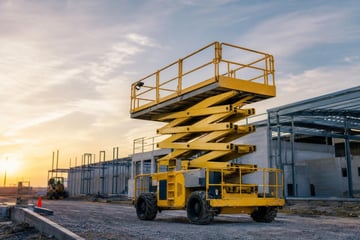
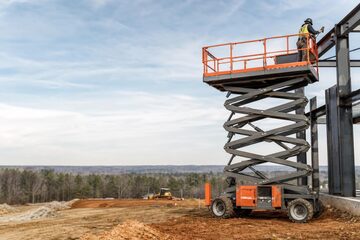
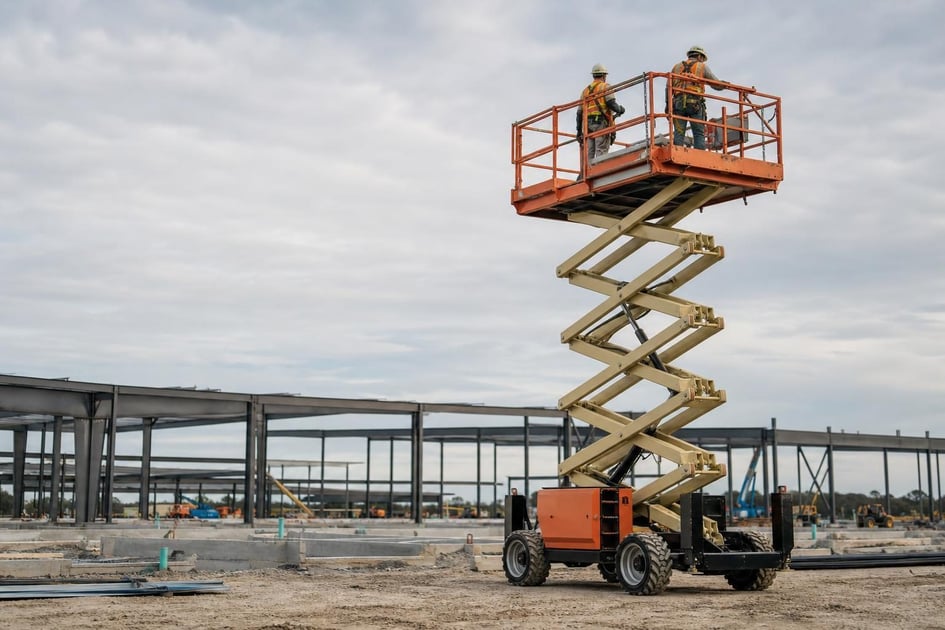
Most contractors and facility managers do not pay cash for scissor lifts. Financing spreads the cost across the revenue the equipment generates, preserving working capital for payroll, materials and unexpected jobsite expenses. At Provide Capital, Scissor Lifts financing typically covers transactions ranging from $15,000 to $65,000, though we finance new and used business equipment from $5,000 to $5 million. Whether you need a 19-foot electric slab lift for warehouse maintenance or a 45-foot diesel rough-terrain unit for outdoor construction, the equipment itself serves as collateral, which keeps rates competitive. Same-day approvals are possible when your documentation is complete.
Key Insight: The equipment itself is the collateral, which means the lender's risk is tied to the asset value, not just your credit profile. This is why scissor lift financing stays accessible even when unsecured credit lines tighten.
Get a fast decision on your equipment
Applying takes just a few minutes, and decisions can come as soon as the same day.
Start Your ApplicationWhat the Financing Covers
Scissor lift financing covers the machine, delivery, tax and sometimes a maintenance package rolled into one note. You can finance new units straight from a dealership or used machines from auction sites, private sellers and equipment brokers. The key qualifier is that the asset must be business equipment, not a consumer purchase. Lenders look at the year, make, model, hour meter and overall condition to set the advance rate and term. Equipment financing is a staple of small-business growth; SBA guidance on equipment loans notes that using the asset as collateral often makes these transactions more accessible than unsecured credit.
A 2024 or 2025 Genie GS-1930 with under 500 hours will command stronger terms than a 2012 model with 3,000 hours and no service history. Financing also qualifies for related attachments such as pipe racks, platform extensions and specialty decks, provided they are invoiced with the lift. If you are adding a lift to a larger fleet package, the lender can bundle it with other assets under a single schedule. Some lenders will also finance freight, initial inspection and operator training as part of the transaction, provided those costs appear on the same invoice and do not exceed a reasonable percentage of the equipment value.
New vs. Used Scissor Lifts
Buying new gives you the full manufacturer warranty, the latest safety features and the longest useful life. For a 19-foot electric slab lift, new prices often sit between $12,000 and $18,000, while a three-year-old unit might run $8,000 to $12,000. A 32-foot rough-terrain diesel lift can cost $45,000 to $65,000 new, with used versions in the $28,000 to $45,000 range depending on hours and brand.
Used equipment financing works best when the machine is less than 10 years old and has fewer than 3,000 hours. Older units can still qualify, but you may need a larger down payment or a shorter term to offset the lender's collateral risk. If you are buying at auction, plan for an independent inspection; financing approvals on auction units often require photos, serial numbers and a condition report before the lender will fund. Always verify that the model you are considering still has OEM parts availability, because a lender may decline collateral that cannot be repaired economically.
Pro Tip: Before you sign, verify whether the lift's hour meter reading aligns with its service records. A 2019 unit with 800 hours and documented maintenance can be a better collateral bet than a 2022 model with 2,400 hours and no paperwork.
Lease vs. Loan: Which Fits Your Business?
A loan means you own the scissor lift at the end of the term and claim the depreciation. A lease gives lower monthly payments and a possible buyout, but you do not build equity in the same way. For most owner-operators who use a lift 100 or more days per year, a loan or equipment finance agreement makes more sense because the machine generates revenue long after it is paid off.
| Feature | Equipment Loan / Finance Agreement | Equipment Lease |
|---|---|---|
| Ownership | You own it after final payment | Lender owns it; you may have a buyout option |
| Monthly Payment | Higher, but builds equity | Lower, treated as operating expense |
| Tax Treatment | Depreciate asset; deduct interest | Potentially deduct full payment (consult your CPA) |
| Best For | High utilization, long-term use | Short-term needs, frequent upgrades |
| End of Term | Free and clear title | Return, renew or purchase at fair market value |
Qualification Criteria
Lenders evaluate four main factors: credit profile, time in business, equipment details and cash flow. A FICO score in the mid-600s or higher will open the best rates, though we work with credit profiles across the spectrum. Two or more years in business strengthens your file, but younger companies can still qualify with solid down payments or additional collateral.
The equipment itself matters: a 2023 JLG or Skyjack from a licensed dealer is easier to approve than a no-name import with limited parts availability. Your monthly bank statements should show enough revenue to cover the new payment comfortably; most underwriters like to see a debt-service coverage ratio above 1.25. Rates vary by credit profile, equipment age and term, so a 24-month term on a new lift will carry different costs than a 60-month term on a seven-year-old machine.
Provide Capital serves construction, healthcare, dental, restaurant and food service, manufacturing, transportation, agriculture, HVAC and forestry nationwide. If your business uses scissor lifts weekly, see what you qualify for and get a same-day decision on your equipment.
Tax Treatment for 2026
For tax year 2026, Section 179 allows businesses to deduct the full purchase price of qualifying equipment in the year it is placed in service, subject to an annual limit that adjusts for inflation. Because the exact dollar ceiling for 2026 depends on final IRS inflation adjustments, you should confirm the current-year limit with your CPA before making a purchase decision. Bonus depreciation may also apply to new and used scissor lifts, though the percentage has been phasing down in recent years.
Your CPA can tell you whether a 2026 purchase qualifies for first-year expensing, standard MACRS depreciation or a mix of both. Keep your invoice, delivery receipt and equipment photos; the IRS wants proof of when the asset went into service and that it is used more than 50 percent for business. For personalized guidance on the 2026 rules, consult a tax professional who knows your industry. The structure of your agreement—loan versus lease—will determine whether you deduct interest and depreciation or treat the payment as an operating expense.
Find the right financing structure
Tell us about the equipment you need and we will show you the options that fit your business.
See Your OptionsWorked Cost Examples
Here is how financing can look for three common scenarios. These are illustrative; your actual payment will vary by credit profile, equipment age and term. A $16,000 used 19-foot electric lift on a 36-month term might see monthly payments in a range that fits most maintenance budgets. A $42,000 new 32-foot rough-terrain diesel lift on a 60-month term spreads the investment across five years of jobs. A $58,000 hybrid 45-foot lift with a platform extension on a 48-month term serves high-reach contractors who bill by the project. Business equipment investment continues to climb across trades, and Forbes coverage of business equipment investment shows that contractors who own rather than rent tend to bid more aggressively on fixed-price jobs.
By the Numbers: A $35,000 scissor lift financed over 60 months typically breaks down to a monthly payment that varies by credit profile, equipment age and term. Same-day approvals are possible on requests from $5,000 up to $5 million, though most scissor lift transactions fall between $15,000 and $65,000.
Industry-Specific Use Cases
Construction crews use 26-foot and 32-foot rough-terrain lifts for framing, exterior work and site preparation. Construction equipment financing is one of the most common requests we see, especially in regions where U.S. Census Bureau construction spending data shows sustained commercial building growth. Facilities management teams favor 19-foot electric units for hallway lighting, HVAC filter changes and ceiling repairs.
Manufacturing plants deploy 32-foot lifts for line maintenance and overhead conveyor work. In agriculture, 45-foot diesel lifts handle orchard work, barn roofing and grain-bin maintenance. HVAC contractors often pair a scissor lift with a Spider Lifts financing package when ductwork runs through atriums or tight mechanical rooms. Restaurants use smaller 19-foot units for cleaning exhaust hoods and replacing ceiling tiles during off-hours.
Seasonal patterns matter too. Contractors in northern states often buy lifts in late winter to lock in pricing before the spring rush, while agricultural operators may finance just before harvest to avoid peak rental rates. Aligning your financing timeline with your revenue cycle can make the first few payments easier to manage.
If you operate across multiple trades, talk to a specialist about your specific machine and learn how the equipment itself keeps your rates competitive.
Common Mistakes to Avoid
The biggest mistake is buying too much lift. A 45-foot rough-terrain unit is overkill for indoor warehouse work and costs more to insure, transport and maintain. Another error is skipping the serial-number check; make sure the lift is not stolen, has no outstanding lien and matches the invoice description.
Some buyers forget to budget for delivery, which can add $500 to $2,000 depending on distance and lift size. Others finance through the dealership without shopping the term; a 60-month note from one source and a 36-month note from another can have very different total costs even if the monthly payments look similar. Always compare the total of payments, not just the monthly figure.
A third mistake is neglecting insurance. Lenders require evidence of physical damage coverage naming them as loss payee before they will fund. If your current policy does not cover powered equipment, you may need a rider or a separate inland marine policy, which adds to your first-year cost.
Key Insight: Lenders evaluate the liquidation value of the specific model. Electric slab scissor lifts from major manufacturers generally hold value better than niche diesel rough-terrain units, which can affect approval speed and required down payment.
Documentation You'll Need
Have these items ready before you apply: the equipment invoice or purchase agreement, your last three months of business bank statements, a voided business check and your driver's license or business formation documents. If the lift is used, add the hour-meter reading, recent service records and photos of the platform, controls and undercarriage.
For transactions above $100,000, two years of tax returns and a current year-to-date profit-and-loss statement may be requested. Having these documents organized before you call will speed up the process and improve your chances of a same-day approval. Underwriters look for consistent deposits, not just large spikes, so three steady months beat one great month followed by two slow ones.
What Happens After Approval
Once approved, the lender issues a funding letter or purchase order to the vendor. You inspect the lift, sign the delivery receipt and the lender pays the seller directly. Funds typically move within 24 to 48 hours of receiving clear invoices and insurance evidence. Your first payment is usually due 30 to 45 days after funding, giving you time to put the machine to work before the note begins.
The lender will file a UCC-1 financing statement on the equipment to secure their interest. This is standard practice and does not appear as a blanket lien on your business credit; it is specific to the lift. Once the final payment clears, the lender releases the UCC filing and sends you a lien-release letter for your records.
Put the right equipment to work
From $5,000 to $5 million, new or used, Provide Capital helps businesses nationwide finance the equipment they need.
Apply TodayFrequently Asked Questions
Can I finance a scissor lift from a private seller?
Yes. Provide Capital finances private-party transactions as long as the seller can provide a clear title, a signed bill of sale and the serial number matches the equipment. An inspection may be required for units older than seven years.
What credit score do I need?
There is no hard minimum, but a FICO in the mid-600s or better generally produces the most competitive structure. Lower scores can still qualify with additional down payment or a shorter term.
How fast can I get approved?
Same-day approvals are possible when you submit complete documentation early in the business day. Larger requests or complex ownership structures may take 24 to 48 hours.
Is a down payment required?
Not always. Many scissor lift transactions from $5,000 to $75,000 can be financed with zero down, depending on credit and equipment age. Strong credit and newer equipment improve your chances of 100 percent financing.
Can I finance multiple lifts at once?
Yes. You can bundle several units into one schedule, which simplifies bookkeeping and may improve the overall rate if the total exceeds $50,000.
Does the lift have to be new?
No. Used scissor lifts up to 10 years old are regularly financed, and older units may still qualify with a larger down payment or shorter term.
What happens if I want to pay off the note early?
Ask about prepayment terms before you sign. Some agreements apply a small prepayment penalty in the first 12 to 24 months; others allow payoff at any time with no fee.
Can I deduct the payments on my 2026 taxes?
If you use a loan or equipment finance agreement, you generally deduct the interest portion and depreciate the asset. With a true tax lease, the entire payment may be deductible as an operating expense. Confirm the structure with your CPA because tax treatment changes based on the contract type and the 2026 IRS limits.
Next Steps
If you are pricing a new scissor lift or trying to free up cash on a used unit, financing keeps your working capital intact and gets the machine on your jobsite fast. At Provide Capital, we finance new and used business equipment from $5,000 to $5 million nationwide, with same-day approvals possible and the equipment itself serving as collateral. Get a same-day decision on your equipment and move your project timeline forward.
Disclaimer: The information provided in this article is for general educational purposes only and is not financial, legal, or tax advice. Funding terms, qualifications, and product availability may vary and are subject to change without notice. Provide Capital does not guarantee approval, rates, or specific outcomes. For personalized information about your business funding options, contact our team directly.