Yes. Owner-operators and fleet managers can finance transportation equipment with no down payment through 100% equipment financing. The lender secures the loan with the equipment itself—the truck, trailer, or delivery vehicle acts as collateral. Rates vary by credit profile, equipment age and term. Same-day approvals are possible for qualified applicants with complete documentation.
Provide Capital finances new and used business equipment from $5,000 to $5 million nationwide. That range covers a single refrigerated delivery van up to a multi-unit fleet purchase. Because the equipment backs the note, you do not need real estate or additional assets to pledge. This structure preserves your working capital for fuel, insurance, payroll, and maintenance—the operating costs that determine whether a trucking business survives its first year.
What Qualifies as Transportation Equipment
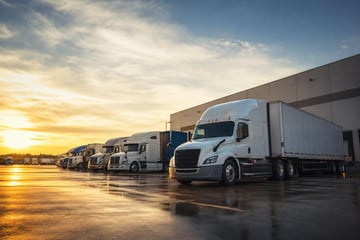
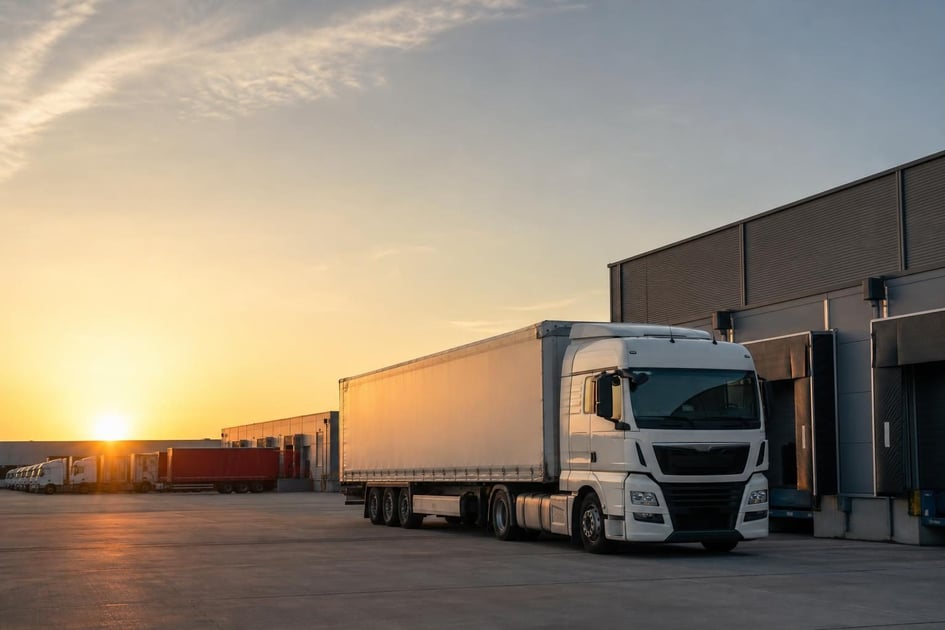
“Transportation equipment” is broader than semi-trucks. Lenders in this category finance any vehicle used to move goods or people for revenue. Common examples include:
- Class 8 semi-trucks and day cabs
- Dry van, reefer, and flatbed trailers
- Box trucks and straight trucks from 16 to 26 feet
- Step vans and parcel delivery vehicles
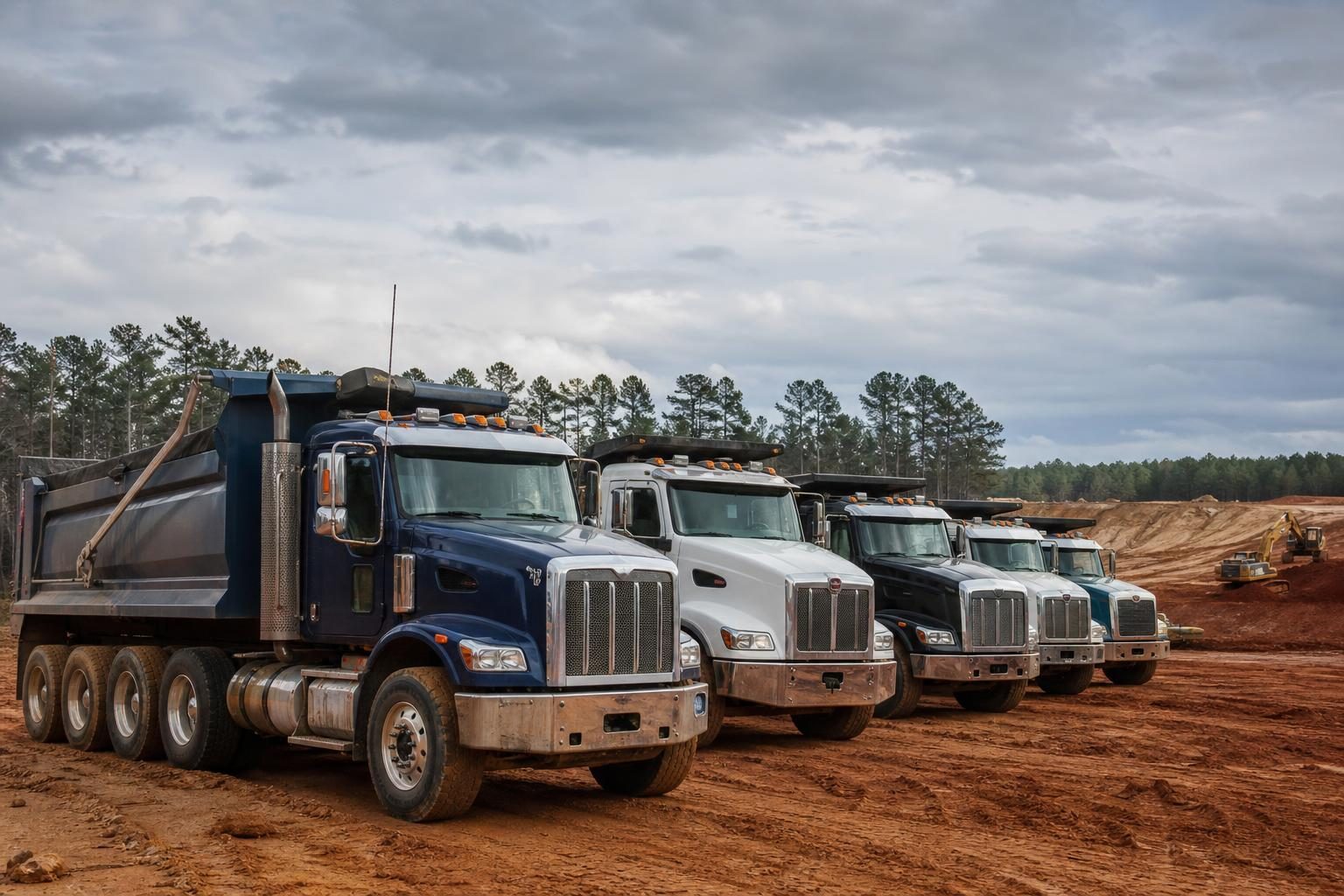
- Dump trucks and vocational haulers
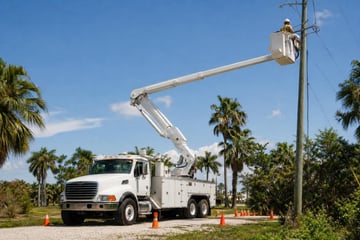
- Bucket trucks and utility boom vehicles
- Tow trucks, rollbacks, and wreckers
- Tanker trucks and liquid transport trailers
- Car haulers and auto transport equipment
Some of these cross into construction or utility work, but if the primary use is transportation of goods, materials, or passengers for hire, the equipment qualifies under Transportation equipment financing. If you are adding a dump truck to a construction fleet, you may also want to review Dump Trucks financing for terms specific to vocational hauling. Similarly, utility contractors adding bucket trucks can explore Bucket Trucks financing to understand how aerial equipment is underwritten.
Get a fast decision on your equipment
Applying takes just a few minutes, and decisions can come as soon as the same day.
Start Your ApplicationHow No-Down-Payment Financing Actually Works
“No down payment” means 100% financing of the equipment’s hard cost—the invoice price from the dealer or private seller. The lender pays the vendor directly, and you take delivery with no capital outlay for the asset itself. Your first payment is typically due 30 to 45 days after funding, which gives you time to put the unit to work before the note begins.
There is a distinction between 100% financing and zero out-of-pocket. Soft costs—sales tax, title fees, registration, and licensing—are often not rolled into the loan. Depending on the state, these can add 5% to 10% to the total acquisition cost. Some lenders will finance soft costs for strong-credit borrowers, but you should budget for them separately until your approval terms are finalized.
Key Insight: A $75,000 box truck can carry $4,000 to $7,500 in taxes and registration fees depending on the state. If your lender covers only the hard cost, you will need that cash at closing even though the loan itself requires no down payment. Ask your financing specialist upfront whether soft costs can be included so you can plan your cash position.
Rates vary by credit profile, equipment age and term. A 60-month term on a new Class 8 truck will carry a different rate than a 36-month term on a 10-year-old reefer trailer. The lender evaluates the collateral’s liquidation value, your operating history, and your personal credit to set the pricing tier.
Who Qualifies for Zero-Down Transportation Financing
Not every applicant receives 100% financing. Underwriters look at three factors to determine whether a zero-down structure is appropriate.
Credit Profile
A FICO score in the mid-600s or higher generally opens the door to 100% financing on new or newer used equipment. Scores below that threshold do not automatically disqualify you, but the lender may require 10% to 20% down to reduce risk. Recent bankruptcies, open tax liens, or multiple equipment repossessions will make zero-down approval difficult regardless of score. Underwriters also look at your debt-service coverage ratio—your monthly revenue divided by your monthly debt obligations. A ratio above 1.25 is the unofficial floor for most equipment lenders.
Time in Business
Two years of operating history is the standard benchmark for 100% financing on commercial trucks. Businesses with less than two years of operating history can still qualify, but they often need to provide a larger down payment or a strong personal guaranty. If you are an owner-operator with a CDL and a signed contract from a shipper, that revenue certainty can offset limited operating history. Underwriters care more about stable, documented cash flow than the age of your articles of incorporation.
Equipment Age and Type
New equipment and late-model used units—generally under five years old with fewer than 500,000 miles—are easier to approve at 100% financing. Older equipment or high-mileage units depreciate faster and carry more mechanical risk, so lenders may cap the advance rate at 85% to 90% of appraised value. Specialized equipment like car haulers or tankers have narrower resale markets, which can also reduce the maximum loan-to-value ratio.
See what you qualify for based on your credit profile and the equipment you are considering. A quick conversation with a specialist can tell you whether zero-down is realistic before you spend time negotiating with a seller.
New vs. Used Equipment: A Side-by-Side Look
The choice between new and used shapes your monthly payment, maintenance reserve, and financing terms. New trucks offer warranty coverage and lower repair risk, but they depreciate sharply in the first 24 months. Used trucks preserve capital and often carry lower total interest costs because the financed amount is smaller, but they require a stricter inspection process.
| Factor | New Equipment | Used Equipment |
|---|---|---|
| Financing availability | 100% common for qualified buyers | 85%–100% depending on age and miles |
| Typical term range | 48 to 84 months | 36 to 60 months |
| Interest rate range | Lower; collateral retains value longer | Higher; faster depreciation increases risk |
| Warranty | Full manufacturer coverage | Limited or expired; budget for repairs |
| Monthly payment example | $1,600–$2,200 on a $120,000 truck | $900–$1,400 on a $60,000 truck |
| Best for | High-mileage operators, fleet expansion | First-time buyers, seasonal businesses |
These payment ranges are illustrative. Rates vary by credit profile, equipment age and term. Your actual payment depends on your credit tier, the lender’s rate card, and whether you choose a loan or lease structure.
Lease vs. Loan for Transportation Equipment
Both structures can be arranged with no down payment, but they work differently. A loan puts the title in your name; a lease keeps title with the lessor until you exercise a purchase option. For owner-operators who want to build equity and avoid mileage penalties, the loan is usually the better fit. For fleets that refresh equipment every four years and prioritize lower monthly outlays, a lease can make sense.
Leases often include mileage restrictions—typically 20,000 to 30,000 miles per year on a standard full-service lease. Excess mileage fees run $0.10 to $0.20 per mile. If you operate long-haul routes that log 150,000 miles annually, a lease will punish you at turn-in. Loans have no mileage caps because you own the asset. However, loans usually require you to carry higher physical damage insurance limits, which raises your premium.
At the end of a loan term, you hold an unencumbered asset with residual value. At the end of a lease term, you either return the equipment, buy it at fair market value, or refinance the residual. If the used truck market is soft when your lease matures, the buyout price could exceed the truck’s actual worth.
Pro Tip: If you are financing a truck that will log more than 100,000 miles per year, avoid closed-end leases with mileage caps. A $1 buyout lease or an equipment loan gives you unlimited miles and builds equity in an asset that you can trade in when you are ready to upgrade. The extra $150 to $300 per month in payment is usually cheaper than excess mileage penalties.
Tax Treatment for the 2026 Tax Year
The tax benefits of equipment financing are one of the strongest arguments for buying rather than leasing, but the rules change year to year. For the 2026 tax year, Section 179 allows businesses to deduct the full purchase price of qualifying equipment in the year it is placed in service, up to an annual limit that is adjusted for inflation. The deduction phases out once total equipment purchases exceed a second, higher threshold. Because these limits are indexed to inflation and may differ from prior years, consult a CPA to confirm the exact 2026 figures before you file.
Bonus depreciation is also available for qualifying new and used equipment in 2026, though the percentage has stepped down from the 100% allowance that applied in earlier years. Again, the exact rate for 2026 depends on legislative schedules and IRS guidance, so your accountant should model the specific benefit based on your entity type and tax bracket.
One constant rule: you must place the equipment in service by December 31, 2026, to claim the deduction on your 2026 return. A signed purchase order is not enough. If you finance a truck in late December but it sits at the dealer waiting for upfitting until January, the deduction shifts to the 2027 tax year. Work backward from your delivery date when you apply.
See what you qualify for
The equipment itself secures the financing, which keeps rates competitive. Checking your options takes minutes.
Check Your OptionsIndustry-Specific Use Cases
Transportation equipment financing looks different depending on what you haul and where you operate. The trucking industry is one of the largest small-business sectors in the country. Census Bureau data on trucking businesses shows that hundreds of thousands of employer and self-employed operators move freight nationwide, which is why lenders have developed specialized underwriting for this asset class.
Long-Haul Trucking
Over-the-road operators running 48 states need reliable Class 8 tractors and 53-foot dry van or reefer trailers. A single new tractor can cost $150,000 to $200,000, while a used unit with 400,000 miles may run $60,000 to $90,000. Because freight rates fluctuate with fuel costs and capacity, preserving cash through zero-down financing keeps you liquid when spot markets soften. Record diesel prices in 2026 have made fuel the largest variable cost for many fleets, amplifying the need to minimize upfront capital outlay.
Regional Delivery and Last-Mile
Box trucks and step vans dominate local delivery contracts, especially in e-commerce and food distribution. These vehicles typically cost $35,000 to $75,000 new, which fits comfortably within the $5,000 to $5 million range that Provide Capital finances. Because delivery routes put less annual mileage on the engine than long-haul freight, a used box truck with 80,000 miles can deliver five to seven years of reliable service. Zero-down financing lets a two-van operation add a third unit when it wins a new route without draining the cash needed for driver wages and insurance deductibles.
Construction and Specialized Hauling
Vocational trucks—dump trucks, roll-off containers, water trucks, and heavy-haul lowboys—serve construction, energy, and infrastructure projects. These are not standard highway tractors; they carry hydraulic systems, pup trailers, or oversized beds that increase cost and specialization. A new dump truck can run $100,000 to $150,000 depending on bed size and material. Because these trucks earn revenue only when projects are active, seasonal operators benefit from keeping cash reserves intact through 100% financing during the off-season.
By the Numbers: A $90,000 used semi-truck financed over 60 months at a competitive rate typically produces a monthly payment between $1,700 and $2,100 for a borrower with strong credit. Over the life of the loan, that operator will pay roughly $102,000 to $126,000 in principal and interest combined. If the truck generates $6,000 per week in gross revenue, the monthly payment consumes roughly 7% to 9% of gross—well within the safe operating margin that most owner-operators target.
Common Mistakes to Avoid
Even experienced operators misstep when financing equipment. Here are the errors that most often derail applications or create cash-flow problems after funding.
- Stretching for too much truck. A monthly payment that consumes more than 15% of gross revenue leaves no room for tire replacements, brake jobs, or rate downturns. Buy the truck you need, not the truck you want.
- Ignoring soft costs. Taxes, title, and registration can add thousands. If you assume 100% financing covers everything, you may show up at the dealer short on cash.
- Skipping the pre-purchase inspection on used equipment. A $300 inspection can reveal $10,000 in deferred maintenance. Lenders may require an inspection anyway, but even if they do not, pay for one.
- Neglecting existing UCC filings. If you already have equipment financing, another lender may have a blanket lien on your business assets. That lien must be released or subordinated before a new lender can take a first position on the new collateral.
- Signing without understanding the prepayment penalty. Some loans carry a prepayment penalty of 3% to 5% in the first two years. If you plan to refinance or sell the truck early, that penalty eats your equity.
Documentation You Need to Apply
Same-day approvals are possible, but only if you submit a complete package. Gather these items before you contact a lender:
- Driver’s license and Social Security card for all guarantors
- Business articles of incorporation or LLC operating agreement
- Last three months of business bank statements
- Current profit-and-loss statement or trailing 12-month financials
- Equipment quote or purchase agreement from the seller
- Proof of insurance meeting the lender’s coverage requirements
- CDL and medical certificate for the primary operator
- Existing UCC search or lien release, if applicable
For businesses with strong credit and clean financials, some lenders can approve with bank statements and a driver’s license alone. For businesses with limited history or challenged credit, expect to provide more detail. The more organized you are, the faster the decision.
What Happens After Approval
Once approved, the lender issues a term sheet or commitment letter spelling out the rate, term, payment amount, and any conditions. Read it carefully. If the terms include a prepayment penalty or a personal guaranty, make sure you understand the implications before you sign.
After you execute the documents, the lender files a UCC-1 financing statement in your state to perfect its security interest in the equipment. This filing is public record and shows that the lender has a legal claim to the asset until the loan is paid in full. The lender then sends funds directly to the equipment vendor or, in a private-party sale, to an escrow service. You take delivery, register the vehicle in your business name, and add the lender as a loss payee on your insurance policy.
Your first payment is typically due 30 to 45 days after funding. Set up automatic withdrawals to avoid missed payments, which can trigger default provisions and put your equipment at risk of repossession.
Key Insight: The UCC filing does not appear on your personal credit report as a tradeline, but it does show up in commercial credit databases. If you apply for another equipment loan within 12 months, the new lender will see the existing lien. That is normal, but expect the underwriter to verify that your current debt load leaves room for the new payment. Keeping your total equipment debt service below 20% of gross revenue makes subsequent approvals smoother.
Get a same-day decision on your equipment by submitting your documentation online. A specialist will review your file and call you with terms, usually within a few hours.
Put the right equipment to work
From $5,000 to $5 million, new or used, Provide Capital helps businesses nationwide finance the equipment they need.
Apply TodayFrequently Asked Questions
Can I finance a truck with no money down if I have bad credit?
Bad credit makes 100% financing harder but not impossible. If your score is below 620, expect the lender to require 10% to 20% down or a strong co-signer with commercial driving experience. Recent repossessions or open bankruptcies are generally disqualifying until they age off your report.
Does the equipment have to be from a dealer?
No. Private-party sales and auction purchases are eligible for financing, but the process takes longer because the lender must verify the seller’s ownership, the equipment’s condition, and the chain of title. Dealer sales are faster because dealers already have relationships with lenders and can provide clean titles and inspection reports immediately.
Can I finance the taxes and registration too?
Sometimes. Strong-credit borrowers can often roll soft costs into the loan, but the total financed amount cannot exceed the lender’s advance rate or the equipment’s appraised value. If the truck is worth $50,000 and the lender advances 100% of value, you may need to pay taxes separately. Ask before you apply.
How long does approval take?
For complete applications on standard equipment, same-day approvals are possible. Complex deals—private-party sales, specialized haulers, or borrowers with thin credit files—may take 24 to 72 hours. Submitting clean bank statements and a signed purchase agreement speeds the process.
Will the lender check my business credit or personal credit?
Both. Most equipment lenders underwrite the owner personally, especially for businesses with fewer than three years of operating history. They will pull your personal FICO and may also review your business credit profile through Dun & Bradstreet or Experian Business. A strong personal score can offset limited business credit.
Can I pay off the loan early?
Most equipment loans allow early payoff, but some carry a prepayment penalty in the first 12 to 24 months. The penalty is usually a percentage of the remaining balance or a fixed number of months’ interest. Ask your specialist to show you the exact language before you sign.
What happens if I default?
Because the equipment is collateral, the lender can repossess the truck or trailer if you stop making payments. The lender will sell the collateral at auction and apply the proceeds to your balance. If the sale does not cover the remaining principal, you remain liable for the deficiency unless your state law or contract says otherwise. Default also damages your personal credit and makes future equipment financing significantly more expensive.
Do I need a commercial driver’s license to qualify?
You do not need a CDL to apply, but you do need a licensed operator for the equipment. If you are the owner and will also drive, the lender will want to see your current CDL and medical certificate. If you employ drivers, provide their credentials and a copy of your driver qualification files.
Moving Forward With Your Next Truck
Transportation equipment financing with no down payment is a practical tool for owner-operators who need to preserve cash for operations. The structure works best when you understand the full cost picture—monthly payment, soft costs, insurance, maintenance, and tax implications—before you sign. Gather your documentation, inspect the equipment thoroughly, and choose a loan or lease structure that matches how many miles you drive and how long you plan to keep the asset.
Before you apply, it is worth reviewing how SBA loan programs compare to direct equipment financing so you understand the full landscape of business capital. Provide Capital serves the transportation industry nationwide, from single-truck owner-operators to multi-unit fleets. Talk to a specialist about your specific machine and see whether 100% financing fits your next purchase. Same-day approvals are possible, and a quick conversation can tell you exactly what terms you qualify for before you negotiate with a seller.
Disclaimer: The information provided in this article is for general educational purposes only and is not financial, legal, or tax advice. Funding terms, qualifications, and product availability may vary and are subject to change without notice. Provide Capital does not guarantee approval, rates, or specific outcomes. For personalized information about your business funding options, contact our team directly.