What Wheel Loaders Actually Cost to Finance
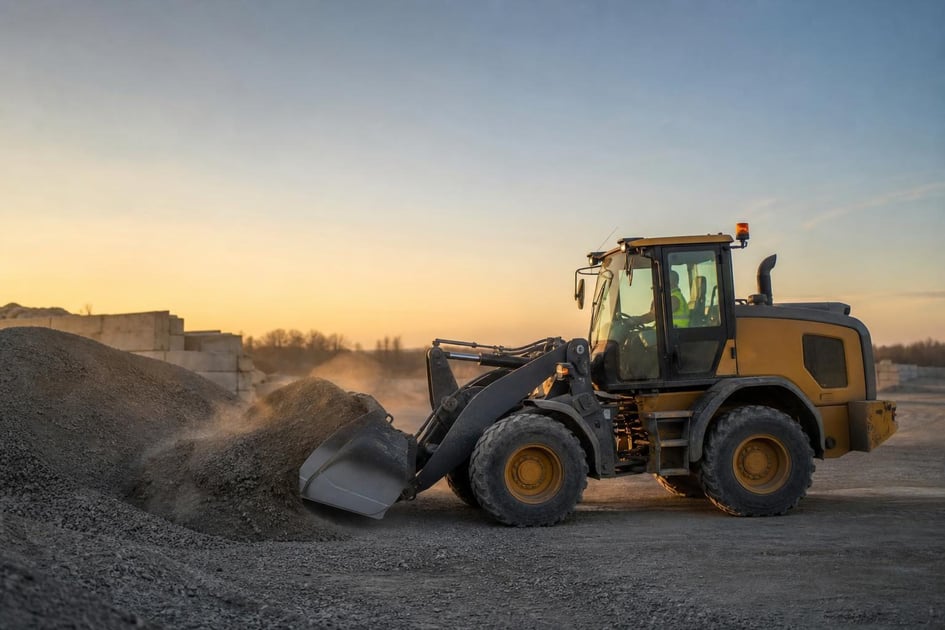
A new compact wheel loader with 40 to 80 horsepower typically runs $40,000 to $80,000. Mid-size units between 100 and 200 horsepower land in the $100,000 to $200,000 range. Large production loaders can exceed $500,000, though most small businesses finance machines at the compact or mid-size level. For owner-operators and small contractors, the used market is where the volume lives. Three- to five-year-old machines often sell for 40% to 60% below original MSRP, and lenders are comfortable financing them because wheel loaders retain utility long after the steepest depreciation is gone.
The financed amount rarely stops at the machine itself. Bucket attachments, pallet forks, grapples, and quick couplers can add $5,000 to $15,000. Delivery within 500 miles usually runs $800 to $2,500 depending on weight and permit requirements. Some buyers also roll an extended warranty or a preventive maintenance contract into the note. Because the equipment itself is the collateral, you are generally not asked to pledge real estate or other business assets, which keeps the structure simple and rates competitive.
Rates vary by credit profile, equipment age and term. A 24-month term on a three-year-old loader carries a different cost structure than a 60-month term on a new machine. Lenders also factor in the expected residual value at the end of the term and the number of hours on the meter. A loader with 1,200 hours is viewed differently than one with 4,500 hours, even if both are the same model year.
By the Numbers: A $75,000 used wheel loader financed over 48 months often produces a monthly payment in the low-to-mid four figures, depending on credit and down payment. A $150,000 new machine on a 60-month structure typically runs higher, but spreading the cost preserves operating cash for fuel, attachments, and labor. On either structure, the total cost of financing usually adds 8% to 20% to the cash price over the life of the agreement.
Get a fast decision on your equipment
Applying takes just a few minutes, and decisions can come as soon as the same day.
Start Your ApplicationFinancing Structures That Match How You Work
Most owners choose between an equipment loan and a finance lease. The right structure depends on how long you plan to keep the machine, how many hours you expect to put on it annually, and whether you want to claim depreciation or treat the expense as an operating cost.
| Feature | Equipment Loan | Finance Lease |
|---|---|---|
| Ownership at end | You own the loader free and clear | $1 buyout or Fair Market Value option |
| Down payment | Typically 0% to 20% | Usually first and last payment upfront |
| Tax treatment | You claim Section 179 and depreciation | You deduct lease payments as operating expense |
| Balance sheet | Asset and liability recorded | May appear as operating expense depending on structure |
| Payment stability | Fixed principal and interest | Fixed or step payments available |
| Best for | High-hour users planning to keep 7+ years | Owners who upgrade every 3 to 4 years |
If you run a construction crew that puts 2,000 hours a year on a loader, a loan usually wins because the machine pays for itself long before it ages out. If you are a seasonal landscaper who needs a loader for snow removal four months a year and wants to trade up regularly, a lease keeps payments lower and simplifies disposal at the end of the term.
Some lenders also offer seasonal payment structures, where you pay larger amounts during busy months and reduced amounts during winter. This matches the cash flow patterns of construction and agriculture businesses in northern climates. Not every lender offers this, so ask specifically if your revenue fluctuates by season.
Who Qualifies and What Lenders Look For
Provide Capital finances new and used business equipment from $5,000 to $5 million. The same-day approval timeline is possible when your documentation is complete, but it is never guaranteed. Underwriters evaluate three main factors.
Credit Profile
A FICO score above 650 opens the most competitive structures. Scores in the 600 to 650 range still qualify, especially if the equipment is newer and the down payment is larger. Below 600, options exist but may require additional collateral, a shorter term, or a larger deposit. If you have a recent bankruptcy or tax lien, be prepared to explain the circumstances and show six to twelve months of clean payment history since resolution. Personal credit matters for small businesses because the owner is often the primary guarantor.
Time in Business
Two years in operation is the standard threshold for the best rates. Businesses with less history face tighter scrutiny, though heavy-equipment purchases sometimes receive more flexibility because the collateral retains value well. If you are buying your first loader after two years in business, present bank statements that show consistent revenue and a clear plan for how the machine will generate new income. A projection showing the loader moving material on specific active or upcoming contracts strengthens the file.
Equipment as Collateral
The wheel loader itself secures the financing. Lenders verify the serial number, hour meter, and maintenance records. For used machines, they may require an independent appraisal or a dealer inspection report. The cleaner the history, the faster the approval. Lenders prefer machines under 10 years old with fewer than 6,000 hours, though exceptions are common for well-maintained units from reputable brands.
See what you qualify for by submitting an application with your equipment quote. The review is fast and does not lock you into a structure until you review and accept the term sheet.
Pro Tip: Pull a maintenance log and the original invoice before you apply. If the seller cannot produce service records, budget $300 to $500 for a third-party fluid analysis and undercarriage inspection. Lenders view documented care as a proxy for residual value, and it can shave a day off underwriting. A loader with verified service history often qualifies for a longer term or a lower rate factor.
Section 179 and Tax Treatment for 2026
For tax year 2026, the Internal Revenue Code allows businesses to deduct the full purchase price of qualifying equipment in the year it is placed in service, subject to annual limits and phase-out thresholds. Wheel loaders qualify because they are used more than 50% for business and have a recovery period of less than 20 years under the Modified Accelerated Cost Recovery System.
The specific dollar limits for 2026 adjust annually for inflation. Rather than cite a limit that may change with final IRS guidance, talk to your CPA about the current-year cap and whether your total equipment purchases trigger the income or investment phase-outs. If you do not want to front-load the deduction, you can spread depreciation over the MACRS schedule, typically five or seven years for loaders.
Lease payments, by contrast, are treated as operating expenses and deducted as paid. There is no depreciation schedule, which simplifies bookkeeping but may yield a smaller total deduction over the life of the agreement. Your accountant can model both scenarios against your expected 2026 taxable income and help you decide whether to own or lease based on your bracket and projected revenue.
The Small Business Administration publishes guidance on managing business expenses, and their resources can help you organize documentation before you meet with your tax preparer. Keeping clean records of when the loader was placed in service and what percentage of use is business versus personal is essential for any deduction you claim.
New vs. Used Wheel Loaders: A Financing Perspective
New machines come with manufacturer warranties, lower maintenance budgets, and the latest emissions and telematics packages. They also depreciate 20% to 30% in the first year. Used machines carry higher interest rate factors in financing—often 1% to 3% more on the rate factor—but the lower principal means less total interest paid and a faster equity buildup.
Depreciation Curves and Loan-to-Value
A loader that sells for $120,000 new may be worth $85,000 after three years and $55,000 after five. If you finance used, you are borrowing closer to that $55,000 figure, so your loan-to-value ratio stays healthier even if the market softens. Lenders like this because their collateral cushion is larger relative to the note balance. A used loader financed at $55,000 with a strong maintenance history can be easier to approve than a new $120,000 machine for a borrower with thin credit, simply because the exposure is lower.
Warranty and Downtime Risk
Used loaders without warranty coverage can cost $5,000 to $15,000 in repairs during years four through seven. Budget for that contingency. Some lenders allow you to roll a 12-month extended warranty into the financing, which turns an unpredictable cash outlay into a fixed monthly cost. Downtime is the hidden expense that does not appear on the financing documents. A broken loader on a critical job site can cost you the contract, so factor reliability into your new-versus-used decision, not just the monthly payment.
Key Insight: Winter purchases of used loaders often command a 10% to 15% price premium in northern states because demand spikes for snow removal. Buying in late spring, when construction fleets rotate inventory, can lower both the purchase price and the amount you need to finance. A March purchase in Minnesota might cost $8,000 more than the same machine in June.
Find the right financing structure
Tell us about the equipment you need and we will show you the options that fit your business.
See Your OptionsIndustry-Specific Use Cases and Seasonal Patterns
Wheel loaders are not just for general construction. In agriculture, a 100-horsepower loader with a grapple attachment handles feed and manure year-round. In forestry, high-lift variants load trucks in rough terrain. HVAC contractors use compact loaders to move chillers and ductwork on commercial sites. Restaurant and food service operations use them for site prep when opening new locations. Each use case changes the ideal size and attachment package, which in turn affects the financed amount and the lender's assessment of whether the machine is appropriate for the stated business.
If you operate in construction, Construction equipment financing is structured around your project cycles. We see the heaviest volume between February and April, when crews prepare for the building season. Agriculture buyers often time purchases around harvest cash flow in late fall. Forestry operators may buy after timber sale closings. Understanding your industry's cash cycle helps you pick a payment structure that does not strain your books during slow months.
The U.S. Census Bureau tracks construction spending and business formation data that reflect these seasonal trends. When you align your financing start date with your revenue peak, you build a cash buffer before the first slow season hits.
Documentation You'll Need Ready
Same-day approvals are possible only when the file is complete. Missing documents are the single biggest cause of delay. Gather these items before you apply:
- Last three months of business bank statements
- Current equipment quote or purchase agreement with the seller's name, machine specs, and serial number
- Driver's license and voided business check
- Two years of business tax returns for requests above $75,000
- Certificate of insurance naming the lender as loss payee
- Vendor invoice or listing showing the asking price
If the seller is a private party rather than a dealer, you may also need a bill of sale and a lien release from the prior lender. Private-party deals take longer because title verification is manual. If the machine has an outstanding lien, the seller must pay it off before or at closing, and the lender will verify the release directly with the prior secured party.
For larger requests, expect to provide a business debt schedule and possibly a personal financial statement. These help the lender understand your total obligations and ensure the new payment fits within your cash flow. The Forbes small business section regularly publishes checklists for equipment purchases that complement this documentation set.
Common Mistakes Owners Make
First, buying too much machine. A 200-horsepower loader looks impressive, but if your trailers and job sites are built for 100-horsepower units, you are paying for capacity you cannot use. Oversized loaders burn more fuel, require larger trailers, and may not fit into tight residential lots. Second, ignoring transport costs. A wheel loader that weighs 20,000 pounds needs a lowboy trailer and possibly an overweight permit. Some buyers finance the machine but forget to budget $3,000 to $8,000 for delivery.
Third, skipping the hour-meter verification. A loader showing 2,500 hours but with worn pins and a rebuilt transmission may have true usage closer to 5,000 hours. Request a dealer inspection for any used machine over $50,000. Fourth, failing to match the term to the useful life. Financing a 10-year-old loader over 60 months means you may still owe money after the machine is retired or after major overhaul expenses begin. A safer rule is to keep the remaining financed term shorter than the machine's expected productive life.
Fifth, neglecting to compare total cost. A lower monthly payment over 72 months may cost more in total interest than a higher payment over 48 months. Run the full amortization before you sign. Talk to a specialist about your specific machine and ask for the total of payments on any structure you are offered.
Pro Tip: If you already own a skid steer, consider whether an attachment would handle 80% of the work before you finance a separate wheel loader. When the job genuinely requires both, Skid Steer Loader financing can package the two machines under one agreement, simplifying bookkeeping and sometimes improving the rate factor through a larger total advance.
What Happens After You Apply
Once you submit an application, underwriting reviews credit, time in business, and equipment details. For requests under $75,000, this can conclude within hours when documentation is complete. Larger requests, complex credit profiles, or private-party sales may take 24 to 48 hours. If approved, you receive a term sheet outlining the payment, term, and any conditions such as down payment, personal guarantee, or prepayment schedule.
Review the term sheet carefully. Pay attention to the rate factor, which is different from an interest rate. A rate factor of 0.018 on a $100,000 loan over 60 months means a monthly payment around $1,800, but the exact interest equivalent depends on amortization and fees. Ask your specialist to translate the factor into an APR for comparison purposes.
After you accept, the lender pays the seller directly or funds your account if the machine is already paid for and you are refinancing. You take delivery, activate insurance, and the first payment is typically due 30 to 45 days later. Throughout the term, you can request payoff quotes or explore early buyout options. Some lenders report to business credit bureaus, which means timely payments strengthen your company's credit profile for the next purchase. At the end of the loan, the lender releases the lien and you own the loader outright. If you leased, you either return the machine, buy it at fair market value, or exercise a $1 buyout, depending on the lease type.
Put the right equipment to work
From $5,000 to $5 million, new or used, Provide Capital helps businesses nationwide finance the equipment they need.
Apply TodayFAQ
Can I finance a wheel loader from a private seller?
Yes, but the process requires extra steps. The lender must verify clean title, inspect the machine, and confirm the seller's ownership. Budget an extra two to five business days compared with a dealer purchase. Make sure the seller can produce a clear title or a payoff letter from their existing lender.
Is a down payment always required?
Not always. Well-qualified buyers financing newer equipment can sometimes secure 0% down. Older machines or lower credit scores may trigger a 10% to 20% down payment requirement. The down payment also protects you by building immediate equity and lowering the total interest cost.
Can I finance attachments and warranties too?
Many lenders allow you to roll buckets, forks, grapples, and extended warranties into the same financing package. The total financed amount must still fit the lender's advance guidelines relative to the equipment value. Soft costs like sales tax and delivery may also be includable up to a limit.
Does financing affect my other business credit lines?
Equipment financing typically appears as a separate installment trade line. Because the loader collateralizes the debt, it often does not reduce your available revolving credit. This leaves your operating line intact for payroll and materials, which is one reason owners choose equipment financing over drawing on a general business line.
What credit score do I need for wheel loader financing?
Scores above 650 receive the most favorable terms. Options exist down to the low 600s and occasionally below, but expect shorter terms, larger down payments, or higher rate factors. Rates vary by credit profile, equipment age and term. There is no universal minimum because the equipment itself mitigates some of the lender's risk.
Can I pay off the loan early?
Most equipment loans allow early payoff, though some include a prepayment schedule for the first 12 to 24 months. Ask your specialist to show you the exact language before you sign. If early payoff is important to you, mention it upfront so the structure can be tailored accordingly.
How is a wheel loader different from a backhoe or skid steer for financing?
From a lending perspective, the application process is identical. The difference is residual value and market demand. Wheel loaders hold value well in construction and agriculture markets. Backhoe Loader financing follows a similar structure but backhoes often appeal to smaller contractors, so average loan sizes tend to be lower. Skid steers are more versatile but may wear faster under constant use.
Should I buy new or used?
If you run high hours and plan to keep the machine for its full life, new often wins on reliability and warranty. If you are expanding into a new line of work and want to limit risk, used preserves capital. The financing structure can adapt to either choice, and your specialist can run payments for both scenarios.
Next Step: Get a Same-Day Decision on Your Equipment
Wheel loaders move material, but they also move your business forward when the financing is structured correctly. Start by gathering your quote and bank statements, then get a same-day decision on your equipment. A specialist can walk you through new and used options, compare loan and lease scenarios, and help you time the purchase to match your cash flow.
If you are still comparing machine sizes or want to understand how a loader fits alongside the rest of your fleet, Wheel Loaders financing details are available on our equipment page. When you are ready to move dirt, we are ready to move the paperwork.
Disclaimer: The information provided in this article is for general educational purposes only and is not financial, legal, or tax advice. Funding terms, qualifications, and product availability may vary and are subject to change without notice. Provide Capital does not guarantee approval, rates, or specific outcomes. For personalized information about your business funding options, contact our team directly.