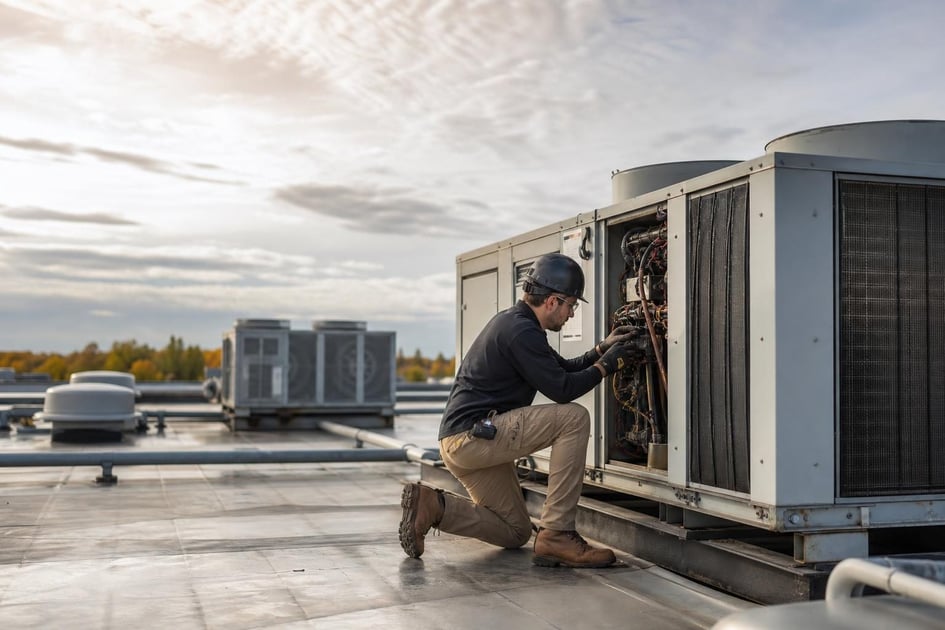
Replacing or upgrading a commercial HVAC system does not have to drain your operating account. Equipment financing lets you spread the cost over time while the system itself secures the loan, which keeps rates competitive and preserves your cash flow for payroll, inventory, and emergencies. If your current unit is failing, your energy bills are climbing, or you are expanding into a new location, financing is the most common way owner-operators acquire heating and cooling equipment without tying up capital.
What Commercial HVAC Financing Covers
Financing applies to far more than the outdoor condenser and indoor air handler. Lenders in the equipment space treat the full project as collateral, which means you can bundle the unit, installation, ductwork modifications, thermostats, and controls into a single arrangement. This matters because a commercial install often runs higher than the equipment sticker price once you factor in rigging, electrical, refrigerant lines, and commissioning. The Small Business Administration notes that equipment loans are consistently one of the most common ways small businesses acquire productive assets.
At Provide Capital, the range for Commercial Hvac System financing runs from $5,000 up to $5 million. On the lower end, that might cover a rooftop replacement for a small retail shop or a multi-zone mini-split for a professional office. On the upper end, it can finance chiller plants, VRF systems, or full building automation for manufacturing or healthcare facilities. The equipment itself serves as collateral, so you do not need to pledge real estate or other assets to secure the transaction.
Key Insight: Many contractors quote equipment and labor separately. When you apply for financing, ask your HVAC contractor for a single turnkey proposal that includes all materials, permits, and startup labor. Lenders prefer a unified invoice because it reduces the risk of liens or incomplete work, and it lets you lock in one monthly payment instead of managing multiple draws.
Already have a machine in mind?
Provide Capital finances new and used equipment from $5,000 to $5 million, with same-day decisions possible.
Apply NowNew vs. Used HVAC Equipment: What to Know
You can finance either new or used commercial HVAC equipment, but the terms will differ. New units carry full manufacturer warranties, longer expected lifespans, and usually qualify for the best available rates because the collateral value is highest at closing. Used equipment can make sense when you are outfitting a secondary location, need a temporary solution, or found a well-maintained unit at auction.
The age of the equipment directly affects your rate and term. A unit that is one to three years old may still qualify for a five- to seven-year term, while a unit over ten years old might be limited to three years or require a larger down payment. Lenders also check whether the used system uses refrigerants that are being phased down under EPA rules; R-22 equipment is increasingly difficult to finance because replacement refrigerant costs are rising and resale value is falling.
Before committing to used equipment, verify the remaining warranty and whether it is transferable. Some manufacturers honor warranties only for the original purchaser, which leaves you exposed if the compressor fails in year two. If you choose new, ask about extended warranty programs and whether the manufacturer offers a labor allowance in the first year. Both choices are valid, but the financing structure should match the expected useful life of the machine.
Loan vs. Lease: Which Structure Fits Your Business?
The two most common ways to finance commercial HVAC systems are equipment loans and fair-market-value leases. A loan puts the title in your name from day one, builds equity, and generally offers the strongest tax benefits for businesses that want to own the asset. A lease keeps the title with the lender, gives you lower monthly payments in many cases, and often includes an option to purchase, renew, or return the equipment at the end.
The right choice depends on how long you plan to keep the building, your current tax position, and whether you want to avoid a large capital expense on the balance sheet. A restaurant operator with a ten-year lease might prefer a lease that matches the restaurant term, while a manufacturer who owns the facility outright usually wants a loan so the asset belongs to the company once it is paid off.
| Factor | Equipment Loan | Fair-Market-Value Lease |
|---|---|---|
| Ownership | You own the system; title transfers at closing | Lender owns the system; you have use rights |
| Monthly payment | Higher; you are paying off full cost plus interest | Lower; you pay for use, not full amortization |
| Term length | Typically 3 to 7 years | Typically 2 to 5 years |
| End-of-term | No obligation; equipment is yours | Option to buy, renew, or return |
| Tax treatment | Interest deductible; depreciation and Section 179 available | Payments often fully deductible as operating expense |
| Balance sheet | Asset and liability recorded | May stay off balance sheet depending on structure |
| Best for | Owner-occupied buildings, long-term use | Short-term locations, rapid technology turnover |
Rates vary by credit profile, equipment age and term. Borrowers with strong commercial credit and established time in business generally see the most favorable pricing. If your credit is bruised or your company is younger, you may still qualify, but the term could be shorter or the down payment requirement larger.
If you are unsure which path to take, see what you qualify for and compare the monthly impact of a loan versus a lease on your specific equipment quote.
Qualification Criteria in Detail
Equipment lenders evaluate applications differently than banks that issue unsecured lines of credit. Because the HVAC system itself is collateral, the emphasis shifts from perfect credit to cash-flow sufficiency and equipment value. That said, there are several factors that determine approval, rate, and term.
Time in Business
Most equipment finance companies prefer at least two years of operating history. That gives them bank statements and tax returns to verify revenue consistency. If you have been in business less than two years, you may still be eligible with a larger down payment or a strong personal guarantor, but the rate will reflect the additional risk.
Revenue and Bank Statements
Lenders typically review the last three to six months of business bank statements. They are looking for steady deposits, reasonable average daily balances, and no recent overdrafts or NSF activity. A seasonal business, such as an agricultural operation or a tourism-dependent restaurant, should explain its revenue cycle upfront so the underwriter does not misread a slow winter as distress.
Credit Profile
Both business and personal credit are reviewed. A business credit score above 75 or a personal score in the mid-600s and above will generally open the door to competitive terms. Scores below that do not automatically disqualify you, but they may push the deal into a program with a shorter term or a 10 to 20 percent down payment.
Equipment Specifications
The underwriter will want the make, model, year, and serial number if the unit is used, plus the vendor invoice or quote. New equipment from recognized manufacturers carries higher collateral value, which improves the loan-to-value ratio. Obscure brands or imported units with limited service networks may require additional equity from the borrower.
Down Payment
Zero-down programs exist for well-qualified buyers, but many transactions include a first-and-last payment or a 5 to 15 percent security deposit. The down payment reduces the lender's exposure and can lower your monthly obligation by hundreds of dollars.
Pro Tip: Prepare a one-page summary of your business before you apply. Include your entity type, years in operation, approximate annual revenue, and a brief explanation of why the equipment is needed. Underwriters process dozens of files per day; a clear narrative can move your application to the top of the stack and reduce back-and-forth requests.
Tax Treatment for 2026
Tax strategy is one of the biggest reasons business owners choose financing over paying cash. For tax year 2026, the Internal Revenue Code offers multiple ways to deduct or depreciate commercial HVAC equipment, but the exact dollar limits and phase-out thresholds adjust annually for inflation. Because these figures change each year, you should confirm the current ceiling with your CPA before signing any documents.
Section 179 allows businesses to deduct the full purchase price of qualifying equipment in the year it is placed in service, subject to an annual limit and a total investment phase-out. Bonus depreciation may also apply to a portion of the cost, though the percentage has been stepping down in recent years. If you structure the acquisition as a loan, you own the equipment and can take advantage of these deductions. If you lease, your monthly payments are generally treated as operating expenses and deducted as paid.
There is no universally correct choice. A profitable company looking to reduce its 2026 tax liability might prefer a loan to capture accelerated depreciation. A business with net operating losses might prefer the simplicity of lease payments. Either way, never make a financing decision based on tax savings alone; the cash-flow impact and total cost of the arrangement matter just as much.
By the Numbers: A $75,000 rooftop unit financed over five years might carry a monthly payment in the low thousands depending on your credit profile and the age of the equipment. Over the full term, the interest cost is often outweighed by the energy savings of a modern high-efficiency system, which can cut utility bills by 20 to 40 percent compared to a unit that is fifteen or twenty years old.
Find the right financing structure
Tell us about the equipment you need and we will show you the options that fit your business.
See Your OptionsCost Examples and Payment Ranges
Commercial HVAC pricing varies widely by region, building size, and system type, but owner-operators often want a realistic sense of what the monthly obligation will look like. Below are illustrative scenarios based on common projects financed through Hvac equipment financing programs.
A small professional office replacing a 3-ton packaged rooftop unit might see an installed cost between $8,000 and $15,000. Financed over five years, the monthly payment could range from the high hundreds into the low thousands. A mid-sized restaurant installing a 10-ton system with makeup air and exhaust hood integration might face a total project cost of $35,000 to $55,000, with payments spread across a five- to seven-year term.
On the larger end, a manufacturing facility or hospital adding a chiller-based central plant could require $250,000 to $500,000 in equipment and controls. These transactions often carry longer terms, up to seven years, and may require two or three quotes from different vendors so the lender can validate fair market value. Even at that scale, the equipment still serves as collateral, which avoids liens on the real property.
Remember that these are broad ranges. Your actual payment depends on the equipment cost, your credit profile, time in business, and the term you select. As Forbes has reported, energy-efficient equipment upgrades typically deliver stronger returns than deferred maintenance for owner-operated commercial properties. Always request a written amortization schedule so you know exactly how much interest you will pay over the life of the agreement.
Industry-Specific Use Cases
Commercial HVAC needs differ by sector, and lenders who specialize in equipment understand those nuances. Here is how financing shows up across several industries.
U.S. Census Bureau data show that small businesses in construction, healthcare, and food service account for a significant share of commercial equipment investment.
Healthcare and Dental
Medical offices and dental practices must maintain precise temperature and humidity control for patient comfort and equipment protection. A failed chiller can force appointment cancellations and revenue loss. Financing lets a practice replace a critical unit over a weekend without drawing down the line of credit reserved for payroll and supplies.
Restaurants and Food Service
Kitchen heat loads, grease exhaust, and health-code ventilation requirements make HVAC one of the largest capital expenses for restaurants. A new location often needs a complete hood and makeup-air system before it can open. Financing the equipment alongside the build-out preserves cash for inventory and staff training during the first critical months.
Manufacturing and Warehousing
Large bays with high ceilings and heavy machinery generate enormous heat loads. Destratification fans, evaporative coolers, and high-volume low-speed fans are often financed alongside traditional HVAC to create a complete climate strategy. Because manufacturing revenue can be cyclical, a loan with a fixed monthly payment helps operators budget through slow quarters.
Agriculture and Food Processing
Packing houses, cold storage rooms, and greenhouse operations rely on refrigeration and climate control as core production tools, not office amenities. A breakdown during harvest season can spoil inventory. Financing spreads the cost across the year so capital is available when seed, fertilizer, or labor costs peak.
Transportation and Fleet Maintenance
Truck terminals, rail yards, and maintenance garages need heating in winter and ventilation year-round to manage exhaust fumes. A shop with multiple bays may need a unit for every two stalls. Industrial Hvac System financing covers these heavier units, which often run larger than standard commercial packages.
Common Mistakes When Financing HVAC
Even experienced owners trip over predictable pitfalls. Avoiding them saves time, money, and frustration.
The first mistake is financing only the equipment and forgetting installation. A lender cannot disburse funds for work that is not itemized on the invoice. If your contractor discovers asbestos abatement or electrical panel upgrades mid-project, you may need to pay those costs out of pocket unless they were included in the original quote.
The second mistake is choosing a term that outlasts the equipment life. A seven-year loan on a used unit with a ten-year expected lifespan is reasonable. A seven-year loan on a twenty-year-old chiller is risky; you could still owe money when the system fails.
The third mistake is neglecting seasonal energy incentives. Many utility companies offer rebates for high-efficiency commercial equipment, and some manufacturers run promotional rate buydowns in the shoulder seasons. Ask your contractor about every available incentive before you finalize the financing amount. It is easier to reduce the loan at closing than to apply a rebate retroactively.
What Documentation You Need
Preparation speeds up approval. Most lenders will request the following:
- A completed one-page application with business and guarantor information
- The last three to six months of business bank statements
- A recent business tax return, usually for the most recent completed year
- A copy of the equipment quote or invoice, including make, model, and vendor contact
- A voided business check for automatic payment setup
- Proof of business formation, such as articles of incorporation or a partnership agreement
If you are buying used equipment, add a maintenance history or inspection report. If the project involves installation, the quote should separate equipment from labor so the lender knows exactly what is being financed. Some lenders will pay the vendor directly; others deposit funds into your account after you sign. Clarify the disbursement process before you commit.
What Happens After Approval
Same-day approvals are possible when the file is complete and the equipment is standard. Once approved, you will receive a term sheet or lease agreement spelling out the payment amount, term, buyout options, and any prepayment penalties. Read it carefully. Pay special attention to automatic renewal clauses in leases and whether the loan has a prepayment discount or penalty.
After you sign, the lender typically funds within one to three business days. The vendor is paid, the equipment is delivered, and your payments begin according to the schedule. If you are replacing a failed unit, coordinate the delivery date with your contractor so you are not paying for a system that sits idle in the parking lot.
Throughout the term, keep the equipment insured and maintained. The financing agreement likely requires both. A lien or security interest remains on the equipment until the final payment clears, so skipping insurance could put you in default even if your payments are current.
Pro Tip: Set a calendar reminder thirty days before your final payment. Call the lender to confirm the exact payoff amount, including any trailing per-diem interest, and request a lien release or title transfer in writing. Closing the administrative loop protects you when it is time to sell the building or refinance other assets.
Ready to move forward?
More than 10,000 businesses have financed equipment with Provide Capital. See what you qualify for today.
Get StartedFrequently Asked Questions
Can I finance HVAC equipment with bad credit?
Yes, but the terms will reflect the risk. Expect a shorter term, a larger down payment, or a slightly higher rate. Because the equipment itself is collateral, equipment lenders can be more flexible than unsecured creditors. Strong revenue and a healthy bank account can offset a weaker credit score.
How long does approval take?
Many applications receive a decision within a few hours to one business day. Same-day approvals are possible when the file is complete and the equipment is standard. Delays usually happen when bank statements are missing, the vendor quote is vague, or the business structure is complex.
Can I include installation costs in the financing?
Yes, provided the installation is itemized on the vendor invoice or proposal. Most lenders prefer a turnkey quote that bundles equipment, materials, and labor. Standalone labor contracts that are not tied to the equipment purchase may need to be paid separately.
Is a down payment always required?
No. Well-qualified borrowers can often secure 100 percent financing. However, a down payment of 5 to 15 percent can improve your rate, lower your monthly obligation, and increase the likelihood of approval if your credit or time in business is marginal.
What happens if I want to pay off the loan early?
It depends on the agreement. Some loans charge no prepayment penalty and may even offer a discount for early payoff. Others use a fixed fee or a sliding scale based on how many payments remain. Ask for the prepayment language in writing before you sign.
Do I own the equipment at the end of a lease?
In a fair-market-value lease, you typically have three options at the end of the term: purchase the equipment at its then-current fair market value, renew the lease for an additional period, or return the equipment to the lender. If ownership is important to you, an equipment loan or a dollar-buyout lease is the better structure.
Can I finance used or refurbished equipment?
Yes. Used equipment is common in secondary locations and backup applications. The key considerations are age, remaining useful life, and whether the refrigerant is still supported. Expect a shorter term and possibly a larger equity contribution than you would need for new equipment.
Will financing HVAC hurt my ability to borrow for other needs?
Generally no. Equipment financing is secured by a specific asset and often reports differently than revolving credit. In fact, successfully paying off an equipment loan can strengthen your business credit profile, making future borrowing easier.
Next Steps
A new commercial HVAC system is a major investment, but it does not have to strain your cash reserves. Financing spreads the cost over time, keeps the equipment itself as collateral, and lets you capture modern efficiency gains without waiting. Whether you need a single rooftop unit or a full building automation upgrade, the right structure depends on your building, your tax position, and how long you plan to operate at that location.
Start by gathering your bank statements, your most recent tax return, and a quote from your HVAC contractor. Then get a same-day decision on your equipment and compare your options side by side. A specialist can walk you through the loan-versus-lease math, help you structure the quote for the cleanest approval, and make sure you are not leaving utility rebates on the table.
Disclaimer: The information provided in this article is for general educational purposes only and is not financial, legal, or tax advice. Funding terms, qualifications, and product availability may vary and are subject to change without notice. Provide Capital does not guarantee approval, rates, or specific outcomes. For personalized information about your business funding options, contact our team directly.