The Short Answer
Choose a $1 buyout lease if you plan to keep the equipment for its full useful life and want the tax benefits of ownership in the 2026 tax year. Choose an FMV lease if lower monthly payments and end-of-term flexibility matter more than owning the asset.
What Is a $1 Buyout Lease?
A $1 buyout lease is a capital lease structured around ownership. You make fixed monthly payments over an agreed term, and when the last payment clears, you pay $1 to take title. From an accounting perspective, the asset is treated as yours during the lease, which means you can claim depreciation. For the 2026 tax year, you may also be able to apply Section 179 expensing or bonus depreciation, though the exact 2026 limits and bonus depreciation percentage depend on current IRS rules and should be confirmed with your CPA.
Because the equipment itself serves as collateral, you do not need to pledge real estate or other assets. Rates vary by credit profile, equipment age and term. Provide Capital structures these transactions from $5,000 to $5 million, so the structure works whether you are buying a single welder or financing a dozen dump trucks.
This structure fits owner-operators who plan to run their machines until the hour meter spins well past peak efficiency. If you expect to put heavy hours on a skid steer and handle maintenance in-house, owning it for $1 at the end is usually the smarter play.
What Is an FMV Lease?
An FMV lease is an operating lease that treats the equipment as a rental for the term. You pay for the use of the asset, not its full cost. At the end, you can return the equipment, renew the lease, or purchase it at its then-current fair market value. There is no $1 bargain purchase option.
Monthly payments are typically lower than a $1 buyout because you are only covering the equipment’s depreciation during the term plus finance charges. The lessor retains the risk that the equipment might be worth less than projected at the end. That makes FMV leases attractive when you need to preserve cash flow for labor, fuel, or inventory.
Provide Capital writes FMV leases on the same collateral-backed basis as our capital leases. The equipment secures the deal, which keeps the approval process efficient and rates competitive. We serve construction, transportation, agriculture, healthcare, dental, restaurant and food service, manufacturing, HVAC and forestry businesses nationwide.
Side-by-Side Comparison
The table below breaks down the core differences.
| Feature | $1 Buyout Lease | FMV Lease |
|---|---|---|
| Ownership goal | Built for ownership | Built for use |
| End-of-term buyout | $1 | Fair market value |
| Monthly payment | Higher (full cost recovery) | Lower (use-only cost) |
| Collateral | Equipment only | Equipment only |
| Tax treatment for 2026 | Depreciation, potential Section 179 or bonus depreciation (confirm with CPA) | Lease payments may be deductible (confirm with CPA) |
| Typical term | Mid-range to long term | Short to mid-range term |
| Best for | Long-life assets | Rapid refresh cycles |
How the Math Differs Over the Term
Under a $1 buyout lease, the lessor recovers nearly the entire cost of the equipment through your payments, leaving only that symbolic $1 residual. Your payment is calculated on the full amount financed, minus any down payment, spread across the term plus interest. That is why the monthly number is higher, but it is also why you automatically own the machine free and clear at the end.
Under an FMV lease, the lessor estimates what the equipment will be worth at the end of the term and subtracts that projected residual from the financed amount. You pay only the difference. If the lessor projects that a commercial mower will retain strong value after a short term, your payments drop accordingly. If the market shifts and the asset is worth less, the lessor eats the loss—provided you return the equipment in acceptable condition.
A $1 buyout on a low-cost piece of shop equipment still ends with a single dollar transfer. Because Provide Capital finances amounts from $5,000 to $5 million, both formulas scale. An FMV lease on a high-dollar fleet still hinges on that end-of-term residual. The math is the same whether the deal is small or large.
Tax Treatment in the 2026 Tax Year
With a $1 buyout lease, you record the equipment as an asset and depreciate it. For the 2026 tax year, you may also elect Section 179 expensing or bonus depreciation, though bonus depreciation has been scheduled to phase down and the exact percentage for 2026 depends on federal law in effect during that year. Ask your CPA to run the numbers using the 2026 limits before you file.
With a true FMV operating lease, you generally deduct the lease payment as a business expense in the year it is paid. That creates a predictable, level write-off without the complexity of depreciation schedules. However, tax rules for leases have tightened over time, and the deductibility can depend on whether your business is taxed as a corporation, partnership or sole proprietorship. Your CPA can confirm how a 2026 FMV lease deduction will look on your specific return.
Either way, the equipment must be placed in service during the 2026 tax year to affect that year’s filing. Waiting until December to close a deal can backfire if delivery slips into January.
Which Equipment Fits Each Structure?
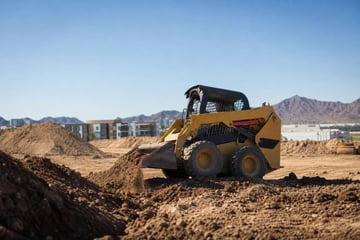
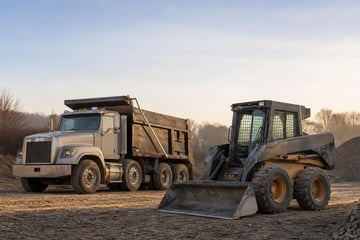
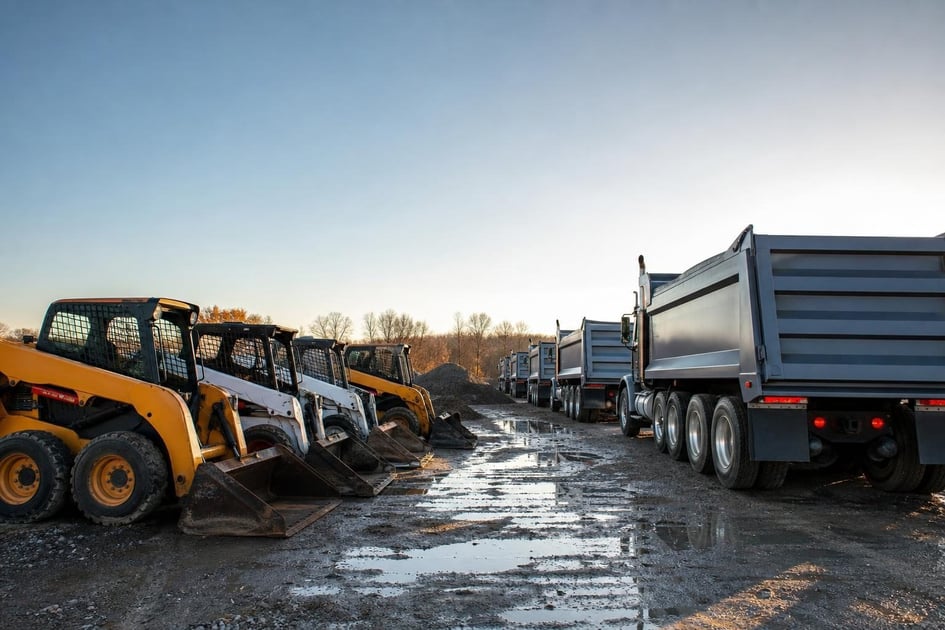
Durable, long-life assets almost always favor the $1 buyout. If you are adding a skid steer to your construction fleet or a dump truck to your hauling operation, you expect that machine to earn revenue for many years. Owning it outright for $1 means no renegotiation, no return inspection and no mileage or hour-meter penalties. Many construction operators use Skid Steers financing to preserve cash. They also use Dump Trucks financing for fleet growth. These deals are often written as $1 buyout leases because the asset stays in service long after the note is paid.
An FMV lease shines when the technology changes quickly or when you want flexibility at the end. A Commercial Hvac System financing package can make sense as an FMV deal if you expect efficiency standards to shift and you would rather upgrade than manage disposal of an aging rooftop unit. Similarly, specialty vehicles with rapid obsolescence sometimes fit better under FMV terms because the residual risk sits with the lessor.
Provide Capital finances both new and used equipment under either structure, across all industries we serve. The equipment age, hours and condition affect the rate and term, but they do not automatically disqualify a deal.
End-of-Term Scenarios
At the end of a $1 buyout lease, you remit the final $1 and the title transfers. There is no ambiguity. You can continue operating, sell the equipment privately, or trade it in toward your next purchase. For an owner-operator who runs tight routes and keeps maintenance records, that certainty is valuable.
At the end of an FMV lease, you face a choice. Return the equipment and walk away. Renew the lease for an additional term at renegotiated payments. Or buy the asset at its fair market value, determined either by an independent appraisal or by a formula written into the original agreement. If you return the machine, expect an inspection for excessive wear. If you buy it, expect to finance or pay the FMV figure in cash.
Neither outcome is better in absolute terms; they simply serve different business plans. If you know you want ownership, the $1 buyout removes the guessing game.
Rates, Collateral and Approvals
Provide Capital finances new and used business equipment from $5,000 to $5 million. The equipment itself is the collateral, which keeps rates competitive and protects your other assets. Rates vary by credit profile, equipment age and term. Same-day approvals are possible when your application, equipment quote and vendor details are complete. We underwrite deals for construction, healthcare, dental, restaurant and food service, manufacturing, transportation, agriculture, HVAC and forestry operators in every state.
Because the collateral is the machine you are buying, we can move quickly even on unconventional transactions. A used dump truck with high hours, a refurbished skid steer, or a commercial HVAC package for a restaurant buildout can all be reviewed the same day if the paperwork is clean. You do not need perfect credit, but you do need verifiable revenue and a clear equipment description.
Frequently Asked Questions
Can I deduct the full monthly payment on a $1 buyout lease?
No. Because a $1 buyout lease is structured for ownership, you generally record the asset on your balance sheet and take depreciation. For the 2026 tax year, you may also qualify for Section 179 or bonus depreciation, but you should confirm the exact 2026 rules and income limitations with your CPA before counting on a specific deduction.
Is an FMV lease considered debt on my balance sheet?
A true FMV operating lease may not appear as debt in the same way a loan does, but accounting standards have changed over the last several years. Many FMV leases now create a right-of-use asset and liability. Your bookkeeper or CPA can tell you exactly how the lease will appear on your 2026 financial statements.
What happens if I want to pay off the lease early?
Early buyout language varies. On a $1 buyout lease, you are already heading toward ownership, so prepaying the remaining balance usually triggers no penalty other than the interest you save. On an FMV lease, an early purchase might require you to pay the remaining payments or the fair market value, whichever is greater. Check the specific clause before you sign.
Can I finance used equipment with either lease type?
Yes. Provide Capital finances both new and used equipment from $5,000 to $5 million. Used skid steers, dump trucks and commercial HVAC units all qualify under $1 buyout and FMV structures. The equipment age and condition affect rate and term, but used assets are explicitly eligible.
Which structure offers lower rates?
Neither structure guarantees a lower rate. Rates vary by credit profile, equipment age and term. An FMV lease often carries a lower monthly payment because of the residual, but the rate itself depends on your credit, the equipment and the length of the term. The best way to compare is to request a quote for both structures on the same machine.
How fast can I get approved?
Same-day approvals are possible when we have a complete application, equipment quote and vendor invoice. Because the equipment serves as collateral, we can move quickly on transactions ranging from $5,000 to $5 million. Final documentation and funding typically follow within a couple of business days after approval, assuming insurance and lien searches come back clean.
Next Step
Call Provide Capital with your equipment quote ready. We will price both a $1 buyout lease and an FMV lease on the same asset so you can see the exact monthly difference side by side. Whether you are financing $5,000 in shop tools or a $5 million fleet package, we keep the deal simple by using the equipment as collateral. Same-day approvals are possible, and we fund transactions nationwide for construction, transportation, agriculture, manufacturing and all the industries we serve.
Disclaimer: The information provided in this article is for general educational purposes only and is not financial, legal, or tax advice. Funding terms, qualifications, and product availability may vary and are subject to change without notice. Provide Capital does not guarantee approval, rates, or specific outcomes. For personalized information about your business funding options, contact our team directly.