Yes, you can finance business equipment with bad credit. Because the equipment itself acts as collateral, lenders can offer competitive structures even when your personal credit score is below 650. At Provide Capital, we finance new and used business equipment from $5,000 to $5 million nationwide for owner-operators in construction, transportation, agriculture, healthcare, dental, manufacturing, restaurants, HVAC, and forestry.
How Collateral Changes the Conversation
Most unsecured business loans rely entirely on your personal credit and cash flow. Equipment financing is different. The lender files a UCC lien on the asset, so if cash flow tightens, the equipment still secures the deal. That collateral is why an owner-operator with a 580 score can still fund a critical excavator or oven while another borrower with the same score gets declined for an unsecured line.
The lender’s risk is tied to the loan-to-value ratio. If you are financing $50,000 of equipment and the secondary market value is $45,000, the deal is stronger than an unsecured loan for the same amount. This is why a 10% or 15% down payment can turn a marginal file into an approval. The equity buffer protects the lender and shows you have skin in the game.
Rates vary by credit profile, equipment age and term. A borrower with a 680 score financing a one-year-old skid steer over 36 months will see different numbers than a borrower with a 620 score financing a 10-year-old box truck over 60 months. Both can be approved, but the structure adjusts to the risk.
Same-day approvals are possible when you submit a complete package: equipment invoice, driver’s license, voided check, and three months of business bank statements. Missing documents are what turn a same-day answer into a three-day wait.
What Lenders Review When Credit Is Thin or Damaged
Your credit score is one data point, not the entire story. Underwriters weight several factors to decide whether to fund a deal and how to structure it. Understanding these factors lets you present your business in the best light.
- Time in business: Two years of operating history beats six months. If you are newly formed, expect a larger down payment or a shorter term. Lenders want to see that you have survived at least one full business cycle.
- Monthly revenue: Consistent deposits matter more than top-line gross. A construction company doing $30,000 a month in steady deposits looks stronger than a restaurant doing $60,000 one month and $8,000 the next. Seasonality is fine if you can show you manage it.
- Equipment age and type: Hard assets with long useful lives and broad resale markets are easier to approve. A used dump truck or commercial mower holds value. Niche or obsolete machinery is harder to collateralize because the lender cannot easily estimate recovery value.
- Down payment: 10% to 20% down is common for challenged credit, though zero-down options exist for strong collateral and strong revenue. The more equity you inject, the more comfortable the underwriter becomes.
- NSFs and negative days: Recent overdrafts, unpaid child support, or open tax liens can override a decent score. Clean up your business checking account for 60 days before applying. Even three NSFs in 90 days can trigger a stipulation or a decline.
- Personal credit depth: A 620 score with three open trade lines and no recent delinquencies is viewed differently than a 620 score with multiple charge-offs in the last 12 months. Recency and severity matter.
Leasing vs. Financing: Which Works Better for Low Credit?
Both paths can get you the machine, but the ownership structure and tax treatment differ. A comparison table makes the choice clearer.
| Feature | Equipment Financing | Equipment Lease |
|---|---|---|
| Ownership | You own the equipment; lender holds a lien until payoff. | Lessor owns the equipment; you may have a buyout option. |
| Credit emphasis | Collateral and cash flow can offset weak credit. | Stronger credit often required for one-dollar buyout leases; FMV leases may be more flexible. |
| Monthly payment | Varies by credit profile, equipment age and term. | Typically fixed; FMV leases may be lower. |
| Tax treatment | Interest deduction plus depreciation for tax year 2026; consult your CPA. | Lease payments generally deductible as operating expense; confirm with your CPA. |
| End of term | UCC lien released; you hold clear title. | Return, renew, or purchase at fair market value or predetermined amount. |
If you plan to run the equipment for 10 years and want the equity, financing is usually the better fit. If you need to refresh technology every 36 months, leasing can make sense despite the credit hurdles. Keep in mind that with bruised credit, you may find more financing options than true tax leases because the collateral matters more to the underwriter.
Industries and Equipment That Move Fastest with Challenged Credit
Provide Capital funds owner-operators nationwide. Certain assets have deep resale markets, which means underwriters can move quickly even when credit is bruised.
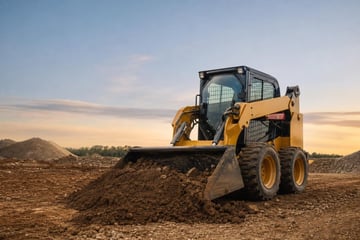
Construction remains the largest request category. Contractors use Skid Steers financing for grading, loading, and site prep. A used skid steer with 1,500 hours and a known brand name is easier to collateralize than a prototype attachment. Contractors often buy these machines in early spring to lock in summer work, so having your paperwork ready before the busy season helps.
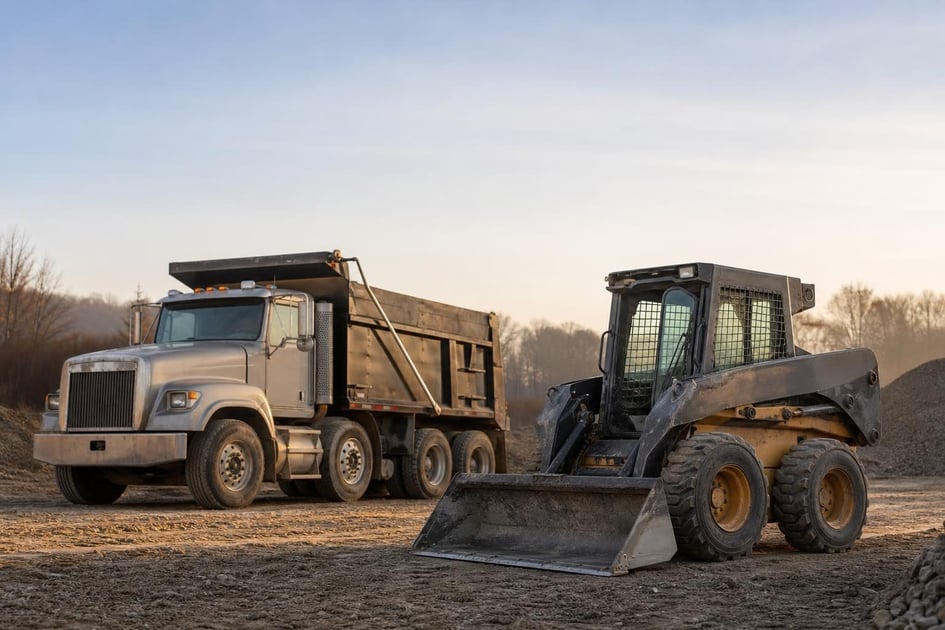
Transportation and dump truck operators rely on hard-working iron. Dump Trucks financing covers tandem, tri-axle, and quad-axle units used in hauling and site development. Because dump trucks hold value in the secondary market, lenders can offer longer terms even when credit is less than perfect. Owner-operators in this space often see the truck itself as their office, so uptime is non-negotiable.
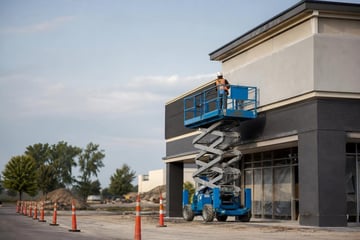
For facilities maintenance, electrical contractors, and sign installers, Scissor Lifts financing is a frequent request. These units have predictable salvage values and broad buyer pools at auction, which lowers the lender’s risk profile. A 19-foot slab scissor lift or a 45-foot rough-terrain unit both command solid resale prices if maintained.
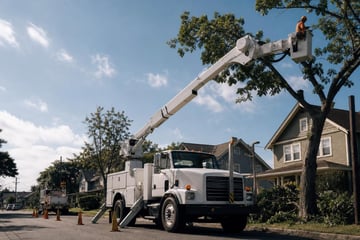
Other fast-moving categories include commercial mowers for landscapers, walk-in coolers for restaurants, CNC machines for manufacturing, tractors for agriculture, and bucket trucks for utilities. The common thread is a liquid secondary market and a clear commercial use. We also serve healthcare and dental practices looking to finance imaging equipment, chairs, and sterilization units, though medical equipment often requires more specialized collateral review.
Tax Moves to Consider for Tax Year 2026
The equipment you finance in 2026 may qualify for Section 179 expensing or bonus depreciation, but annual limits and phase-out thresholds adjust each year. For tax year 2026, you should speak with your CPA about how much you can deduct upfront versus depreciate over the schedule. Financing does not eliminate these benefits; you can still take available deductions on equipment you buy with a loan. Keep your equipment invoice and finance agreement organized for your accountant.
Some borrowers with challenged credit worry that a higher rate makes the tax benefit less meaningful. That is rarely true. If the equipment generates revenue from day one, the deduction for tax year 2026 plus the cash-flow boost of financing often still produces a positive return. Run the numbers with your CPA before you let tax uncertainty delay a purchase that could land you a contract.
How to Strengthen a Weak Application
You cannot rebuild your credit overnight, but you can improve your file before you hit submit.
- Offer more down. Even 5% extra can shift a decline into an approval by lowering the lender’s loan-to-value. If you can put 15% down instead of 10%, do it.
- Provide a co-signer. A business partner or spouse with stronger credit adds a second repayment source. Make sure they understand they are personally liable if the business cannot pay.
- Clean up bank statements. Stop NSFs for at least two full statement cycles. Lenders read overdrafts as cash-flow stress. If you have three or more NSFs, wait until you have 60 clean days.
- Buy newer equipment. A 2019 model with maintenance records is less risky than a 2008 model with no history. Newer iron also means fewer unexpected repair bills that could strain your ability to pay.
- Write a short narrative. If your credit was damaged by a single event—divorce, medical issue, or a bad job—explain it. Underwriters are humans. A one-paragraph explanation attached to your application can turn a decline into a conditional approval.
What the Approval Process Looks Like
Most deals follow a simple timeline. You submit an application and equipment details. An underwriter reviews credit, collateral value, and bank statements. If the numbers work, you receive terms. You sign and the lender pays the vendor or private seller. Funds rarely touch your account; the lender wires directly to the seller to perfect the lien.
For deals under $150,000, documentation is light: single-page application, invoice, bank statements, and proof of business. For transactions from $150,000 to $5 million, expect two years of tax returns, a debt schedule, and an equipment appraisal. The upper end of the range is reserved for established operators with strong collateral, but we have funded first-time buyers at the $5,000 to $50,000 level with minimal history.
After you sign, funding usually occurs within 24 to 48 hours. If the seller is a private party, the lender may need to verify title and coordinate a payoff of any existing lien. Dealer transactions are faster because the title flow is standardized.
FAQ
Can I get equipment financing with a 500 credit score?
It is possible, but the structure changes. Expect a larger down payment, a shorter term, and for rates to vary by credit profile, equipment age and term. Strong revenue and a high-demand collateral asset help offset the score. We see approvals in the low 500s when the equipment is strong and the business has consistent deposits.
Will applying hurt my credit score?
Most equipment lenders perform a hard inquiry on your personal credit. The impact is usually small and temporary, but multiple hard pulls in a short window can add up. Ask the lender whether they review credit before running a full bureau. Some can give you a soft-quote preview based on basic information.
How much down payment is required?
Down payments range from zero to 20% or more depending on credit and collateral. With bad credit, 10% to 20% is common. A strong piece of equipment can sometimes reduce that requirement. If you can afford a larger down payment, you may also see a lower rate because the lender’s risk drops.
Is the equipment the only collateral?
In most cases, yes. The lender takes a security interest in the machine itself. For larger transactions or weaker files, a lender may also file a blanket UCC on business assets or require a personal guarantee, but the primary collateral remains the equipment. That is why this product exists for borrowers who cannot qualify for unsecured credit.
How fast can I get approved?
Same-day approvals are possible when your file is complete and the collateral is straightforward. Large transactions or missing documents slow the process. Have your invoice, bank statements, and business documentation ready before you apply. If the underwriter has to chase you for a voided check, you lose 24 hours.
Can I finance used equipment with bad credit?
Yes. Provide Capital finances both new and used business equipment. Used equipment can actually improve approval odds because the lower price reduces the lender’s exposure. Stick to brands with strong resale values and avoid obsolete or highly specialized machines. A well-maintained used unit from a reputable dealer is often the smartest way to rebuild your credit profile.
Ready to Move Forward?
Gather your equipment invoice, last three months of business bank statements, and your driver’s license. Call Provide Capital or start an application online. We work with owner-operators across construction, healthcare, dental, restaurants, manufacturing, transportation, agriculture, HVAC, and forestry. Whether you need $5,000 in refrigeration or $5 million in earthmoving iron, we can review your scenario and give you a straight answer—often the same day.
Disclaimer: The information provided in this article is for general educational purposes only and is not financial, legal, or tax advice. Funding terms, qualifications, and product availability may vary and are subject to change without notice. Provide Capital does not guarantee approval, rates, or specific outcomes. For personalized information about your business funding options, contact our team directly.