Yes, You Can Finance Agriculture Equipment with Bad Credit
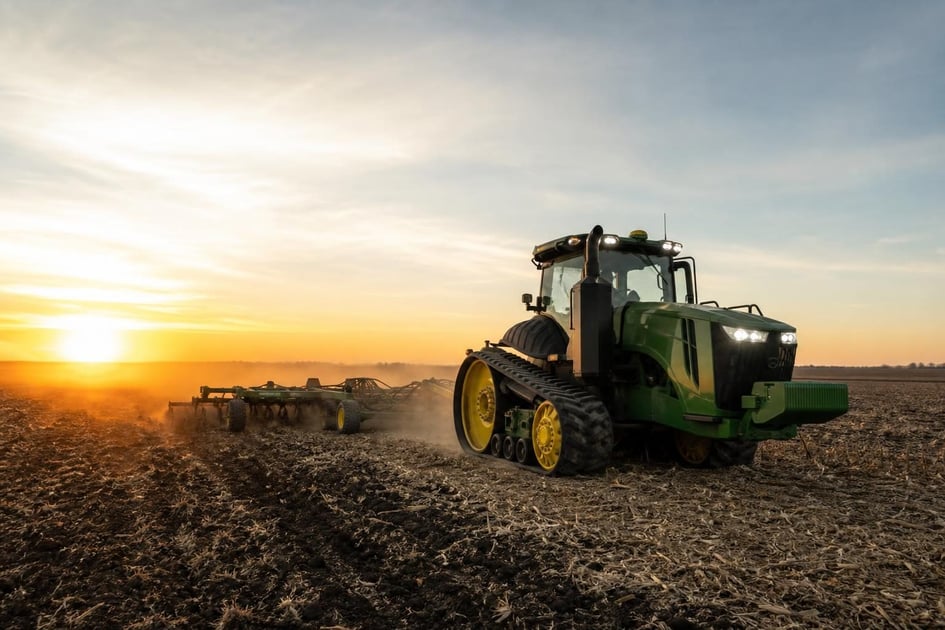
You can get approved for agriculture equipment financing with bad credit. The decisive factor is usually not your personal credit score alone, but the value of the equipment you are buying and the cash flow of your operation. Because the loan is secured by the machine itself, lenders can offer terms that unsecured financing cannot match. Provide Capital finances new and used business equipment from $5,000 to $5 million for farms and ranches nationwide. The equipment itself is the collateral, which keeps rates competitive. Rates vary by credit profile, equipment age and term, and same-day approvals are possible when your file is complete.
Farm owners often assume a low credit score locks them out of capital. In reality, equipment financing is built around the asset. A lender’s primary security is the tractor, combine, or baler sitting in your field. That collateral reduces risk, which means even borrowers with past credit events can qualify. The trade-off may be a shorter term, a larger down payment, or additional documentation, but the door remains open.
Why Collateral Matters More Than Your Credit Score
Unsecured borrowing relies entirely on your signature and credit history. Equipment financing works differently. The lender takes a security interest in the machine through a UCC-1 filing. If cash flow ever becomes a problem, the lender can recover value from the asset. This structure is why our Agriculture equipment financing options remain accessible across a wide range of credit profiles.
For a farm owner, this is good news. Your operation may have gone through a rough season, a medical event, or a divorce that damaged personal credit. Meanwhile, your business still generates revenue during planting and harvest. A lender who understands agriculture will weigh the equipment’s resale value and your farm’s cash flow more heavily than a raw credit score. The machine itself is the collateral, which keeps rates lower than credit cards or merchant cash advances. According to the Equipment Leasing and Finance Association, businesses nationwide rely on secured equipment finance to acquire productive assets without draining cash reserves.
What Lenders Review When Your Credit Is Bruised
When credit is challenged, underwriters look for compensating strengths. They build a case around your ability to pay and the quality of the collateral. Here is what matters most.
The Story Behind Your Credit Report
A single number does not tell the whole story. A Chapter 7 bankruptcy five years ago with clean credit since is viewed differently than three 60-day late payments in the last six months. Lenders want to know what happened and whether the root cause is resolved. If you can explain a past foreclosure or tax lien with documentation showing it is satisfied, your odds improve. Be prepared to write a brief letter of explanation.
Cash Flow and Seasonal Income
Agriculture is not a 12-month paycheck. Underwriters know that a row-crop farm may earn the bulk of its revenue at harvest, while a livestock operation might see income at sale time. Provide Capital reviews recent bank statements to understand your deposit patterns. Consistent seasonal inflows—even if they spike in October and flatten in February—can support an approval. The key is showing that your operation produces enough gross revenue to cover the payment, even after accounting for seed, feed, fuel, and labor.
Equipment Specifications and Value
With challenged credit, the collateral must carry the deal. Lenders will verify the model year, hours, serial number, and overall condition. A used combine with 2,000 engine hours and a clean maintenance record is stronger collateral than a 30-year-old tractor with unknown history. If you are buying from a dealer, the invoice provides clear value. If you are buying from a private party or at auction, be ready for an inspection or appraisal.
Time in Business and Industry Experience
Established farms have an easier path because they can produce tax returns and profit-and-loss statements. However, newer operations can still qualify if the borrower has deep industry experience and documented revenue. A first-generation farmer with a solid lease agreement and projected cash flow may be considered, especially if the equipment is essential to generating that revenue.
New vs. Used Equipment: Making the Smart Choice with Challenged Credit
One of the fastest ways to improve your approval odds is to reduce the amount you need to borrow. Used equipment lowers the financed balance, which reduces the lender’s risk. That does not mean you should buy a worn-out machine. It means you should match the equipment’s remaining useful life to the finance term.
New equipment carries a warranty and predictable maintenance costs, which lenders like. The higher price tag requires a larger commitment, but the longer useful life can support a longer term and lower monthly payment. With bad credit, new equipment may still be within reach if your cash flow is strong.
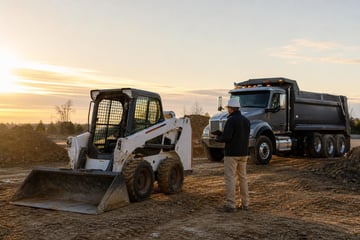
Many operations need versatile support machines in addition to tractors and combines. Financing a used skid steer for barn cleaning and feed handling can keep your upfront cost low while preserving operating capital. Our Skid Steers financing program covers new and used units for agricultural use. For larger material-handling needs, Wheel Loaders financing can fund the machine you need for silage, manure, or bulk feed management.
Here is how new and used equipment typically compare for borrowers with credit challenges:
| Factor | New Equipment | Used Equipment |
|---|---|---|
| Financed Amount | Higher purchase price | Lower purchase price |
| Lender Risk | Higher dollar exposure | Reduced balance improves odds |
| Collateral Confidence | Strong; warranty supports value | Depends on inspection and hours |
| Typical Term | Longer, matched to useful life | Shorter, aligned with remaining life |
| Monthly Payment | Lower due to longer term | Higher or similar due to shorter term |
| Credit Flexibility | May require stronger compensating factors | Lower amount often offsets weaker credit |
Lease vs. Loan Trade-Offs for Farm Owners
When credit is tight, the structure of the deal matters as much as the collateral. Equipment finance agreements, $1 buyout leases, and fair market value leases each behave differently on your balance sheet and tax return.
An equipment finance agreement functions like a loan. You own the machine from day one, and the lender holds a lien. You claim depreciation and any available Section 179 deduction for tax year 2026, and you deduct the interest portion of your payments. At the end of the term, the lien releases and you own the asset free and clear.
A $1 buyout lease is essentially a loan in lease clothing. You make monthly payments and own the equipment for one dollar at the end. For tax purposes, it is usually treated as a finance lease, meaning you still take depreciation and Section 179. The main difference is contractual, not economic.
A fair market value lease is a true lease. You do not own the equipment during the term. You make payments and expense them as operating costs. At the end, you can return the machine, renew the lease, or buy it at fair market value. This structure typically requires stronger credit because the lender retains residual risk.
For borrowers with bad credit, the equipment finance agreement or $1 buyout lease is often easier to obtain than an FMV lease because the lender’s recovery is simpler and the collateral value is straightforward. The table below summarizes the differences:
| Feature | Equipment Finance Agreement (Loan) | $1 Buyout Lease | Fair Market Value Lease |
|---|---|---|---|
| Ownership | You own; lender holds UCC lien | You own after final $1 payment | Lender owns; you may return or buy |
| Monthly Payment | Higher than FMV; builds equity | Moderate | Lowest payment |
| Tax Treatment for 2026 | Depreciation, Section 179, interest deduction | Depreciation, Section 179, interest deduction | Payments expensed as operating cost |
| End of Term | Lien released | Title transfers for nominal sum | Return, renew, or purchase at FMV |
| Credit Flexibility | High; secured by collateral | High; secured by collateral | Moderate; residual risk to lender |
Tax Treatment for Tax Year 2026
Tax strategy is often the deciding factor between leasing and buying. For tax year 2026, Section 179 allows businesses to deduct the full purchase price of qualifying equipment up to an inflation-adjusted dollar limit. There is also a phase-out threshold that reduces the benefit once total equipment purchases exceed a separate annual limit. These figures are indexed to inflation and change every year, so you should confirm the exact 2026 limits with your CPA before making a purchase decision.
Bonus depreciation may also be available in 2026, though the percentage and eligible property rules have shifted under recent tax legislation. Some farm equipment may qualify for accelerated schedules under the Modified Accelerated Cost Recovery System. The interaction between Section 179, bonus depreciation, and regular MACRS depreciation is complex, especially if your operation is structured as a pass-through entity. Do not rely on last year’s numbers. Refer to IRS guidance on Section 179 and bonus depreciation, then have your accountant model the after-tax cost of each structure.
If you choose a true fair market value lease, you do not depreciate the asset. Instead, you deduct lease payments as a business expense. This simplifies bookkeeping but may provide less front-loaded tax relief than a purchase. Again, your CPA can run the 2026 scenarios.
Seasonal Cash Flow and Ag-Specific Scenarios
Every sector of agriculture has its own equipment timeline. A corn and soybean operation in Iowa may need a combine and grain cart ready by September. A cattle ranch in Texas might need a hay baler and feeder wagon before the first frost. A dairy in Wisconsin may need a skid steer for daily bedding and feed push-up year-round.
Because the work is seasonal, the financing should match your cash flow. Some lenders offer skip-payment programs that let you miss a winter payment and catch up at harvest. Others structure quarterly payments instead of monthly. Not every lender understands ag, but an equipment finance partner who does can save your operation from a cash crunch.
Provide Capital serves agriculture nationwide, from specialty crop growers in California to wheat farmers in Kansas. Whether you need a $15,000 rotary mower or a $400,000 self-propelled sprayer, the equipment itself is the collateral, which keeps rates competitive. Because we focus on the asset, we can often move faster than banks that require blanket liens on all farm real estate and personal property.
Documentation That Speeds Up Approval
Speed matters when a machine is sitting on a dealer lot or a timed auction is closing. Same-day approvals are possible, but only if your paperwork is organized. Here is what you should have ready:
- A signed equipment invoice or purchase agreement showing the serial number, model year, and sale price.
- Your driver’s license and business registration documents.
- Recent business bank statements that show seasonal revenue patterns.
- Proof of insurance that names the lender as loss payee.
- Prior-year business tax returns, if available.
- A brief explanation letter for any major credit events, with supporting documents showing resolution.
With bad credit, completeness beats speed. A file that answers the underwriter’s questions before they ask them can turn a tentative decline into an approval with conditions. If you have your equipment quote and business documents ready, get a same-day decision on your equipment by starting an application today.
Mistakes to Avoid When Credit Is Already Tight
A low credit score gives you less margin for error. Avoid these common missteps.
Shopping Your Deal to Too Many Lenders
Every formal credit application can trigger a hard inquiry. If you apply with five brokers in one week, your score may drop further, and each lender sees the others pulling your report. Choose one lender who understands agriculture and submit a complete file. If they need to adjust structure, they can usually do it internally without another bureau hit.
Buying Equipment Sight Unseen
Auction prices are tempting, but a machine with hidden engine damage or a bad transmission is worth far less than the auctioneer claimed. Because the lender’s security is the physical collateral, a low appraisal can kill the deal after you have already won the bid. Always inspect the equipment, check the maintenance log, and verify the hour meter.
Stretching the Term Too Long
A seven-year term on a three-year-old baler might lower your monthly payment, but you could end up owing more than the machine is worth when you need to replace it. Match the term to the remaining useful life. With bad credit, a shorter term may actually improve approval odds because the lender’s exposure window is smaller.
Ignoring Insurance and UCC Filing Details
Your lender will require comprehensive physical damage insurance and will file a UCC-1 to perfect their lien. Do not let your insurance lapse. If a hailstorm totals your financed combine and you have no coverage, you still owe the balance. Set up automatic payments for both the loan and the insurance policy.
After Approval: Funding, Filing, and First Payment
Once you accept the terms, the process moves quickly. The lender finalizes the UCC filing, verifies your insurance, and wires funds directly to the dealer or private seller. You take delivery and put the machine to work. Your first payment is typically due shortly after funding, giving you a short runway to put the equipment to productive use before the first draft hits your account.
Throughout the term, keep accurate records of maintenance and repairs. Well-maintained equipment holds value, which matters if you ever want to refinance, upgrade, or sell the machine before the lien is released. Treat the asset like the collateral it is, and the financing relationship becomes a stepping stone to stronger credit.
Frequently Asked Questions
Can I get agriculture equipment financing with a low credit score?
Yes. While a low credit score limits your options with traditional banks, equipment financing is secured by the machine itself. Lenders will focus on the asset value, your farm’s cash flow, and any compensating factors. Rates vary by credit profile, equipment age and term. A larger down payment or documented seasonal revenue can offset a weaker score.
Does the equipment really serve as the collateral?
Yes. The lender files a UCC lien against the specific machine. Because the loan is secured by hard collateral, approval criteria are more flexible than for unsecured credit. This is also why competitive rates remain available to borrowers across a broad credit spectrum.
Will applying hurt my credit score?
Submitting an application may result in a hard inquiry on your credit report. However, the damage from one focused application is far less than applying with multiple lenders over several weeks. Gather your documents, choose your equipment, and apply once with a lender who understands agriculture.
Can I finance used tractors, combines, and other ag equipment?
Absolutely. Used equipment is common in farm financing. The lender will review the model year, hours, and overall condition to confirm collateral value. Older machines may qualify for shorter terms, but they can still be excellent collateral if the price is right.
Is a down payment required if I have bad credit?
A down payment is not always mandatory, but it strengthens your file. Putting your own capital into the deal reduces the lender’s risk and demonstrates personal investment. Even a modest down payment can improve your approval odds and lower your monthly payment.
How fast can I get approved and funded?
Same-day approvals are possible when your application and equipment details are complete. Funding typically follows quickly once documents are signed and insurance is verified. Having your equipment quote and bank statements ready before you apply is the best way to meet a tight deadline.
Can I deduct the full cost of the equipment on my 2026 taxes?
For tax year 2026, Section 179 may allow a first-year deduction up to an inflation-adjusted limit, subject to a phase-out threshold. Bonus depreciation may also apply depending on current law. The exact dollar figures change annually. Have your CPA run the numbers before you file your 2026 return.
What happens if I miss a payment?
Contact your lender immediately. Because the equipment is collateral, prolonged default can lead to repossession. Most lenders prefer to work out a seasonal deferment or short-term modification rather than take back a machine. Communication is the best policy.
Talk to a Specialist About Your Next Machine
Bad credit does not have to stall your operation. If you have a specific tractor, combine, or hay tool in mind, talk to a specialist about your specific machine and see what you qualify for. Provide Capital finances new and used business equipment from $5,000 to $5 million nationwide, with same-day approvals possible when your file is complete. Apply now to review terms and keep your farm moving through the next season.
Disclaimer: The information provided in this article is for general educational purposes only and is not financial, legal, or tax advice. Funding terms, qualifications, and product availability may vary and are subject to change without notice. Provide Capital does not guarantee approval, rates, or specific outcomes. For personalized information about your business funding options, contact our team directly.