
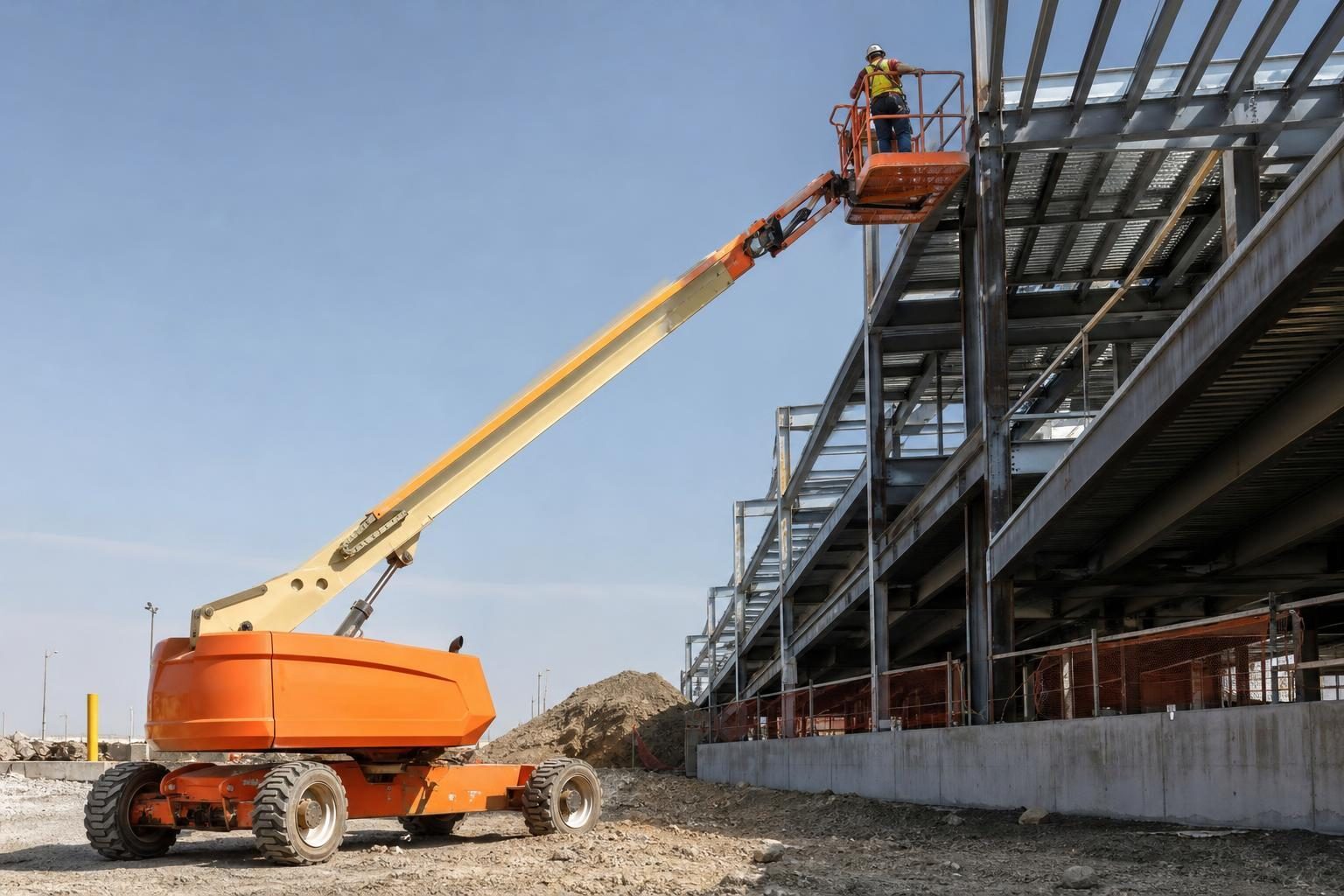
What It Takes to Qualify for Boom Lift Financing
If you are buying a boom lift for your business, you can likely finance it. The equipment itself acts as collateral, which means lenders can offer competitive terms even if your credit is not perfect. Most borrowers who have been in business for at least two years, show stable revenue, and can document their income will qualify for some form of financing.
At Provide Capital, we finance new and used boom lifts from $5,000 up to $5 million. Rates vary by credit profile, equipment age and term. Same-day approvals are possible when your paperwork is in order. If you are looking at a specific unit, see what financing you qualify for on that boom lift before you negotiate the purchase price.
Already have a machine in mind?
Provide Capital finances new and used equipment from $5,000 to $5 million, with same-day decisions possible.
Apply NowHow Lenders Evaluate Your Application
Time in Business
Most equipment lenders prefer at least two years of operating history. That track record shows you can generate revenue and manage debt. Businesses with one to two years may still qualify, though usually with a larger down payment or a shorter term. Under one year, options narrow significantly, and you should expect to put more money down. According to Small Business Administration guidance, established businesses with documented financial history are far more likely to secure equipment financing on favorable terms.
Credit Profile
Your personal and business credit scores both matter. A strong credit profile—typically a FICO score above 680—opens access to longer terms and lower rates. Scores in the 600 to 679 range still qualify, but expect higher payments and possibly a larger down payment. Below 600, financing is possible through specialized programs, though terms tighten further. Because the boom lift secures the loan, lenders are often more flexible than they would be for an unsecured line of credit.
Revenue and Cash Flow
Lenders want to see that your monthly revenue can cover the new payment. They typically look for a debt-service coverage ratio above 1.25, meaning your operating income exceeds your total debt obligations by at least 25 percent. Bank statements from the last three to six months are usually enough to verify this. If your revenue is seasonal—common in construction and forestry—be ready to explain the cycle. U.S. Census Bureau data shows that construction spending follows predictable seasonal patterns, and lenders account for this when reviewing applications from trades that slow in winter.
Equipment Specifications
The age, hours, and brand of the boom lift affect approval odds and terms. New lifts and late-model used units up to five years old receive the best financing terms. Lifts older than ten years or with high hours may still qualify, but expect shorter amortization and a larger down payment. Lenders also consider whether the equipment is being purchased from a dealer or a private party. Dealer purchases are easier to document and often come with warranties, which reduces lender risk.
Key Insight: Private-party sales can take two to five business days longer to fund because the lender must verify title, inspect the equipment, and confirm no liens exist. If you need the lift quickly, buying through a dealer streamlines the process.
New vs. Used Boom Lifts: Financing Differences
New boom lifts depreciate rapidly in the first two years—often 20 to 30 percent—according to standard depreciation schedules. That steep drop means new equipment loans sometimes require slightly higher down payments to keep the loan-to-value ratio in line. However, new lifts come with manufacturer warranties, lower maintenance costs in the first three years, and access to the latest safety features.
Used lifts cost less upfront, which lowers your monthly payment even if the rate is marginally higher. A three- to five-year-old boom lift from a major brand like JLG, Genie, or Skyjack often holds its value well and remains financeable for terms up to 48 months. Lifts older than seven years may require 20 to 30 percent down and terms capped at 36 months.
When deciding, factor in utilization. If you plan to run the lift more than 1,000 hours per year, a newer unit with a warranty may save money on repairs. For intermittent use—under 500 hours annually—a well-maintained used lift is often the better financial choice.
Pro Tip: Ask the seller for maintenance records and the last annual inspection report before you apply. Lenders increasingly request these for used equipment, and having them ready can shave a day or two off approval time.
Lease vs. Loan: Which Structure Fits?
You have two main ways to finance a boom lift: an equipment loan or a fair-market-value lease. A loan puts the title in your name once the debt is paid. A lease lets you use the equipment for a set term, after which you return it, buy it out, or renew. The right choice depends on how long you plan to keep the lift, your tax strategy, and your balance-sheet preferences.
| Factor | Equipment Loan | Fair-Market-Value Lease |
|---|---|---|
| Ownership | You own the lift after the final payment | You return or buy out at lease end |
| Down payment | Typically 0 to 20 percent | Often one or two monthly payments upfront |
| Monthly payment | Higher than a lease for the same term | Lower monthly cost |
| Term length | 24 to 84 months | 12 to 60 months |
| End-of-term obligation | None; you hold clear title | Return, purchase, or renew |
| Maintenance responsibility | Yours | Yours, unless a full-service lease |
If you plan to keep a boom lift for more than five years or put high hours on it, a loan usually wins. You build equity, and there are no mileage or condition restrictions. If you upgrade equipment every two to three years to access newer technology, a lease keeps payments low and removes the hassle of resale.
Midway through your decision, it helps to know exactly where you stand. Get a decision on your equipment, possibly the same day, so you can compare loan and lease offers side by side before you commit to a seller.
Tax Treatment for the 2026 Tax Year
Under Section 179 of the Internal Revenue Code, businesses can deduct the full purchase price of qualifying equipment in the year it is placed in service. For the 2026 tax year, the Section 179 limit is set by inflation-adjusted thresholds; bonus depreciation phases continue under current law. Because these figures change annually and interact with other deductions, you should consult a CPA to confirm exactly how much you can write off on a boom lift purchased in 2026.
If you lease instead of buy, you generally deduct lease payments as an operating expense. Loans allow you to deduct interest and, if you qualify, take Section 179 or bonus depreciation on the equipment itself. The difference can be significant: a $75,000 boom lift placed in service in 2026 could yield a first-year deduction that offsets most or all of the taxable income it generates, depending on your tax bracket and other deductions.
By the Numbers: A construction contractor in the 24 percent federal tax bracket who purchases a $60,000 boom lift in 2026 and fully deducts it under Section 179 could reduce tax liability by approximately $14,400 in the first year. That is a rough illustration; your actual savings depend on state taxes, other deductions, and whether the equipment qualifies under IRS rules for the 2026 tax year. Speak with a CPA before making tax-driven decisions.
Find the right financing structure
Tell us about the equipment you need and we will show you the options that fit your business.
See Your OptionsWhat the Payments Actually Look Like
Below are three realistic scenarios for a business with two or more years in operation. Rates vary by credit profile, equipment age and term, so treat these as directional examples, not quotes.
- Scenario A: New $85,000 telescopic boom lift, 60-month term, strong credit. Estimated monthly payment: $1,450 to $1,650.
- Scenario B: Used $42,000 articulating boom lift (four years old), 48-month term, mid-tier credit. Estimated monthly payment: $980 to $1,150.
- Scenario C: New $120,000 rough-terrain boom lift, 72-month term, strong credit. Estimated monthly payment: $1,850 to $2,100.
Extending the term lowers the monthly payment but raises total interest. A 36-month term on that $42,000 used lift might run $1,350 to $1,550 per month, while a 60-month term drops it to $780 to $920. Weigh cash flow against total cost.
Industry-Specific Considerations
Boom lifts serve several industries, and lenders view each slightly differently based on seasonality, contract stability, and equipment utilization.
Construction
Construction companies are the largest buyers of boom lifts. Lenders understand the industry well, but they also know it is seasonal. If you are a Construction equipment financing customer, be ready to show contracts or a backlog that proves revenue during slower months. A boom lift used across multiple job sites generates more predictable income than one tied to a single project.
Facilities Maintenance and HVAC
HVAC contractors use articulating boom lifts for rooftop work. This use is steady year-round in many climates, which lenders like. If you service commercial properties with recurring maintenance agreements, emphasize those contracts in your application. They demonstrate stable, repeat revenue.
Tree Care and Forestry
Forestry boom lifts, often called cherry pickers in this segment, see heavy seasonal use. Lenders may ask for revenue history that spans at least one full annual cycle. Because the work is weather-dependent, a larger down payment or shorter term is common.
Manufacturing and Warehousing
Indoor manufacturing facilities use electric articulating boom lifts for maintenance and installation. These lifts accumulate fewer hours than outdoor units, so a used purchase can be especially attractive. Lenders view manufacturing revenue as relatively stable, which can help offset a weaker credit profile.
Common Mistakes Buyers Make
First, do not wait until you have already committed to a purchase price to seek financing. Pre-approval gives you negotiating power and prevents you from losing a unit while paperwork drags. Second, do not underestimate the total cost of ownership. Financing the lift is only part of the expense; transport, insurance, maintenance, and operator training add thousands per year. Third, avoid overextending on lift capacity. A 60-foot boom lift costs significantly more than a 40-foot model, and if you only need the extra reach occasionally, renting may be smarter.
Fourth, failing to document revenue is a frequent rejection reason. Many small contractors mix personal and business expenses in one account. Before you apply, separate your books and have at least three months of clean business bank statements. Fifth, do not ignore the seller. A reputable dealer with a service department adds value that private sellers cannot match, and lenders know it. As Forbes business coverage has noted, equipment buyers who secure financing before shopping consistently negotiate better purchase prices than those who arrive at the dealership without a funding source.
Documentation You Will Need
For loans under $150,000, most lenders ask for:
- One to three years of business tax returns
- Three to six months of business bank statements
- A personal financial statement or personal tax return
- The equipment invoice or purchase agreement
- Proof of insurance covering the equipment
For loans above $250,000 or for borrowers with challenged credit, expect to provide more: interim financial statements, a debt schedule, and possibly business contracts. Having these ready before you apply can move you from application to approval in hours rather than days.
Pro Tip: If you are buying at auction, get a conditional approval letter before bidding. Auction houses often require payment within 24 to 48 hours, and most lenders cannot close that fast without prior underwriting. A pre-approved limit lets you bid with confidence.
What Happens After Approval
Once approved, the lender issues a term sheet or finance agreement. Review it carefully: note the monthly payment, term, any prepayment penalties, and the default provisions. If the terms match what you expected, you sign and return the documents. The lender then pays the seller directly—either the dealer or the private party—once they verify title and insurance.
Funding usually takes 24 to 72 hours for dealer transactions and three to five business days for private sales. After funding, your payments begin according to the schedule, typically 30 to 45 days later. The lender files a UCC-1 lien on the equipment, which is released once you pay off the balance.
If your credit or revenue profile improves during the term, ask about refinancing or early payoff. Some lenders charge a prepayment penalty in the first 12 to 24 months; others do not. Knowing this upfront helps you avoid surprises.
Put the right equipment to work
From $5,000 to $5 million, new or used, Provide Capital helps businesses nationwide finance the equipment they need.
Apply TodayFrequently Asked Questions
Can I finance a boom lift with bad credit?
Yes, but terms tighten. Expect a larger down payment—often 15 to 25 percent—and a shorter term. The equipment itself is collateral, which reduces lender risk, but you will pay more over the life of the loan.
Does the lift have to be new?
No. Used boom lifts are routinely financed. Units up to five years old get the best terms. Lifts older than ten years may still qualify with 20 to 30 percent down and terms of 36 months or less.
How long does approval take?
Same-day approvals are possible for straightforward applications with strong credit and clean documentation. More complex files—large loan amounts, challenged credit, or private-party sales—can take two to five business days.
Can I finance attachments or accessories?
Sometimes. If the attachment is part of the same invoice and permanently affixed to the lift, lenders often roll it into the loan. Standalone accessories or tools financed separately may need a different structure.
Is a down payment always required?
Not always. Well-qualified buyers can sometimes finance 100 percent of the purchase price, including soft costs like delivery. Most borrowers, however, should expect to put 0 to 20 percent down depending on credit and equipment age.
What tax benefits apply in 2026?
For the 2026 tax year, Section 179 and bonus depreciation may allow you to deduct all or part of the boom lift cost in the first year. The exact limits depend on IRS inflation adjustments and your taxable income. Consult a CPA before relying on any tax strategy.
Can I pay off the loan early?
Most lenders allow early payoff, but some charge a penalty if you do so in the first 12 to 24 months. Read the finance agreement carefully, and ask your loan officer to point out the specific language before you sign.
Should I choose a loan or a lease?
Choose a loan if you plan to keep the lift long-term and want to build equity. Choose a fair-market-value lease if you prefer lower payments and plan to upgrade every few years. A $1 buyout lease is structurally similar to a loan and may make sense if your accountant recommends it for tax or balance-sheet reasons.
Ready to Move Forward?
Boom lift financing is straightforward when you know what lenders expect and you have your documents ready. Whether you need a 40-foot electric lift for warehouse maintenance or an 80-foot diesel unit for rough terrain, the equipment itself secures the financing, which keeps rates competitive and approvals moving. Start an application in a few minutes and get a decision, possibly the same day, so you can put the lift to work instead of waiting on paperwork.
For related equipment, see our guides on Scissor Lifts financing and Boom Lifts financing to compare options.
Disclaimer: The information provided in this article is for general educational purposes only and is not financial, legal, or tax advice. Funding terms, qualifications, and product availability may vary and are subject to change without notice. Provide Capital does not guarantee approval, rates, or specific outcomes. For personalized information about your business funding options, contact our team directly.
