
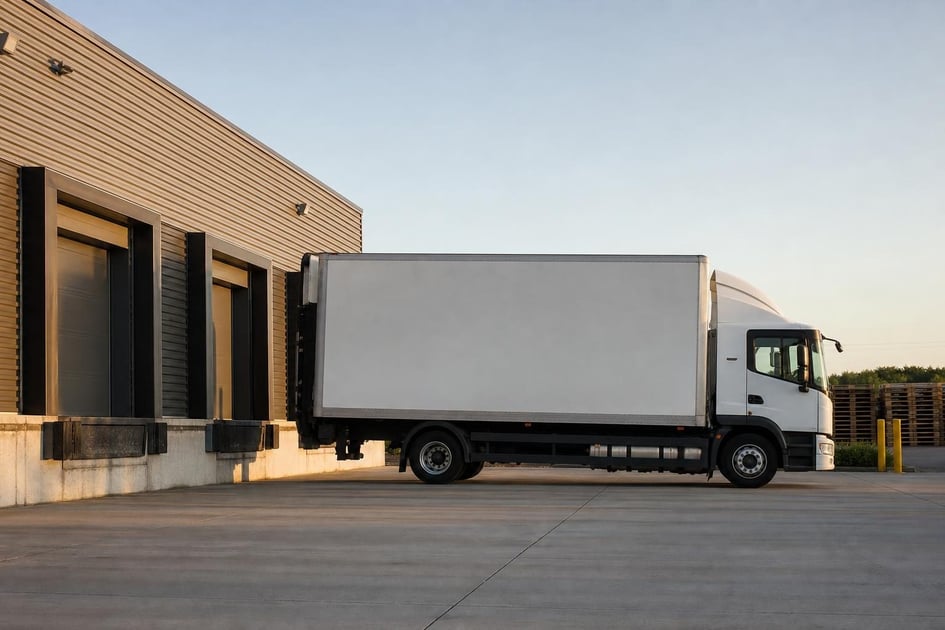
Yes, you can finance a box truck with no down payment, but only if your credit profile, business history, and the equipment itself meet a lender's risk criteria. Most owner-operators who qualify have been in business for at least two years, carry a personal credit score above 650, and are buying a truck with a documented maintenance history and reasonable mileage. If you are newer or have a lower score, expect the lender to ask for 10 to 20 percent down, a personal guaranty, or a co-signer. The equipment itself acts as collateral, which is why Box Trucks financing can be more accessible than unsecured working capital—but the truck has to be worth enough to cover the lender's exposure.
Key Insight: A "no down payment" approval often still requires you to cover the first payment, documentation fees, and state registration costs out of pocket. On a $45,000 box truck, these soft costs can run $2,500 to $4,500 before you take delivery. Ask your financing specialist for a full cash-to-delivery estimate so you are not surprised at closing.
What "No Down Payment" Actually Means in Box Truck Financing
When a lender advertises 100 percent financing, they mean the loan or lease covers the purchase price of the equipment. They do not mean you will sign papers and drive away without writing a single check. The distinction matters because many first-time buyers budget for zero out-of-pocket expenses and then stall at the closing table.
Here is how the numbers typically break down on a used box truck priced at $40,000. The lender funds the full $40,000. You still pay sales tax, title fees, and the first monthly payment upfront. Depending on your state, sales tax alone can add 4 to 8 percent to the transaction. Some lenders will roll the sales tax into the financing, but that increases your monthly payment and the total interest paid over the term. Others require you to pay tax and fees separately.
There is also a difference between 100 percent of the invoice price and 100 percent of the appraised value. If you are buying from a private seller for $38,000 but the lender's third-party appraisal comes back at $32,000, the lender will base their advance rate on $32,000. You would need to cover the $6,000 gap, negotiate the seller down, or walk away. This gap risk is higher on used trucks with custom bodies or unusual specifications because standardized valuation guides may not account for aftermarket modifications.
Soft costs—delivery, upfitting, wrap lettering, telematics installation—are rarely included in 100 percent equipment financing. If you need $5,000 in shelving and lift-gate work, plan to pay that separately or negotiate a higher total facility that covers both the truck and the modifications. Some lenders will accommodate this if the upfitter is a known vendor and the work is itemized on the invoice.
Already have a machine in mind?
Provide Capital finances new and used equipment from $5,000 to $5 million, with same-day decisions possible.
Apply NowWho Qualifies for Zero-Down Box Truck Financing
Lenders look at four factors when deciding whether to waive a down payment: time in business, revenue consistency, credit history, and the equipment's collateral value. Each lender weights these differently, but the pattern is consistent across the industry.
Time in Business
Established businesses with two or more years of operating history are the safest bet for zero-down approvals. Lenders can verify revenue through tax returns, bank statements, and merchant processing records. If you have been in business for less than two years, the lender has less data to judge your ability to absorb a new monthly payment. Some programs accept one year in business, but they usually come with shorter terms, higher monthly payments, or a requirement to put money down.
Revenue and Debt-Service Coverage
Lenders want to see that your existing cash flow can handle the new payment. A common threshold is a debt-service coverage ratio of 1.25 or higher, meaning your net operating income is at least 125 percent of your total debt obligations including the new truck payment. If you are generating $15,000 per month in gross revenue and your existing debt payments are $3,000, a new truck payment of $850 should fit comfortably. If your margins are thin or your revenue is seasonal, the lender may ask for a larger down payment to reduce their risk.
Credit Profile
Personal credit scores in the mid-600s and above open the door to zero-down programs. Scores below that do not automatically disqualify you, but they shift the conversation from "how much down payment?" to "what size down payment makes this approvable?" Bankruptcies, tax liens, and recent delinquencies are red flags. If any of those are on your report, be prepared to explain the circumstances and show a 12-month pattern of on-time payments since the event.
The Equipment Itself
A 2024 box truck with 30,000 miles and a clean title is easier to finance at 100 percent than a 2016 model with 180,000 miles and a rebuilt title. Lenders use the equipment as collateral, so they care about depreciation curves, resale liquidity, and remaining useful life. Trucks under seven model years old with fewer than 150,000 miles generally receive the most favorable advance rates.
Pro Tip: If you are close to qualifying for zero down but not quite there, offering a larger security deposit instead of a traditional down payment can sometimes tip the approval. A security deposit equal to one or two monthly payments lowers the lender's risk without permanently reducing your capital, and some programs return it after 12 to 24 months of on-time payments.
How Lenders Evaluate a Box Truck as Collateral
Because the truck secures the loan, the lender will verify its value independently of the asking price. They typically order a third-party appraisal or rely on standardized guides that track auction results, wholesale transactions, and retail sales. The lender's advance rate—the percentage of the appraised value they will finance—determines whether you need a down payment.
For new box trucks, advance rates often reach 100 percent of invoice because the manufacturer warranty and predictable depreciation reduce the lender's downside risk. For used trucks, advance rates typically range from 85 to 100 percent depending on age, mileage, and condition. A one-year-old truck might qualify for 100 percent. A five-year-old truck might cap at 90 percent. A ten-year-old truck might require 20 to 30 percent down regardless of your credit.
Lenders also check for open recalls, salvage history, and lien issues. A truck with an open safety recall may be uninsurable or illegal to operate, which makes it unacceptable collateral. A salvage or rebuilt title cuts the appraised value significantly, sometimes by 40 to 60 percent. If the seller still owes money on the truck, the lender will require a lien payoff letter before funding to ensure the title transfers cleanly.
New vs. Used Box Trucks: Financing Differences
The choice between new and used affects your monthly payment, maintenance budget, and tax strategy. New trucks command higher monthly payments but come with warranties and lower repair risk. Used trucks reduce your monthly obligation but can introduce unpredictable maintenance costs that strain cash flow.
| Factor | New Box Truck | Used Box Truck (3–5 Years Old) |
|---|---|---|
| Typical price range | $55,000 to $85,000 | $25,000 to $50,000 |
| Advance rate for zero down | Up to 100% of invoice | 85% to 100% of appraised value |
| Warranty coverage | Full manufacturer warranty | Limited or expired; buy extended coverage separately |
| Monthly payment estimate | Higher principal, competitive rates | Lower principal, rates vary by credit profile, equipment age and term |
| Depreciation impact | Steepest in years 1–3 | Slower; prior owner absorbed initial drop |
| Insurance cost | Higher replacement value | Lower replacement value, but some carriers surcharge older vehicles |
| Typical term available | Up to 84 months | Up to 60 months, depending on age and mileage |
New trucks depreciate rapidly in the first 36 months. If you finance a $70,000 new box truck at 100 percent and need to sell in year two, you may owe more than the truck is worth. This negative equity risk is lower on a used truck because the previous owner absorbed the steepest depreciation. On the other hand, a used truck with 120,000 miles may need transmission work, brake replacement, or body repairs that a new truck will not.
If your route is local and your annual mileage is under 30,000, a used truck often makes financial sense. If you are running interstate freight or high-mileage delivery routes, the reliability of a new truck and the protection of a manufacturer warranty may justify the higher payment.
Lease vs. Loan: Which Works Better for Cash Flow?
Equipment financing agreements and leases both let you acquire a box truck without paying the full purchase price upfront, but they differ in ownership, tax treatment, and end-of-term obligations. Understanding these differences helps you match the structure to your cash flow needs.
| Feature | Equipment Financing Agreement (Loan) | Fair Market Value Lease | $1 Buyout Lease |
|---|---|---|---|
| Ownership during term | You own the truck; lender holds a lien | Lessor owns the truck | Lessor owns the truck |
| Monthly payment | Higher than FMV lease, lower than $1 buyout | Lowest monthly payment | Higher monthly payment |
| Depreciation deduction | You claim depreciation and interest | Lessor claims depreciation; you deduct lease payments | You claim depreciation and interest |
| End-of-term option | Title releases after final payment | Return, renew, or buy at fair market value | Buy for $1; title transfers automatically |
| Best for | Owner-operators who want to own the asset | Businesses wanting lowest payment and flexibility | Businesses that want ownership with structured payments |
According to SBA guidance on buying business assets, leasing works well when you need to preserve cash flow, while buying makes sense if you plan to use the equipment for its full useful life. A fair market value lease keeps your monthly payment low, which helps if you are ramping up routes and revenue is still growing. The trade-off is that you do not own the truck at the end unless you pay the then-current fair market value, which can be hard to predict. A $1 buyout lease functions like a loan for tax purposes but may have slightly different accounting treatment; your accountant can explain whether it belongs on or off your balance sheet under current standards.
An equipment financing agreement is the most straightforward structure for owner-operators who plan to keep the truck for its full useful life. You claim the depreciation, you build equity, and there is no balloon payment at the end. The downside is that you are responsible for maintenance and repairs from day one, and if the truck becomes obsolete or your business pivots, you still owe the balance.
See what you qualify for and compare lease and loan structures side by side before you commit to a specific truck.
Find the right financing structure
Tell us about the equipment you need and we will show you the options that fit your business.
See Your OptionsTax Treatment for the 2026 Tax Year
The tax benefits of financing a box truck can significantly reduce your net cost, but the rules change, and the exact deductions available to you depend on your business structure, taxable income, and how you use the vehicle. For the 2026 tax year, Section 179 allows businesses to deduct the full purchase price of qualifying equipment in the year it is placed in service, subject to annual limits and phase-out thresholds that adjust for inflation. Bonus depreciation may also apply, though the percentage has been declining from prior peaks. Because the specific dollar limits for 2026 depend on inflation adjustments not finalized until late in the year, consult a CPA before counting on a specific deduction amount.
If you lease, you generally deduct the lease payments as a business expense. If you finance, you depreciate the truck over its IRS-assigned useful life—typically five years for commercial vehicles—though accelerated methods and Section 179 may front-load those deductions. Interest on the loan is also deductible as a business expense. Keep detailed logs of business versus personal mileage; the IRS scrutinizes vehicle deductions, and commingling personal use with business use can complicate your return.
States vary in how they conform to federal depreciation rules. Some states fully conform to Section 179 and bonus depreciation. Others decouple, meaning you might get a large federal deduction but only a modest state deduction. If you operate in multiple states, your CPA should run projections for each jurisdiction.
By the Numbers: A delivery contractor in the 24 percent federal tax bracket who places a $50,000 box truck in service in 2026 could see a first-year tax benefit ranging from several thousand dollars under standard depreciation to a substantially larger amount if Section 179 and bonus depreciation apply. The exact figure depends on the inflation-adjusted limits published by the IRS for tax year 2026. Work with a CPA to model your specific scenario before you buy.
What Documentation You'll Need
Preparing your paperwork before you apply shortens the approval timeline and reduces the back-and-forth. Most lenders request the following:
- Business tax returns for the last two years
- Personal tax returns for the last two years, especially if you are a guarantor
- Bank statements for the last three to six months
- A current profit-and-loss statement or year-to-date financials
- A copy of the equipment invoice or purchase agreement
- Vehicle identification number, mileage, and condition photos for used trucks
- Proof of insurance meeting the lender's requirements
- A business debt schedule showing existing obligations
For used trucks, the lender may also require a third-party inspection or a clean title search. If you are buying from a dealership, they often handle the title verification. If you are buying from a private seller, you may need to coordinate the lien release and title transfer yourself. Some lenders will not fund private-party transactions at all, so confirm that detail early.
Insurance requirements typically include comprehensive and collision coverage with the lender listed as loss payee. The coverage limits must be high enough to pay off the loan if the truck is totaled. For a $50,000 truck, expect to carry at least that much in physical damage coverage, plus liability limits that meet state and federal regulations if you operate across state lines.
Typical Approval Timeline and What Happens After
Same-day approvals are possible when your file is complete and the equipment is straightforward. A clean credit profile, a clear invoice from a dealership, and a standard box truck under five years old can move through underwriting in a matter of hours. More complex files—older trucks, private-party sales, borrowers with credit challenges, or deals requiring additional collateral—may take 24 to 72 hours.
Once approved, you receive a term sheet or approval letter spelling out the monthly payment, term length, any fees, and conditions precedent to funding. Read this carefully. Look for prepayment penalties, documentation fees, and requirements for automatic debit. If the terms match what you discussed, you sign the closing documents and provide proof of insurance. The lender then wires funds directly to the seller or, in some cases, to an escrow account.
After funding, the lender files a UCC-1 financing statement to perfect their security interest in the truck. This is a public record showing that the lender has a lien on the equipment. You receive the title with the lender listed as lienholder. Once you make the final payment, the lender releases the lien and mails you a clear title. Keep your payoff letter and UCC termination statement for your records in case of a title discrepancy years later.
Common Mistakes Owner-Operators Make
The most expensive mistake is buying a truck that does not match your revenue. A $60,000 box truck with a $950 monthly payment looks affordable on paper, but if your net profit per route is thin and a major repair sidelines you for two weeks, that payment becomes a crisis. Run a stress test: can you cover the payment for three months if your biggest client delays payments or if the truck needs unexpected work?
Another common error is ignoring soft costs. Buyers focus on the sticker price and forget about upfitting, registration, insurance binders, and DOT compliance. A refrigerated box truck, for example, may need additional insulation and a separate refrigeration unit service contract. A straight box truck used for moving may need e-track, straps, and dollies. Budget 10 to 15 percent above the purchase price for these extras.
Choosing the wrong term length also trips up borrowers. A 72-month term lowers your monthly payment but extends your obligation into the truck's high-maintenance years. A 36-month term builds equity faster but strains monthly cash flow. Match the term to the truck's expected useful life and your revenue stability.
Finally, do not skip the pre-purchase inspection on a used truck. Hire a diesel mechanic to check the engine, transmission, brakes, and body integrity. A $300 inspection can save you from a $8,000 engine replacement six months into ownership.
Key Insight: Lenders view box trucks as stronger collateral when they are between 16 and 26 feet in length with standard dock-height bodies. Custom lengths, cutaway conversions, or highly specialized upfits shrink the resale market, which makes lenders nervous. If you need a 30-foot custom body, expect a lower advance rate or a requirement to cover the custom upfit cost separately.
Industry-Specific Use Cases
Box trucks serve different roles across industries, and the financing structure should match how the truck generates revenue.
Last-Mile Delivery
E-commerce growth has tightened capacity in last-mile delivery. Owner-operators contracting with regional carriers or running independent routes need reliable trucks that fit residential streets. A 16-foot box truck with a lift gate handles parcel freight and small furniture without the maneuverability problems of a larger straight truck. Forbes analysis of last-mile delivery capacity notes that vehicle sizing directly affects route density and fuel efficiency. Finance the truck on a shorter term if you expect high annual mileage and rapid wear.
Moving and Storage
Local movers favor 24 to 26-foot box trucks with ramp or lift-gate access. Seasonality is a factor; spring and summer generate most of the revenue, so a lease with a skip-payment option or seasonal structure may help smooth cash flow. Moving trucks also suffer cosmetic damage quickly, which affects resale value. Consider a used truck for this application rather than a new one that will accumulate dents and scrapes in the first year.
Food Service Distribution
Restaurants, catering companies, and specialty food distributors use box trucks to run multi-stop routes. Temperature control is critical here. If you need a refrigerated box, the reefer unit adds $15,000 to $25,000 to the cost and requires separate maintenance contracts. Lenders treat reefer trucks as specialized collateral, so the advance rate may be slightly lower than on a dry box truck. Document the reefer unit's age and service history carefully.
General Freight and Transportation equipment financing
Owner-operators running general freight under their own authority need trucks that balance payload capacity with fuel economy. Diesel engines dominate the 24 to 26-foot class, but gasoline models are gaining traction for lighter urban routes. U.S. Census Bureau transportation data shows that the transportation and warehousing sector continues to expand, which supports steady demand for box trucks in the secondary market. A truck with broad resale appeal makes lenders more comfortable with zero-down structures.
For heavier hauling, some operators cross-shop Dump Trucks financing or flatbed options, but box trucks remain the most versatile entry point for independent operators who handle mixed freight. The enclosed cargo area protects goods from weather and theft, which reduces insurance claims and customer disputes.
Put the right equipment to work
From $5,000 to $5 million, new or used, Provide Capital helps businesses nationwide finance the equipment they need.
Apply TodayFrequently Asked Questions
Can I finance a box truck with no money down if I have bad credit?
It is difficult but not impossible. Credit scores below 600 typically trigger a down payment requirement of 10 to 25 percent. Some lenders will approve a zero-down deal if you have strong revenue, a co-signer with good credit, or additional collateral. Be honest about your credit history when you apply; hiding derogatory information only delays the denial.
Does the lender inspect the truck before funding?
For new trucks, inspection is usually limited to verifying the VIN and confirming the invoice with the dealership. For used trucks, especially private-party sales, the lender may require a third-party inspection or an appraisal. The cost typically ranges from $150 to $400 and is paid by the borrower.
Can I finance a box truck for personal use?
No. Equipment financing is for commercial use only. The lender will ask for a business purpose and may require a copy of your business license, DOT number, or commercial insurance policy. If you need a truck for personal moving or hobbies, a consumer auto loan is the appropriate product.
What happens if I want to pay off the loan early?
Prepayment terms vary. Some lenders charge no penalty. Others impose a prepayment fee equal to a percentage of the remaining balance or a set number of months' interest. Ask for the prepayment policy in writing before you sign. If you expect to refinance or sell the truck within the first two years, a no-prepay-penalty structure is worth prioritizing.
Can I finance multiple box trucks at once?
Yes. Fleet deals are common for growing delivery businesses. Lenders may offer better terms on multi-unit transactions because the administrative cost per unit drops. However, they will scrutinize your ability to absorb multiple new payments simultaneously. Expect to provide a fleet utilization plan showing projected revenue per truck.
Is a commercial driver's license required to finance a box truck?
For most box trucks under 26,000 pounds GVWR, a standard driver's license is sufficient, and lenders do not require a CDL. If the truck is rated above 26,000 pounds or if you are pulling a trailer that pushes the combined weight over the limit, you will need a CDL. The lender may ask for a copy.
How does insurance affect my approval?
Insurance is a condition of funding, not a factor in the credit decision. You will not be denied because your insurance is expensive, but you will not receive funds until the lender is listed as loss payee and the coverage meets their minimums. Shop for insurance quotes early; high-risk routes or inexperienced drivers can push premiums up sharply.
Can I buy from a private seller instead of a dealer?
Some lenders allow private-party purchases; others do not. Private-party deals require extra documentation: a bill of sale, title verification, lien payoff letters, and sometimes an escrow arrangement. The funding timeline is usually longer. If you need same-day funding, a dealership is the safer route.
Next Steps
Zero-down box truck financing is available to owner-operators with solid credit, established revenue, and a clear plan for the equipment. Start by gathering your financials, checking your credit report for errors, and narrowing your search to trucks that fit the lender's collateral criteria. Get insurance quotes in advance so you are not scrambling after approval. Get a same-day decision on your equipment and lock in your truck before another buyer moves on it.
Work with a financing specialist who understands the transportation market. The right structure—loan versus lease, term length, and payment schedule—can save you thousands over the life of the deal. Bring your business plan, your equipment specs, and your questions. The sooner you start the conversation, the sooner you are hauling freight and billing customers.
Disclaimer: The information provided in this article is for general educational purposes only and is not financial, legal, or tax advice. Funding terms, qualifications, and product availability may vary and are subject to change without notice. Provide Capital does not guarantee approval, rates, or specific outcomes. For personalized information about your business funding options, contact our team directly.