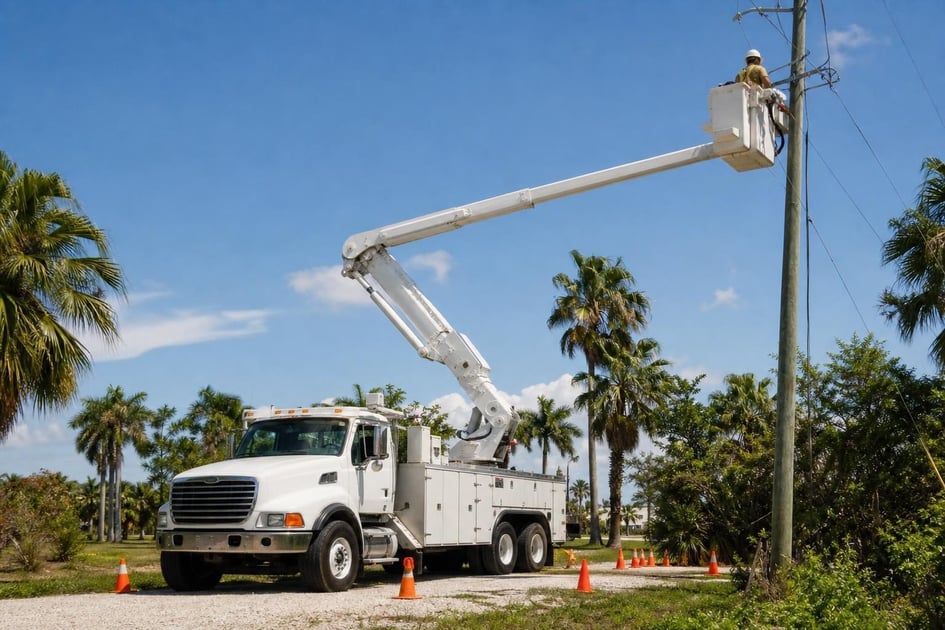
Florida contractors can finance new and used bucket trucks from $5,000 up to $5 million through an equipment lender that uses the machine itself as collateral. Because the truck secures the financing, rates stay competitive and same-day approvals are possible for well-qualified buyers. Whether you run a line crew in Tampa, a tree service in Orlando, or a telecom crew in Jacksonville, Bucket Trucks financing is structured around the equipment value and your business cash flow, not just your credit score alone.
Why Florida's Market Runs on Bucket Trucks
Florida is not a typical bucket truck market. The state's combination of hurricane exposure, rapid population growth, and year-round vegetation management creates demand that few other states match. Florida Power & Light and Duke Energy together serve millions of customers across more than 50 counties, and both utilities conduct annual storm drills that require massive fleets of aerial equipment. When hurricanes make landfall, mutual-aid agreements bring thousands of out-of-state line workers into Florida, each crew trailing bucket trucks that must be ready for immediate deployment. The scale of post-storm restoration is massive; after recent hurricanes, utility companies deployed tens of thousands of workers to restore power to millions of homes and businesses, according to AP News reporting on Florida storm recovery.
That storm-driven demand bleeds into the private sector. Tree care contractors who hold utility vegetation management contracts need boom trucks that can reach 50 to 65 feet to clear rights-of-way before storm season peaks. Telecom and broadband installers are extending fiber lines into suburban and rural markets, driving demand for medium-height insulated units. Construction contractors use bucket trucks for signage, lighting, and exterior building maintenance on the nearly 180,000 building permits Florida issues annually, according to U.S. Census Bureau data on Florida. Citrus harvesters and agricultural operators in central Florida also use smaller boom trucks for orchard maintenance and picking operations.
The result is a state where bucket trucks work year-round, not just seasonally. A contractor who buys in January can have the unit working utility maintenance through spring, storm response through summer and fall, and tree trimming through winter. The equipment does not sit idle, which makes lenders comfortable financing both new and used units.
Key Insight: Florida's hurricane season runs June 1 through November 30, but the busiest buying window for used bucket trucks is January through March, when out-of-state storm contractors sell off surplus units before tax season. Buyers who wait until May often find inventory picked over and prices higher by 10% to 15%.
Already have a machine in mind?
Provide Capital finances new and used equipment from $5,000 to $5 million, with same-day decisions possible.
Apply NowWhat a Bucket Truck Costs and Which Specs Matter
Bucket truck prices vary widely based on boom height, chassis size, insulation rating, and age. A used non-insulated telescopic unit on a light-duty chassis with a 40-foot working height might sell for $35,000 to $65,000. A late-model articulating telescopic truck with a 60-foot reach, material handler jib, and insulated boom on a Ford F-550 or Freightliner M2 chassis can run $125,000 to $175,000. New, fully specced utility units from manufacturers like Altec, Terex, or Versalift regularly exceed $200,000 and can approach $275,000 when ordered with dual baskets, hydraulic tool circuits, and auxiliary power.
The working height is the first filter most buyers apply. A 40-foot truck handles routine maintenance and residential tree work. A 55-foot to 65-foot unit reaches distribution lines on standard utility poles. Anything above 75 feet enters transmission and specialty telecom work, where chassis requirements grow heavier and CDL rules tighten. Side reach matters too. An articulating boom can extend 25 to 35 feet horizontally, letting a lineworker reach over fences, ditches, or structures without repositioning the truck.
Insulation is critical for electrical contractors bidding on utility work. Category C and D dielectric ratings protect lineworkers from accidental contact with energized lines. Non-insulated trucks cost less upfront but limit the jobs a contractor can accept. If you plan to work near power lines, the premium for an insulated boom usually pays back within the first few utility contracts.
Financing Structures Compared
Bucket truck financing generally falls into three structures. The right choice depends on how long you plan to keep the truck, how you want to handle depreciation, and whether you need to preserve borrowing capacity for other equipment. Provide Capital offers equipment financing agreements and lease structures from $5,000 to $5 million, with terms typically ranging from 24 to 72 months.
| Feature | Equipment Financing Agreement | $1 Buyout Lease | Fair Market Value Lease |
|---|---|---|---|
| Ownership | You own the truck from day one | You own the truck after final $1 payment | Lender owns the truck; you can return or purchase at FMV |
| Down payment | Usually 0% to 20% | Usually 0% to 10% | Often 0% to 10% |
| Term lengths | 24 to 72 months | 24 to 60 months | 24 to 48 months |
| Monthly payment | Higher than FMV, lower total cost | Higher than FMV, full amortization | Lower monthly payment |
| Tax treatment | Section 179 and depreciation to the borrower | Section 179 and depreciation to the borrower | Payments generally expensed; confirm with CPA |
| Best for | Buyers who want ownership and long-term use | Buyers who want ownership with lower upfront cost | Buyers who may upgrade every 3 to 4 years |
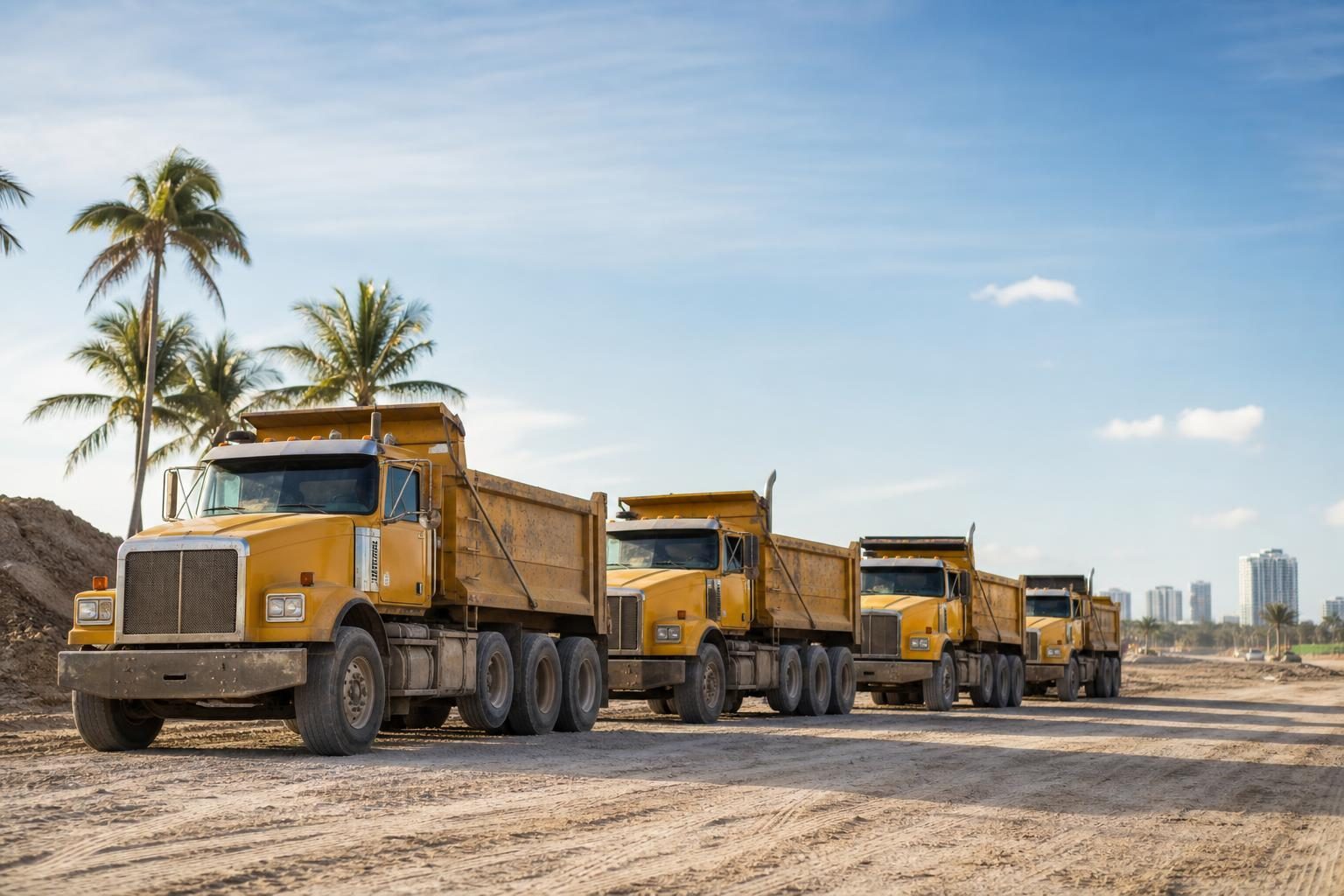
Rates vary by credit profile, equipment age, and term length. Used trucks older than 10 years may carry slightly shorter maximum terms or require a larger down payment, but the equipment itself still serves as collateral. Because the financing is secured by the truck, lenders can approve deals that unsecured business lines would decline. If you are also financing Dump Trucks financing or other fleet additions, bundling multiple units into one application can streamline underwriting and reduce documentation.
Pro Tip: If you plan to bid on FPL or Duke Energy mutual-aid work, your bucket truck must have a Category C or D dielectric rating and current ANSI inspection documentation. Private tree-care buyers can run uninsulated units, but resale demand and contractor versatility are higher with an insulated boom.
What Lenders Look For in a Florida Application
Underwriting for bucket truck financing focuses on four factors: time in business, credit history, cash flow, and equipment condition. Established contractors with two or more years in operation, bank statements showing consistent deposits, and a credit profile that demonstrates responsible payment history will see the fastest approvals and the most favorable structures. That said, the equipment collateral gives lenders flexibility. A strong down payment or a co-signer can offset a shorter operating history or past credit challenges.
For used trucks, lenders pay close attention to age, mileage, hours on the boom, and maintenance records. A 2018 unit with 80,000 miles but documented annual boom inspections and a clean title is easier to finance than a 2020 model with missing service records. Lenders may require an independent equipment appraisal for transactions above $250,000, or for units older than 10 years, to confirm the collateral value matches the loan amount.
Insurance requirements are straightforward but non-negotiable. The lender will be listed as loss payee and additional insured on a physical damage policy covering the truck. General liability and, for many utility contractors, workers compensation coverage must also be current before funding. Florida-based buyers should verify that their commercial auto policy covers the specific GVWR and boom configuration, because some standard policies exclude aerial devices above certain heights or weights.
New vs. Used Bucket Trucks in Florida
New bucket trucks come with manufacturer warranties, the latest safety features, and full depreciation schedules. For contractors bidding on long-term utility maintenance contracts, a new unit signals reliability and reduces downtime risk. Custom chassis and body configurations let you order exactly the boom height, material handler capacity, and tool package your crew needs. The downside is upfront cost and longer lead times. Some popular chassis builds take 6 to 12 months from order to delivery.
Used trucks offer immediate availability and lower monthly payments. In Florida, the used market is especially active because storm contractors cycle equipment quickly. A three-year-old truck that worked two hurricane seasons may have higher boom hours than a comparable utility-owned unit, so buyers should request the aerial hour meter reading and the last ANSI inspection report. Look for rust on outrigger pads, hydraulic leaks at the boom base, and corrosion in the bucket controls. Florida's humidity and salt air accelerate wear on exposed steel.
Financing terms for used equipment are generally competitive as long as the truck is less than 15 years old at the time of purchase. Trucks older than 15 years can still be financed, but the term may cap at 36 months and the down payment may rise. For buyers who plan to run the truck until the wheels fall off, used is often the smarter cash-flow play. For buyers who need warranty protection and want to maximize the Section 179 deduction in the first year, new makes more sense.
By the Numbers: For tax year 2026, the Section 179 deduction limit is $2,560,000, and the phase-out threshold begins at $4,090,000 in total equipment placed in service. These figures are adjusted annually for inflation. Always confirm current limits with a CPA before filing.
See what you qualify for
The equipment itself secures the financing, which keeps rates competitive. Checking your options takes minutes.
Check Your OptionsTax Treatment for 2026
Bucket trucks qualify as business equipment under the tax code, which means buyers can deduct the cost using Section 179, bonus depreciation, or standard MACRS depreciation. For tax year 2026, the Section 179 deduction limit is $2,560,000, and the benefit begins to phase out once total equipment placed in service exceeds $4,090,000. Because these thresholds are indexed to inflation, they change each year. A CPA can confirm how the 2026 limits apply to your specific purchase and whether your business structure allows you to take the full deduction in year one.
An Equipment Financing Agreement or $1 buyout lease generally lets the borrower claim Section 179 and depreciation, because the borrower is considered the owner for tax purposes. A fair market value lease usually treats payments as operating expenses, which may still be deductible but under different rules. The distinction matters if you are trying to time a large deduction against a high-revenue year. Never guess at tax strategy. The rules around listed property, business-use percentage, and state-level treatment in Florida can shift the math.
Florida Industries That Rely on Bucket Trucks
Bucket trucks are not one-size-fits-all. The spec sheet that works for a sign company in Miami is wrong for a line crew in the Panhandle. Understanding how different Florida industries use these trucks helps buyers choose the right financing structure and the right machine.
Electrical Utilities and Storm Response
Florida's electric utilities operate massive vegetation management and line maintenance programs. FPL alone clears trees along thousands of miles of overhead distribution lines annually. When storms hit, mutual-aid contractors pour into the state with bucket trucks ranging from 45 to 65 feet. These contractors need insulated booms, material handlers, and chassis heavy enough to carry transformers and reels. Transportation equipment financing covers not just the boom truck but also the trailers and support vehicles that move crews and materials across county lines.
Tree Care and Vegetation Management
Arborists and tree trimmers represent a large share of Florida's bucket truck buyers. Unlike utility crews, tree companies often need non-insulated units with chipper bodies or grapple saws mounted to the boom. Height requirements vary by client. Municipal contracts may require 55-foot reaches for street and park work, while residential tree services can operate at 40 feet. The ability to finance a used truck quickly matters in this segment because storm cleanup contracts appear with little notice and require immediate mobilization.
Telecom and Broadband
Telecom installers use bucket trucks to hang fiber and maintain copper lines on utility poles. The working height is usually 35 to 50 feet, but side reach becomes important when poles sit behind sidewalks or in wetlands. Many telecom contractors run light-duty chassis to keep fuel costs down and to avoid CDL requirements. Because telecom projects often run on multi-year contracts, a 60-month equipment financing agreement matches the revenue stream well.
Construction and Signage
General contractors, electricians, and sign installers use bucket trucks for exterior building work, parking lot lighting, and billboard maintenance. These trucks see lighter duty than utility units, which means a well-maintained used truck can last years in this application. If your construction firm also needs heavy hauling capability, consider pairing Dump Trucks financing with your bucket truck purchase to complete a fleet package.
Agriculture and Citrus
Florida citrus growers and nurseries use smaller bucket trucks for orchard pruning, frost fan maintenance, and harvest support. These units are often non-insulated, mounted on compact chassis, and equipped with orchard-friendly tires. Financing terms for agricultural equipment may align with seasonal cash flow, with structured payments that step up during harvest months.
Common Mistakes Florida Buyers Make
The biggest mistake is buying underpowered or under-specced equipment to save on monthly payments. A contractor who buys a 40-foot non-insulated truck to clear residential trees will not be able to pivot into utility line work when the opportunity arises. The second mistake is skipping the boom inspection. Aerial devices require regular ANSI inspections, and a used truck with a lapsed inspection report can cost $2,000 to $5,000 to certify before it goes to work.
Buyers also underestimate licensing. Florida requires a Class B CDL for single vehicles with a GVWR of 26,001 pounds or more. Many bucket trucks on medium-duty chassis fall under that threshold, but add a material handler, reel carrier, or heavy toolbox body and the weight climbs quickly. If your driver does not hold the right license, the truck sits.
Finally, some buyers wait until peak storm season to shop. Inventory shrinks, prices rise, and lenders get busy. Starting the financing conversation in January or February puts you in position to buy when supply is highest and competition is lowest. Get a same-day decision on your equipment before the spring rush begins.
Key Insight: A bucket truck mounted on a Ford F-550 chassis with a 19,500-pound GVWR can often be operated with a standard Class E Florida license, but move up to a Freightliner M2 on a 26,000-pound chassis and the driver needs a Class B CDL. Factor licensing timelines into your purchase decision if crew availability is tight.
Documentation You'll Need
The application process is simpler than most buyers expect. For transactions under $250,000, most lenders require a one-page credit application, three months of business bank statements, and an invoice or equipment description. For larger transactions or deals involving multiple units, you may need two years of business tax returns, a year-to-date profit and loss statement, and a personal financial statement from the guarantor.
Used truck purchases also need a title history, the seller's equipment specification sheet, and proof of current insurance or a binder. If the truck is being sold by an out-of-state storm contractor, verify that the title is clean and that no liens remain from prior financing. Florida buyers should also confirm that the truck meets Florida Department of Transportation weight and dimension rules if it will cross state lines or operate on interstate highways.
Borrowers exploring government-backed options alongside private equipment financing can review SBA 504 loans for major fixed assets through the U.S. Small Business Administration, though equipment-only deals under $5 million are often faster through a direct equipment lender.
What Happens After Approval
Once approved, the lender issues a commitment letter outlining the term, payment structure, and any conditions. You review and sign, then the lender pays the seller directly. For dealer purchases, funding usually occurs within 24 to 48 hours of receiving signed documents and a clear invoice. For private-party sales, the lender may wire funds to an escrow agent or title company to ensure the lien is recorded correctly.
After funding, your first payment is typically due 30 to 45 days later. Some lenders offer seasonal or deferred payment structures for Florida agricultural and storm-response contractors who need 60 to 90 days before revenue begins. The equipment is titled in your business name with the lender listed as lienholder. Once the final payment clears, the lender releases the lien and you hold clear title.
If your business is growing and you need additional units, many lenders will approve follow-on deals with reduced documentation because they already know your account. Talk to a specialist about your specific machine and future fleet plans.
Ready to move forward?
More than 10,000 businesses have financed equipment with Provide Capital. See what you qualify for today.
Get StartedFrequently Asked Questions
Can I finance a used bucket truck in Florida?
Yes. Provide Capital finances both new and used bucket trucks. Used units up to 10 to 15 years old are generally eligible for standard terms. Older trucks may require a larger down payment or a shorter term.
What credit score do I need for bucket truck financing?
There is no universal minimum. Strong credit speeds approval and improves terms, but because the equipment serves as collateral, lenders can approve buyers with credit challenges if cash flow and down payment are sufficient.
How long are the terms?
Terms typically range from 24 to 72 months for equipment financing agreements. Used trucks older than 10 years may cap at 48 or 60 months depending on the collateral value.
Can I finance a bucket truck from a private seller?
Yes. Private-party sales are common in the used bucket truck market. The lender will verify title status, equipment condition, and may require an appraisal before funding.
Do I need a CDL to operate a bucket truck in Florida?
It depends on the gross vehicle weight rating. Trucks with a GVWR of 26,001 pounds or more require a Class B CDL in Florida. Lighter units may be operable with a standard Class E license.
What is the Section 179 deduction for 2026?
For tax year 2026, the Section 179 deduction limit is $2,560,000, with a phase-out starting at $4,090,000 in total equipment placed in service. Consult a CPA to confirm how this applies to your business.
How fast can I get approved?
Same-day approvals are possible for qualifying applications with complete documentation. Most funded deals close within 24 to 72 hours after approval.
Should I buy or lease a bucket truck?
Buying through an equipment financing agreement makes sense if you plan to keep the truck for 7 to 10 years and want to claim depreciation. Leasing works better if you upgrade equipment every 3 to 4 years or need lower monthly payments. Compare the structures in the table above.
Ready to Finance Your Florida Bucket Truck?
Florida's bucket truck market moves fast, and the contractors who secure financing early buy better equipment at better prices. Whether you need a 45-foot telecom unit or a fully specced 65-foot utility boom, Provide Capital offers equipment financing from $5,000 to $5 million with terms tailored to your business. See what you qualify for and get a decision on your next bucket truck today.
Disclaimer: The information provided in this article is for general educational purposes only and is not financial, legal, or tax advice. Funding terms, qualifications, and product availability may vary and are subject to change without notice. Provide Capital does not guarantee approval, rates, or specific outcomes. For personalized information about your business funding options, contact our team directly.