
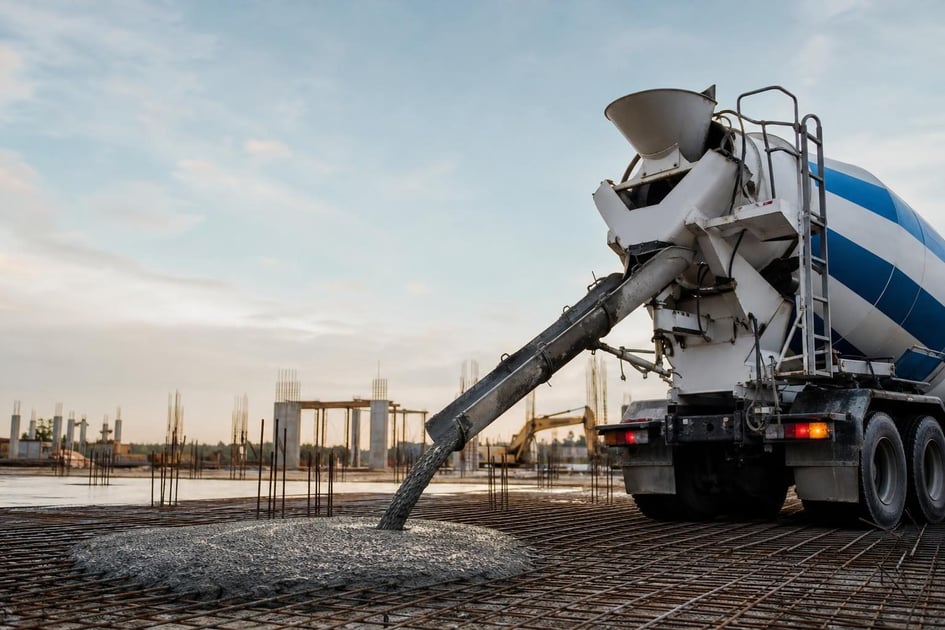
What does concrete mixer financing qualify for? In practice, it comes down to four things: your time in business, monthly revenue, credit history, and the equipment itself. Provide Capital finances new and used concrete mixers from $5,000 to $5 million, using the machine as collateral to keep rates competitive. Same-day approvals are possible if your documentation is ready. Whether you are a ready-mix operator adding capacity or a construction company buying your first tow-behind unit, understanding the qualification criteria before you shop helps you negotiate with confidence and avoid surprises at closing.
If you are weighing a purchase, see what you qualify for before you negotiate with the dealer.
What Lenders Look For in a Concrete Mixer Application
Time in Business and Industry Experience
Most equipment lenders prefer at least two years in operation. That history shows you have survived seasonal slowdowns and managed cash flow through winter months when pours drop off. If you have been in business for less than two years, you may still qualify, but the lender will weigh other factors more heavily: personal credit score, bank balance trends, and whether you have existing contracts lined up. Experience in the concrete trade itself matters. A contractor who has spent ten years as a finisher before striking out on their own presents a different risk profile than someone entering the industry cold, even if both businesses are technically new.
Revenue and Bank Activity
Lenders typically look for a minimum of $100,000 in annual revenue, though some programs accept less. More important than the top-line number is the pattern. Consistent deposits, manageable existing debt service, and a bank balance that does not regularly hit zero all signal that you can handle a new equipment payment. For construction companies, lenders also understand that revenue is seasonal. They may average your last twelve months or look at your busiest quarters to set a payment that aligns with your cash cycle. Be prepared to explain large one-time deposits or withdrawals, as underwriters flag irregular activity.
Credit Profile and Collateral Value
Personal credit scores in the mid-600s and above open the most competitive programs. Scores below that do not automatically disqualify you, especially if revenue is strong and the equipment holds its value well. Because the concrete mixer serves as collateral, the lender has a secured interest that offsets some of the risk associated with a lower score. Expect the lender to review both personal and business credit reports. Recent bankruptcies, unresolved tax liens, or judgments will require explanation and may trigger a larger down payment requirement.
The Equipment as Collateral
The mixer itself is central to the approval decision. Lenders evaluate the manufacturer, model year, hours or miles, and recent comparable sales. A well-maintained mixer from a major brand with a dealer network nationwide is easier to liquidate if necessary than a niche import with scarce parts. This is why equipment-focused lenders can often offer better terms than generalist banks: they understand the resale market for concrete equipment.
Personal Guarantees and UCC Filings
Most equipment finance agreements for concrete mixers require a personal guarantee from the owner or majority shareholder, especially for transactions under $1 million. The guarantee is not a reflection of poor credit; it is standard practice in secured equipment lending. The lender also files a UCC-1 lien against the equipment, which gives them priority claim if the asset is sold before the loan is satisfied.
Key Insight: Because the mixer itself secures the financing, lenders often weigh the equipment's resale value as heavily as your credit score. A late-model, low-hour rear-discharge mixer from a major manufacturer holds value better than a high-mileage front-discharge truck, which can offset a shorter time in business or a credit blemish.
Already have a machine in mind?
Provide Capital finances new and used equipment from $5,000 to $5 million, with same-day decisions possible.
Apply NowNew vs. Used Concrete Mixer Financing
New Mixers
A new mixer gives you the full manufacturer warranty, the latest emissions compliance, and predictable maintenance costs for the first few years. For contractors working on municipal or state jobs, newer equipment may also be required to meet idling or emissions rules. Financing terms on new equipment typically stretch longer—up to 60 or 72 months—because the lender is comfortable with the collateral value. New equipment also qualifies for the most favorable tax treatment for tax year 2026, though you should confirm the exact deduction limits with your CPA.
Used and Refurbished Mixers
Used mixers cost less upfront and depreciate more slowly. A three-year-old front-discharge mixer with documented maintenance can be financed on similar terms to new equipment if it is from a recognized brand. Lenders will ask for an appraisal or a purchase invoice to confirm value. Be prepared to put down 10% to 20% on used equipment, especially if it is more than five years old or has over 5,000 hours. The sweet spot for used financing is typically two to four years old with under 3,000 hours.
When evaluating a used mixer, lenders look at the drum's condition, the chassis frame integrity, and the engine's service history. A mixer that has spent its life in a precast plant doing short, consistent runs may be in better mechanical shape than a highway delivery truck with fewer hours but more thermal cycling.
Pro Tip: Rental fleet auctions often sell mixers with full maintenance logs and mid-life component replacements. A lender views that paper trail as risk reduction, which can translate to better rates than financing a privately sold mixer with spotty records.
Lease vs. Loan: Choosing the Right Structure
Choosing between a loan and a lease depends on how long you plan to keep the mixer, how you want to treat it on your books, and your tax strategy for 2026.
| Factor | Equipment Loan | Equipment Lease |
|---|---|---|
| Ownership | You own the mixer; lender holds a lien | Lessor owns the mixer; you have use rights |
| Down Payment | Often 0% to 20% | Usually one or two payments upfront |
| Term | 24–72 months | 24–60 months |
| End of Term | You own it free and clear | Purchase option, return, or renew |
| Monthly Payment | Typically lower than lease for same term | Often higher, but may include maintenance |
| Tax Treatment (2026) | Interest deducted, depreciation/Section 179 | Lease payments deducted as operating expense |
| Balance Sheet Impact | Asset and liability recorded | Off-balance-sheet depending on structure |
| Best For | Long-term use and equity building | Short-term projects, technology refresh, preserving credit lines |
With a loan, you build equity in the mixer from day one. Once the lien is released, the asset is yours and its remaining value sits on your balance sheet. This is the most common structure for established contractors who plan to run a mixer for seven to ten years. A lease keeps the equipment off your capital expenditure budget, which some owners prefer when they want to preserve borrowing capacity for other lines of credit or bonding programs.
Tax Treatment for Tax Year 2026
For tax year 2026, Section 179 allows businesses to deduct the full purchase price of qualifying equipment in the year it is placed in service, subject to annual limits that adjust for inflation. Concrete mixers used more than 50% for business purposes qualify. If you choose not to take Section 179, you can depreciate the asset over its Modified Accelerated Cost Recovery System life, typically five years for heavy equipment.
Bonus depreciation continues to phase down in 2026. The exact percentage depends on current federal statute, so talk to your CPA about how much of the mixer's cost can be front-loaded this year versus spread over the recovery period. Leasing offers a simpler path: you deduct each lease payment as a business expense.
Interest paid on the equipment loan is deductible as a business expense for tax year 2026. This deduction applies to the interest portion of each payment, not the principal. Over a 72-month term, the interest component is front-loaded, meaning your deductible interest is highest in the first two years.
By the Numbers: A contractor in the 24% federal tax bracket who finances a $150,000 concrete mixer and claims available deductions for tax year 2026 could see a first-year tax benefit that substantially offsets the initial cash outlay. The precise savings depend on your bracket, state taxes, and whether you pair Section 179 with bonus depreciation. Your CPA can model the exact impact.
Real-World Cost Ranges and Payment Estimates
Understanding the real cost of concrete mixing equipment helps you set realistic expectations before you apply.
Small portable mixers and tow-behind units suitable for residential contractors run $5,000 to $25,000. Mid-size rear-discharge trucks fall between $150,000 and $300,000 depending on drum capacity, chassis brand, and regional availability. High-capacity front-discharge mixers and specialized volumetric units can reach $400,000 or more. Because Concrete Mixer financing through Provide Capital covers amounts up to $5 million, even fleet purchases of multiple trucks can be structured under a single approval.
Chassis choice significantly affects price. A mixer mounted on a premium Class 8 chassis with an air-ride suspension and automated transmission will cost more than the same drum on a standard specs chassis. Similarly, a 10.5-yard drum commands a premium over an 8-yard unit. Volumetric mixers, which produce concrete on demand from raw materials, often start around $125,000 and can exceed $350,000 depending on capacity and automation level.
Payment examples for qualified buyers:
- $35,000 used skid-mounted mixer: roughly $700–$900 per month over 60 months.
- $180,000 new rear-discharge truck: roughly $3,200–$4,000 per month over 72 months.
- $450,000 front-discharge fleet purchase: roughly $7,500–$9,500 per month over 72 months.
Rates vary by credit profile, equipment age and term. These ranges are illustrative; your actual payment will depend on underwriting.
See what you qualify for
The equipment itself secures the financing, which keeps rates competitive. Checking your options takes minutes.
Check Your OptionsHow Equipment Age and Hours Shape Your Approval
Lenders use age and usage metrics to set advance rates and terms. A mixer truck with under 2,000 engine hours and less than 100,000 miles might qualify for 100% financing. Once a truck crosses 300,000 miles or a stationary mixer exceeds 5,000 hours, expect the lender to cap the advance at 80% to 90% of appraised value. Mixers older than ten years are still financeable, but terms usually shorten to 36 or 48 months and may require a larger equity stake.
Industries That Rely on Concrete Mixer Financing
Ready-mix delivery is only one use case for concrete mixer financing. Paving contractors use mobile mixers for curb and gutter work where batch plants are too far away. Foundation specialists keep a small drum truck on site for continuous pours that prevent cold joints. Agricultural operations finance skid-mounted mixers to pour concrete feed pads and silage bunkers. Precast manufacturers run pan mixers and twin-shaft units that require different collateral valuations than truck-mounted drums.
According to U.S. Census Bureau construction spending data, residential and non-residential construction activity directly drives demand for concrete equipment. When housing starts rise, contractors who can pour foundations faster win more bids. A financed mixer lets you scale capacity without waiting for cash reserves to accumulate. As the Associated Press has reported, ongoing infrastructure investment across the United States continues to sustain demand for ready-mix capacity. Construction equipment financing helps contractors position for those jobs without the cash-flow strain of an outright purchase.
Documentation You'll Need to Close
Business and Financial Paperwork
Expect to provide the last three months of business bank statements, a current year-to-date profit and loss statement, and a business tax return from the prior year. If you are a sole proprietor, the lender may also request personal tax returns. Have a current personal financial statement ready if you are borrowing more than $250,000.
Equipment Details and Verification
You will need an equipment quote or purchase invoice that lists the year, make, model, serial number, hours or miles, and purchase price. For private-party sales, a third-party appraisal may be required. Photos of the unit help, especially for used equipment. If the mixer is mounted on a truck chassis, the lender needs the vehicle identification number and title status.
Insurance Requirements
Before funding, the lender will require a certificate of insurance naming them as loss payee. The policy must cover the full replacement value of the mixer and typically must include physical damage coverage. General liability alone is not sufficient. If you are adding the equipment to an existing policy, request the certificate at least 48 hours before closing to avoid delays.
Common Mistakes When Financing Concrete Equipment
Buying More Capacity Than Your Contracts Support
A ten-yard front-discharge truck looks impressive, but if your average pour is two yards, you are carrying debt on idle capacity. Match the drum size to your book of business. A volumetric mixer might be more versatile for small, variable pours than a full-size drum truck.
Ignoring Transport and Permitting Costs
Mixer trucks often exceed standard weight limits and require special permits or routing. Factor those ongoing costs into your budget alongside the monthly payment. Some municipalities restrict mixer truck access during rush hours or on certain bridge classifications.
Overlooking Seasonal Cash Flow
Concrete work slows in winter across much of the country. Structure your first payment due date after your spring ramp-up, or negotiate a seasonal skip-payment plan if the lender offers it. Missing a January payment because of frozen ground is a preventable problem.
Forgetting Soft Costs
Delivery fees, taxes, title work, and initial insurance premiums add up. Some lenders allow you to finance soft costs up to a percentage of the equipment value; others require them out of pocket. Clarify this before you sign.
Pro Tip: If you are buying a mixer mounted on a truck chassis, ask the dealer to itemize the mixer body separately from the chassis on the invoice. Some lenders treat the chassis as titled vehicle collateral and the mixer body as equipment collateral, which can change the documentation and insurance requirements.
What Happens After Approval
Once approved, the lender issues a purchase order or funds the transaction directly. For dealer purchases, funds are typically wired to the seller within 24 to 48 hours. For private-party sales, the lender may send the check to the seller and the title work to your state's DMV or titling authority. The lender files a UCC-1 lien on the equipment, which is released when you pay off the balance. You will receive an amortization schedule and instructions for setting up automatic payments.
After the first payment, the lender may require proof of insurance renewal annually. If you sell the mixer before the loan matures, the balance must be paid off at closing, and the lender will release the lien once they receive the payoff. Some lenders offer a simple payoff quote process that can be completed in 24 hours.
Ready to move forward? Get a same-day decision on your concrete mixer and lock in your equipment before the busy season starts.
Put the right equipment to work
From $5,000 to $5 million, new or used, Provide Capital helps businesses nationwide finance the equipment they need.
Apply TodayFrequently Asked Questions
Can I finance a concrete mixer with bad credit?
You can still qualify with credit challenges, especially if the mixer is newer and your revenue is consistent. Expect a larger down payment or a shorter term. The equipment's value provides the lender with security that unsecured lenders do not have.
How long does approval take?
Same-day approvals are possible when your documentation is complete. More complex transactions, private-party sales, or requests over $1 million may take two to three business days.
Do I need a down payment?
Not always. Well-qualified buyers can finance 100% of the equipment cost including soft costs like delivery. Used equipment or challenged credit usually requires 10% to 20% down. The down payment is often based on the loan-to-value ratio, not just your credit.
Can I finance a private-party sale?
Yes, but the lender will verify the seller's ownership through a title search, require a bill of sale, and may require an independent appraisal. The process adds a day or two but opens access to used inventory outside dealer lots.
Is the interest tax-deductible?
For tax year 2026, interest on business equipment loans is generally deductible as a business expense. The principal repayment is not deductible, but depreciation or Section 179 may offset the capital outlay. Consult your CPA about how it interacts with your other deductions.
What if I want to pay off the loan early?
Most equipment loans allow early payoff, though some have a prepayment schedule for the first 12 to 24 months. Ask for the prepayment policy before you sign. A loan with no prepayment penalty gives you flexibility if you land a large contract and want to clear the debt.
Can I finance multiple mixers at once?
Yes. Fleet purchases can be bundled under a single master equipment finance agreement, which simplifies bookkeeping and may improve your rate compared to separate transactions. Concrete Equipment financing programs are designed to handle bundled acquisitions.
Does the lender need to approve the seller?
For dealer purchases, the seller typically does not need prior approval. For private sales, the lender verifies clear title and may require escrow to protect both parties.
Moving Forward with Your Concrete Mixer Purchase
Concrete mixer financing is straightforward if you understand what lenders weigh and you have your paperwork organized. Whether you are replacing an aging truck or adding a second mixer to keep up with residential demand, the right financing structure preserves your working capital and keeps your cash flow aligned with your seasonal income. The U.S. Small Business Administration offers resources on managing equipment debt, and construction industry data from the U.S. Census Bureau confirms that contractors who invest in capacity during growth phases tend to capture market share faster than those who wait for cash reserves.
Review your current book of business before you apply. Know your average monthly concrete volume, your peak season revenue, and how many months it takes to collect on commercial pours. That data helps you choose a payment that feels comfortable in November as well as June.
Talk to a specialist about your specific machine and find out how quickly you can get your next mixer working on the job site.
Disclaimer: The information provided in this article is for general educational purposes only and is not financial, legal, or tax advice. Funding terms, qualifications, and product availability may vary and are subject to change without notice. Provide Capital does not guarantee approval, rates, or specific outcomes. For personalized information about your business funding options, contact our team directly.