Most construction contractors can qualify for equipment financing if they have six months or more in business, a credit score in the mid-600s, and documented revenue that supports the monthly payment. The equipment itself serves as collateral, which means you do not need real estate or a separate asset pledge to secure the deal. At Provide Capital, we finance new and used construction equipment from $5,000 up to $5 million, with same-day approvals possible for well-documented applications.
What Construction Equipment Qualifies for Financing
Nearly every asset that moves dirt, lifts material, or hauls loads can be financed. Lenders categorize equipment by use, age, and resale liquidity. The broader the resale market, the easier the approval. If you are looking for Construction equipment financing, the range of eligible assets is broad.
Heavy Earthmoving and Excavation Equipment
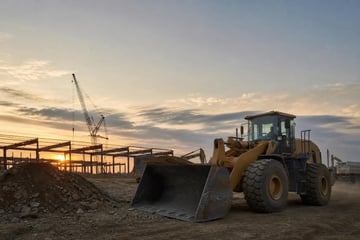
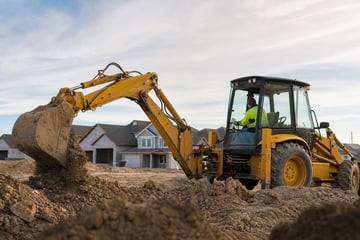
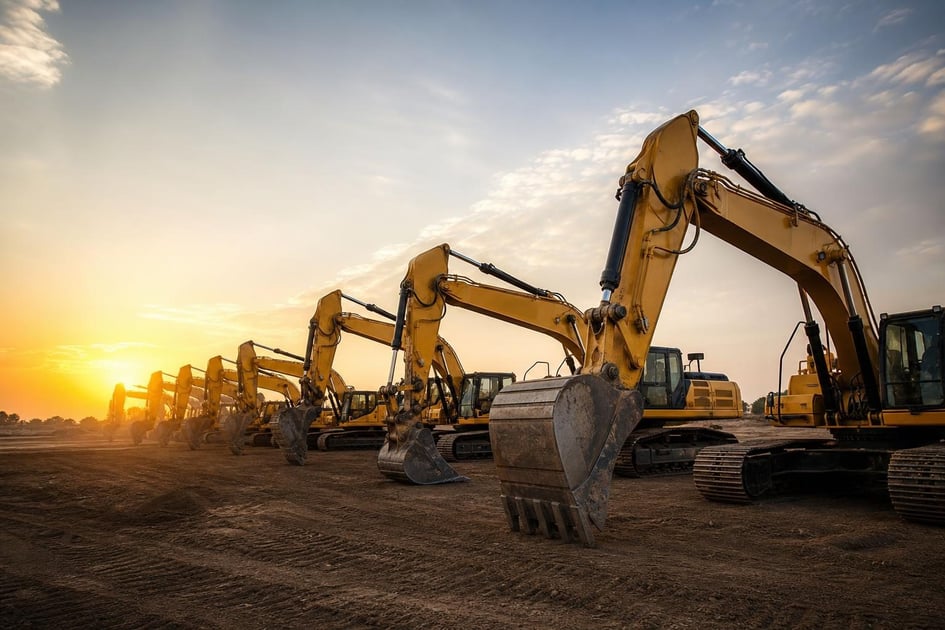
Excavators, dozers, backhoes, and compact track loaders form the backbone of site-prep work. These machines carry strong resale values, so lenders view them favorably even when used. Skid Steers financing is particularly popular among smaller contractors because one machine can switch between grading, digging, and material handling with the right attachments. Wheel Loaders financing covers everything from compact utility models for landscaping up to full-production loaders for quarry operations.
Lifting and Aerial Work Platforms
Scissor lifts, boom lifts, and telehandlers qualify readily because they serve multiple trades. Electric slab scissor lifts see high demand in finished-space work, while rough-terrain diesel units dominate new construction sites. The key qualification factor is hours and maintenance history. Units with documented service records finance more smoothly than those sold at auction with unknown histories.
Trucks, Trailers, and Hauling Equipment
Dump Trucks financing includes single-axle landscape bodies through tri-axle heavy haulers. Lenders treat titled trucks slightly differently than untitled equipment because DMV registration creates a clear lien path. If you are financing a truck older than ten years, expect a larger down payment or a shorter term to offset depreciation risk.
Specialty and Attachment Equipment
Trenchers, pavers, concrete pumps, and directional drills qualify, though niche items may require a larger down payment because the resale pool is smaller. Attachments such as hydraulic hammers, augers, and grapples can often be bundled into the same financing package as the host machine, provided the combined collateral value supports the loan amount.
Key Insight: Lenders value collateral liquidity above brand name. A five-year-old excavator with 3,000 hours and a clean maintenance log will qualify on better terms than a two-year-old no-name import with gaps in its service history, because the resale market for the name-brand machine is deeper and more predictable.
Get a fast decision on your equipment
Applying takes just a few minutes, and decisions can come as soon as the same day.
Start Your ApplicationWhat Lenders Look for in a Construction Borrower
Equipment financing uses the machine as collateral, but the borrower still matters. Underwriters evaluate three primary factors: credit, time in business, and cash flow. According to the SBA's guidance on 7(a) loans, equipment purchases are a standard use of proceeds, which validates how lenders structure these transactions.
Credit Profile and Score Ranges
A FICO score in the mid-600s opens the door to competitive structures. Scores below that do not automatically disqualify you, but they shift the deal toward shorter terms or a larger down payment. Lenders also look for recent derogatory events. A bankruptcy discharged two years ago is viewed differently than a current tax lien or open judgment. Personal credit matters because most construction firms are pass-through entities where the owner guarantees the debt.
Time in Business
Two years or more in operation is the standard benchmark, though some programs accept twelve months and exceptional cases clear at six months if revenue is strong and the down payment is meaningful. Startups without an operating history face higher scrutiny and generally need either a strong personal credit profile or a co-signer. For established contractors, time in business demonstrates seasonality survival. You have already weathered at least one slow period and still generated revenue.
Revenue and Cash Flow
Lenders want to see that your monthly equipment payment fits inside your cash flow. They typically calculate a debt-service coverage ratio by comparing net operating income to proposed debt obligations. Bank statements showing consistent deposits, even if seasonal, are more persuasive than a single large contract followed by dry months. If your business generates at least $10,000 in monthly revenue, you generally have enough volume to support a modest equipment payment without strain.
By the Numbers: Financing amounts range from $5,000 for a single attachment or small trailer up to $5 million for a fleet package of earthmovers and haul trucks. Terms typically stretch from 24 to 72 months depending on equipment age, with newer machines qualifying for longer amortization because the collateral retains value deeper into the loan.
New vs. Used Equipment: How Financing Differs
New equipment offers the longest terms and lowest down payments because depreciation is predictable and warranty coverage protects the collateral. Used equipment, especially units three to seven years old, can be the better value, but financing terms tighten as the machine ages. As Reuters reported on core capital goods demand, business spending on equipment has remained solid through 2026, which means both new and used markets are active.
| Factor | New Equipment | Used (3–7 years) | Used (8+ years) |
|---|---|---|---|
| Down payment | 0–10% | 10–15% | 15–20% |
| Typical term | 60–72 months | 36–60 months | 24–36 months |
| Rate structure | Most competitive | Standard range | Shorter term offsets higher rate |
| Warranty | Manufacturer included | Optional extended | As-is or third-party |
| Approval speed | Fast | Standard | May require appraisal |
Rates vary by credit profile, equipment age, and term length. Used equipment with high hours or from a private seller may require a third-party inspection before funding.
Equipment Loan vs. Equipment Lease
A loan leaves you with title and equity. A lease trades lower monthly payments for the option to return or upgrade. Construction contractors who plan to run a machine until the engine gives out usually prefer a loan. Those who need to scale capacity for a specific project or who want predictable upgrade cycles often choose a lease. Forbes Finance Council notes that equipment financing helps businesses purchase assets such as machinery and vehicles while preserving operating capital.
| Feature | Equipment Loan | $1 Buyout Lease | Fair Market Value Lease |
|---|---|---|---|
| Ownership | You own it after final payment | You own it for $1 at end | Return or purchase at FMV |
| Monthly payment | Higher | Moderate | Lowest |
| Tax deduction | Interest plus depreciation | Full payment deductible | Full payment deductible |
| Balance sheet | Asset and liability | May be off-balance-sheet | Usually off-balance-sheet |
| Best for | Long-term core fleet | Planned ownership with cash flow relief | Short-term or technology-sensitive assets |
Pro Tip: If you are financing a used machine through a private-party sale, get the serial number and a detailed photo set before applying. Lenders run an equipment valuation against auction databases, and an incomplete submission forces them to pause while they request more data. A complete file—invoice, photos, serial number, and seller contact—can move from application to approval the same day.
See what you qualify for
The equipment itself secures the financing, which keeps rates competitive. Checking your options takes minutes.
Check Your OptionsTax Treatment and Section 179 for 2026
For the 2026 tax year, Section 179 allows qualifying businesses to deduct the full purchase price of financed equipment in the year it is placed in service, subject to annual limits and a phase-out threshold. The exact dollar limits for 2026 are set by the IRS and indexed to inflation. Because these figures change annually, you should confirm the current-year limit with your CPA before making a purchase decision. Bonus depreciation may also apply, though its percentage has been stepping down in recent years. Always consult a tax professional to model the after-tax cost of ownership versus leasing for your specific situation.
Industry-Specific Equipment Scenarios
Construction is not monolithic. A concrete contractor's financing profile looks different from a residential excavation crew's.
General Contracting and Site Development
General contractors need versatile iron: skid steers, compact excavators, and dump trucks that can pivot between residential and light commercial work. Because generalists face more variable revenue, lenders may scrutinize job-backlog consistency. Showing three to six months of signed contracts strengthens your file.
Specialty Trades and Subcontractors
Underground utility contractors, paving crews, and demolition specialists run single-purpose machines that cost more per unit but generate predictable revenue. A trencher that earns $250 per hour on directional-bore jobs can carry a larger monthly payment than a general-purpose loader that sits between assignments. If your equipment is mission-specific, highlight the contracted utilization rate in your application.
Common Mistakes Contractors Make When Financing
First, applying without a specific machine in mind. Lenders need collateral to value. An open-ended pre-approval is harder to secure than a deal tied to a listed asset. Second, stretching the term to the maximum to lower payments on equipment that will age out early. A seven-year loan on a twelve-year-old dozer leaves you paying for a machine that may be retired before the note is satisfied. Third, ignoring soft costs. Delivery, freight, and initial attachments can often be rolled into the financing, but only if you ask upfront. Adding them after approval requires a loan modification.
Documentation You Need to Apply
A complete application moves faster. Gather the last three months of business bank statements, a current year-to-date profit and loss statement, the equipment invoice or purchase agreement, and a copy of your driver's license or business registration. For loans above a certain threshold, often around $250,000, lenders may also request two years of tax returns and an interim balance sheet. If the equipment is used, add the serial number, hour meter reading, and maintenance records if available.
What Happens After You Submit
Most applications receive an initial decision within hours, not days. If the collateral and borrower profile fit standard parameters, you get a term sheet listing the down payment, monthly payment, and any documentation conditions. Review the term sheet carefully. The rate and structure are valid for a set window, usually five to ten business days. Once you sign and return the term sheet with any required stipulations, the lender wires funds directly to the seller or releases a check. Same-day approvals are possible when the file is clean and the equipment is easy to value.
If you have a machine picked out and your paperwork ready, see what you qualify for and get a same-day decision on your equipment.
Put the right equipment to work
From $5,000 to $5 million, new or used, Provide Capital helps businesses nationwide finance the equipment they need.
Apply TodayFrequently Asked Questions
Can I finance construction equipment with bad credit?
You can, but the structure changes. Expect a larger down payment, a shorter term, or a higher monthly payment. The equipment itself is collateral, so lenders have recourse if you default, but they price the added risk into the deal.
How much down payment is required?
New equipment often qualifies with little or no money down for established borrowers. Used equipment typically requires 10 to 20 percent down, depending on age, hours, and your credit profile.
Can I finance equipment from a private seller?
Yes. Private-party transactions are common in construction. The lender will verify title, run a lien search, and may require an inspection. Funds are usually sent directly to the seller once you sign the closing package.
What is the oldest equipment you can finance?
Most lenders cap financing at equipment that is 15 to 20 years old at the end of the term. A ten-year-old excavator on a five-year note is acceptable. A twenty-year-old dozer on a seven-year note is not.
Can I bundle attachments into the same financing?
Yes, provided the combined collateral value supports the total amount. Bundling a skid steer with a bucket, auger, and trencher attachment into one note is standard practice.
Does the equipment need to be insured?
Yes. The lender will be listed as loss payee on a physical damage policy. If you already carry inland marine or equipment coverage, your agent can add the lender's interest. If not, the lender will require proof of coverage before funding.
How fast can I get funded?
Same-day approvals are possible for straightforward deals with complete documentation. More complex files, those involving used private-party sales, poor credit, or large loan amounts, may take 24 to 72 hours.
Can I refinance existing equipment?
Some lenders offer sale-leaseback transactions or refinancing on equipment you already own free and clear. The machine must be appraised, and you generally need to demonstrate that the cash released will go toward income-producing activity.
Next Steps
Start with the machine, not the math. Identify the specific make, model, year, and price of the equipment you need, then gather your last three months of bank statements and your year-to-date financials. With those two pieces in hand, you are ready to apply. Construction equipment financing through Provide Capital covers new and used machines nationwide, from compact tools up to $5 million fleet packages. Whether you need Skid Steers financing for residential grading or Wheel Loaders financing for aggregate work, the process is built around speed and certainty. Talk to a specialist about your specific machine and find out how soon you can put it to work.
Disclaimer: The information provided in this article is for general educational purposes only and is not financial, legal, or tax advice. Funding terms, qualifications, and product availability may vary and are subject to change without notice. Provide Capital does not guarantee approval, rates, or specific outcomes. For personalized information about your business funding options, contact our team directly.