What Dental Equipment Financing Covers
Dental equipment financing pays for the chairs, imaging systems, and technology you need to treat patients and run a profitable practice. Most owner-operators use these programs to spread the cost of high-dollar purchases over three to seven years rather than paying cash upfront. At Provide Capital, the equipment itself serves as the collateral, which keeps rates competitive and lets qualified borrowers access amounts ranging from $5,000 up to $5 million depending on the asset and the practice’s financial profile. The U.S. Census Bureau tracks capital investment across healthcare services, and dental practices consistently rank among the higher-investment small-business categories.
The category breaks into three main buckets: clinical equipment that touches the patient, technology that drives diagnosis and workflow, and office infrastructure that keeps the practice compliant and efficient. Understanding what belongs in each bucket helps you build a loan request that covers the full project rather than leaving you with unexpected out-of-pocket costs.
Primary Clinical Equipment
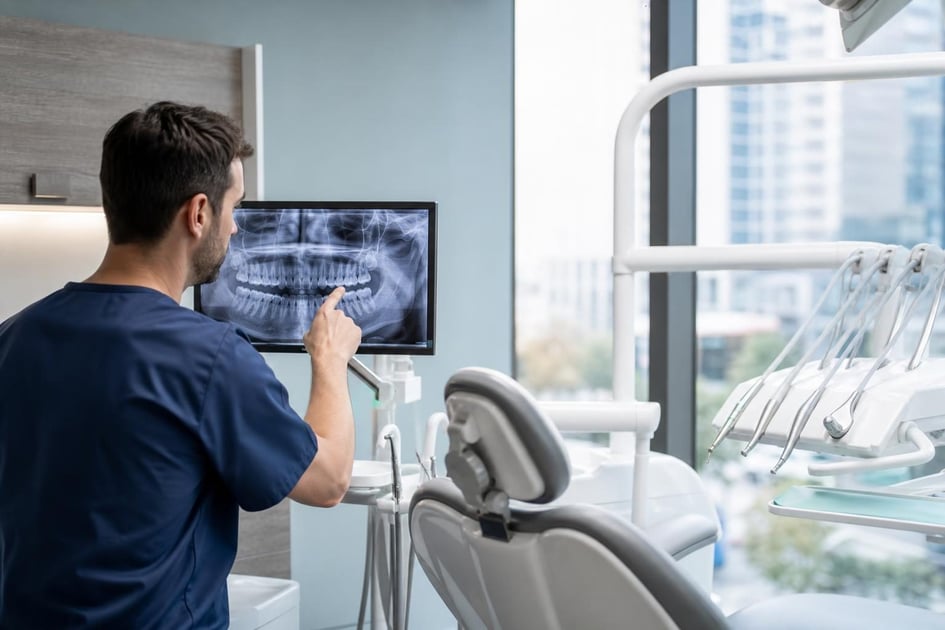
Clinical assets include the tools you use every appointment. Treatment rooms need delivery systems, operatory lights, and suction units. Digital radiography suites run from $20,000 to $100,000 depending on whether you choose intraoral sensors, panoramic units, or cone-beam computed tomography systems. Sterilization centers with autoclaves and ultrasonic cleaners add another $5,000 to $15,000 per operatory. If you are opening a new location or renovating an existing one, Dental Chairs financing is often the single largest line item, with premium models costing $8,000 to $15,000 each plus installation.
Technology and Digital Systems
Modern practices run on software. Practice-management platforms, digital-imaging storage, and CAD/CAM design systems represent capital investments that can exceed $50,000 when bundled with training and implementation. Intraoral scanners, 3D printers for restorative models, and guided-surgery planning software can add another $30,000 to $80,000 per operatory depending on the manufacturer and integration level. Many lenders treat software as a secondary collateral class, so it helps to work with a specialist who understands dental valuations. Provide Capital structures loans that wrap software licenses, installation, and initial training into the same term as the hardware, keeping your monthly obligation predictable and preserving your cash reserves for payroll and supplies.
Key Insight: Lenders typically advance 100 percent of the equipment cost when the asset is new and the vendor quote is firm, but used equipment may require a 10 to 20 percent down payment depending on age, condition, and the presence of a remaining manufacturer warranty.
Get a fast decision on your equipment
Applying takes just a few minutes, and decisions can come as soon as the same day.
Start Your ApplicationHow Lenders Evaluate Dental Practice Applicants
Approval decisions rest on four pillars: your personal credit profile, the practice’s revenue history, the equipment’s resale value, and the term you request. Rates vary by credit profile, equipment age and term, so two dentists buying identical chairs can receive different offers based on time in business and existing debt load. The Small Business Administration recognizes equipment financing as a core funding path for medical and dental practices.
Credit Profile and Business History
Most equipment lenders want to see a personal credit score in the mid-600s or higher, though exceptions exist for strong revenue stories. Time in business matters because dental equipment loans rely on cash-flow underwriting. A practice open for three years with stable tax returns is easier to approve than an owner with projected financials and no operating history. If you have been operating for fewer than two years, expect to provide a larger down payment or a personal guarantee.
Revenue and Debt Service Coverage
Underwriters calculate debt-service coverage ratio by dividing monthly revenue by the proposed equipment payment. Many lenders look for a ratio of 1.25 or higher, meaning your practice generates at least $1.25 for every $1.00 of new debt. A practice collecting $75,000 per month with $45,000 in fixed costs can comfortably absorb a $2,000 equipment payment. If your current debt already pushes you near that threshold, consider paying down existing obligations before adding the new loan.
Collateral Value and Equipment Age
Because the equipment secures the loan, the lender cares about liquidation value. New digital x-ray systems hold value well for five to seven years, while proprietary software or older film-based units depreciate faster. A $150,000 CAD/CAM system from a major manufacturer will command stronger terms than a $15,000 used sterilizer with no service records. The lender may request an equipment appraisal for transactions above $250,000 or for specialized technology with limited resale markets.
By the Numbers: A typical dental equipment loan for a single-practice owner falls between $75,000 and $350,000, with terms stretching from 36 to 84 months. Transactions under $100,000 often close with just a bank statement and equipment quote, while deals above $500,000 may require two years of tax returns and a current profit-and-loss statement.
If you are ready to move forward, see what you qualify for with a short application that takes less than ten minutes.
New vs. Used Dental Equipment: Financing Differences
New equipment carries full warranties, the latest features, and stronger collateral value, but it also commands higher monthly payments. Used equipment lowers the total outlay and can still deliver excellent clinical results, yet it may carry shorter available terms and slightly higher rates. The right choice depends on your patient volume, growth plans, and how long you intend to keep the asset.
| Factor | New Equipment | Used Equipment |
|---|---|---|
| Typical term range | 48 to 84 months | 24 to 60 months |
| Down payment | 0% to 10% | 10% to 20% |
| Rate posture | Lower risk, better rate | Higher risk, slightly higher rate |
| Warranty coverage | Full manufacturer warranty | Limited or third-party only |
| Collateral life | 5 to 10 years | 2 to 5 years remaining |
| Best for | Long-term practices, high volume | Starter practices, backup units |
Financing New Equipment
New purchases make sense when you are expanding capacity or replacing a core production unit. A new panoramic x-ray with a seven-year warranty gives you predictable maintenance costs and supports a longer loan term, which lowers the monthly payment. Lenders like new equipment because the manufacturer’s support network protects resale value. If you are buying a full operatory package for $125,000, a 72-month term could keep the monthly obligation near $2,000, though your actual payment depends on the rate and fees attached to your specific offer.
Financing Pre-Owned Equipment
Used equipment works well for secondary operatories, emergency backup, or practices testing a new service line. A two-year-old intraoral scanner at 40 percent of replacement cost can generate the same clinical output while preserving cash. The trade-off is term length: a lender may only offer 36 months on a unit that is already three years old, which pushes the monthly payment higher than a comparable new unit stretched over 72 months. Always request service records and confirm that replacement parts remain available before committing to a used purchase.
Pro Tip: Ask your vendor for a refurbished unit with a factory-backed warranty. These machines often qualify for new-equipment terms even though the price is 20 to 30 percent below replacement cost, giving you the best of both collateral value and monthly affordability.
Lease vs. Loan: Which Structure Fits Your Practice?
Equipment loans and leases both let you acquire assets without paying the full price at closing, but they treat ownership, tax deductions, and end-of-term obligations differently. A loan puts the title in your name immediately and builds equity. A lease keeps the title with the lessor until you exercise a buyout, which can lower the monthly cost but may restrict how you modify or trade in the equipment.
Equipment Loans
With a loan, you own the asset from day one and can deduct depreciation and interest under the 2026 tax rules. The lender files a UCC-1 lien against the equipment, which releases when you make the final payment. Loans suit dentists who plan to keep the equipment for its full useful life and want the option to sell or trade it without third-party approval. Provide Capital structures loans from $5,000 to $5 million with fixed monthly payments, so you can match the term to the asset’s expected production lifespan.
Equipment Leases
A lease divides the equipment’s cost into rental payments. At the end of the initial term, you may return the equipment, renew the lease, or purchase it for fair market value or a nominal amount depending on the lease type. Operating leases sometimes offer lower monthly costs than loans, but they can complicate practice sales because the buyer must assume or buy out the lease. Leases also limit your ability to customize the equipment, which matters for integrated dental chairs and delivery systems that need to match your operatory layout.
End-of-Term Buyouts
$1 buyout leases transfer ownership at the end for a single dollar, effectively functioning like a loan but with different tax treatment. Fair-market-value buyouts require a balloon payment based on the equipment’s residual value. Before signing, confirm whether the lease is reported as debt on your balance sheet and how it affects your debt-service coverage ratio on future borrowing. If you are unsure which structure preserves the most cash over five years, ask a specialist to compare loan and lease payments for your specific quote.
See what you qualify for
The equipment itself secures the financing, which keeps rates competitive. Checking your options takes minutes.
Check Your OptionsTax Treatment for Dental Equipment in 2026
The 2026 tax year offers significant incentives for practices investing in equipment, but the exact limits and phase-out thresholds change with federal legislation. Rather than citing a specific dollar cap that may shift during the year, the safest approach is to outline the mechanisms and direct you to a certified public accountant who can apply the current-year figures to your return.
Section 179 Deduction
Section 179 allows qualifying businesses to deduct the full purchase price of equipment in the year it is placed in service, up to an annual limit that Congress sets for each tax year. For 2026, you should verify the exact ceiling and phase-out threshold with your CPA before making purchase timing decisions. Dental chairs, x-ray units, and computers generally qualify as tangible personal property, but software and certain accessories may fall under separate rules. Items attached to real property, such as dental cabinetry that is built into the wall, sometimes fail the tangibility test and must be depreciated over 39 years as non-residential real property rather than written off immediately. If your practice is approaching the taxable-income limit, spreading purchases across December and January could preserve more of the deduction.
Bonus Depreciation
Bonus depreciation permits an additional first-year write-off beyond Section 179, though the applicable percentage has been stepping down in recent years. For 2026, confirm with your tax advisor whether the bonus rate remains at 40 percent or has dropped further, because the scheduled phase-out affects how aggressively you should front-load capital investments. Used equipment qualifies for bonus depreciation if it is new to your practice, but you must place it in service before December 31 to claim the benefit for the 2026 tax year. Leased equipment does not qualify for bonus depreciation on your return unless you exercise a purchase option and then place the asset in service under your ownership.
Key Insight: Financing equipment in December does not guarantee a 2026 deduction if the vendor cannot deliver and install before January. Always confirm lead times and place the asset in service before year-end to lock in the current tax year’s benefits.
Approval Timelines and Required Documentation
Speed matters when a chair breaks or a new associate starts Monday. Provide Capital can deliver same-day approvals on qualifying transactions, though larger or more complex requests may take 24 to 72 hours. Having your paperwork organized before you apply eliminates the back-and-forth that slows funding.
Same-Day Approval Scenarios
Same-day decisions are most common on transactions between $5,000 and $100,000 for established practices with clean credit. If you have a vendor quote, three months of bank statements, and no recent bankruptcies or tax liens, the underwriter can often issue a term sheet within hours. Requests above $250,000 or from practices open less than two years usually require manual review and additional documentation.
Standard Documentation Package
Most applicants should gather the following before starting the application: a signed equipment quote or invoice showing the serial numbers and total cost, the last three months of business bank statements, the prior two years of business tax returns, a current year-to-date profit-and-loss statement, and a copy of the practice’s business license. If you are a sole proprietor or partnership, the lender may also request personal tax returns to verify income continuity. Self-employed dentists should be prepared to explain any large deposits or seasonal fluctuations in collections. For loans above $500,000, the lender may also request a personal financial statement and a schedule of existing business debt. The more complete your file, the faster the closing.
Mistakes to Avoid When Financing Dental Equipment
Even experienced practice owners stumble over details that add cost or delay funding. Analysis from Forbes highlights that rising technology and labor costs are squeezing dental margins, making efficient capital structure more important than ever. Avoid these common errors:
- Underfinancing soft costs. Shipping, installation, training, and initial maintenance contracts can add 8 to 12 percent to the sticker price. Ask for a total project quote and finance the full amount rather than paying these costs out of pocket.
- Ignoring equipment age. A 10-year-old pano may look like a bargain, but lenders may cap the term at 24 months, creating a cash-flow squeeze that offsets the lower purchase price.
- Overlooking prepayment terms. Some contracts apply prepayment penalties during the first 12 to 24 months. If you plan to pay the loan off early with practice-sale proceeds, verify the penalty structure before signing.
- Waiting until equipment fails. Emergency borrowing rarely produces the best terms because you lose leverage to compare vendors and negotiate rate. Start the conversation 30 to 60 days before you expect to buy.
Ready to move forward?
More than 10,000 businesses have financed equipment with Provide Capital. See what you qualify for today.
Get StartedFrequently Asked Questions
What credit score do I need to qualify for dental equipment financing?
Most lenders prefer a personal credit score in the mid-600s or higher, but credit is only one factor. Strong revenue, low existing debt, and a clear equipment quote can offset a lower score. Owners with limited operating history or recent bankruptcies face tighter requirements and larger down payments.
Can I finance used dental equipment?
Yes. Used equipment is eligible, though terms are usually shorter and down-payment requirements higher than for new assets. The lender will want to see service records and confirm that replacement parts remain available. Equipment older than seven years may require a larger equity contribution or a shorter amortization.
How much can I borrow for dental equipment?
Provide Capital finances equipment from $5,000 up to $5 million. The approved amount depends on the equipment’s value, your practice revenue, and your existing debt obligations. Most single-location practices fall in the $75,000 to $350,000 range for a single project.
Is the equipment itself the collateral?
Yes. The equipment secures the loan, which is why rates stay competitive compared with unsecured borrowing. The lender files a UCC lien against the specific assets until the balance is paid. Because the collateral is tangible and has established resale value, the approval process weighs the asset heavily alongside your credit profile.
Can I finance software and installation costs?
Many lenders allow you to bundle software, delivery, and installation into the equipment loan as long as the total does not exceed the appraised value of the hardware. Digital-imaging software, CAD/CAM licenses, and training packages often qualify when they are part of a single vendor invoice. Ask your financing specialist to review the quote before you sign with the vendor.
How fast can I get approved?
Same-day approvals are possible on qualifying transactions, especially those under $100,000 for established practices. Larger requests or files with missing documentation may take 24 to 72 hours. Submitting a complete package with bank statements, tax returns, and a firm equipment quote is the fastest way to move.
What is the difference between a lease and a loan?
A loan transfers ownership to you immediately and builds equity as you pay. A lease is essentially a rental agreement with an option to buy at the end. Loans generally offer more flexibility for customization and practice sales, while leases may feature lower monthly payments during the initial term. The best choice depends on your tax strategy and how long you plan to keep the equipment.
What tax benefits apply in 2026?
Section 179 and bonus depreciation may allow significant first-year deductions, but the exact limits for the 2026 tax year should be confirmed with a CPA. To claim a 2026 deduction, you must place the equipment in service before December 31. Financing arrangements do not change your eligibility, but the structure of the transaction—loan versus lease—affects whether you claim depreciation, interest, or rental expense.
Next Steps for Your Practice
Upgrading your equipment should increase production and improve patient experience, not strain your cash reserves. Start by collecting firm quotes from your vendor, then gather three months of bank statements and your most recent tax return. Review your business credit report for errors and gather service records for any used equipment you plan to include. With those in hand, get a same-day decision on your equipment and compare terms without obligation. Provide Capital offers Dental equipment financing nationwide, with competitive structures that use the equipment itself as collateral. Whether you need Dental Chairs financing or a full technology overhaul, the process is built around the realities of running a practice, not the preferences of a distant credit committee. The same team also supports completely different industries; if your practice ever diversifies into food service, you can explore solutions like Commercial Ovens financing under the same relationship. Talk to a specialist about your specific machine and find out how fast you can put new equipment to work.
Disclaimer: The information provided in this article is for general educational purposes only and is not financial, legal, or tax advice. Funding terms, qualifications, and product availability may vary and are subject to change without notice. Provide Capital does not guarantee approval, rates, or specific outcomes. For personalized information about your business funding options, contact our team directly.