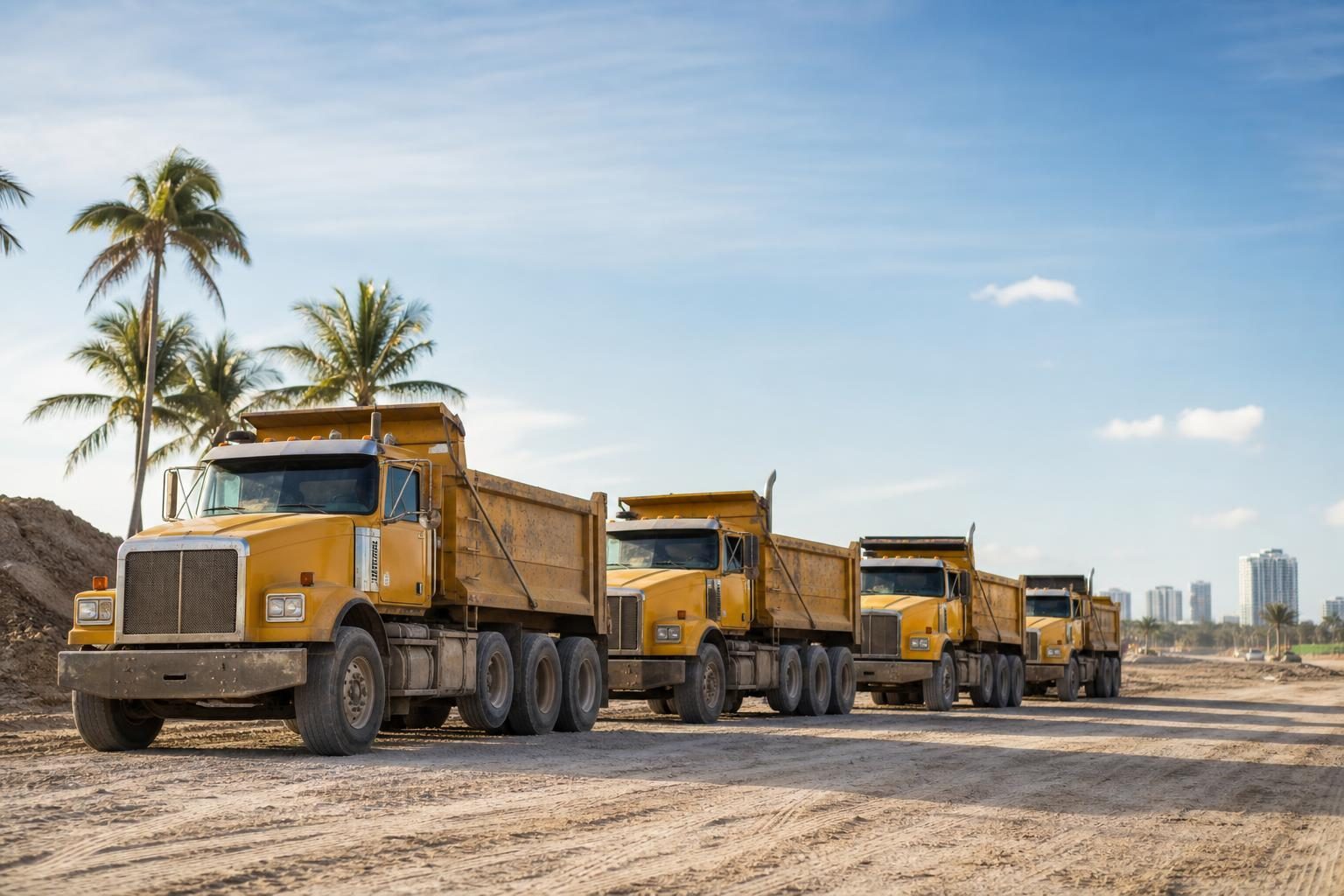
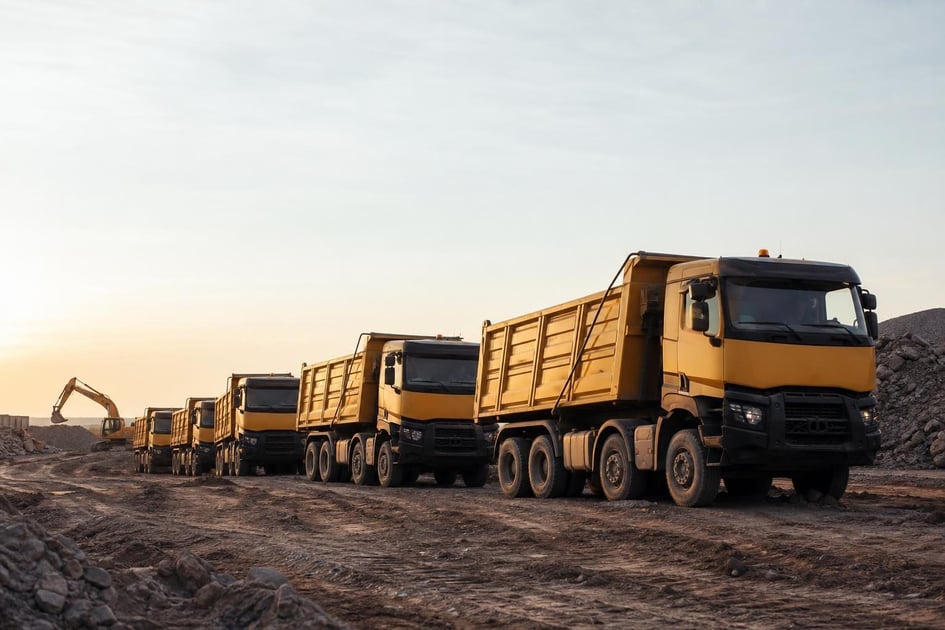
Dump truck financing lets you add or replace a hauler without draining operating cash. Most small-business owners put down 10% to 20% of the truck's cost and spread the balance over two to seven years. Rates vary by credit profile, equipment age and term. With the truck itself serving as collateral, lenders can keep the structure competitive even for borrowers with a few dings on their credit. Whether you run a single tandem in landscaping or a tri-axle fleet in heavy construction, the process is straightforward once you understand what lenders weigh and how the numbers break down.
How Dump Truck Financing Works
A dump truck loan is a form of equipment financing where the vehicle secures the note. If your business cannot repay, the lender recovers the truck. That collateral reduces the lender's risk, which typically means lower down-payment requirements than an unsecured term loan and more flexible credit guidelines. You make fixed monthly payments, build equity with each one, and own the truck free-and-clear at the end of the term.
Provide Capital finances new and used business equipment from $5,000 to $5 million. A single-axle used dump truck might fall near the lower end of that range, while a fleet of tri-axle heavies with aluminum bodies can approach the upper limit. The equipment itself is the collateral, which keeps rates competitive. Same-day approvals are possible when your paperwork is complete and the equipment meets the lender's guidelines. That speed matters in a market where a clean used truck at a fair price can sell within 48 hours. The SBA 7(a) loan program can also fund equipment purchases, though direct equipment financing often closes faster and with less paperwork than a government-guaranteed process.
Get a fast decision on your equipment
Applying takes just a few minutes, and decisions can come as soon as the same day.
Start Your ApplicationWhat Lenders Evaluate
Equipment lenders look at five main factors: credit, time in business, cash flow, equipment condition, and down-payment size. No single factor disqualifies you, but weak spots in one area usually need strength in another to balance the deal.
Credit Profile
Most equipment lenders look for a FICO score in the mid-600s or higher for the strongest terms, but scores below that do not automatically disqualify you. A solid business bank balance, consistent deposits, or a strong co-signer can offset personal credit challenges. Expect to provide two to three years of personal and business tax returns. Recent bankruptcies, open tax liens, or judgments within the last two years are bigger hurdles than a low score alone.
Time in Business
Two years under the same ownership is the standard benchmark. Businesses open less than two years can still qualify, though they usually need a larger down payment or additional collateral. Lenders view dump trucks as specialized assets with a defined resale market, so they are often more willing to finance newer companies than a bank making an unsecured working-capital loan would be.
Equipment Age and Condition
Lenders prefer trucks with remaining useful life that matches the loan term. Financing a 15-year-old off-road hauler for five years is harder than financing a three-year-old highway dump for the same term. Expect to provide the VIN, mileage, maintenance records, and photos. Lenders may also require an independent appraisal for private-party sales or for trucks with customized bodies. The goal is simple: if the lender has to repossess and resell, they want a liquid asset.
Down Payment Expectations
Plan on 10% to 20% for new or late-model used trucks. Older equipment or weaker credit can push the requirement to 25% or more. The down payment is your equity in the deal; it protects both you and the lender from being immediately underwater. If you are buying a $120,000 truck, that means bringing $12,000 to $24,000 to the table for a standard deal, and potentially $30,000 or more if the truck is aged or your file has challenges.
Key Insight: Lenders often value the dump truck through an independent appraisal or a listed-equipment guide rather than the sale price. If a seller asks $85,000 but the guide shows $72,000, the lender usually bases the advance rate on the lower figure. Build that gap into your cash planning so you are not scrambling to cover a shortfall at closing.
New vs. Used Dump Trucks
The new-versus-used decision is usually driven by cash flow, tax timing, and how hard you plan to run the truck. Both paths finance readily, but the terms and total cost of ownership differ.
Price Ranges and Depreciation Curves
A new Class 8 dump truck can run $150,000 to $250,000 depending on axle configuration, body material, and emissions package. A three- to five-year-old unit often trades between $80,000 and $140,000. After year seven, prices fall into the $40,000 to $70,000 range for standard highway trucks. Depreciation is steepest in the first three years, which is why used buyers often capture the best value per dollar. That said, new trucks come with warranty coverage, known maintenance history, and the latest fuel-efficiency standards, which can lower per-mile operating costs over a long hold period.
Financing Terms by Equipment Age
New and nearly new trucks usually qualify for the longest terms—up to seven years. Once a truck crosses the seven- to ten-year mark, terms often shrink to three or four years. The lender wants the note retired while the truck still has commercial value and can be remarketed if needed. If you need a lower monthly payment on an older truck, the most reliable lever is a larger down payment, not a longer term.
| Factor | New Dump Truck | Used Dump Truck (3–5 yrs) | Used Dump Truck (7+ yrs) |
|---|---|---|---|
| Purchase price | $150k – $250k | $80k – $140k | $40k – $70k |
| Typical term | 5 – 7 years | 4 – 6 years | 2 – 4 years |
| Down payment | 10% – 15% | 15% – 20% | 20% – 30% |
| Collateral value | High; strong resale | Moderate; established market | Lower; limited lenders |
| Best for | Fleet expansion, tax timing | Value-conscious single-truck buyers | Low-cost entry, short terms |
If you have a truck picked out and want to know how the numbers look, see what you qualify for and get a same-day decision on your equipment.
Lease vs. Loan: Which Structure Fits Your Operation?
A loan ends with you owning the truck outright. Each payment builds equity, and you can sell or trade the asset at any time. A lease—particularly a $1 buyout or FMV lease—gives lower monthly payments but may come with mileage or usage restrictions. The key difference is who holds the title at the end and how the tax treatment flows.
Loans make sense if you plan to run the truck for eight to ten years and want the depreciation and Section 179 deductions. You carry the truck on your balance sheet, deduct interest, and claim the depreciation schedule your CPA recommends. Leases work better if you expect to upgrade every three to four years or if you want to preserve bank lines for other projects. At the end of an FMV lease, you return the truck or buy it at fair market value. At the end of a $1 buyout lease, you own it, but the monthly cost is usually close to a loan payment anyway.
One practical note: some municipal contracts require trucks no older than five years. If you depend on those contracts, a lease with a built-in replacement cycle keeps you compliant without the hassle of remarketing aged equipment. Match the financing structure to your revenue model, not just the monthly payment.
Pro Tip: If you haul under a municipal contract that requires trucks no older than five years, a lease with a built-in replacement cycle keeps you compliant without the hassle of selling aged equipment. Match the financing structure to the contract terms, not just the monthly payment.
Tax Treatment for 2026
For the 2026 tax year, Section 179 allows businesses to deduct the full purchase price of qualifying equipment in the year it is placed in service, subject to an annual limit set by the IRS. Because those limits adjust with inflation and legislative changes, consult a CPA to confirm the current-year cap before you buy. Bonus depreciation may also apply, though it has been phasing down in recent years. Never rely on a past year's limit when planning a 2026 purchase.
If you finance the truck, you can still take Section 179 on the full equipment cost even though you paid only the down payment out of pocket. The interest portion of each payment is deductible as a business expense over the life of the loan. Because tax rules change frequently, run your specific situation past a CPA who understands construction and transportation equipment. The savings can be substantial, but only if the structure is documented correctly from day one.
See what you qualify for
The equipment itself secures the financing, which keeps rates competitive. Checking your options takes minutes.
Check Your OptionsIndustry-Specific Use Cases
Dump trucks are not one-size-fits-all. The right spec and financing structure depend on what you are hauling, where you are hauling it, and who is paying the invoice.
Construction and Demolition
General contractors and site developers use dump trucks to move fill, haul debris, and deliver aggregate. A tri-axle truck with an automatic tarp system keeps you compliant with road-sprinkling laws and reduces downtime at the scale house. According to U.S. Census Bureau construction spending data, total construction activity in mid-2026 remained above $2.1 trillion on a seasonally adjusted annual basis, which sustains demand for hauling capacity across residential and non-residential projects. Equipment manufacturers have raised their 2026 sales forecasts on the back of infrastructure and data-center demand, as reported by Reuters coverage of Caterpillar's outlook. For contractors looking to expand hauling capability alongside other iron, Construction equipment financing can bundle multiple units under a single facility.
Landscaping and Excavation
Landscapers typically run lighter single-axle or tandem dumps with landscape bodies. These trucks haul mulch, stone, and sod while doubling as tow vehicles for skid steers. Because the work is seasonal in many regions, a used truck financed on a shorter term keeps payments manageable during winter slowdowns. A landscaper buying a $55,000 used dump might put 20% down and clear the note in four years, well before major drivetrain work is due.
Transportation and Aggregate Hauling
Owner-operators who contract with quarries or asphalt plants need heavy-spec trucks rated for punishing loads. These units cost more upfront but generate revenue per ton. Transportation equipment financing can structure payments around your haul contracts so that heavy months absorb more principal. Some operators pair their dump truck with a Tow Truck financing package to diversify revenue streams, hauling equipment during slow aggregate periods.
Ready to add capacity before the next paving season? Talk to a specialist about your specific machine and learn how same-day approvals can keep your project timeline intact.
Common Mistakes Buyers Make
Buying for payload alone. A truck spec'd for maximum cubic yards may be too tall for local bridges or too heavy for state weight limits. Check your route before you spec the body.
Skipping the pre-purchase inspection. Leaks in the hoist cylinder, cracks in the subframe, and rust in the dump body are expensive fixes. A $300 inspection can save $10,000 in deferred maintenance.
Overlooking insurance costs. Dump trucks carry higher liability premiums than straight trucks. Get a binder quote before you sign the finance agreement so the total monthly outlay is not a surprise.
Ignoring the resale channel. If you plan to upgrade in four years, buy a make and model with strong regional demand. Obscure brands or odd configurations sit on the market longer and fetch less at trade-in.
Neglecting the body hoist cycle count. A dump body rated for 100,000 cycles sounds generous, but a truck running three loads per day, five days per week, hits that mark in roughly 13 years. If you are buying used, ask for maintenance logs that show hoist cylinder replacements or body rebuilds.
Documentation You'll Need
Having your paperwork organized before you apply shortens the cycle and improves your odds of a same-day approval. Most lenders ask for:
- Personal and business tax returns (last two years)
- Current profit-and-loss statement and balance sheet
- Bank statements (last three to six months)
- Driver's license and, if applicable, CDL
- Equipment quote or purchase agreement with VIN, year, make, model, and mileage
- Proof of insurance binder
Commercial entities should also have articles of incorporation or operating agreements ready. Sole proprietors may need a DBA certificate. If you are buying from a private party, add a copy of the seller's title and a bill of sale. Lenders will run a UCC search to confirm no existing liens on the truck. The cleaner the paper trail, the faster the closing.
What Happens After Approval
Once approved, the lender issues a commitment letter detailing the term, payment schedule, and any collateral requirements. You sign and return it, along with proof of insurance naming the lender as loss payee. The lender then pays the seller or dealer directly. In most cases, funds move within one to three business days. You take delivery, put the truck to work, and your first payment is usually due 30 to 45 days later.
If the truck needs upfitting—installing a new body, pintle hitch, or tarps—coordinate the timeline with the lender. Some lenders will fund the upfit cost if it is on the same invoice and completed before delivery. Others require the truck to be road-ready at funding. Clarify this before you commit to a body shop schedule.
By the Numbers: A $95,000 used dump truck financed over five years with 15% down puts roughly $14,250 out of pocket at closing. The financed balance of $80,750 spread across 60 months produces a payment that varies by credit profile, equipment age and term. Total interest cost depends on the rate and whether you pay off early—something to model with your CPA before you sign.
Put the right equipment to work
From $5,000 to $5 million, new or used, Provide Capital helps businesses nationwide finance the equipment they need.
Apply TodayFrequently Asked Questions
Can I finance a dump truck with bad credit?
Yes, but expect a larger down payment—often 20% to 30%—and a shorter term. Lenders offset elevated risk by limiting their exposure. Strong cash flow or a co-signer improves your position. Some lenders specialize in credit-challenged borrowers, though the rates vary by credit profile, equipment age and term.
How long can I finance a dump truck?
New and late-model used trucks typically qualify for terms of five to seven years. Trucks older than ten years may be limited to two to four years. The lender wants the loan paid off while the truck still has value. If you need a lower payment on an older unit, increase the down payment rather than stretching the term.
Is a down payment always required?
Nearly always. Most lenders want 10% to 20% skin in the game. Zero-down offers are rare in commercial equipment and usually carry higher rates or stricter covenants. A down payment also protects you from owing more than the truck is worth the moment you drive it off the lot.
Can I finance a private-party sale?
Yes. Private-party transactions are common in the dump truck market. The lender will still require an appraisal, title search, and proof of seller ownership. The process adds a day or two but opens up inventory you will not find on dealer lots. It is worth the extra paperwork if the price is right and the truck checks out mechanically.
Does the lender need to be listed on my insurance?
Yes. The lender is named as loss payee and additional insured on the commercial auto policy. If the truck is totaled, the insurance check goes to the lender first, with any surplus returned to you. This is standard on every equipment loan and protects the lender's collateral interest.
Can I pay off the loan early?
Most equipment loans allow prepayment, but some charge a prepayment penalty or minimum interest clause. Read the commitment letter carefully and ask your account manager to explain the exact math before you sign. If you expect seasonal cash surpluses, prioritize a loan with no prepayment penalty.
What if I need to finance the body and the chassis separately?
Many lenders treat the body and chassis as a single unit if they are assembled and on the same bill of sale. If you are buying a cab chassis and upfitting it later, discuss the timeline with your lender. Some will finance both stages; others require the truck to be road-ready before funding. Get clarity before you order the body.
Can I use the truck out of state?
Yes, as long as your insurance and registration cover interstate operation. Lenders do not restrict where you work, but they do require the truck to remain registered in the United States and fully insured at all times. If you move the truck's base of operations to another state, update your registration and insurance promptly and notify the lender.
Final Thoughts
A dump truck is a revenue tool, not a luxury purchase. The right financing structure keeps your cash flow intact, your tax position optimized for 2026, and your operation ready for the next contract. Do your homework on the truck, gather your paperwork, and choose a lender that understands the difference between a highway dump and an off-road hauler. The best deals go to buyers who show up prepared, not to those hoping for a shortcut.
When you are ready to move forward, get a same-day decision on your equipment and put your next dump truck to work.
Disclaimer: The information provided in this article is for general educational purposes only and is not financial, legal, or tax advice. Funding terms, qualifications, and product availability may vary and are subject to change without notice. Provide Capital does not guarantee approval, rates, or specific outcomes. For personalized information about your business funding options, contact our team directly.