How Dump Truck Financing Works in Houston
Houston-area contractors and owner-operators do not need to tie up cash or exhaust bank lines to add a dump truck to their fleet. Equipment financing uses the dump truck itself as collateral, which keeps borrowing costs competitive and lets you spread the expense across months or years while the machine earns revenue. Provide Capital finances new and used business equipment from $5,000 to $5 million, with same-day approvals possible for qualified buyers. Whether you are hauling aggregate from the Port of Houston, moving site development spoil in the Energy Corridor, or clearing storm debris along the Gulf Coast, financing lets you preserve liquidity for fuel, labor, and insurance. If you need a truck on the job next week, see what you qualify for and keep your projects on schedule.
Why Houston Owner-Operators Finance Instead of Paying Cash
Houston’s construction economy runs year-round, but cash flow is rarely steady. Spring brings residential sprawl in Cypress, Katy, and The Woodlands. Summer heat slows paving but drives aggregate demand for concrete plants. After tropical weather, debris-removal contracts spike overnight. Paying cash for a $125,000 tri-axle dump truck might wipe out the reserves you need for payroll during a 45-day pay-application cycle. Financing leaves that capital in your operating account.
Preserve Working Capital for Labor and Materials
General contractors on Houston’s Grand Parkway segments or municipal TxDOT jobs often wait 30 to 60 days for payment. A monthly equipment payment is easier to absorb than a six-figure withdrawal that leaves you scrambling to cover overtime or rebar deliveries.
Keep Credit Lines Open
A dedicated equipment loan does not consume your existing bank line of credit. That leaves your revolving facility available for fuel cards, emergency repairs, or bonding when a Harris County or Montgomery County project requires it.
New vs. Used Dump Trucks: What Houston Buyers Should Know
The Houston market has no shortage of inventory. Dealers along the I-45 corridor stock new Freightliner, Peterbilt, and Mack models with factory warranties, while auction yards and peer-to-peer listings offer low-hour used units at lower acquisition prices. Your choice affects down payment, term length, and maintenance reserves.
| Factor | New Dump Trucks | Used Dump Trucks |
|---|---|---|
| Down payment | Often lower; lender risk is reduced by factory warranty and predictable depreciation | May require 10–20% down depending on age, mileage, and brand |
| Monthly payment outlook | Higher total financed amount, but longer terms may be available | Lower total amount; shorter terms common for units over five years old |
| Warranty coverage | Full manufacturer powertrain and aftertreatment coverage | Limited or expired; budget for aftermarket service contracts |
| Maintenance reserves | Lower initially; DEF and emissions systems are under warranty | Higher; Houston heat and stop-and-go site traffic accelerate wear |
| Financing term available | Up to 60–72 months on qualifying credit | Typically 36–60 months; rates vary by credit profile, equipment age and term |
| Ideal buyer | High-mileage operators, fleet standardization, emission-sensitive contracts | First-time buyers, seasonal haulers, or specialty-body needs |
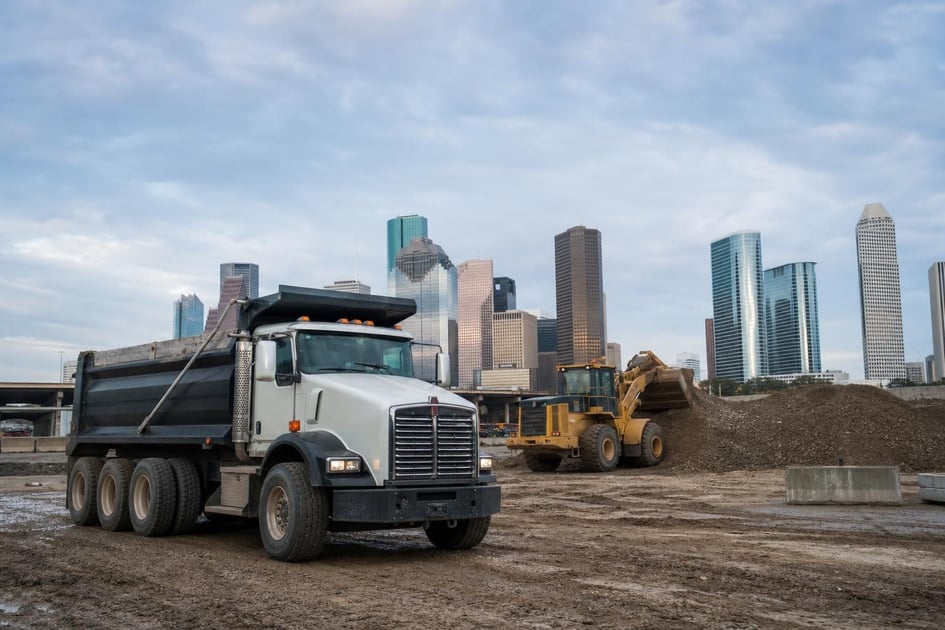
If you are running interstate hauls from the Port to San Antonio or Austin, a new truck with a factory warranty may be worth the premium. If you are moving dirt inside the 610 Loop for a two-year site-development contract, a well-maintained used three-axle dump can pay for itself before the major overhaul interval.
Lease vs. Loan: Choosing the Right Structure
Equipment financing usually takes the form of a capital lease or an equipment installment loan. A capital lease, often called a $1 buyout lease, functions like a loan for tax and accounting purposes: you claim depreciation and the interest expense, and you own the truck at the end. An operating lease, or fair-market-value lease, treats the truck as a rental; you return it or buy it at fair market value when the term ends.
Loans make sense when you plan to run the truck for a decade, rack up 150,000 miles, and eventually trade it on your own timeline. Operating leases appeal to fleet managers who want to refresh iron every four years to avoid downtime or who need to preserve the debt-service-coverage ratios required by surety bond underwriters on large Houston infrastructure bids. According to the Equipment Leasing and Finance Association, financing is the standard acquisition method for a large majority of U.S. businesses acquiring productive assets. In either case, the dump truck itself is the collateral, which helps keep the approval focused on the equipment value and your cash flow rather than solely on real estate or outside guarantees.
Qualifying for Dump Truck Financing in Houston
Provide Capital serves owner-operators and fleet managers in construction, transportation, and related trades nationwide. Because the equipment secures the transaction, qualification is more flexible than unsecured bank credit.
Credit Profile
A strong personal credit history opens the best terms, but bruised credit is not an automatic disqualification. Lenders look at the overall story: consistent revenue, reasonable leverage, and a history of paying trade creditors. If your score took a hit during a slow season, be prepared to explain the circumstances and show three to six months of improved cash flow.
Time in Business
Two or more years in operation is the sweet spot, but startups with commercial experience and a signed contract can still qualify. A Houston contractor who leaves a large firm to start an independent hauling company and brings a signed six-month site-work agreement is a very different risk than a borrower with no industry background.
Equipment Age and Specs
Lenders prefer models less than ten years old at origination, though well-maintained work trucks up to fifteen years old can be financed with a larger down payment. Diesel particulate filter status, GVWR rating, and DOT inspection history matter. A 33,000-pound GVWR Class 7 truck used for local sand and gravel hauls is easier to collateralize than an overweight, modified unit with unclear title history.
Down Payment Expectations
Zero-down promotions exist for premium credits and new equipment, but most owner-operators should plan on 5% to 15% down. Used trucks, older models, or borrowers with past credit challenges may need 10% to 20%. The down payment reduces the lender’s advance rate and shows you have skin in the game.
Rates, Terms, and What Drives Your Payment
Rates vary by credit profile, equipment age and term. A new Class 8 dump truck on a 60-month note will command different pricing than a 2018 model on a 36-month term. Other factors include your years in business, the size of your down payment, and whether the truck is purchased from a dealer or a private party.
Term length is usually tied to the equipment’s useful life. Most dump truck loans run 36 to 72 months. Stretching to 72 months lowers the monthly obligation but increases the total interest paid over time. A shorter term builds equity faster and reduces the chance of being underwater when you are ready to trade. Seasonal Houston haulers who work hardest from March through November sometimes choose a shorter term to pay the truck off during peak earning months.
Tax Treatment for 2026: Section 179 and Depreciation
For tax year 2026, the Internal Revenue Code allows businesses to immediately expense qualifying equipment under Section 179, subject to an annual deduction limit and a phase-out threshold that begins once total equipment purchases reach a specific dollar amount. Additionally, bonus depreciation rules for 2026 may differ from prior years as the Tax Cuts and Jobs Act provisions continue to phase down. Because these limits and percentages adjust annually and interact with your overall taxable income, you should confirm the exact 2026 figures with your CPA before you rely on them for purchase planning.
In general, a capital lease or installment loan on a dump truck placed in service during 2026 should qualify for Section 179 if the truck is used more than 50% for business. You can also elect traditional MACRS depreciation if that produces a better outcome alongside your other deductions. Houston contractors often benefit most by matching the deduction timeline to their revenue cycle: if you expect a high-income year from a major Harris County infrastructure contract, accelerating deductions through Section 179 can reduce your 2026 tax liability.
For official parameters, see IRS guidance on Section 179 for the 2026 tax year and discuss the strategy with a tax professional familiar with Texas contractor accounting.
Documentation You'll Need to Apply
Same-day approvals are possible when you submit a complete file. Have the following ready before you contact the lender:
- One to three years of personal and business tax returns
- Current year-to-date profit-and-loss statement and balance sheet
- Bank statements for the last three to four months
- A copy of the equipment quote or purchase agreement, including VIN, year, make, model, and mileage
- Proof of insurance binder naming the lender as loss payee
- Your commercial driver’s license if you plan to operate the truck personally
Dealer purchases usually close faster because the seller provides a clean title and uniform commercial code filing. Private-party and auction transactions are still financeable, but they require extra diligence on title verification and lien releases. If you are looking at Dump Trucks financing for a fleet addition, getting pre-approved before you shop lets you negotiate as a cash buyer at the Houston auction.
Houston Market Use Cases
Dump trucks in Houston do not all do the same work. The application affects the spec you need and the structure that makes the most financial sense.
Construction and Site Development
From the Woodlands to Sugar Land, residential and commercial earthwork demands Class 7 and Class 8 dumps with at least 16-foot beds and high-lift gates. These trucks haul clay, rip rap, and demo debris across soft Gulf Coast soils. Construction equipment financing is built around high-utilization assets that move daily. If you are bonded on TxDOT or municipal work, lenders view the contracted revenue as a strong offset to the equipment payment.
Aggregate and Asphalt Hauling
Houston’s concrete plants and hot-mix asphalt suppliers run steady schedules to feed the region’s nonstop road-building program. Owner-operators pulling into Martin Marietta or Vulcan Materials facilities need trucks specced for abrasion and heat. Financing used trucks for this segment is common; the revenue per load is predictable and the equipment pays for itself quickly if you maintain the bed liner and hydraulic hoist.
Storm Recovery and Debris Removal
Tropical weather and flash flooding create surges in demand for rolloffs and dump trucks along Buffalo Bayou and throughout Harris County. A financed truck lets you mobilize immediately after a storm without waiting for a FEMA reimbursement cycle. Because the revenue window is concentrated, many operators choose shorter terms so the truck is owned free-and-clear before the next slow season.
Transportation and Logistics Support
Not every dump truck stays on a construction site. Some operators contract with freight brokers to move bulk commodities between the Port of Houston and regional rail yards. These trucks need DOT authority, apportioned plates, and often ELD compliance for interstate runs. Transportation equipment financing accounts for the higher mileage and federal compliance costs inherent in these applications.
Common Mistakes Houston Buyers Make
Avoid these missteps and you will close faster and pay less over the life of the agreement.
Buying Too Much Truck for the Job
A 20-yard heavy-duty articulated dump truck looks impressive, but if 90% of your work is hauling 10 loads a day of fill dirt across a 15-mile radius inside Beltway 8, a single-axle or tandem-axle truck is more maneuverable and fuel-efficient. Over-spec’ing raises your payment, your insurance, and your maintenance costs without increasing revenue.
Ignoring GVWR and DOT Rules
Texas enforces weight limits aggressively on I-10, I-45, and U.S. 59. A truck with a gross vehicle weight rating that pushes you into Class 8 territory triggers federal DOT medical cards, drug-testing pools, and IFTA fuel-tax reporting. Know the regulatory cost before you sign the finance agreement.
Not Checking Insurance Costs Before Committing
Houston commercial auto rates reflect Gulf Coast weather risk, port congestion, and dense urban traffic. A $900 monthly payment can become a $1,400 monthly obligation once you add physical damage, general liability, and cargo coverage. Get a binder quote before you finalize the equipment so the total cost fits your cash flow.
What Happens After Approval
Once approved, Provide Capital issues a term sheet outlining the monthly payment, term length, and any documentation still required. You review and sign electronically. The lender then pays the seller directly or wires funds to escrow for a private-party deal. You take delivery, activate your insurance, and put the truck to work. Funding can happen within 24 to 48 hours of final document execution.
After funding, your responsibilities are straightforward: make the payment on time, keep the truck insured, and maintain the equipment so it retains collateral value. Many lenders offer automatic ACH withdrawals to keep you on schedule while you are busy dispatching loads between Conroe and Galveston.
Ready to get a same-day decision on your equipment? get a same-day decision on your equipment and move your next load sooner.
Frequently Asked Questions
Can I finance a dump truck if I am a new business in Houston?
Yes. Startups with relevant industry experience, a commercial driver’s license, or a signed contract are considered. Be prepared to provide a larger down payment or a personal guaranty. Two years in business improves your terms, but it is not an absolute requirement.
Does the equipment itself really serve as collateral?
Yes. The dump truck secures the financing. That is why rates are typically more competitive than unsecured credit and why lenders focus heavily on the equipment’s value, age, and condition. You do not usually need to pledge real estate.
What credit score do I need to qualify?
There is no hard cutoff. Strong credit in the mid-600s and above opens the best rates and longest terms. Borrowers with lower scores can still qualify with compensating factors such as a larger down payment, strong revenue, or newer equipment.
Can I finance a private-party sale or auction purchase?
Yes. Provide Capital finances dealer purchases, private-party transactions, and auction wins. Private sales require a clear title search and a purchase agreement. Auction purchases sometimes move fastest when you are pre-approved before the bidding starts.
Is a CDL required to finance a dump truck?
You do not need a commercial driver’s license to sign the finance agreement, but you will need one to legally operate a truck over 26,000 pounds GVWR on public roads. Lenders may ask for your CDL as evidence that you can actually use the equipment to generate revenue.
How long does approval take?
Same-day approvals are possible when the file is complete. More complex transactions—those involving private-party sales, multiple units, or credit challenges—may take 24 to 48 hours. Submitting clean documentation upfront is the best way to speed the process.
Can I include taxes, delivery, and upfits in the financing amount?
Often, yes. Sales tax, freight to your Houston yard, and bodies or tarps can sometimes be rolled into the financed amount, depending on the overall advance ratio and collateral value. Ask your financing specialist to structure the quote so you know exactly what is included.
What happens if I want to pay off the loan early?
Most equipment loans allow early payoff. Some structures include a prepayment penalty during the first 12 to 24 months; others do not. Review the term sheet carefully before signing so you understand the cost of refinancing or selling the truck before maturity.
Closing Next Step
Houston’s economy is built on movement—dirt, gravel, debris, and freight. A dump truck financed on terms that match your work cycle keeps you competitive without draining your operating account. Whether you need a single tandem-axle for residential site work or a fleet of tri-axles for a Grand Parkway subcontract, the right structure turns iron into income. Talk to a specialist about your specific machine by starting your application today and see how fast you can get rolling.
Disclaimer: The information provided in this article is for general educational purposes only and is not financial, legal, or tax advice. Funding terms, qualifications, and product availability may vary and are subject to change without notice. Provide Capital does not guarantee approval, rates, or specific outcomes. For personalized information about your business funding options, contact our team directly.