
Equipment Financing in Kansas: What Owner-Operators Actually Pay
Equipment financing in Kansas works by using the machine itself as collateral. That single fact keeps rates competitive even when a buyer's credit is imperfect. Transactions range from $5,000 to $5 million, with repayment terms from 24 to 84 months depending on the equipment's useful life. Rates vary by credit profile, equipment age and term.
Kansas is an equipment-heavy state. From the combine harvesters moving through northwest Kansas wheat fields to the CNC machines running in south-central Kansas aviation shops, businesses here rely on iron to generate revenue. According to the U.S. Census Bureau, Kansas is home to more than 250,000 small businesses, many of them owner-operated shops that replace equipment on a schedule dictated by season and mileage, not calendar quarters. When a quarter-million-dollar tractor reaches its hour limit in August, waiting until January to replace it is not an option.
Same-day approvals are possible when the application is complete and the equipment is clearly identified. Most lenders can issue a decision within hours if you have your documentation ready and the seller has provided an invoice or equipment specification sheet.
Key Insight: Kansas agricultural equipment purchases peak between February and April as operators prepare for spring planting. Lenders see application volume rise 40 to 60 percent during this window. Submitting your paperwork in January, before the rush, often produces faster turnaround and more attention from underwriters.
Get a fast decision on your equipment
Applying takes just a few minutes, and decisions can come as soon as the same day.
Start Your ApplicationHow Kansas Equipment Financing Works
The structure is straightforward. You identify the equipment, the lender verifies its value and condition, and the loan is secured by the asset itself. Because the equipment serves as collateral, the lender's risk is tied to the machine's resale value, not just your credit score. That is why a buyer with a 650 credit score can still finance a $75,000 skid steer at a reasonable rate, provided the machine holds its value.
The lender files a UCC-1 lien against the equipment. You make fixed monthly payments. At the end of the term, you own the equipment outright and the lien is released. There are no balloon payments in a standard equipment term loan, which matters for a Kansas contractor who needs predictable costs through winter slowdowns.
Most lenders finance up to 100 percent of the equipment cost for qualified buyers, though a down payment of 10 to 20 percent can improve the rate or extend the term. Soft costs such as delivery, installation and initial training can sometimes be rolled into the financing, but only up to a limit—usually 10 to 15 percent of the equipment price.
What Kansas Lenders Look For
Credit and Time in Business
Lenders typically want to see a personal credit score above 600, though some programs accept scores in the high 500s with compensating factors. Time in business matters more than many applicants realize. A company with two years of tax returns and steady bank deposits is a fundamentally different risk than a newly formed entity with projections.
For Kansas agriculture and construction borrowers, lenders also look at seasonality. A contractor in eastern Kansas with strong summer revenues but thin winter months may still qualify if the debt-service coverage ratio averages out over 12 months. The lender will ask for six to twelve months of bank statements to see the full cycle.
Equipment as Collateral
The equipment itself is the star of the underwriting show. Lenders want to know the year, make, model, serial number and condition. New equipment is easier to finance because the value is known and the manufacturer's warranty reduces risk. Used equipment is financeable too, but lenders usually cap the age at 10 to 15 years at the end of the term. A 2015 excavator on a 60-month note is fine; a 2008 model on the same term may require a larger down payment or a shorter amortization.
By the Numbers: A $50,000 skid steer financed over 60 months might carry a monthly payment between $950 and $1,150 depending on credit tier. A $250,000 combine on a 72-month term could run $4,200 to $5,100 per month. These are illustrative ranges; your actual payment depends on credit profile, equipment age and term.
If you have equipment picked out and want to know where you fall in those ranges, see what you qualify for with a same-day decision.
New vs. Used Equipment in the Kansas Market
Kansas buyers split the difference between new and used more often than buyers in coastal states. The reason is depreciation. A new Class 8 truck loses 15 to 20 percent of its value in the first year. A three-year-old truck with 300,000 miles has already absorbed that hit and still has half a million miles of useful life left.
New equipment comes with warranties, predictable maintenance schedules and the latest emissions compliance. For a Kansas manufacturer trying to meet aerospace vendor standards, new CNC equipment may be mandatory. For a rural excavating crew buying a Dump Trucks financing unit for site work, a two-year-old truck with verified service records is often the smarter buy.
| Factor | New Equipment | Used Equipment |
|---|---|---|
| Down payment | Often 0% to 10% | Often 10% to 20% |
| Rate | Lower | Slightly higher |
| Term | Up to 84 months | Usually capped at 60 months |
| Warranty | Full manufacturer | Limited or expired |
| Best for | High-utilization, precision work | Cost-conscious buyers, seasonal use |
Equipment Loans vs. Leases
Loans and leases both spread the cost over time, but the ownership structure differs. With a loan, you own the equipment and claim depreciation. With a true operating lease, the lessor owns the asset and you deduct the lease payments as an operating expense.
Loans make sense when the equipment has a long useful life and you want to build equity. A loan is the right structure for a Skid Steers financing purchase on a construction crew that will run the machine for 10 years. Leases work better for technology that obsoletes quickly or for buyers who need the lowest possible monthly outlay and do not care about ownership at the end.
At the end of a capital lease, you typically pay a nominal buyout—sometimes $1, sometimes fair market value—and the equipment is yours. At the end of an operating lease, you return the equipment or negotiate a renewal. The choice depends on your tax strategy, your balance sheet goals and how long you plan to keep the machine. The U.S. Small Business Administration publishes a useful breakdown of the lease-versus-buy decision for owner-operators.
Kansas Industries and Equipment That Qualify
Agriculture and Farming
Kansas produces roughly one-fifth of the nation's wheat and is a top corn and sorghum state. That means combines, tractors, planters, grain carts and irrigation systems are consistently financed across the state. Lenders understand seasonal cash flow in agriculture and will structure payments to match harvest cycles—sometimes with larger payments in fall and smaller ones in spring.
Construction and Contracting
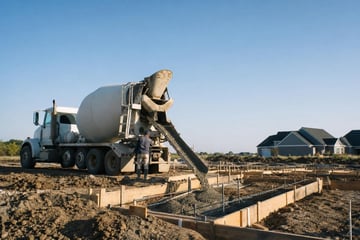
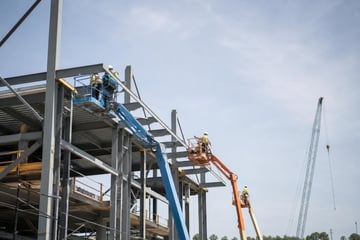
From foundation crews in northeastern Kansas to rural road builders in the western counties, construction firms finance excavators, Skid Steers financing, backhoes and compactors. The Kansas construction season runs roughly April through October, so many contractors buy in late winter to secure availability and negotiate better pricing before the spring rush.
Manufacturing and Aviation
Kansas remains a national center for aviation manufacturing, and the state's industrial base extends beyond aerospace into food processing, plastics and metal fabrication. Manufacturing equipment—CNC mills, lathes, presses, welding stations—finances well because it is specialized and holds value. Lenders like equipment with a strong resale market, and manufacturing iron fits that profile.
Restaurants and Food Service
Barbecue joints, small-town cafes and institutional kitchens all need equipment. Commercial ovens, walk-in coolers, prep tables and dish systems are financeable from $5,000 up. For restaurants, the equipment itself is the collateral, so a borrower with a thin credit file but a solid location and business plan can still qualify.
Forestry and Logging
The southeastern corner of Kansas holds timber operations that need chippers, skidders and log loaders. Forestry Logging equipment financing works similarly to construction financing, though lenders may require proof of timber contracts or land leases to verify revenue stability.
Pro Tip: If you are buying at auction—a common practice for Kansas farm and construction equipment—get pre-approved before you bid. Most auction houses require payment within 24 to 48 hours. A pre-approval letter from your lender lets you bid with a firm ceiling and avoids the risk of winning a machine you cannot quickly fund.
Find the right financing structure
Tell us about the equipment you need and we will show you the options that fit your business.
See Your OptionsTax Treatment for 2026
For the 2026 tax year, Section 179 allows businesses to deduct the full purchase price of qualifying equipment in the year it is placed in service, subject to an annual limit. The exact dollar limit for 2026 is set by the IRS and indexed to inflation. Bonus depreciation may also be available, though the percentage has been phasing down in recent years. For 2026, consult your CPA on the current bonus depreciation rate and whether your equipment qualifies.
The key point is timing. To claim a 2026 deduction, the equipment must be purchased and placed in service by December 31, 2026. Many Kansas buyers accelerate fourth-quarter purchases to capture the deduction in the current tax year. Do not guess at the limit. Talk to a CPA who knows your tax situation and can confirm the 2026 Section 179 cap and any state of Kansas adjustments.
If you lease instead of buy, you deduct the lease payments as a business expense. The deduction is spread across the lease term, which can be useful if you expect higher taxable income in future years.
Seasonal Buying Patterns in Kansas
Kansas equipment buying follows the agricultural calendar more closely than most states. February through April is the busiest window as operators prepare for planting. A secondary spike hits in August and September as wheat harvest wraps up and farmers assess what needs replacement before fall fieldwork.
Construction buying peaks in March and April, before the ground thaws and projects break ground. HVAC companies see demand in late spring and early fall, when commercial clients replace systems before peak cooling or heating seasons. Understanding these cycles helps with pricing. Dealers are more likely to negotiate in December and January, when their lots are full and foot traffic is light.
Common Mistakes Kansas Buyers Make
Buying at auction without inspecting the equipment is the first mistake. Online auction photos hide hydraulic leaks and frame cracks. Always inspect in person or hire a mechanic.
The second mistake is stretching the term too long to lower the payment. A 96-month note on a piece of equipment with a seven-year useful life means you will still owe money after the machine is worn out. Match the term to the useful life.
The third mistake is forgetting soft costs. Delivery from a dealer to a rural job site can add $3,000 to $5,000. If you did not include that in your financing request, it comes out of working capital.
The fourth mistake is applying to multiple lenders simultaneously. Each hard pull can ding your credit score, and lenders can see the other inquiries. It signals desperation. Choose one or two lenders that specialize in your equipment type and apply sequentially.
What Documentation You Need
Have these items ready before you apply:
- Business tax returns for the last two years
- Personal tax returns for the last two years
- Six to twelve months of business bank statements
- A current profit-and-loss statement
- The equipment invoice or purchase agreement
- Proof of insurance on the equipment once approved
If you are buying from a private party rather than a dealer, you will also need a bill of sale and a clear title search. Private-party sales take longer to fund because the lender must verify there are no outstanding liens.
What Happens After Approval
Once approved, the lender issues a funding letter or pays the seller directly. Most transactions fund within 24 to 48 hours after approval. You sign the closing documents, the lender files the UCC lien, and you take possession.
Insurance is required from day one. The lender will be listed as a loss payee on the policy. If the equipment is totaled, the insurance check goes to the lender first, with any surplus coming to you.
After closing, your payments begin 30 to 45 days later. There is no prepayment penalty on most equipment term loans, though some lenders charge a small fee if you pay off within the first 12 months.
Key Insight: Kansas dealers often bundle implements with tractors or attachments with skid steers. When you bundle, ask the lender to itemize each piece on the UCC filing. If you later sell one attachment, a blanket lien on "all equipment" can complicate the release. Itemized filings cost nothing extra and keep your options open.
Put the right equipment to work
From $5,000 to $5 million, new or used, Provide Capital helps businesses nationwide finance the equipment they need.
Apply TodayFrequently Asked Questions
Can I finance equipment with a credit score below 600?
It is possible, but the down payment requirement rises and the term shortens. Most lenders want to see a score of at least 600, though compensating factors—strong cash flow, a co-signer or a newer piece of equipment—can offset a lower score.
How fast can I get funded?
Same-day approvals are possible when the application is complete and the equipment is clearly identified. Funding usually happens within 24 to 48 hours after approval, assuming the seller can deliver the paperwork quickly.
Do I need to put money down?
Not always. Well-qualified buyers can finance 100 percent of the equipment cost. If your credit is marginal or the equipment is older than 10 years, expect a down payment of 10 to 20 percent.
Can I finance private-party equipment?
Yes, but the process takes longer. The lender must verify the title is clear and the seller's lien holders are paid off. Add three to five business days to the timeline for a private-party sale.
What happens if I pay off the loan early?
Most equipment loans have no prepayment penalty, but some charge a fee if you pay off within the first 6 to 12 months. Ask your lender to show you the prepayment language before you sign.
Is the interest tax deductible?
Yes. For the 2026 tax year, the interest portion of your payments is deductible as a business expense. If you structure the deal as a lease, the entire payment may be deductible. Confirm the details with your CPA.
Can I finance multiple pieces of equipment at once?
Yes. Bundling several items into one loan keeps the paperwork simple and can improve your rate because the total loan amount is larger. Many Kansas farm operations finance a tractor and implement package together.
Does the lender need to inspect the equipment?
For new equipment from an authorized dealer, usually not. For used equipment, especially private-party sales or auction purchases, the lender may require an inspection or an appraisal. The cost is typically $200 to $500 and can be rolled into the loan.
Next Steps
Equipment financing in Kansas is a tool that matches the state's working rhythm. Whether you are replacing a combine before wheat planting or adding a Dump Trucks financing unit to your construction fleet, the key is to match the equipment's useful life to the loan term, time your purchase for the off-season when dealers negotiate, and have your documentation ready before you shop.
Kansas continues to see investment in equipment manufacturing. An agricultural equipment maker recently announced a major expansion in the state, a signal that the local equipment supply chain remains strong for buyers. Read more in this AP News report on Kansas ag equipment investment.
If you are looking at a specific machine and want to move quickly, get a same-day decision on your equipment and know your budget before you talk to the seller.
Disclaimer: The information provided in this article is for general educational purposes only and is not financial, legal, or tax advice. Funding terms, qualifications, and product availability may vary and are subject to change without notice. Provide Capital does not guarantee approval, rates, or specific outcomes. For personalized information about your business funding options, contact our team directly.